
At the southwest corner of the Virginia Range with Jeff Martinez. Check out the darting injury at 2:09. The advocates are trying to convince the bureaucrats and ranchers that they can be as ruthless as the helicopter pilots and wranglers.
How to Alienate Your Supporters
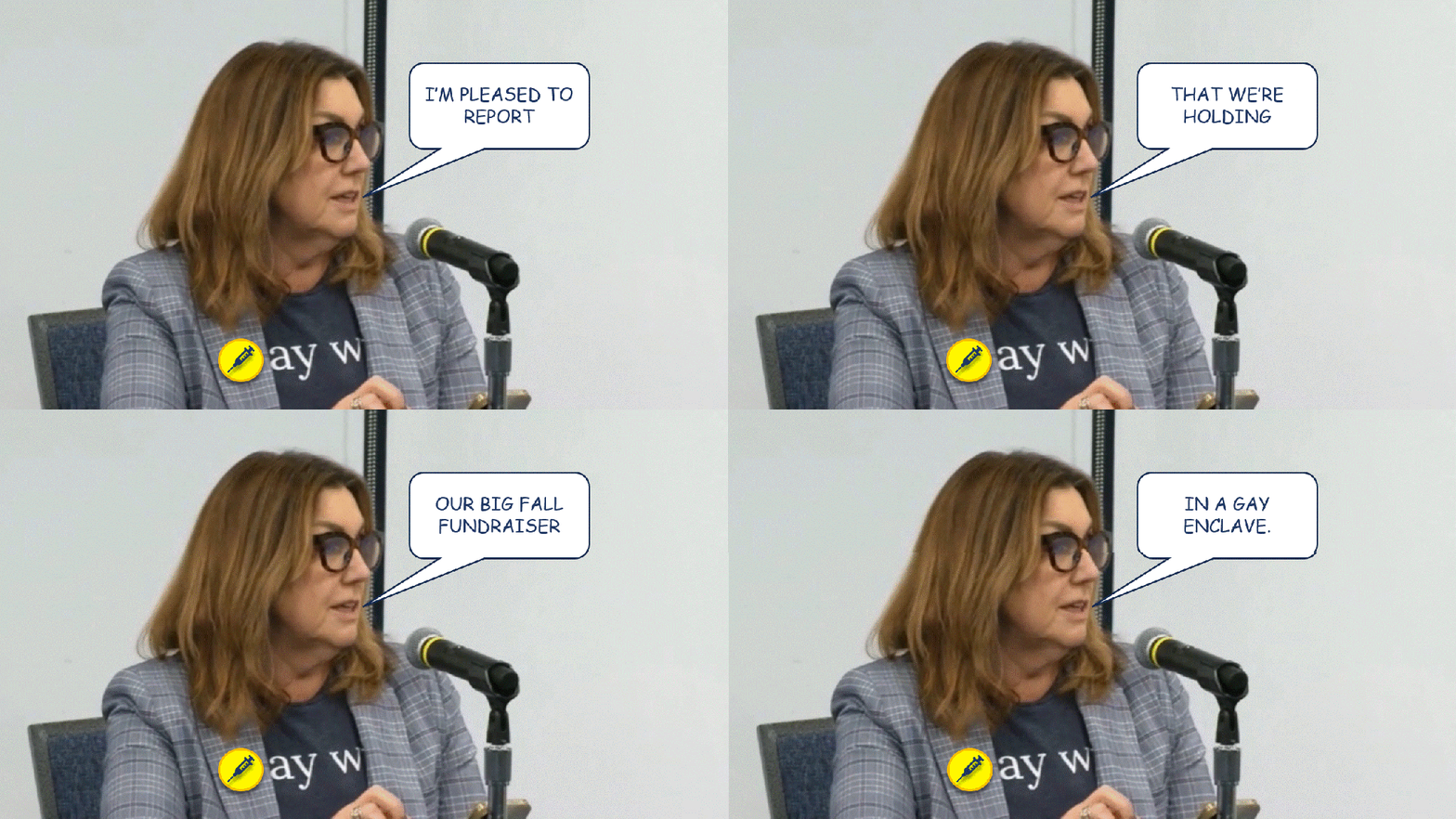
Who’s Advising Bobby Khan About Wild Horses?
The advocates asserted in the Nevada Current op-ed that “America’s wild horses have faced competition from livestock, unfair resource allocation, and shrinking habitat for generations,” which is a fair statement, but their solution is completely unrelated and can only make the problem worse.
Makes perfect sense once you realize they’re in the tank for the ranchers.
Bobby Khan, a candidate for the seat currently held by a co-founder of the pesticide caucus and author of the “Ground a Helicopter, Sterilize a Mare” Act, has proposed a five-step plan for resolving the issues.
1. End the Roundups. “Halt helicopter roundups and stop funneling horses into holding facilities or auctions.” The goal is to end the removals not the roundups. Bait trapping and fertility control are alternate methods of removal.
2. Return Horses to the Wild. “Reintroduce horses and burros to their designated lands where they legally belong.” Not if they’re managed principally for livestock.
3. Herd Management Solutions. This one wrecks the whole program: “Work with experts, ranchers and advocates to implement responsible herd management practices that protect horses and respect ranching interests.” Resource management is a zero-sum game. What you give to the ranchers must be taken from the horses. This is why there so many in off-range holding. Not compatible with item 2.
4. Cut Costs and Save Taxpayer Money. “Replace costly confinement programs with humane, natural management that saves taxpayers hundreds of millions of dollars annually.” Probably a reference to fertility control, straight out of the advocates’ playbook.
5. Build Coalitions for Change. “Partner with leaders, advocates, and public voices…to bring national attention and action to the issue.” Enlarging the committee will not produce the required knowledge.
RELATED: Palomino Valley Horse Rally Won’t Break Any New Ground.

An Evening of Education and Advocacy for Wild Horses?
The event, organized by the Campaign Against America’s Wild Horses, is set for October 23 in Virginia City.
The topic is wild horse management on the Virginia Range.
They’ll sell the program as humane population reduction or wild horse conservation, but it’s really mass sterilization.
There’s nothing natural about it and it’s all based on myths propagated by bureaucrats, hunters and ranchers.

Palomino Valley Horse Rally Won’t Break Any New Ground
From the solutions page at Bobby Khan for Congress:
“He’ll fight to ban helicopter roundups, demand full transparency from the Bureau of Land Management, and push for humane, science-based herd management solutions. That includes fertility control, strategic rewilding, and support for sanctuaries and tribal partnerships doing the real work on the ground.”
Sounds just like the advocates.
RELATED: Political Rally at Palomino Valley Off-Range Corrals?
BLM Preparing to Rescind Public Lands Rule
Stakeholders said it created regulatory uncertainty, reduced access to public lands and undermined the multiple-use mandate established by Congress according to the news release.
A 60-day comment period began with publication of a notice in the Federal Register.
Wild horses fall under “historical values” in the definition of multiple use in FLPMA.
RELATED: Public Lands Rule Published.
Foal-Free Friday, Searching for Integrity Edition
When will the advocates explain how mass sterilization, the inevitable result of humane population reduction, stops competition from livestock, fixes unfair resource allocations and restores lost habitat?
RELATED: Foal-Free Friday, Waiting for Godot Edition.

TRNP Filly Euthanized for WNV
The incident occurred on August 31 according to the September 18 update at the horse management page.
AZDA Should Give Salt River Advocates the Boot
The inevitable result of humane population reduction is mass sterilization.

Tell AZDA they should have removed the Salt River Wild Horse Darting Group from the case five years ago because they’re sterilizing the mares.
If Wild Horses Had Principal Use of Cottonwood
The allotment was recognized for a virtual fencing project in this year’s rangeland stewardship award.
The Allotment Master Report puts it in the Maintain category.
The permittee receives 2,144 active AUMs on 16,689 public acres, equivalent to 179 wild horses, or 10.7 wild horses per thousand public acres, roughly the same stocking rate as the Virginia Range.
Your faithful public servants claim that public lands in the western U.S. can only support one wild horse per thousand acres (25,500 animals on 25.6 million acres).
The advocates, defeated a long time ago, give their assent through their darting programs.
If the allotment was an HMA, the AML would be 17 and 162 wild horses would be consigned to off-range holding because of permitted grazing.
BLM allotments in the Nevada support livestock equivalent to 173,144 wild horses on 40,194,360 public acres, or 4.3 wild horses per thousand public acres.
Wild horses can be placed on public lands not identified for their use by acquiring base properties associated with grazing allotments and flipping the preference to horses.
RELATED: The Allotments Tell the Story: They’re Lying, All of Them.

2025 Stewardship Award Goes to Nevada Guest Ranch?
A representative of the BLM will present the award today to Cottonwood Ranch at the 57th annual meeting of the Public Lands Council, according to the announcement.
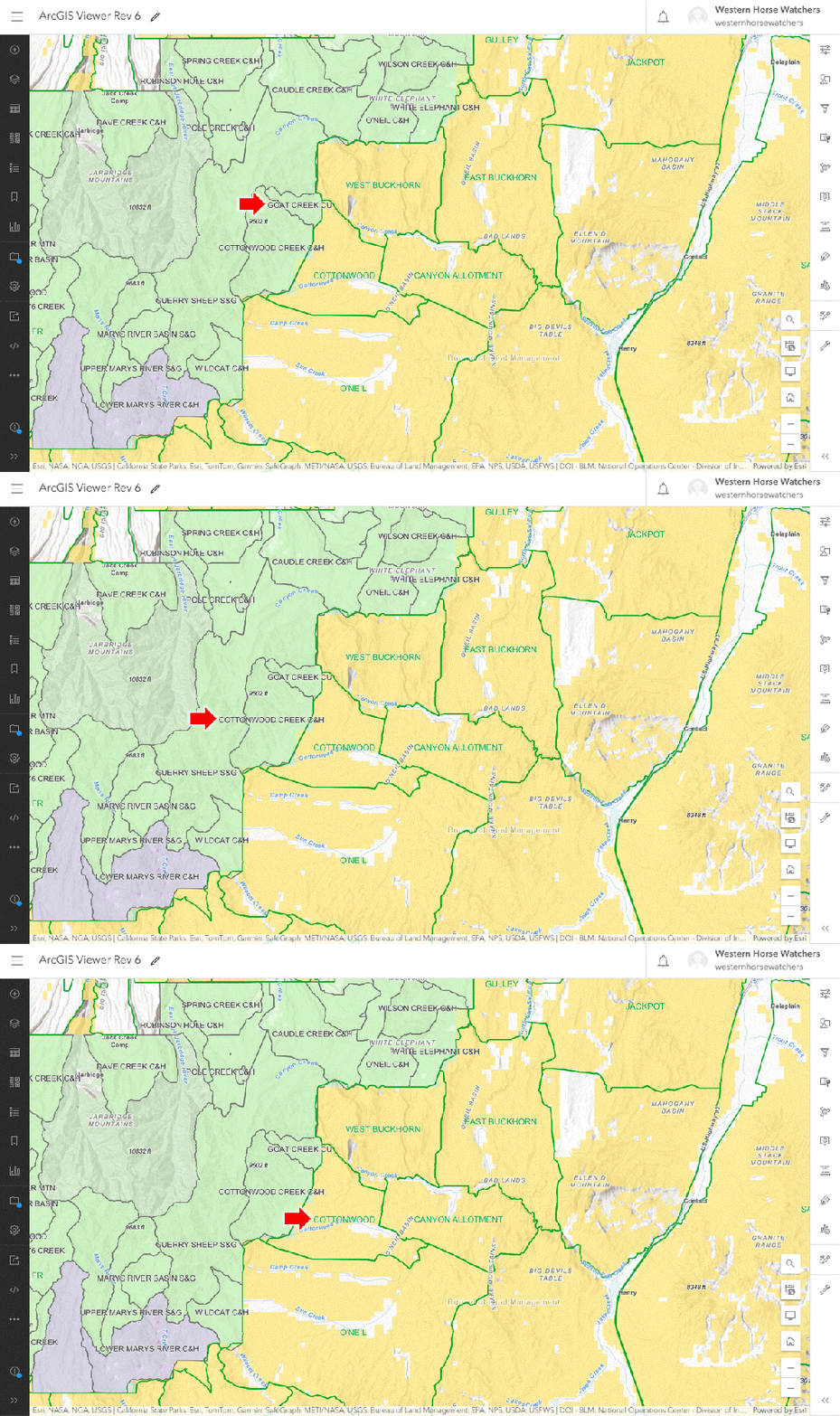
The owners have preference on the Cottonwood Allotment, managed by the Wells Field Office, and the Cottonwood Creek and Goat Creek Allotments, managed by the Jarbidge Ranger District.
The award pertains to virtual fencing on the BLM allotment. Use of the technology on Forest Service lands was not disclosed.
The aim of the grazing program is to ensure that high net worth individuals receive generous government benefits, often at the expense of America’s wild horses, with no means testing and no expiration date.
RELATED: Winners of 2024 Stewardship Awards Announced.
BLM Announces McGregor Grazing Auction
The job walk will occur on September 19, followed by in-person bidding on September 26, according to the news release.
In the past, auction results showed that the American people were not receiving a fair price for livestock grazing covered by term permits.
NDA Website Back in Service
A Board of Agriculture meeting was set for September 9 but no reports have been posted to the documentation page.
RELATED: Can’t Access NDA Website?
How to Insult the Advocates
Do what WyoFile did. Refer to them as pro-horse groups and individuals.
RELATED: Sterility Is a Goal, Not a Defect of Fertility Control Programs.

Mustang Monday
On the Virginia Range with Western Horse Watchers.
Clifford Spring Exclosure Won’t Isolate Stone Cabin Horses
The aim of the project is to improve riparian habitat while continuing to provide water to free-roaming horses, wildlife and livestock.
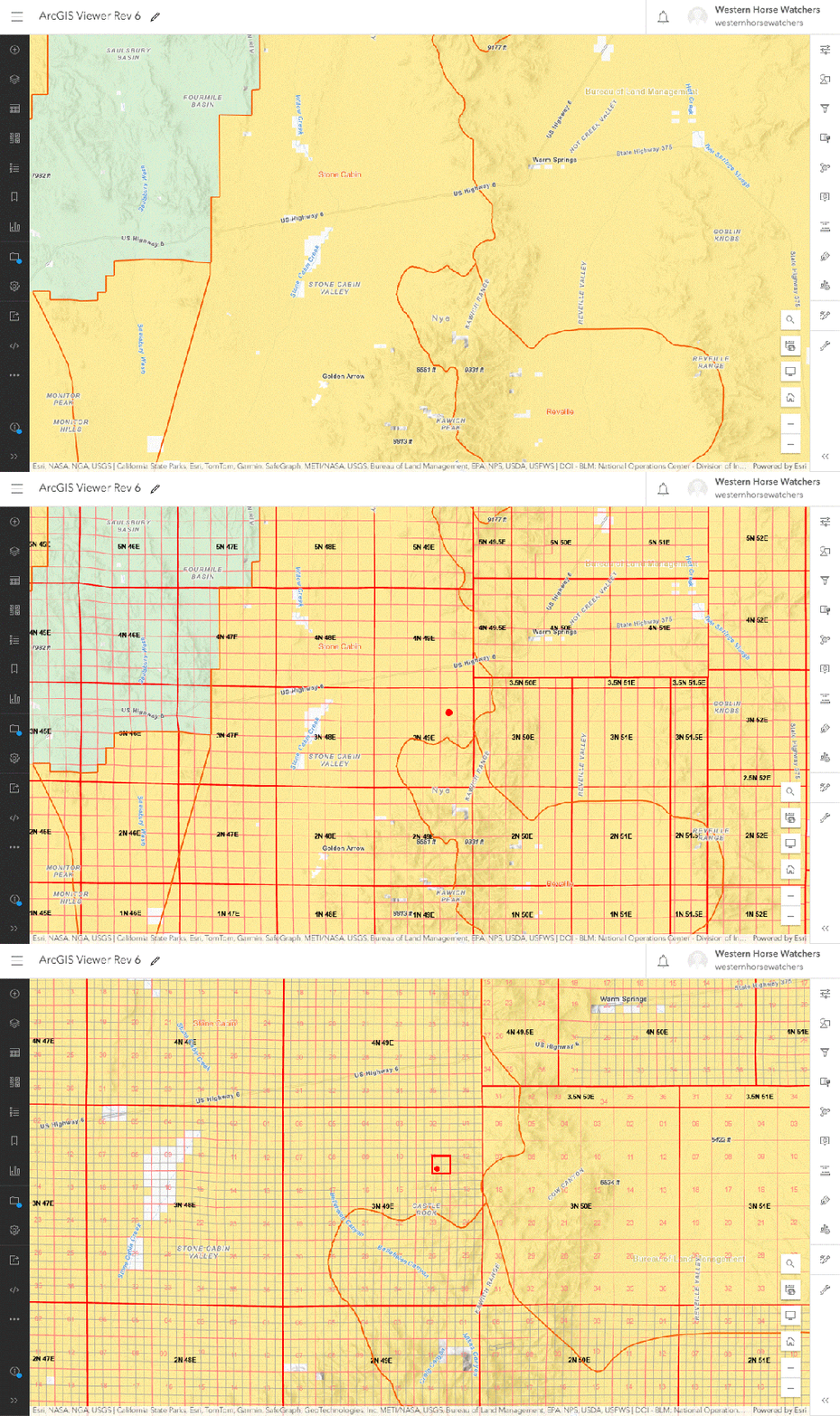
Map 1 in the preliminary decision gives you the location but doesn’t tell you the HMA.
The last page gives the legal description as T. 3 N., R. 49 E., sec. 11, SW1/4SE1/4.
That means the southwest quarter of the southeast quadrant of Section 11 in Township 3 North, Range 49 East (Mount Diablo base and meridian). Probably a 40-acre parcel.
The PLSS layer in the ArcGIS viewer puts the spring in the Stone Cabin HMA, which lies mostly within the Stone Cabin Allotment.
The Proposed Action, discussed in the CX, would install 730 feet of metal fence around the spring, two gates, up to 360 feet of buried water lines, one in-ground tank equipped with a thermoriser and one tire trough located outside the exclosure.
Comments will be accepted through September 19.
Another Moreno Valley Burro Hit by Arrow
She was captured and taken to an equine hospital where most of the projectile was removed but another surgery is needed to retrieve the head according to a report by KTLA News.
A local sanctuary has offered a reward of $14,000 for information leading to an arrest and conviction of the person(s) responsible.
Curiously, there would be no charges if the advocates were hitting the jennies with pesticide-laced darts.
RELATED: Archer Hits Two Wild Burros, Location Not Disclosed.
BLM Moves Rock Springs Roundups into Next Year
An attorney representing plaintiffs in a new lawsuit said they won’t happen before the summer of 2026 according to a report by Wyofile.
The case was brought by two advocacy groups and two women, all PZP adherents, who may have been offended by being described as “pro-horse groups and individuals.”
As of today, the agency has not released a roundup schedule for FY26.
Eighth Annual Devil’s Garden Roundup, Day 15
The incident started on August 27.
Figures for Day 12 indicate three stallions captured plus one mare but the total is 11.
The documented capture total through September 10 is 111, including 46 stallions, 54 mares and 11 foals.
Youngsters represented 9.9% of the sample.
Of the adults, 46% were male and 54% were female.
The average daily take is 7.4.
The death rate is 3.6%.
Body condition scores were not given.
The number of horses shipped is not known.
The operation supports three tenets of rangeland management.
Too Many Horses and Not Enough Land at Salt River?
So says one of the challengers vying for the management contract.
If that’s true then why not move them to one or more vacant allotments to the north?
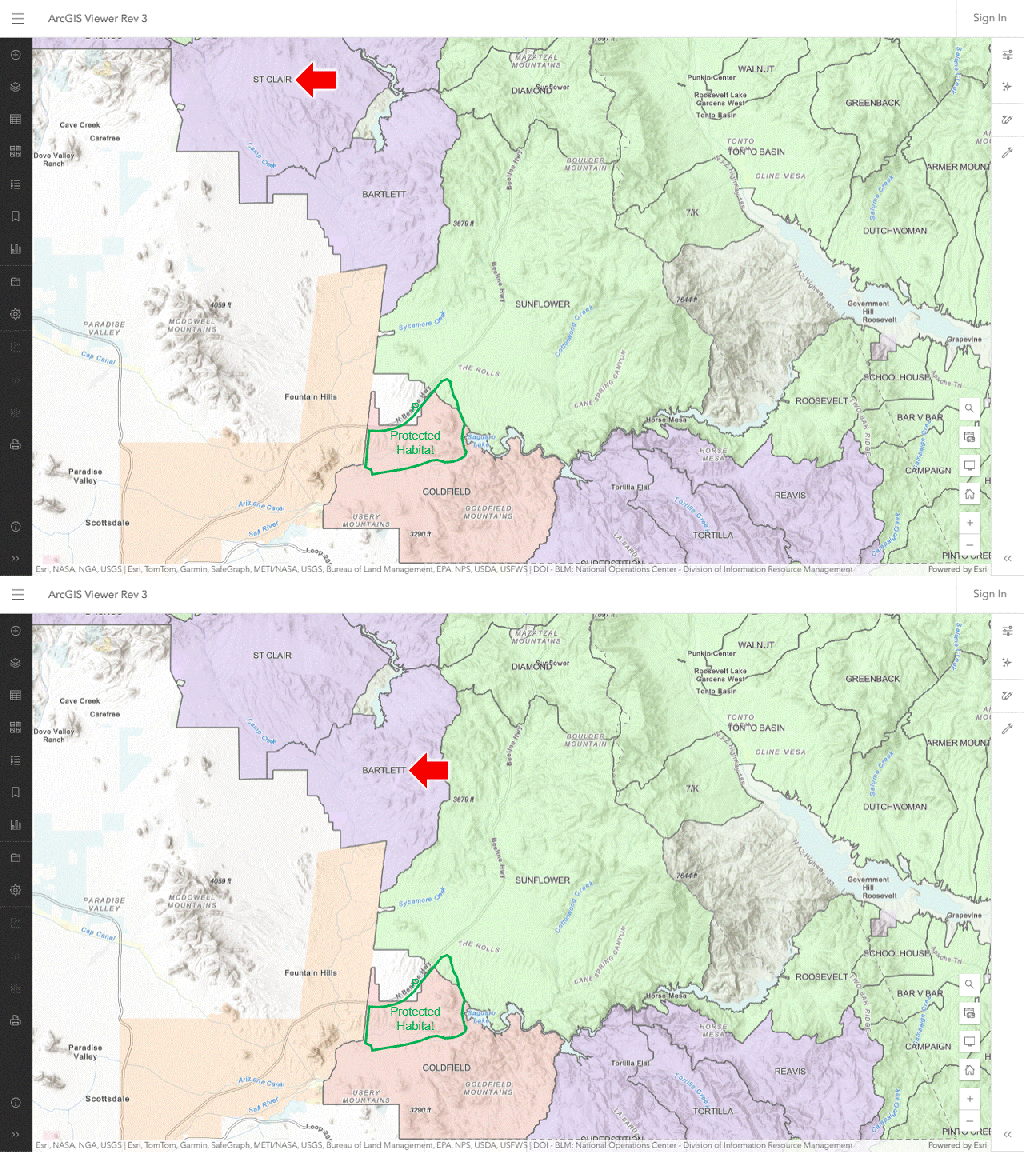
Their current habitat is in the Goldfield Allotment and previously extended into the Sunflower Allotment.
RELATED: McDowell Commissioners to Hear Plan for Salt River Horses.
 Western Horse Watchers Association