At the southwest corner of the Virginia Range with Jeff Martinez.
The absence of youngsters is not an accident.

Exposing the Hypocrisy, Lies and Incompetence of the Wild Horse Advocates
At the southwest corner of the Virginia Range with Jeff Martinez.
The absence of youngsters is not an accident.
The aging population may suffer major losses this winter, according to the advocates, but this is not a normal condition of a wild horse herd—unless it can’t have any babies.
Who’s responsible for that?
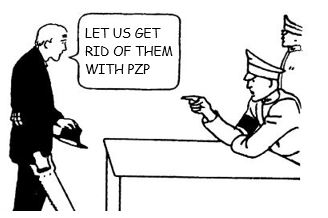
The bureaucrats may have requested a darting program, but the advocates delivered it.
RELATED: Advocate Takes McCullough Plea to Casper.
The incident began on October 22. Results through November 3:
The location of the trap site was not given.
A mare was put down for blindness in one eye on Day 12, a non-life-threatening condition, followed by another on Day 13.
The death rate is 0.7%. Horses lost in the Day 9 truck rollover are not included in the total.
The capture total includes 319 stallions, 379 mares and 119 foals.
Youngsters represented 14.6% of the animals gathered, suggesting the herd is growing at a rate of 10% per year.
Of the adults, 45.7% were male and 54.3% were female.
Body condition scores ranged from 3 to 6 on Days 12 and 13.
The HMAs and surrounding lands are subject to permitted grazing.
*According to advocates.
Day 13 ended with 143 unaccounted-for animals.
Up to 19 mares will be treated with GonaCon Equine, a fertility control pesticide, before being returned to the range with up to 19 stallions.
Other statistics:
Overpopulation means more horses than allowed by plan, not more horses than the land can support. If this was not true, you’d see body condition scores of 3 or less.
The roundup was authorized because the horses have been trying to reclaim some of their food from the ranchers, not because they’re starving.
RELATED: Roberts Mountain Roundup, Day 11.
This letter to the editor marks her third attempt to forestall the bait-trap removal at McCullough Peaks, which was set to begin on November 1.
She’s so far gone and so lost in the pesticide paradigm that she can’t even see that she’s advocating for the ranchers, not the horses.
Let’s take a closer look.
From the second paragraph: To avoid motorized removal, the BLM implemented a reversible birth control program using Porcine Zona Pellucida. This program, administered through field darting, reduced the birth rate to 2% annually, keeping the herd’s numbers within the appropriate management level of 70-140 horses.
It’s not reversible! Damage begins with the first injection and progresses to sterility after five consecutive years. This is happening at the Virginia Range. The advocates refer to these mares as self-boosting.
If the birth rate is 2% per year, the growth rate is -3% per year, assuming a 5% death rate, meaning the herd is shrinking. Exactly what the ranchers want!
Third paragraph: The BLM’s plan involves trapping and removing 41 or more wild horses and using a controversial fertility control vaccine called GonaCon on the mares, for which preliminary evidence indicates permanent sterility.
It’s a pesticide not a vaccine! Vaccines prevent illness, supposedly.
A 2017 labeling amendment extended the interval between primer and booster from 30 days to 90 days but the BLM ignores it, an issue for law enforcement.
The remark about sterility is likely true, because the agency prefers it almost exclusively to PZP. Just look at the news releases over the past year. The condition is sometimes described as long-term infertility.
Fourth paragraph: The aging herd, with a significant portion over 15 years old and 22 horses over 20 years old, requires a population of at least 150 breeding aged adults for genetic viability. To make matters worse, the operation is scheduled to take place next month, before the impact of winter conditions can be assessed, possibly resulting in a slow decline toward extinction of this cherished herd.
That’s not the concern! It’s the size of the breeding population that matters. The 2% birth rate suggests it’s very small and that would be true if the AML was 500.
Describing the herd as “cherished” suggests she walks in lockstep with the Campaign Against America’s Wild Horses, a leader in nonmotorized removal.
No word about resource management and the prevalence of livestock in the HMA.
Next to the federal government, nobody’s getting rid of more wild horses and causing more long-term harm than the advocates.
Opposition to wild horses is expected from hunters, ranchers and bureaucrats who manage the public lands for their benefit.
But not from the advocates, who claim to be voices for the horses.
One of the most pressing issues in the wild horse world is to expose, dislodge and dismantle these groups, prohibiting their staff and membership from ever stetting foot in areas identified for wild horses.
Consider this example from the Virginia Range:
Scenario A, man kills stallion with arrow. Horse not replaced because the advocates have poisoned the mares with Zonastat-H
Scenario B, stallion dies of natural causes and is not replaced because the advocates sterilized the mares with Zonastat-H
Scenario A is bad, but Scenario B is good, according to the advocates.
Barren mares, shrinking herds and loss of genetic diversity are also good and the advocates are positioning themselves to be leaders in the industry.

They use footage from roundups to convince you that removal by pesticide is better than removal by helicopter.

They want you to think they have all the answers. They can’t distinguish between cause and effect, and won’t look at the data, so they don’t even know what the problem is.

And they hate dissent. If you disagree with them, or their allies, you’ll be disappeared by their big-tech minions.

This commentary was inspired by the real estate agent and PZP darter in the Minden/Gardnerville area, whose column about inhumane treatment of animals appears in the October edition of Horse Tales, starting at the bottom of page eight.
Naturally, she absolved herself and other field workers from any wrongdoing and couldn’t heap enough praise on the Campaign Against America’s Wild Horses and Wild Horse Eradication, two of the greatest offenders.
Next to the federal government, nobody’s getting rid of more wild horses and causing more long-term harm than the advocates.
RELATED: Combatting Duplicity in the Wild Horse World.

The incident will begin on or about November 7 according to the BLM news release.
A helicopter will push the horses into the trap and operations will be open to public observation, probably from a distance.
The capture and removal goals are 1,594 and 1,381, respectively.
Up to 81 mares will be treated with GonaCon Equine, a fertility control pesticide, before being returned the range with up to 121 stallions.
The target zone is approximately 60 miles east of Fallon, NV in Churchill County.
The 979 horses allowed by plan require 11,748 AUMs per year.
The stocking rate allowed by plan is 3.3 wild horses per thousand acres, three times higher than the target rate across all HMAs of one wild horse per thousand acres.
The current population is thought to be 1,661 plus this year’s foals.
Captured animals will be taken to the off-range corrals at Palomino Valley.
Gather stats and daily reports will be posted to this page.
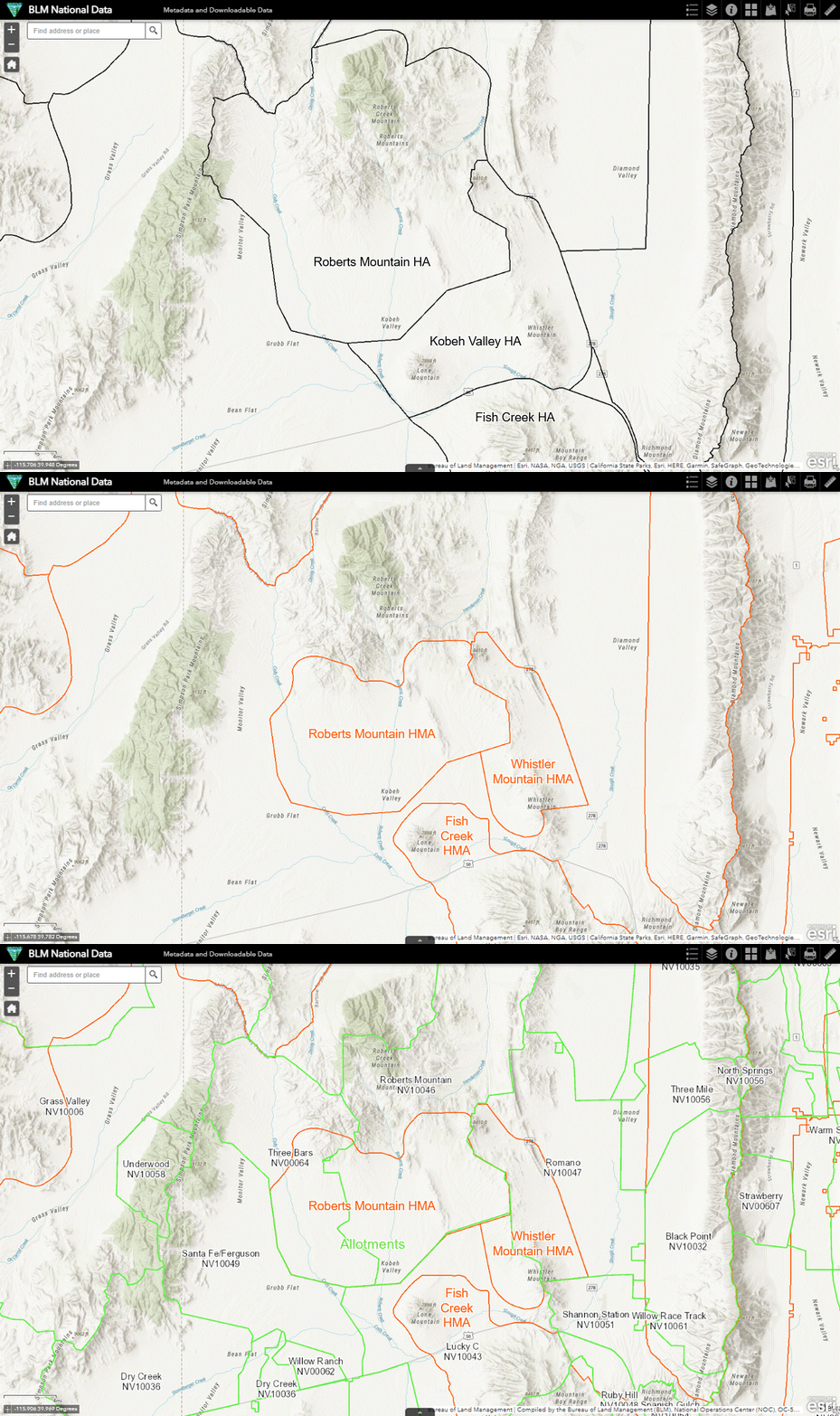
The HMA and surrounding lands are subject to permitted grazing.
It is the same size as the HA and the management plan assigns more forage to horses than livestock. Click on map to open in new tab.
RELATED: BLM Publishes Clan Alpine Final Planning Documents.

A $500,000 grant from the American Rescue Plan Act will pay for the project, according to a report by KTVN News.
Councilwoman Naomi Duerr said the money will help them fully fence the range, which probably means the portion inside city limits.
The Park Service has proposed the removal of wild horses from Theodore Roosevelt National Park under two scenarios, Alternatives B and C.
In option B, horses would be forcibly removed to quickly reduce the herd size to zero.
Alternative C corresponds to a fully contracepted herd that dies off after some of the horses are removed.
The Park Service designated option C as the Proposed Action (preferred option).
The plan faces stiff opposition, especially from the advocates.
At the Salt River, Virginia Range and McCullough Peaks, you have fully contracepted herds, or nearly so, that are dying off, but the advocates offer no opposition.
They think it’s great!
So who’s fooling whom?
What they really want is a contract with the Park Service to carry out Alternative C.
The pesticide of choice would likely be Zonastat-H.
RELATED: Foal Free-Friday, Questioning the Assumptions Edition.

The incident began on October 22. Results through November 1:
The location of the trap site was not given.
The death rate is 0.5%. Horses lost in the Day 9 truck rollover were not included in the death count.
The capture total includes 295 stallions, 351 mares and 115 foals.
Youngsters represented 15.1% of the animals gathered, suggesting the herd is growing at a rate of 10% per year.
Of the adults, 45.7% were male and 54.3% were female.
Body condition scores ranged from 4 to 5 on Days 10 and 11.
The HMAs and surrounding lands are subject to permitted grazing.
*According to advocates.
Day 11 ended with 206 unaccounted-for animals.
Up to 19 mares will be treated with GonaCon Equine, a fertility control pesticide, before being returned to the range with up to 19 stallions.
Other statistics:
Overpopulation means more horses than allowed by plan, not necessarily more horses than the land can support.
RELATED: Roberts Mountain Roundup, Day 9.
The herd on the Maryland side of the island consisted of 15 bands and 81 horses according to the October 27 inventory.
Last update was in July.
Seven foals were born this year, seven years after the darting program was shut off.
The pesticide of choice was Zonastat-H, a favorite of the advocates.
Not included in the report:
The BLM WHB Handbook indicates the breeding population should exceed 50 animals to maintain an acceptable level of genetic diversity.
The Assateague Island Alliance updates the lists.
RELATED: Assateague Pony Census, July 2023.
Proposals should align with the 2021 Strategic Plan and funding is subject to Congressional direction and appropriations. according to yesterday’s news release.
Priorities include new or improved fertility control methods for wild horses, examining the relationships between wild horses or burros and their environment, and improving a variety of wild horse and burro program activities, such as aerial surveys, genetic monitoring, animal handling, adoption rates and the human dimensions of wild horse and burro management.
An interesting topic in the area of human dimensions would be the role of moral depravity in wild horse and burro management.
For example, how do promiscuity, adultery, contraception, abortion, sterilization, divorce and sexual perversion (LGBT) influence policy and practice?
How many of the advocates subscribe to these values?
As for the role of man-made climate change, there is none.
Absence of predators? Totally man made, to protect the most noble and deserving nonnative species on America’s public lands.
RELATED: Decision Published for Fertility Control Research.

The incident concluded on September 30, with 101 burros captured, 101 shipped, none released and no deaths, according to figures in the sidebar.
The daily reports yield 100 captured and 119 shipped.
The capture total included 73 jacks, 21 jennies and 7 foals.
Youngsters represented 7% of the animals gathered.
Of the adults, 78% were male and 22% were female.
Two areas on the California side of the Colorado River were targeted.
RELATED: BLM Approves Another Nuisance Removal Near Cibola-Trigo HMA.

A Virginia Range mare named Saddle Shoe is 11 years old and likely won’t have any more foals, according to a story dated October 31 by the Lassen County Times.
Why?
Because mares can’t conceive after age 10? No.
Because stallions won’t breed older mares? No.
Because advocates with the Campaign Against America’s Wild Horses ruined her with Zonastat-H? Probably.
The writer points to the mare as a beneficiary of the darting program, now in its fifth year, not a victim.
And with five consecutive years of use, there are likely many more such mares.
The darting program proves there’s no need for mass roundups, crowded holding corrals and permanent sterilization—because the advocates are sterilizing them inconspicuously, much to the delight of the bureaucrats and ranchers.

The article was likely drafted by CAAWH staff to draw attention to themselves and their wrongheaded ideas.
RELATED: Combatting Duplicity in the Wild Horse World.
Traffic from Facebook returned to the new normal last month after an unexpected jump in September.
The downward trend in 2023 may indicate that material by Western Horse Watchers has been banned or blocked by the advocates.
Hopefully their little Potemkin Villages are crumbling.
WordPress stopped reporting traffic from Twitter in August 2023.
RELATED: Socialist Media Update for September 2023.

The BLM should give the darting program a chance according to the writer of a letter to the Powell Tribune.
The herd is aging. The death rate is increasing. The ranchers need to be patient.
GonaCon will sterilize the mares.
If the agency removes the younger horses the herd will be in danger of dying out.
The capture goal will bring the herd well below the 150 adults needed to maintain genetic viability.
What a bunch of crap!
PZP sterilizes mares.
As birth rates go down, the herds die off.
Breeding populations are too small to sustain genetic diversity.
The minimum herd size of 150 to 200 wild horses (recommended in Section 4.4.6.3 of the WHB Handbook) assumes the advocates are not trying to beat the populations down with ovary-killing pesticides.
The Salt River and Virginia Range, known for their fanatical darting programs, have herds well above 150 but the advocates are driving the breeding populations to zero.

They are responsible for as much or more long-term harm as the federal government.
RELATED: Advocates Say McCullough Peaks Roundup Not Necessary.
The incident began on October 22. Results through October 30:
The location of the trap site was not given.
The death rate is 0.7%.
The capture total includes 229 stallions, 270 mares and 90 foals.
Youngsters represented 15.3% of the animals gathered, suggesting the herd is growing at a rate of 10% per year.
Of the adults, 45.9% were male and 54.1% were female.
Body condition scores ranged from 4 to 5 on Days 8 and 9.
The HMAs and surrounding lands are subject to permitted grazing.
*According to advocates.
Day 9 ended with 84 unaccounted-for animals.
Up to 19 mares will be treated with GonaCon Equine, a fertility control pesticide, before being returned to the range with up to 19 stallions.
Other statistics:
Overpopulation means more horses than allowed by plan, not necessarily more horses than the land can support.
RELATED: Roberts Mountain Roundup, Day 7.
UPDATE: A note was added to the Day 9 report after this post went live: A truck carrying 36 captured horses overturned outside of Delta, UT. Three were killed, four were humanely euthanized and many suffered minor cuts and bruises. The remaining horses were taken to a holding facility in Delta where they continue to be evaluated and monitored by the on-site veterinarian. The driver was not injured. The cause of the accident is under investigation.
The mares have been darted with birth control medication for years. It’s an aging population that will shrink naturally through deaths from old age.
Six horses died over the summer and more will be lost to winterkill according to an advocate interviewed for a story dated October 30 by Cowboy State Daily.
Articles like this confirm your suspicions that they’re sick in the head and want the ranchers to win.
The HMA has the unfortunate distinction of being in the motorized and nonmotorized removal sections of the latest schedule.
RELATED: McCullough Herd to Achieve AML on its Own?

At the September 7 “Dust Up” debate in Elko, Nevada State Senator Hansen said the BLM was not in bed with the livestock industry.
But he didn’t say that about the advocates.
Who are they pandering to in the following video?
What do they offer?
That’s what they mean by “A Better Way.”
Filmed during a “Stay Barren” event at the Durell Vineyards in Sonoma, CA.
RELATED: Combatting Duplicity in the Wild Horse World.
On the Currituck Outer Banks with Karen Pulfer Focht.

