If Wild Horses Had Principal Use of Buzzard and Bar Eleven

The two allotments, located north of Rawlins, WY and east of the Green Mountain HMA, offer 22,832 active AUMs on 103,511 public acres, according to the Allotment Master Report.

The forage assigned to horses is zero.

How many wild horses could live there?

Using the principle of forage interchangeability, the True AML would be 22,832 ÷ 12 = 1,903, the number of horses the land could support if it was managed principally for them as specified in the original statute.

The stocking rate would be 1,903 ÷ 103,511 × 1,000 = 18.4 wild horses per thousand public acres.

Why is this important?

The bureaucrats and ranchers claim that public lands in the western U.S. can only support one wild horse per thousand acres (27,000 animals on 27 million acres).

The advocates ratify the narrative with their darting programs.

If the allotments were an HMA, the AML would be 103, and 1,903 – 103 = 1,800 horses would be consigned to off-range holding because of permitted grazing.

Curiously, the LDS Church holds all of the active AUMs on Bar Eleven.

BLM allotments in the state carry livestock equivalent to 158,425 wild horses on 17,312,214 public acres, or 9.2 wild horses per thousand public acres.

RELATED: The Allotments Tell the Story: They’re Lying, All of Them.

Buzzard and Bar Eleven Allotments 06-04-24

TIME Looks at Wild Horse Politics

The BLM has been captured by the cattlemen according to the June 3 report.

They look at the horses as pests, something to get rid of, and something that infringes on the ranchers.

So do the advocates and their political allies, not mentioned in the article.

They want to get rid of them with PZP, a restricted-use pesticide that tricks the immune system into destroying the ovaries.

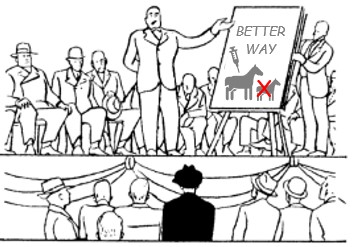
Better Way 10-25-23

“Despite the mythologies of the West, herd management is done more by aircraft than lasso these days.  And it’s often handled by the same companies intent on making room for their own cattle to roam, a twisted insiders’ game that lets the giant mega-ranchers cash in not just on flying the helicopters that clear the area, but then again with pennies-on-the-dollar deals to allow private cattle and sheep to graze on public lands.”

“The money behind it seems like a loop between bureaucrats, ranchers, and their helicopter pilots in a closed system that nefariously protects cattle and sheep at the expense of horses.”

Nobody wants to pick a fight with the ranchers, especially in an election year.

They have strong sympathy among voters, which should be easy to change.

Public-lands ranching is government dependency and redistribution of wealth, hallmarks of socialism, which most Americans reject.

No more gravy train, no more sucking on the government teat.

RELATED: How Much Private Land Do the Public-Lands Ranchers Control?

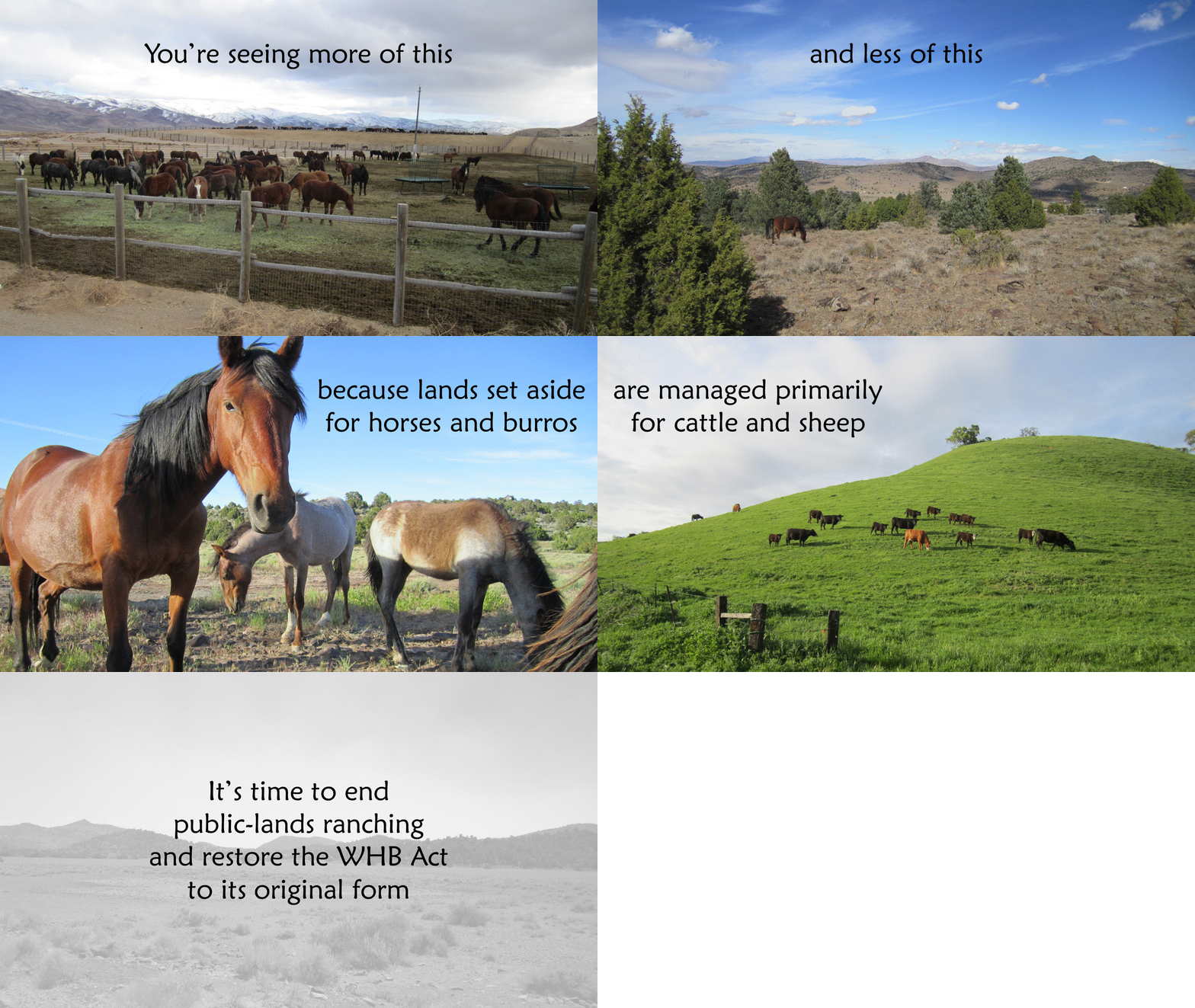
PSA 12-07-19

NDA Extends Virginia Range Mass Sterilization Program

The Animal Industry Report for the June 4 BOA meeting indicates on page two that the agency entered into a sixth-year non-exclusive cooperative agreement running from May 1, 2024 through April 30, 2025.

The Campaign Against America’s Wild Horses operates the search-and-destroy mission on their behalf.

Protect Wild Horses from Advocates 08-29-21

With a dwindling breeding population and growing number of nonviable mares, the tipping point is now within reach, where a decreasing birth rate cannot keep up with an increasing death rate, and the herd slides into irreversible decline like Assateague Island.

This is what the advocates bring to the table, a strategy that appeals only to hunters, ranchers, bureaucrats and their lunatic followers.

RELATED: Virginia Range Darting Program Now in Its Sixth Year?

Socialist Media Update for May 2024

Traffic from Facebook and Twitter accounted for 5.0% of the total during the month, down considerably from the same period two years ago.

Did you know the stocking rate of the grazing program is seven times higher than that of the wild horse and burro program?

To put the wild horse and burro program on par with the grazing program, you’d have to increase the AML from approximately 27,000 to nearly 189,000.

You didn’t hear that from the advocates.

Western Horse Watchers brings you the truth about wild horses, resource management and the Love Triangle on America’s public lands.

RELATED: Socialist Media Update for April 2024.

Traffic from Socialist Media May 2024 06-01-24

SOWH Releases Videos from Reno Conference

If the keynote address is any indication, you didn’t miss much.

Instead of condemning the Campaign Against America’s Wild Horses and its mass sterilization program on the Virginia Range, there was praise for its good work (19:33).

Instead of trying to change the system (22:24), change the statute, restoring it to its original form.

Regarding the Veterans for Pesticides Act (25:00), you can reduce the need for helicopters by clearing the land of privately owned livestock, allowing the herds to fill their niche and manage themselves. Funny how the advocates won’t talk about that.

As of today, the channel contains eleven videos.

RELATED: SHOCKER: Advocates Don’t Know What to Do.

Virginia Range Darting Program Now in Its Sixth Year?

As of today, the Campaign Against America’s Wild Horses has not posted the Year 6 Agreement with NDA to its darting resources page.

The summary for Year 5, which ended on April 30, has not been posted to the monthly reports page.

Let Us Fix Your Wild Horse Problem 02-18-23

With many of the mares at risk of sterility, now is the time to finish the herd off and win the approval of the bureaucrats and ranchers.

Price of Hay Eases Slightly?

A bale of alfalfa-grass mix sold for $30 today, 20 bales minimum, down from $34 in March.

The feed store did not indicate if this was a special offer or the new rate.

A horse would need around five bales per month, putting the cost of feed at $150 per AUM.

The poor ranchers, forced to live in multi-million-dollar base properties, pay $1.35 per AUM on public lands managed by the BLM and Forest Service.

Three years ago, before Bidenomics kicked in, the same bale fetched $19.

RELATED: Price of Hay Defies Gravity.

Putting Wild Horses on Par with Privately Owned Livestock

The BLM allows 23,866 wild horses and 2,919 wild burros on 26,917,766 public acres according to the 2024 population dataset.

That’s equivalent to 23,866 + 2,919 ÷ 2 = 25,326 wild horses on 26,917,766 public acres.

As reported on April 22, the agency authorizes privately owned livestock equivalent to 1,023,481 wild horses on 145,895,940 public acres.

To match the stocking rate and resource loading of the grazing program, the wild horse and burro program would have to satisfy the following relationship:

x ÷ 26,917,766 = 1,023,481 ÷ 145,895,940

Solving for x, the new AML would be 188,832.

The current wild horse and burro population, equivalent to 66,236 wild horses, is well within this limit.

Why are the advocates working with the bureaucrats to take the numbers lower?

  • They have a shared vision
  • They view these animals as pests
  • They want the ranchers to win

Why are you still giving them money?

RELATED: New Report Ties Poor Rangeland Health to Permitted Grazing.

Thriving Ecological Balance-3

New Report Ties Poor Rangeland Health to Permitted Grazing

Today’s news release indicates that 44 million acres do not meet BLM’s minimum standards, with livestock being the primary cause, either in whole or in part.

PEER Rocky Mountain Director Chandra Rosenthal noted that an estimated 1.5 million cattle forage BLM lands compared to fewer than 75,000 wild horses.

As reported by Western Horse Watchers on April 22, the agency authorizes livestock equivalent to 1,023,481 wild horses on 145,895,940 public acres in ten western states, or seven wild horses per thousand public acres.

The agency allows 26,785 wild horses and burros on 26,917,766 public acres, according to the 2024 population dataset, or one such animal per thousand public acres.

Which species has the larger footprint and potential for rangeland degradation?

The current wild horse and burro population is equivalent to 66,236 wild horses, or 2.5 wild horses per thousand public acres.

You’d need to increase the wild horse population to 188,424 to have the same resource loading as privately owned livestock.

Caliente Roundup, Day 43

The incident started on April 16.  Results through May 23:

  • Scope: Caliente Complex
  • Target: Horses
  • Type: Planned
  • Method: Bait
  • Goals: Gather 350, remove 350
  • Captured: 252, up from 224 on Day 38
  • Shipped: 207, no change from Day 38
  • Released: None
  • Deaths: 9, up from 7 on Day 38
  • Average daily take: 5.9
  • Unaccounted-for animals: 36

The figures above are based on the daily reports.

A stallion was dispatched on Day 39 due to blindness.

Another stallion was dispatched on Day 42 due to injuries sustained in capture, sorting or holding, boosting the death rate to 3.6%.

The capture total includes 102 stallions, 110 mares and 40 foals.

Youngsters represented 15.9% of the animals gathered, consistent with a herd growth rate of eleven percent per year.

Of the adults, 48.1% were male and 51.9% were female.

Body condition scores were not given.

The location of the trap site is not known.

The Complex is subject to permitted grazing.  Resources liberated to date:

  • Forage: 3,024 AUMs per year
  • Water: 2,520 gallons per day

There are no plans to treat any of the mares with fertility control pesticides and return them to the range.

The roundup supports three tenets of rangeland management.

RELATED: Caliente Roundup, Day 38.

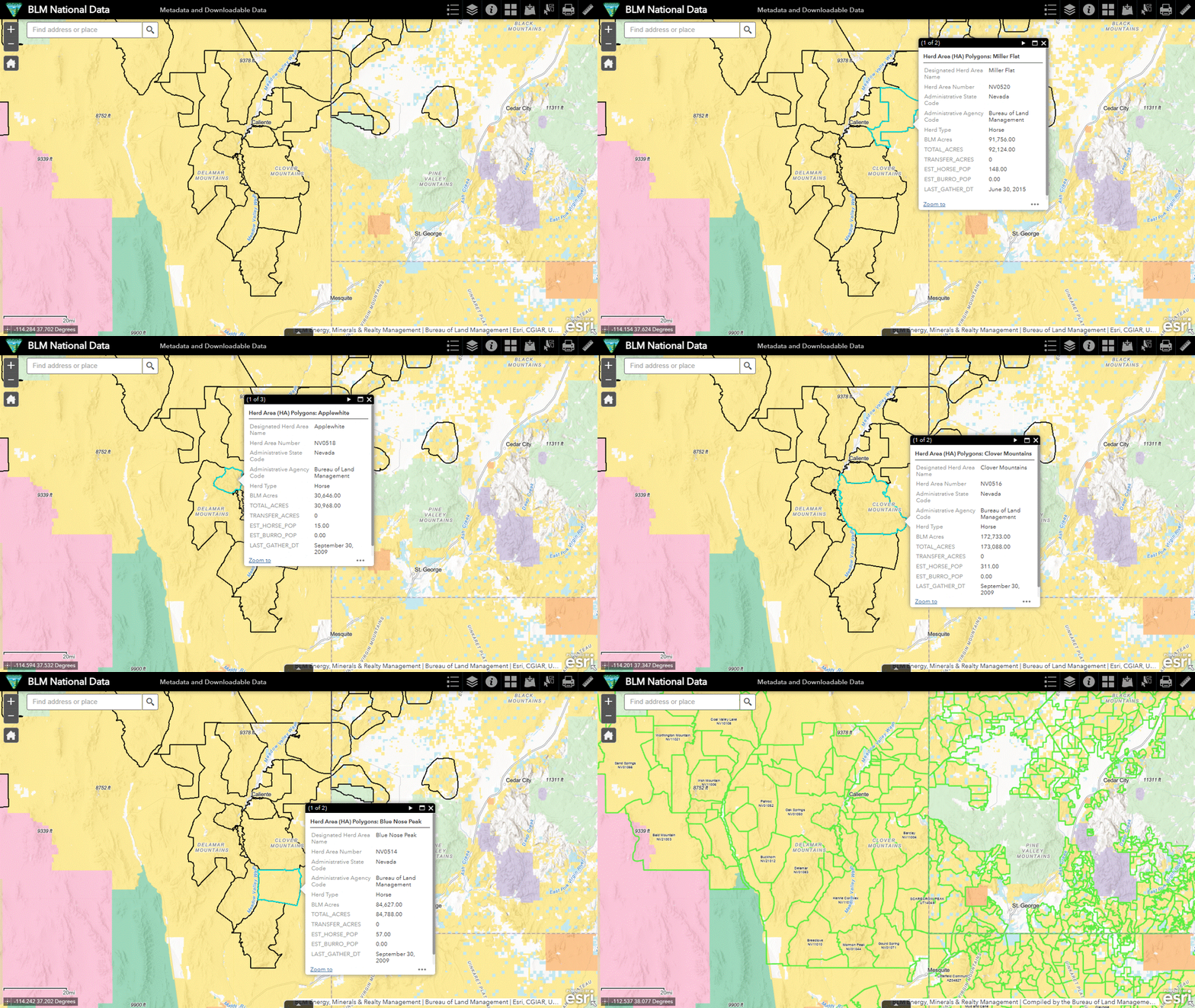
Caliente Complex with Allotments 03-28-24