The manual is intended as a study guide for those planning to take the Pesticide Applicator Certification Core Exam.
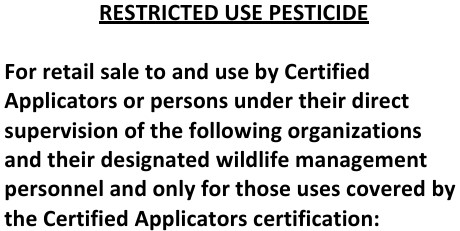
The 2014 edition states on page 51 that restricted-use pesticides (such as PZP) demand special attention because there is reason to believe they could harm humans, livestock, wildlife or the environment even when used according to label directions.
Such as permanent infertility in mares.
Unlawful use of pesticides is discussed on page 39.
Failure to use the product as directed on the label.
The advocates want you to think of PZP as a medication, always referring to the product as a vaccine.
As stated in its Year Two Report, the Colorado Wild Horse Working Group believes that strategic darting should be the cornerstone of wild horse management.
It’s an indication that the stakeholders are willing to play the long game in support of their goals and a major win for the advocates.
Not mentioned in the discussion are the long-term effects of the fertility control pesticides and the eventual disappearance of the herds.
One of the most amazing statistics in this report by High Country News is the number of individuals who declined to comment.
The article did not mention services provided by the wild horse advocates that benefit the ranchers.
Beating the horse populations down with ovary-killing pesticides.
The aim of the grazing program is to ensure that high-net-worth individuals receive generous government benefits, often at the expense of America’s wild horses, with no means testing and no expiration dates.
They’ll be flying for the Utah Division of Wildlife Resources to capture bighorn sheep according to the BLM news release.
The Decision Record authorizes the Proposed Action, discussed in section 2.1 of the Final EA.
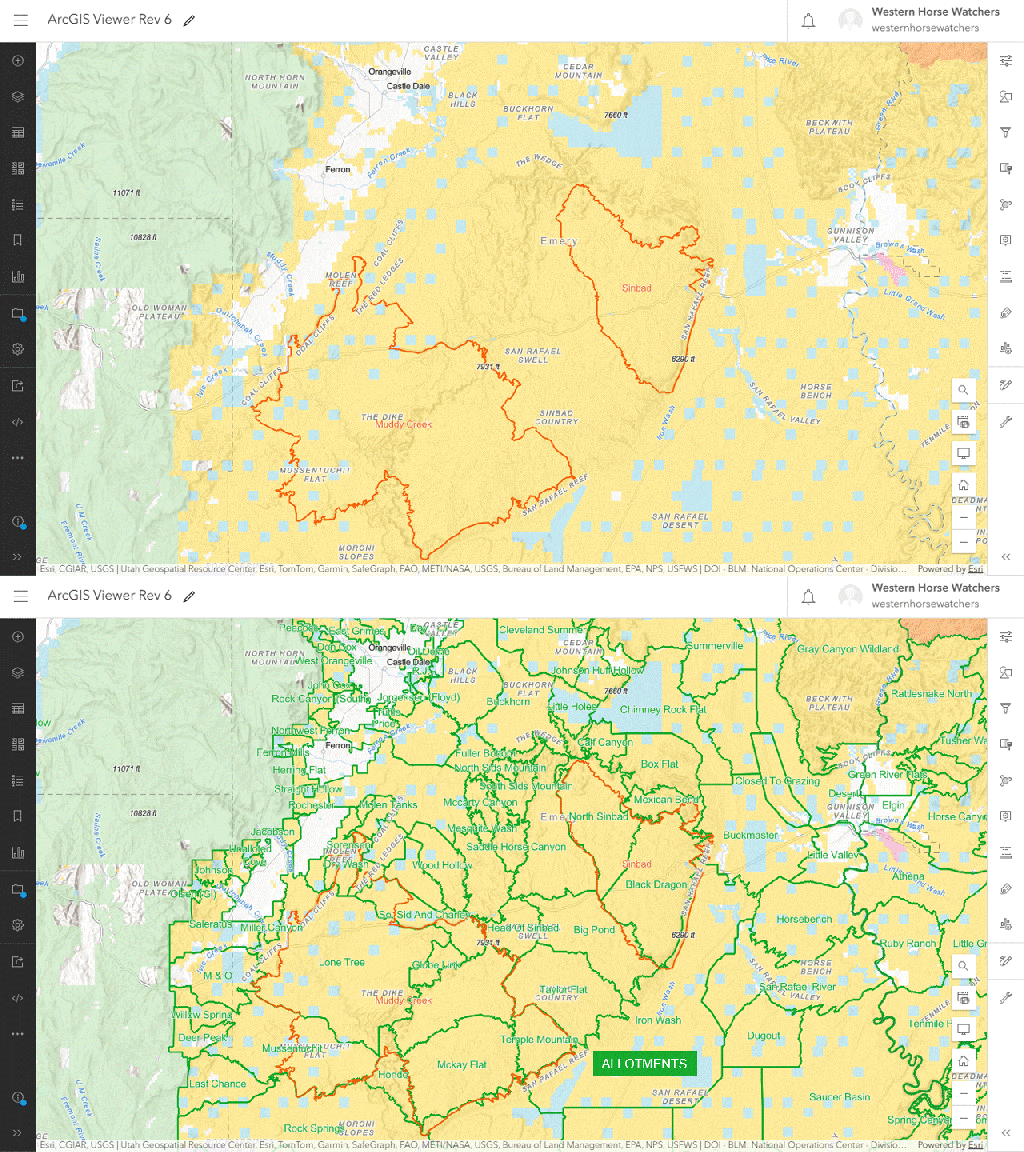
Table 1-2 indicates that “captures could take place in the Muddy Creek Wild Horse HMA as well as the Sinbad Burro HMA. Helicopter overflights may temporarily disturb wild horses and burros in the vicinity of the capture. Impacts beyond short-lived stress are not expected because these animals would not be the target of pursuits, which would already be short in duration, and could readily escape the area.”
Although the EA mentions livestock grazing, it does not show the allotments in the project area.
One of the greatest threats to wild sheep is illness picked up from domestic sheep.
The Authorization Use Report at RAS would tell which if any of the allotments are permitted for sheep.
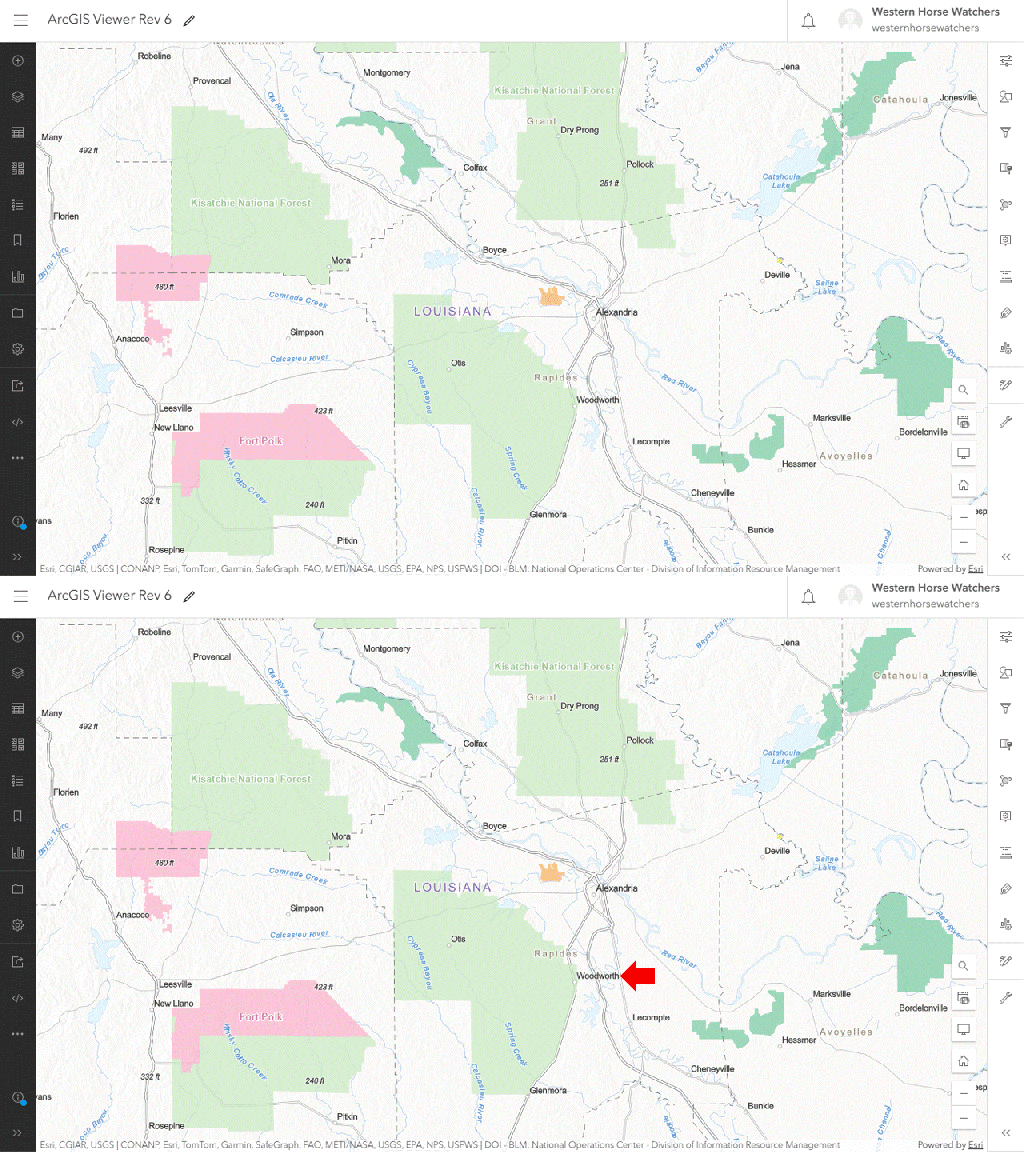
To the west is Fort Johnson (previously Fort Polk), an Army base the horses once called home.
The article did not associate the horses with the forest and did not indicate if the advocates had submitted a plan to beat the numbers down with ovary-killing pesticides.
The fertility control program was launched in Magoffin County early last year according to a story by WHAS News.
The report refers to PZP as a contraceptive vaccine, not a restricted-use pesticide.
Contrary to another statement in the article, the product is not reversible if applied for more than five years.
The group expects the population to stabilize in three years.
The story did not indicate if the partner organizations would become obsessed with pesticides as they have out west and if the effort would morph into a mass sterilization program across the nine-county region where the horses are found.
The Senate news release includes links to summaries and explanatory statements for (1) Commerce, Justice, Science and Related Agencies, (2) Energy and Water Development and (3) Interior, Environment and Related Agencies.
The bill for Interior provides $144 million for wild horse and burro management according to the Division C explanatory statement, including $11 million for fertility control.
The hypergeometric function in Excel lets you compute the probabilities of matching one to five numbers in the first part of the Powerball drawing.
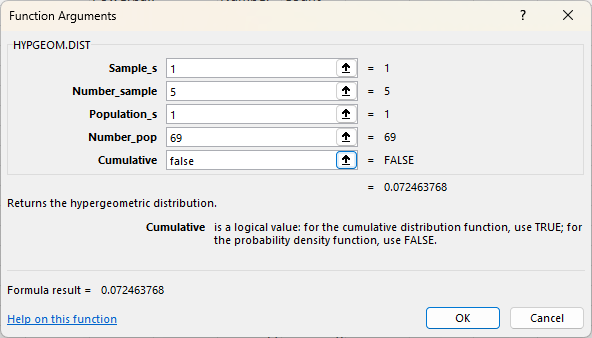
Suppose your favorite number is seven. What is the probability that it appears in the sample of five taken at random from a field of 69, as it did on November 15?
Using Excel’s nomenclature, the number of successes in the sample would be one, the sample size would be five, the number of successes in the population would be one, the population size would be 69 and the cumulative argument would be set to false.
The result is approximately .072, about 7.2%. The probability that seven does not appear would be 1 – .072 = .928 or 92.8%.
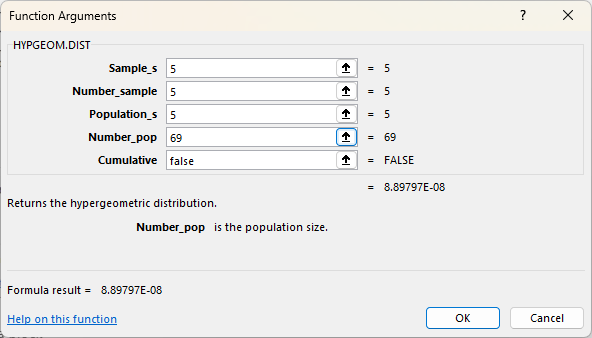
What is the probability of matching all five numbers? Change the number of successes in the sample to five and the number of successes in the population to five.
The result is almost zero, .000000089, or 1 in 11,238,513.
Unfortunately, Excel does not have a function for computing the probability of the advocates telling the truth about PZP in 2026, that you can’t use the pesticide for “humane population reduction” without sterilizing the mares.
A report by The Hill says President Trump is in a full-fledged feud with politicians in Colorado due to the prosecution of former Mesa County elections clerk Tina Peters, who has aligned herself with the president’s claims of election fraud in 2020.
The article suggests that actions by the administration are retribution over Peters.
Vetoing a bill that would have completed the Arkansas Valley Conduit, a project that would send water to the southeastern part of the state
Dismantling the National Center for Atmospheric Research, an institution specializing in climate science
Denial of a disaster declaration following wildfires and flooding last year in southwestern Colorado
The writer did not cite the scuttling of the inmate training program at Cañon City.
Some folks say 2026 is the Year of the Horse, the perfect time to raise awareness about helicopter roundups.
They don’t see it as an opportunity to stop the removals and restore basic concepts such as principal use and management at the minimum feasible level.
Instead, they see it as an opportunity to expand the use of RUPs, to replace motorized removal with mass sterilization.
They don’t want you to know that public lands in the western U.S. can sustain many more wild horses than the government admits.
They are servants of the ranchers and don’t deserve a penny of your support.
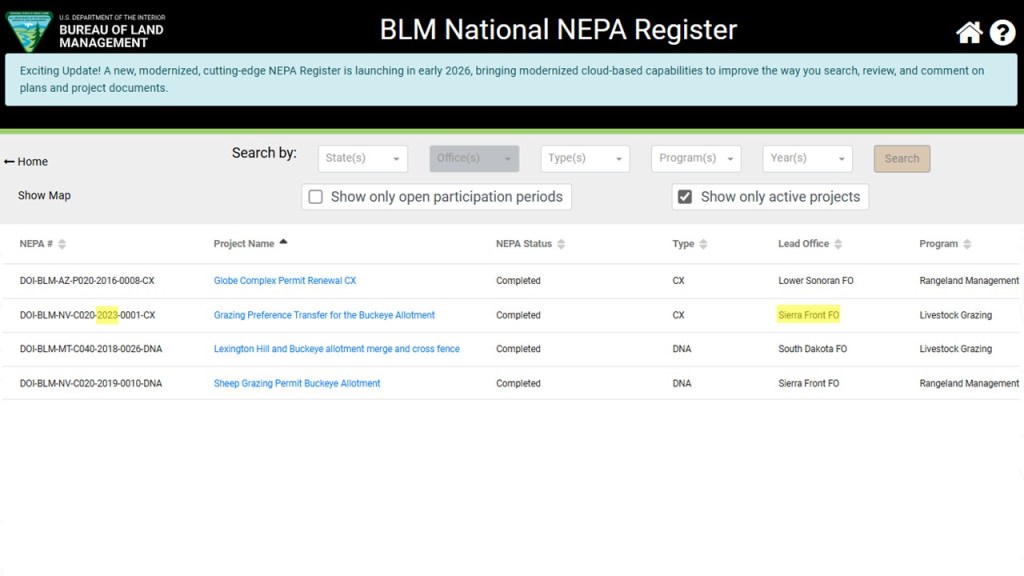
Click this link to search ePlanning for projects involving the Buckeye Allotment, to see if the Campaign Against America’s Wild Horses has asked the BLM to convert its grazing preference to wild horses.
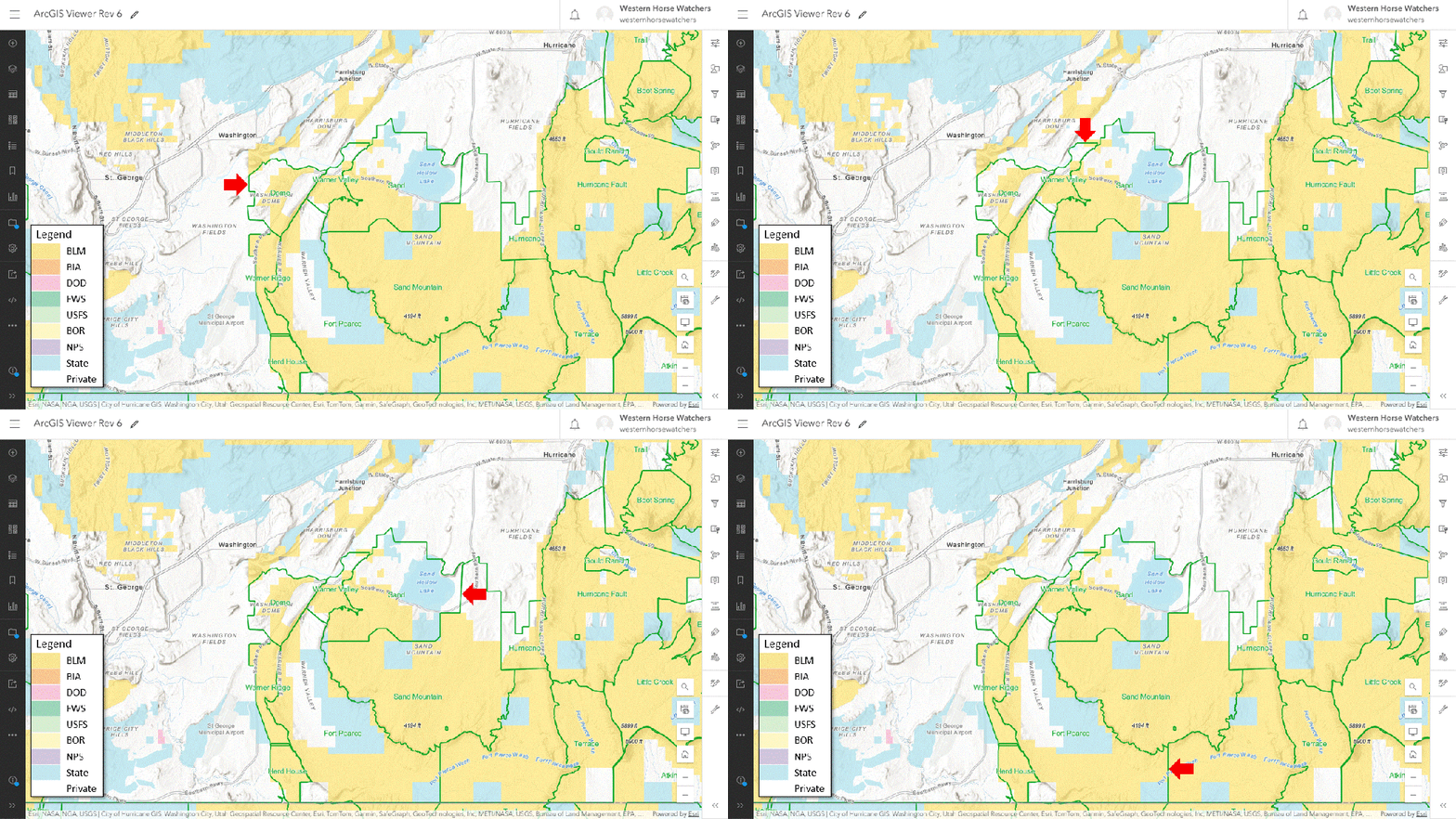
The news release indicates the BLM conveyed 929 public acres to the Washington County Water Conservancy District in exchange for 89 private acres designated as critical habitat for the Mojave desert tortoise.
Figure 3.4 in the Final EA shows the arrangement. The BLM parcel has a purple border and the private parcel is red.
Four allotments were affected by the project but the smallest was hit the hardest.
Table 3.3 in the Final EA gives the acreage and active AUMs.
Warner Valley, consisting of 834 public acres, will lose 700 acres and 119 of 124 active AUMs according to section 3.5.5.1.
It’s not clear what will happen to the Warner remnant.
The EA did not consider the loss in value of the base property tied to the allotment due to a near total loss of grazing preference.





 Western Horse Watchers Association