Lake Pleasant Roundup, Day 51

The incident started on February 5.  Results through March 26:

  • Scope: Lake Pleasant HMA
  • Target: Burros
  • Type: Planned
  • Method: Bait
  • Goals: Gather 400, remove 400
  • Captured: 183, up from 144 on Day 22
  • Shipped: 180, up from 93 on Day 22
  • Released: None
  • Deaths: 3, no change from Day 22
  • Average daily take: 3.6
  • Unaccounted-for animals: 0

The figures above are based on the daily reports.

No activity was reported between February 28 and March 25.

The death rate is 1.6%.

The capture total includes 78 jacks, 80 jennies and 25 foals.

Youngsters represented 13.7% of the animals gathered.

Of the adults, 49.4% were male and 50.6% were female.

The HA and HMA are the same size.  The area is subject to permitted grazing.

  • Forage liberated to date: 1,098 AUMs per year
  • Water liberated to date: 915 gallons per day

There are no plans to treat any of the jennies with fertility control pesticides and return them to the range.

The roundup targets animals that are damaging private property and creating a public safety hazard, purposes for which PZP was not authorized.

The incident supports three tenets of rangeland management.

RELATED: Lake Pleasant Roundup, Day 22.

Lake Pleasant HMA with Allotments 02-06-23

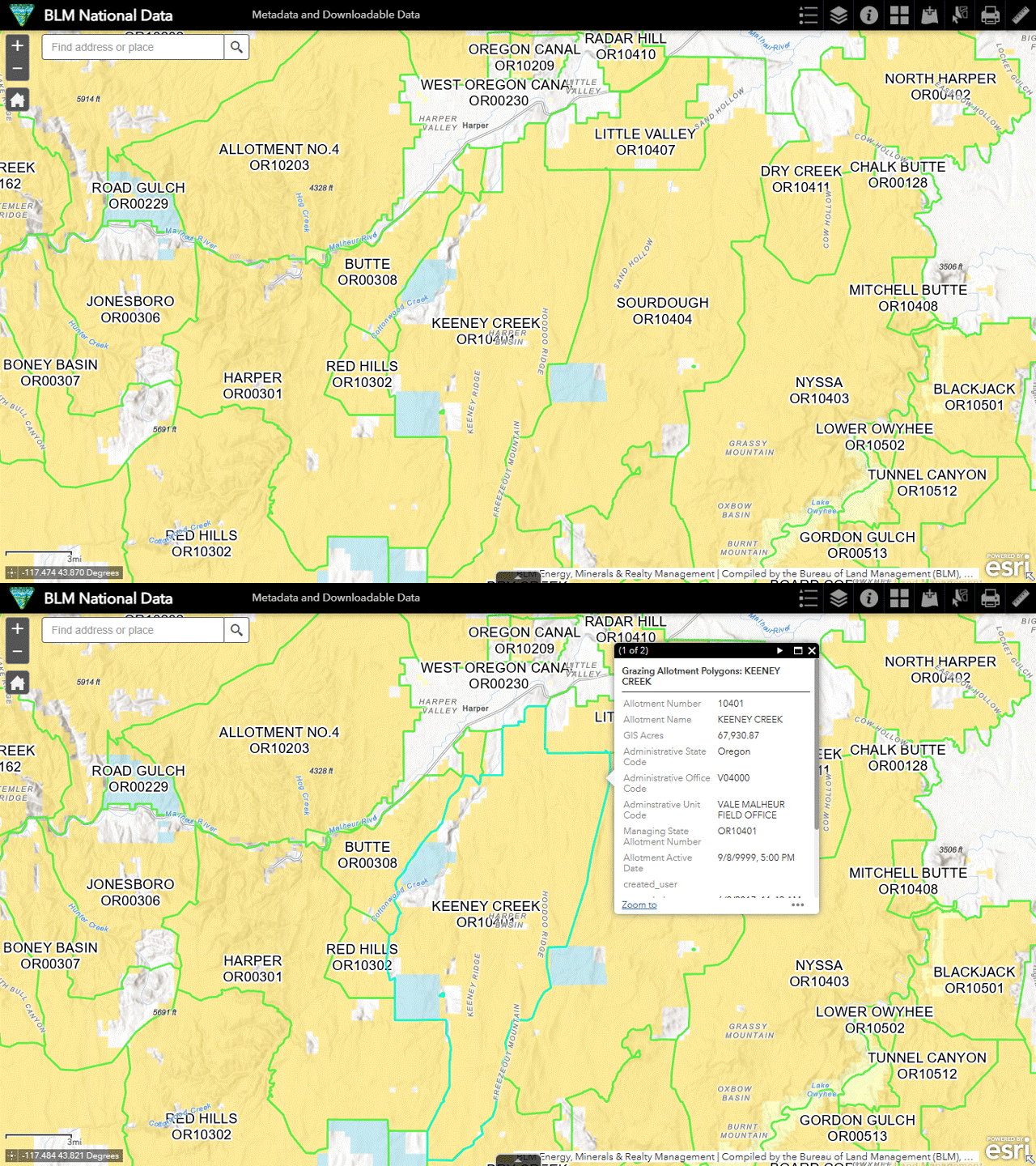
If Keeney Creek Was Managed Principally for Wild Horses

The AML would be 598 and the stocking rate would be 10.1 animals per thousand public acres.

The allotment, located south of Harper, OR, offers 7,180 active AUMs on 59,439 public acres, according to the Allotment Master Report.

The bureaucrats and ranchers tell us that public lands in the western U.S. can only support one wild horse per thousand acres (27,000 animals on 27 million acres).

The advocates reinforce the narrative with their darting programs.

If it was an HMA, the AML would be 60 and 538 horses would be consigned to off-range holding because of permitted grazing.

RELATED: The Allotments Tell the Story: They’re Lying, All of Them.

Keeney Creek Allotment 03-31-24

Side Trips While in Reno for SOWH Conference

The event runs from April 17 to 19 at the Grand Sierra Resort as explained in a March 29 news release.

If you’re tired of being propagandized about HMAPs, fertility control and the wonders of public-lands ranching, not necessarily by the presenters but by other conferees and hangers-on, here are some options for quick getaways:

Velma’s Burial Site – Mountain View Cemetery, along I-80 west of hotel.  Refer to the map in this video.

Virginia City – Go south on 580, take exit 25B and turn left onto State Route 341 about a mile ahead.  When you get to the top you’ll hit a straightaway known as Five Mile Flat, where you may see wild horses.  For a scenic detour through the residential area and a better chance to see some Virginia Range mustangs, turn left onto Cartwright then right onto Lousetown at the fire station.  Lousetown will take you back to 341 and Virginia City.  The best time to see wild horses in this area is May and June.

Tahoe Reno Industrial Center – Go north on 580 from the hotel, then east on I-80 to State Route 439, USA Parkway.  You may see wild horses in this area but few if any foals thanks to the advocates.  Highway 439 runs south to Highway 50, where you can go west to Carson City then north back to the hotel on 580.  As you go west on 50, horses on the right are probably Virginia Range and horses on the left are Pine Nut Mountains but there is some intermixing.  The Pine Nut HMA also features barren mares, courtesy of the advocates.

RELATED: Tough Choices: SOWH&W Conference Overlaps FREES.

Velmas Grave Marker 03-30-24

Court Sends Pancake EA Back to BLM for Further Analysis

The case centered around the absence of a Herd Management Area Plan (HMAP) for the Complex, which would summarize the management goals for the area and the actions required to achieve them.

The judge stated that “Engaging in the decision-making of an HMAP without actually preparing an HMAP could therefore deprive interested parties of the administrative review processes to which they are entitled,” according to a news release on EIN.

What is the overarching goal of rangeland management in areas identified for wild horses and burros?  Ranching superiority, with few exceptions.

HMAPs cannot change that.  Management priorities and resource allocations are documented in the land-use plans which are beyond the scope of the order.

RELATED: Reading the Pancake Tea Leaves.

Foal-Free Friday, Arithmetic for Advocates Edition

The BLM allows 11,987 wild horses and 824 wild burros on 14,032,947 public acres in Nevada, according to the statistics released earlier this week.

The current population is thought to be 28,314 wild horses and 3,804 wild burros.

The Nevada WHR and Marietta WBR are not subject to permitted grazing so let’s deduct their acreage, AMLs and current populations from the totals.

  • Nevada WHR – AML is 500 wild horses, no BLM acreage (land controlled by DoD), current population is 337 horses
  • Marietta WBR – AML is 104 wild burros, 64,466 BLM acres, current population is 38 horses and 556 burros

The management plans for Nevada HMAs allow 11,487 wild horses and 720 wild burros on 13,968,481 public acres, compared to a current population of 27,939 horses and 3,248 burros.

That’s equivalent to 11,487 + (720 ÷ 2) = 11,847 horses allowed by plan on 13,968,481 public acres, compared to a current population of 27,939 + (3,248 ÷ 2) = 29,563.

The stocking rate allowed by plan is 11,847 ÷ 13,968,481 × 1.000 = 0.8 wild horses per thousand public acres.

The bureaucrats and ranchers tell us that public lands in the western U.S. can only support one wild horse per thousand acres (27,000 animals on 27 million acres), so Nevada comes up on the short side of the target.

The current stocking rate is 29,563 ÷ 13,968,481 × 1,000 = 2.1 wild horses per thousand public acres.

We know from previous discussion that BLM allotments in Nevada can support 4.3 wild horses per thousand public acres, for an estimated carrying capacity of 0.8 + 4.3 = 5.1 wild horses per thousand public acres, which surpasses the current stocking rate by a factor of 2.4.

You don’t have a wild horse problem, you have a resource management problem.

For every horse allowed on Nevada public lands, five have been consigned to off-range holding because of permitted grazing.

The HMAs in Nevada should be able to support an additional 60,000 wild horses.

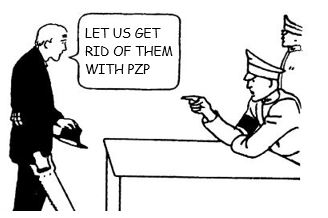
The advocates couldn’t care less.  They want to end wild horse reproduction, not public-lands ranching.
Protect Wild Horses from Advocates 08-29-21

To wit, here is the arithmetic they understand and use on a daily basis:

0.5 cc PZP solution + 0.5 cc modified Freund’s Complete Adjuvant = 1 dose of primer

0.5 cc PZP solution + 0.5 cc modified Freund’s Incomplete Adjuvant = 1 dose of booster

Give one primer and five to six boosters until the mares are sterile.

RELATED; Foal-Free Friday, Holier Than Thou Edition.
Pesticides R Us Better Way 11-07-23

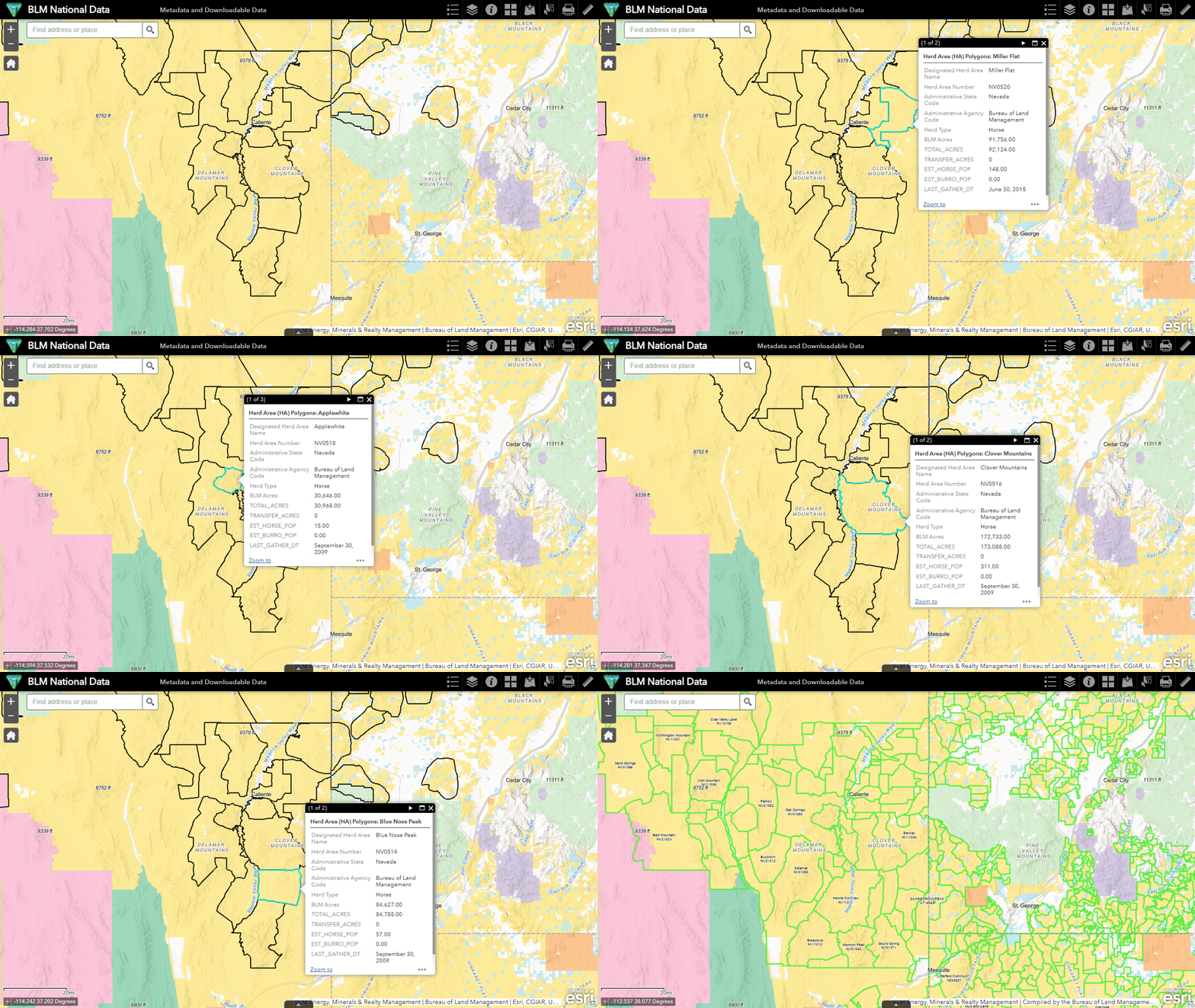
Caliente Roundup Announced

The incident will begin on or about April 1 and will not be open to public observation according to today’s news release.

Horses will be drawn into the traps with bait.

The capture and removal goals are identical at 350 each.

There are no plans to treat any of the mares with fertility control pesticides and return them to the range.

The Complex consists of nine former HMAs in eastern Nevada.

It’s unfit for wild horses but currently supports a population of 1,022 plus an untold number of privately owned livestock.

Captured animals will be taken to the off-range corrals in Axtell, Delta and Sutherland Utah.

Receiving only lukewarm support from Congress in the form of FLPMA, PRIA and the Burns Amendment, the bureaucrats have embarked on a long-term plan of nullifying the WHB Act through the planning process, one HMA at a time.

Caliente Complex with Allotments 03-28-24

Nevada’s Fragile Landscape Can’t Handle 33,000 Wild Horses?

So says the writer of an opinion piece in today’s edition of the Reno Gazette Journal.

But it can support privately owned livestock equivalent to 173,000 wild horses!

BLM allotments in the state offer 2,081,076 active AUMs on 40,194,360 public acres according to the Allotment Information Report at RAS.

That’s equivalent to 173,423 wild horses on 40,194,360 acres, or 4.3 wild horses per thousand public acres.

This brings more distress to the bureaucrats and ranchers, who claim that public lands in the western U.S can only support one wild horse per thousand acres (27,000 animals on 27 million acres).

To find the active AUMs, add the numbers in column Q of the unfiltered dataset.

You’ll have to filter the data for duplicate rows to get the total public acreage.

The author of the commentary affiliates with the Coalition for Healthy Nevada Lands.

RELATED: Ranchers Fighting Proxy War Through Wildlife Groups?

McGee Mountain Roundup Over

The incident concluded today with 22 burros captured, 19 shipped, none released and three dead.

There were no unaccounted-for animals.

The death rate was 13.6%.

The capture total included six jacks, fifteen jennies and one foal.

Youngsters represented 4.5% of the animals gathered.

Of the adults, 28.6% were male and 71.4% were female.

There were no plans to treat any of the jennies with fertility control pesticides and return them to the range.

The roundup supported three tenets of rangeland management.

RELATED: McGee Mountain Roundup Starts Next Week.

UPDATE: The BLM news release said the incident restored a thriving natural ecological balance and multiple-use relationship, codewords for maximizing rancher prosperity.

BLM Releases 2024 Wild Horse and Burro Population Dataset

There were an estimated 73,520 wild horses and burros on BLM-managed public lands as of March 1, compared to 82,883 animals at the same time last year, according to today’s news release.

The number of animals in off-range holding was 64,382 as of January 22.

Between 2020 and 2023, the agency removed about 50,000 wild horses and burros from said lands, compared to 27,000 animals between 2016 and 2019.

Overpopulation means more horses and burros than allowed by plan, not necessarily more horses and burros than the land can support.

AMLs are small relative to the available resources because most of them have been assigned to privately owned livestock—a practice the advocates should be fighting instead of perpetuating.

RELATED: FY24 to See More Horses and Burros Off the Range Than On?

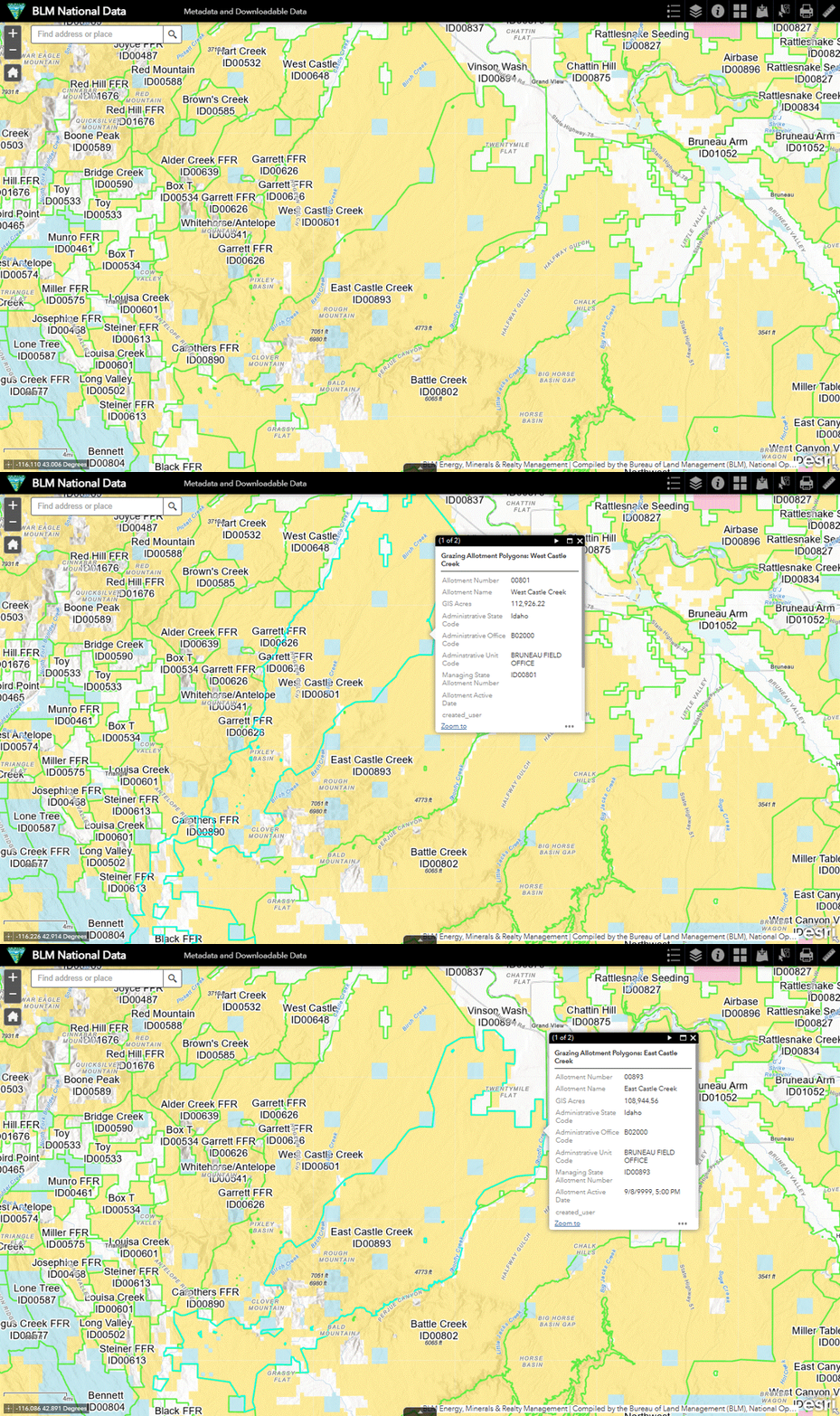
If East and West Castle Creek Were a Wild Horse Area

They would have an AML of 1,438 and a stocking rate of 7.4 wild horses per thousand public acres.

The allotments, located west of Bruneau, ID, offer a combined 17,251 active AUMs on 195,240 public acres, according to the Allotment Master Report.

The bureaucrats and ranchers claim that public lands in the western U.S. can only support one wild horse per thousand acres (27,000 animals on 27 million acres).

The advocates bolster the narrative with their darting programs.

If it was an HMA, the AML would be around 200 and 1,238 wild horses would be consigned to off-range holding because of permitted grazing.

RELATED: The Allotments Tell the Story: They’re Lying, All of Them.

East and West Castle Creek Allotments 03-24-24

If Battle Creek Was a Wild Horse Area

It would have an AML of 974 and a stocking rate of 7.6 wild horses per thousand public acres.

The allotment, located west of Bruneau, ID, offers 11,682 active AUMs on 127,954 public acres, according to the Allotment Master Report.

The bureaucrats and ranchers claim that public lands in the western U.S. can only support one wild horse per thousand acres (27,000 animals on 27 million acres).

The advocates prop up the fairy tale with their darting programs.

If it was an HMA, the AML would be around 130 and 844 wild horses would be consigned to off-range holding because of permitted grazing.

Almost 98% of the AUMs go to J.R. Simplot.

RELATED: The Allotments Tell the Story: They’re Lying, All of Them.

Battle Creek Allotment 03-23-24

If Big Desert Sheep Was a Wild Horse Area

It would have an AML of 2,492 and a stocking rate of 11.1 wild horses per thousand public acres.

The allotment offers 29,899 active AUMs on 224,268 public acres adjacent to Craters of the Moon National Park, according to the Allotment Master Report.

The bureaucrats and ranchers insist that public lands in the western U.S. can only support one wild horse per thousand acres (27,000 animals on 27 million acres).

The advocates ratify the narrative through their darting programs.

If it was an HMA, the AML would be around 225 and 2,267 wild horses would be consigned to off-range holding because of permitted grazing.

RELATED: The Allotments Tell the Story: They’re Lying, All of Them.

Big Desert Sheep Allotment 03-21-24

McGee Mountain Roundup, Day 3

The incident started on March 18.  Results through March 20:

  • Scope: McGee Mountain HMA
  • Target: Burros
  • Type: Planned
  • Method: Bait
  • Goals: Gather 22, remove 22
  • Captured: 11, up from 3 on Day 1
  • Shipped: None
  • Released: None
  • Deaths: None
  • Average daily take: 3.7
  • Unaccounted-for animals: 11

The figures above are based on the daily reports.

Youngsters represented 9.1% of the animals gathered.

Of the adults, 20% were male and 80% were female.

The HMA is smaller than the HA.  The area is subject to permitted grazing.

  • Forage liberated to date: 66 AUMs per year
  • Water liberated to date: 55 gallons per day

The roundup supports three tenets of rangeland management.

RELATED: McGee Mountain Roundup in Progress.

McGee Mountain HMA with Allotments 03-13-24

If Indian Creek Was a Wild Horse Area

It would have an AML of 710 and a stocking rate of three wild horses per thousand public acres.

The allotment offers 8,518 active AUMs on 234,680 public acres adjacent to Canyonlands National Park, according to the Allotment Master Report.

The bureaucrats and ranchers tell us that public lands in the western U.S. can only support one wild horse per thousand acres (27,000 animals on 27 million acres).

The advocates indicate their agreement through their darting programs.

If it was an HMA, the AML would be around 235 and 475 wild horses would be consigned to off-range holding because of permitted grazing.

The Nature Conservancy receives all of the authorized forage in the allotment, on which it runs cattle, probably in connection with Dugout Ranch.

RELATED: The Allotments Tell the Story: They’re Lying, All of Them.

Indian Creek Allotment 03-20-24

Two Men Admit Guilt in Deaths of SoCal Wild Burros

The incident occurred north of Yermo, CA in November 2021 and does not appear to be related to the loss of the Clark Mountain burros, investigation of which continues.

Three animals were killed according to a DOJ news release.

The pleas include one felony count of possession of an unregistered short-barreled rifle and one misdemeanor count of maliciously causing the death of a burro on public lands.

They face up to ten years in federal prison for the firearm charges and up to one year in federal prison for the burro deaths.

Sentencing was set for July 8.