The map at Nevada Fire Info tells the story.
Incident command transitioning tomorrow according to InciWeb.
RELATED: Where Is the Davis Fire?
Western Horse Watchers Association
Exposing the Hypocrisy, Lies and Incompetence of the Wild Horse Advocates
On the range
The map at Nevada Fire Info tells the story.
Incident command transitioning tomorrow according to InciWeb.
RELATED: Where Is the Davis Fire?
The map at Nevada Fire Info shows the fire has spread to the north-northeast on the west side of I-580.
The National Data Viewer shows land ownership. Click on image to open in new tab.
RELATED: Davis Fire Now on InciWeb.
The site initiated coverage last night.
A report by Carson Now indicates wild horses moving near Geiger Grade, the main road from south Reno up to the Highlands.
Your host received another email from NV Energy saying that power had been restored, hopefully to the entire area.
Despite assurances by Jay Kirkpatrick that PZP would only be used to slow population growth, the advocates have ignored his warnings about long-term use are now using the pesticide beyond its five-year limit.
How long will they be satisfied with near-zero birth rates?
Attrition is a slow process and the bureaucrats and ranchers want quick results, the domain of motorized removal.
The announcement earlier this week of the Little Book Cliffs roundup echoed their frustration: “Fertility treatment alone cannot reduce wild horse herd populations.”
Why do they want small herds?
Because the horses consume forage that belongs to the ranchers.
Public lands are not managed for the benefit of the American people as specified in FLPMA, but for a select few.
Unabashed, the advocates are now actively helping the bureaucrats realize their goal of ranching superiority in the lawful homes of wild horses, sometimes referred to as achieving and maintaining AMLs.
With few if any new foals hitting the ground, the average age of the herds is increasing, along with the death rate. But that’s not good enough.
The accidental poisoning last month of dozens of rodeo horses indicates there are other ways to achieve the desired results.
An August 30 report by Tri-State Livestock News noted that less than one half a gram of monensin can be fatal to a horse.
In their desire to win the approval of the bureaucrats and ranchers and dominate the removal industry, how long before the advocates experiment with substances that hasten death?
Liberals are on the forefront of society’s downward spiral and most wild horse advocates are liberals.
RELATED: Foal-Free Friday, Filling the Vacuum Edition.

The city council voted unanimously this week in favor of a resolution urging the Park Service to preserve the wild horses in the park, according to a story by KX News.
Although the agency cancelled the Livestock Plan earlier this year, there are still some concerns that it wants the horses removed.
The incident will begin on or about September 11 according to today’s news release.
The capture and removal goals are 130 and 100, respectively.
The pre-gather population is not known.
A helicopter will push the horses into the trap and operations will be open to public observation.
The HMA covers 36,100 total acres in western Colorado, including 35,178 public acres.
The 150 horses allowed by plan require 1,800 AUMs per year.
The stocking rate allowed by plan is 4.3 wild horses per thousand public acres.
Mares returned to the range will be treated with fertility control pesticides.
In a move that will likely anger the advocates, the news release said “Fertility treatment alone cannot reduce wild horse herd populations.”

Animals identified for removal will be taken to the off-range corrals in Cañon City.
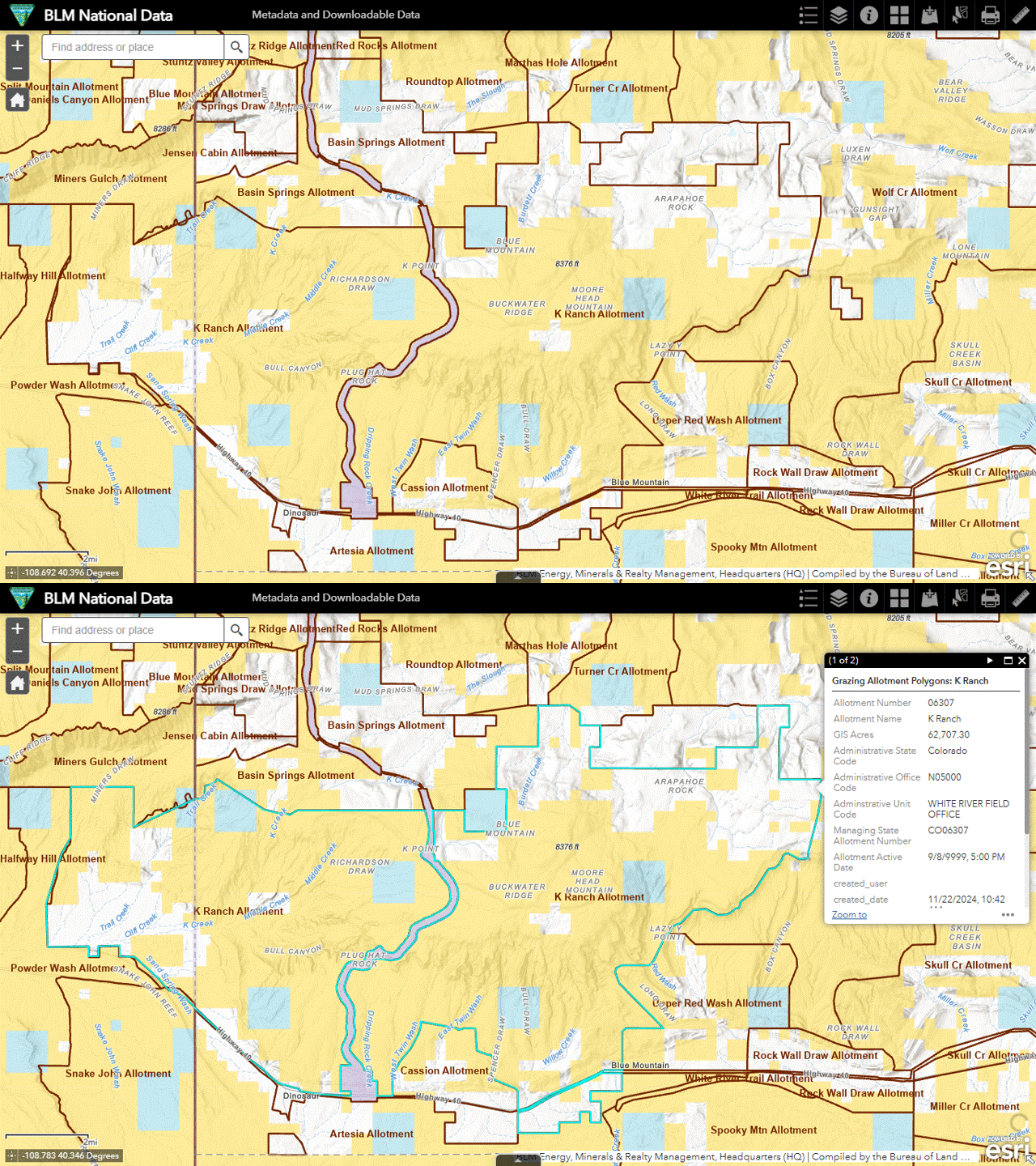
The HMA is not subject to permitted grazing but surrounding lands are, denoted by green borders in the following map.
BLM allotments in the state support livestock equivalent to 49,546 wild horses on 7,448,367 public acres, or 6.7 wild horses per thousand public acres.
The incident concluded today with 109 horses captured, 106 shipped, none released and three dead.
There were no unaccounted-for animals.
The capture and removal goals were 100 each.
The death rate was 2.8%.
The average daily take was 21.8.
The capture total included 50 stallions, 40 mares and 19 foals.
Youngsters represented 17.4% of the animals gathered.
Of the adults, 55.6% were male and 44.4% were female.
Body condition scores were not given.
There were no plans to treat any of the mares with fertility control pesticides and return them to the range, a huge disappointment to the advocates.
The roundup liberated 1,308 AUMs per year, giving new hope to the permittees.
RELATED: Maverick-Medicine Emergency Roundup Announced.
UPDATE: The September 3 news release did not indicate if other animals, including privately owned livestock, were suffering from lack of water.
The ranch covers 23,665 total acres in southern Montana, including 13,800 deeded acres, according to the listing.
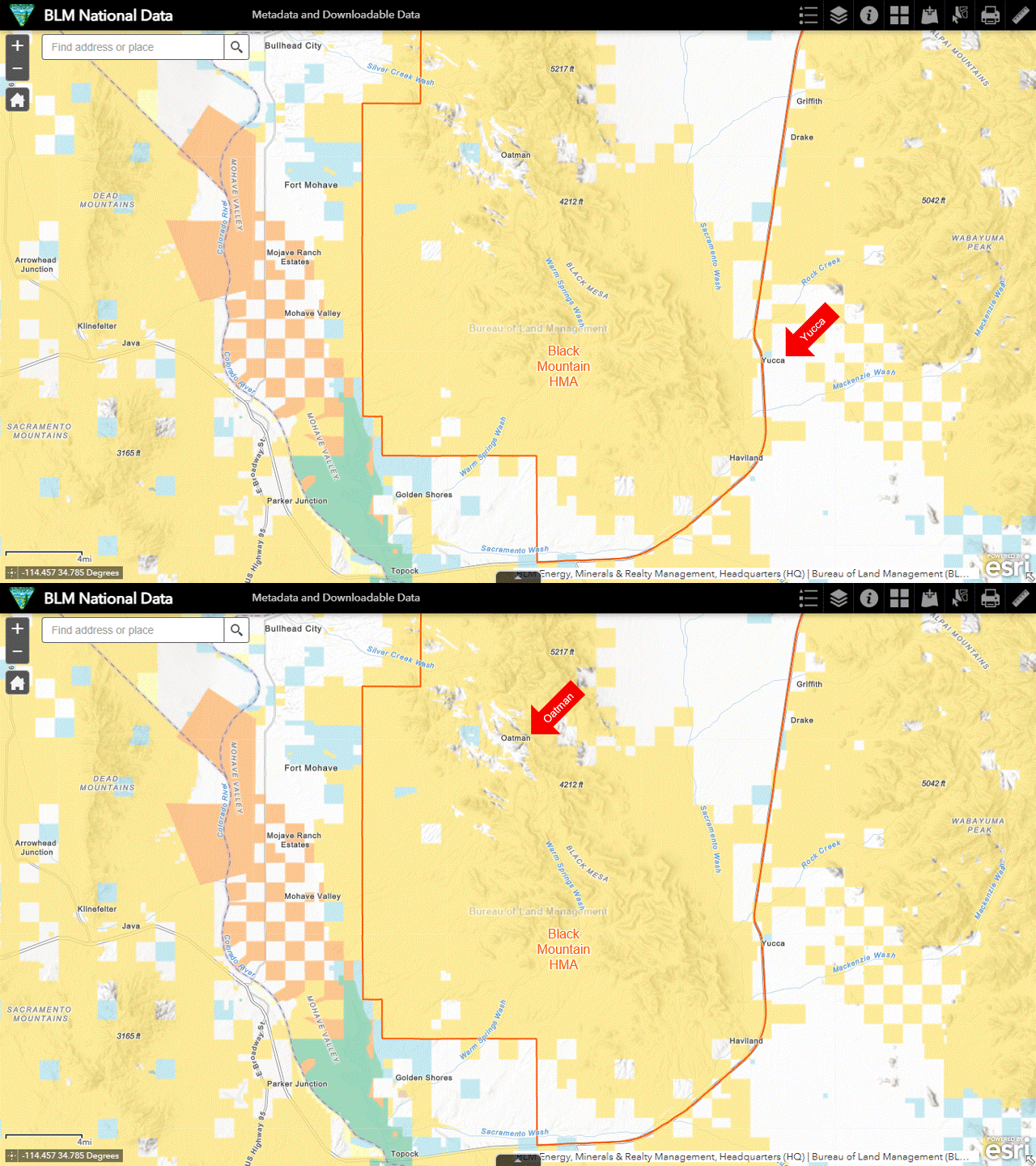
The description indicates it has preference on the Rancholme Allotment but the map suggests it also has access to Marosok.
The Allotment Master Report ties both parcels to the same permittee.
The land ratio is too low to make the property attractive from a wild horse viewpoint.
You must acquire 13,800 deeded acres to access 4,638 public acres, or approximately three deeded acres per public acre. You want it to be the other way around.
The idea is to buy small private parcels attached to larger public parcels.
Then convert the grazing preference to horses as American Prairie did for bison elsewhere in the state.
In the August 28 edition: Four Mile, Sands Basin and Maverick-Medicine have been added to the emergency/nuisance section and Twin Peaks has been marked TBA.
A schedule for FY25, which begins on October 1, has not been posted to the gather and fertility control page.
RELATED: BLM Updates Roundup Schedule.
The incident started on August 29. Results through August 31:
The figures above are based on the daily reports.
The capture goal has been reached.
The total includes 45 stallions, 37 mares and 19 foals.
Youngsters represented 18.8% of the animals gathered.
Of the adults, 54.9% were male and 45.1% were female.
Body condition scores were not given.
The location of the trap site is not known.
The HMA is subject to permitted grazing. Resources liberated to date:
There are no plans to treat any of mares with fertility control pesticides and return them to the range.
The incident started on August 29 with 15 horses captured, none shipped, none released and no deaths.
The one-day event concluded on August 29 with 36 horses captured, 36 shipped, none released and no deaths.
There were no unaccounted-for animals.
The capture total included 17 stallions, 14 mares and five foals.
The status of the grazing allotments affected by the fire and the availability of forage for livestock were not discussed in the August 29 news release.
RELATED: Sands Basin Emergency Roundup Next Week.
The one-day event concluded on August 27 with 38 horses captured, 38 shipped, none released and no deaths.
There were no unaccounted-for animals.
The capture total included 20 stallions, 15 mares and three foals.
The status of the grazing allotments affected by the fire and the availability of forage for livestock were not discussed in the August 29 news release.
RELATED: Four Mile Emergency Roundup Next Week.
The incident started today with 36 horses captured, 36 shipped, none released and no deaths.
RELATED: Sands Basin Emergency Roundup Next Week.
The incident started today with 38 horses captured, 38 shipped, none released and no deaths.
The group that bungled the rescue will take them according to a story by KOLO News.
The report did not indicate if the group received financial support from its partner in the fiasco, the Campaign Against America’s Wild Horses.
An inventory was not provided.
The number of stallions that received permanent reproductive organ injuries is not known, nor is the number of nonviable mares.
The horses cannot be returned to the range per the agreement with NDA.
RELATED: Advocates Knew NDA Would Remove Sunny Hills Wild Horses.
The incident concluded on August 24 with 422 horses captured, 401 shipped, 13 released and six dead according to the daily reports.
There were two unaccounted-for animals.
The sidebar at the gather page says 403 horses shipped, bringing the count to zero.
The capture and removal goals were 420 and 360, respectively.
The death rate was 1.4%.
The average daily take was 35.2.
The capture total included 139 stallions, 196 mares and 87 foals.
Youngsters represented 20.6% of the animals gathered.
Of the adults, 41.5% were male and 58.5% were female.
The July 31 schedule indicates that 30 mares will be treated with GonaCon Equine and be returned to the range with 30 stallions but this is not discussed at the gather page.
The roundup supported three tenets of rangeland management.
RELATED: Sulphur Roundup Announced.
The HMA was on the June 3 schedule with Triple B, but they were dropped in the July 31 update.
Today’s new release indicates that 100 wild horses will be removed starting this week due to inadequate water.
The horses will be drawn into the trap with bait and the incident will not be open to public observation.
Captured animals will be taken to the Indian Lakes Off-Range Corrals in Fallon.
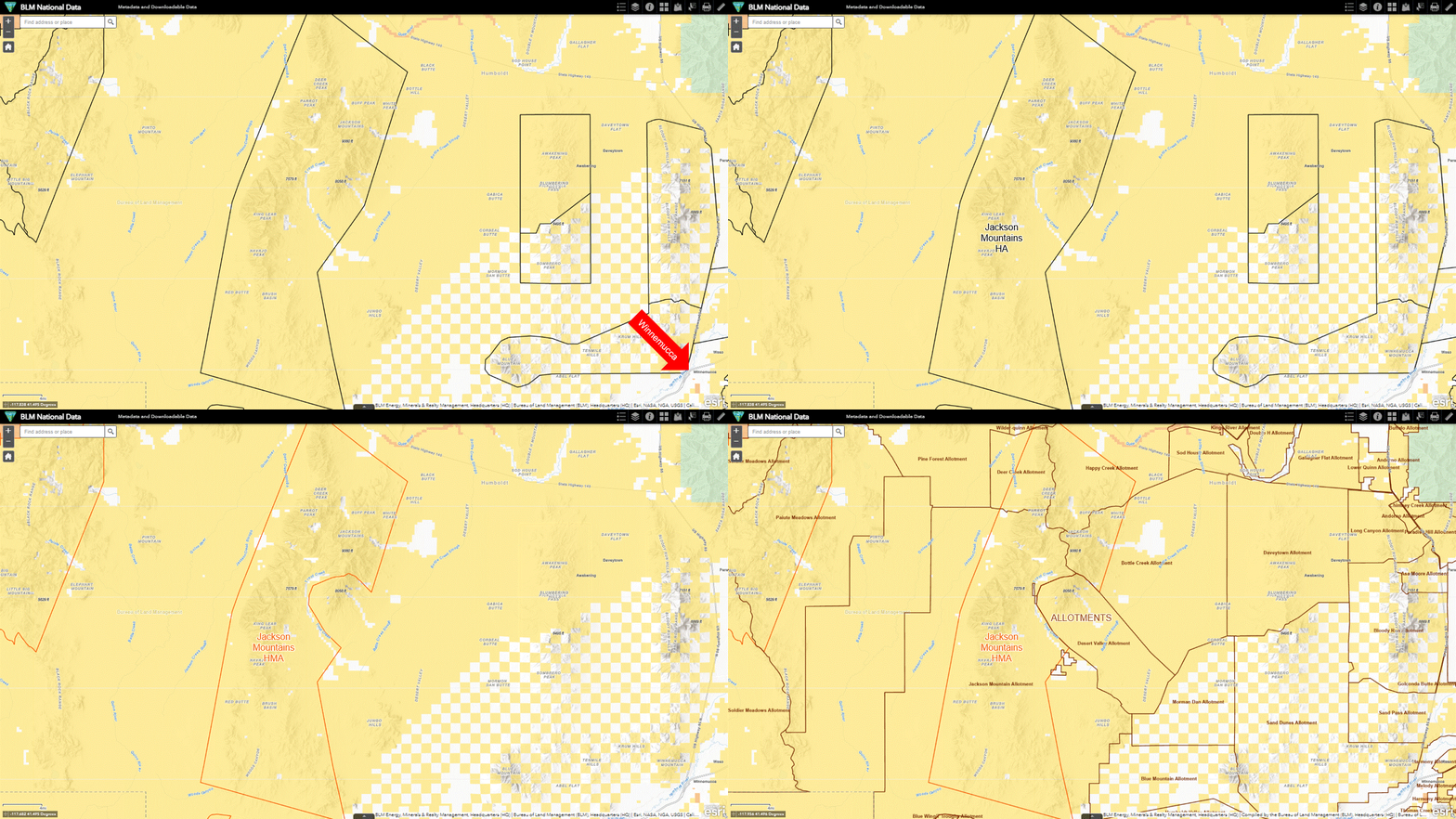
Only one of the overlapping allotments does not have active AUMs according to the Allotment Master Report.