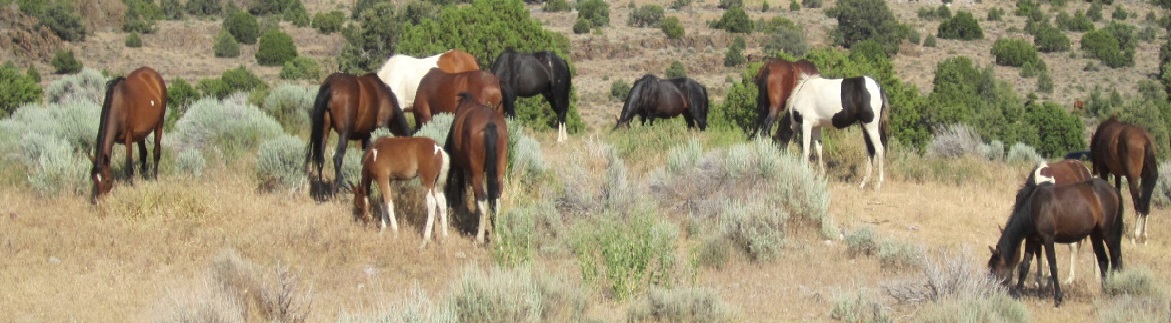
On the Pine Nut Mountains and Virginia Range. H/T Lauri Duke.
Category: Range
On the range
Sand Wash Horses Share Range with Elk
Short one by HighStakesRanch showing wildlife on Sand Wash Basin HMA. These guys hauled water to the horses during the drought of 2018.
Observing the Devil’s Garden Wild Horse Roundup
Video by Crystal Leslie provides a first-hand account of gather in October, 2018.
RELATED: Devil’s Garden Horses Get Short End of Stick, Livestock Grazing in California.
PZP Zealotry on a Global Scale
Video by the Botstiber Institute for Wildlife Fertility Control, the Bill and Melinda Gates Foundation of the animal kingdom, the Population Bombers of the wild horse world, spreading the serpent’s venom across the land.
They don’t allow comments on their YouTube channel. Are they worried that someone might disagree with them?
The video provides a ‘who’s who’ of contraceptive advocacy on western rangelands.
Virginia Range Mustangs Still Visiting Watering Station
Old man winter has taken the high ground but the horses seem to just shrug it off.


Stallion Moves ‘Em Out
Free-roaming horses on the Virginia Range, 12/31/18. Temperature around 25 ºF with a gusty north wind. Elevation 6,500 feet.
Fort Polk Horses Gunned Down
Five wild horses were killed in late December at the Peason Ridge Wildlife Management Area in western Louisiana, according to a report published today by Pegasus Equine Guardian Associates. The incident was described as intentional, not a hunting accident.
RELATED: Wild Horse Removal Continues at Fort Polk.
Picnic at Pahrump
Short one by Deborah McCorkle of wild horses near Pahrump, NV. She says they’re always together. “They eat the grass in the neighborhood and are gone. People clean up after them and there are signs posted to beware of the burros and wild horses.”
Arizona Rescue Takes In Devil’s Garden Horses
Nine former wild horses, removed in October from the Devil’s Garden Plateau WHT, have been placed with the Equine Voices Rescue & Sanctuary in Amado. Refer to this report posted yesterday by KVOA-TV, the NBC affiliate in Tucson.
RELATED: Forest Service Delays Sale of Devil’s Garden Horses.
‘Swamp Cancer’ Claims More Chincoteague Ponies
Four horses infected with the disease, formally known as pythiosis, did not respond to treatment and were put down last week, according to a syndicated report that appeared yesterday in the Winston-Salem Journal.
A veterinarian interviewed for the piece suggested that the ailment was spreading northward (from southern states) because of a ‘changing climate.’ Good grief.
Mustang Monday
On Big Summit WHT. Not a fight, just horses being horses. H/T Joe Hudspeth.
In Search of the Salt River Horses
They’re overpopulated, don’t ya’ know? H/T Carol & Gary’s See America Tour.
Big Bands on Onaqui Mountains
No, it’s not Glenn Miller’s birthday. H/T Flyin T Hangin A.
RELATED: BLM Puts Crosshairs On Onaqui Mountain Horses.
Mustangs Share Trail with Hiker
On the south edge of Little Bookcliffs WHR. H/T Dylan Brewer.
Volunteers Seek Fencing for Sand Wash Horses
Commissioners in Moffat County, CO are concerned about public safety on state route 318 due to recent collisions between vehicles and wild horses. Personnel from Wild Horse Warriors have asked for fencing but officials want a solution that satisfies all stakeholders. Refer to this story, posted today by the Craig Press.
On Her Timeline
Momma mustang on Christmas Day, freeze mark obscured by winter coat. Still can’t touch her. Worth the wait.

Heber Management Plan Drafted
A working group, chartered by Arizona State University, has created a blueprint for managing the 19,700 acre Heber Wild Horse Territory, according to a report that appeared today in the White Mountain Independent of Show Low, AZ.
The proposal, assembled by a diverse group of citizens under the guidance of professional facilitators, will be reviewed by the Forest Service.
A management plan was mandated in 2007 when the WHT was established. The goal is to balance the needs of horses, livestock and wildlife relative to the available resources.
Approximately 300 wild horses live in the territory, for a population density of 15 animals per thousand acres. That figure differs appreciably from the typical one animal per thousand acres on HMAs, many of which lie in the Great Basin.
The article did not indicate how many cattle are allowed in the WHT.
“There is also perception that ranchers don’t want any horses on the landscape because of alleged overgrazing from horses that impacts cattle forage abundance, water, etc.”
It’s not a perception, it’s the truth.
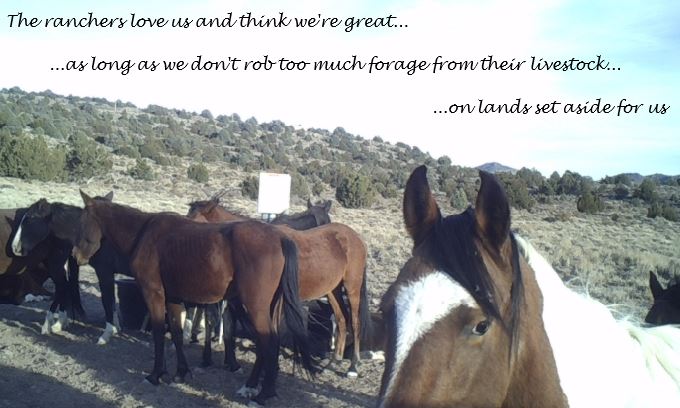
Things may turn out well for the horses if the stakeholders and regulatory agencies remember that’s it’s a HORSE TERRITORY not a cow territory.
RELATED: Conflict Between Livestock and Horses Plays Out at Heber WHT.
Placitas Horse Freed from Gully
A wild horse trapped in an arroyo near Placitas, NM was rescued by volunteers who called in a backhoe to cut a ramp so the horse could climb out. H/T JD Reynolds.
Mustang Monday
On Sand Wash Basin HMA. H/T High Stakes Ranch.

