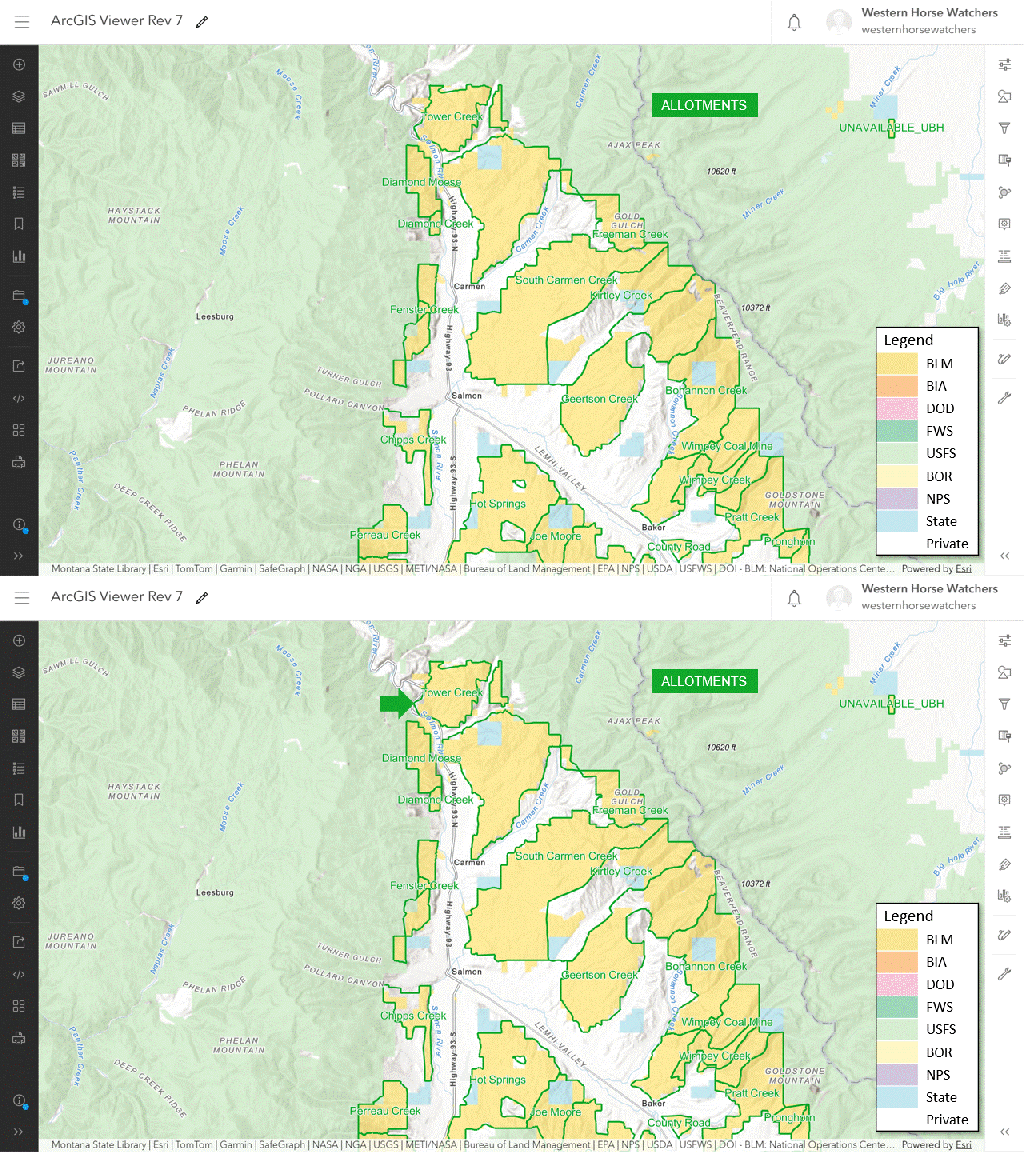
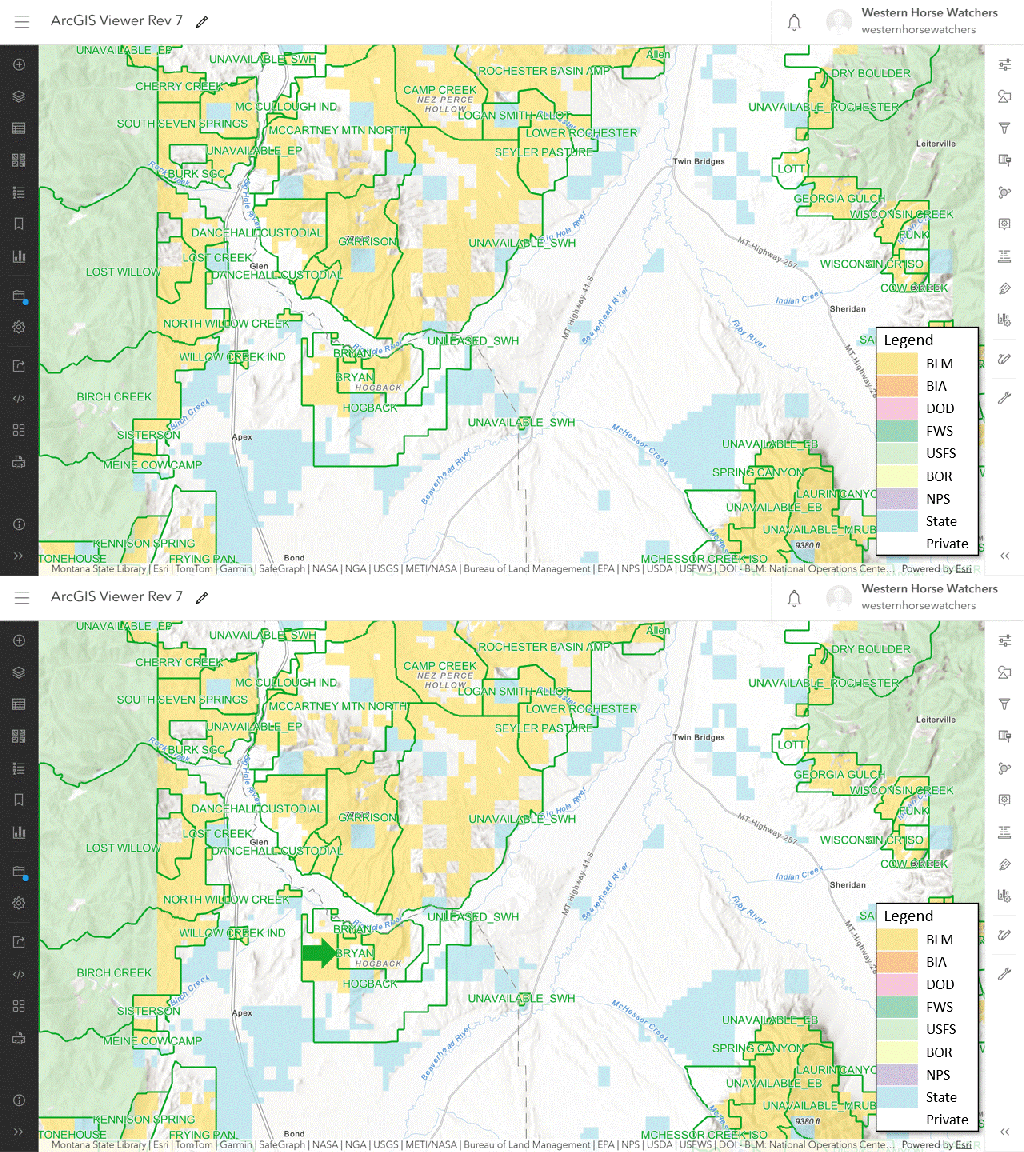
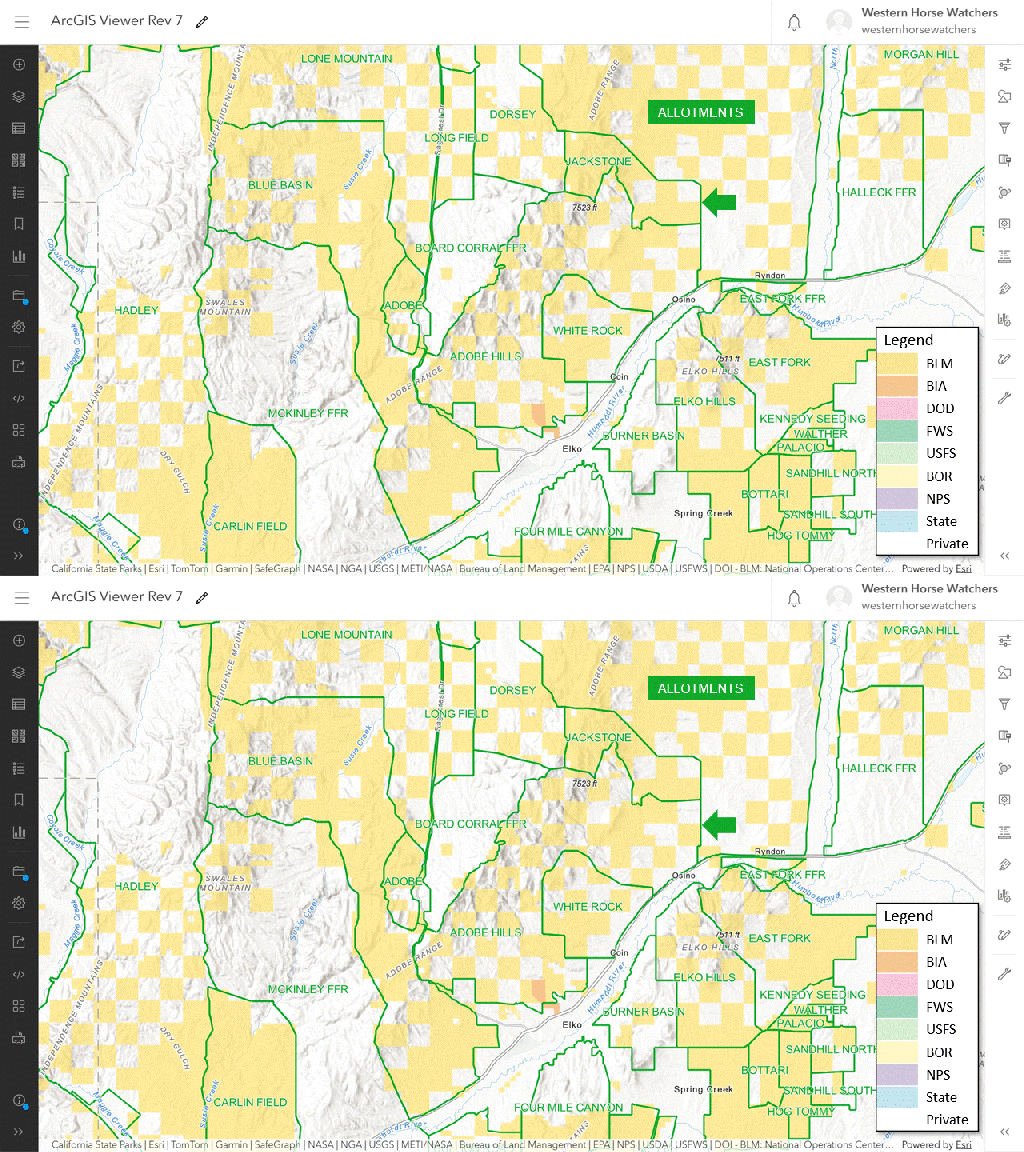
The allotment is too small but nearly 1,500 acres will be treated for cheatgrass next year according to a BLM news release.
Your faithful public servants claim that rangeland health will deteriorate if wild horse populations exceed one animal per thousand acres but the allotment supports livestock equivalent to three wild horses per thousand acres and it’s in the Maintain category.
The Range Creek HMA, with a target stocking rate of 2.9 wild horses per thousand public acres, is a few miles to the east.
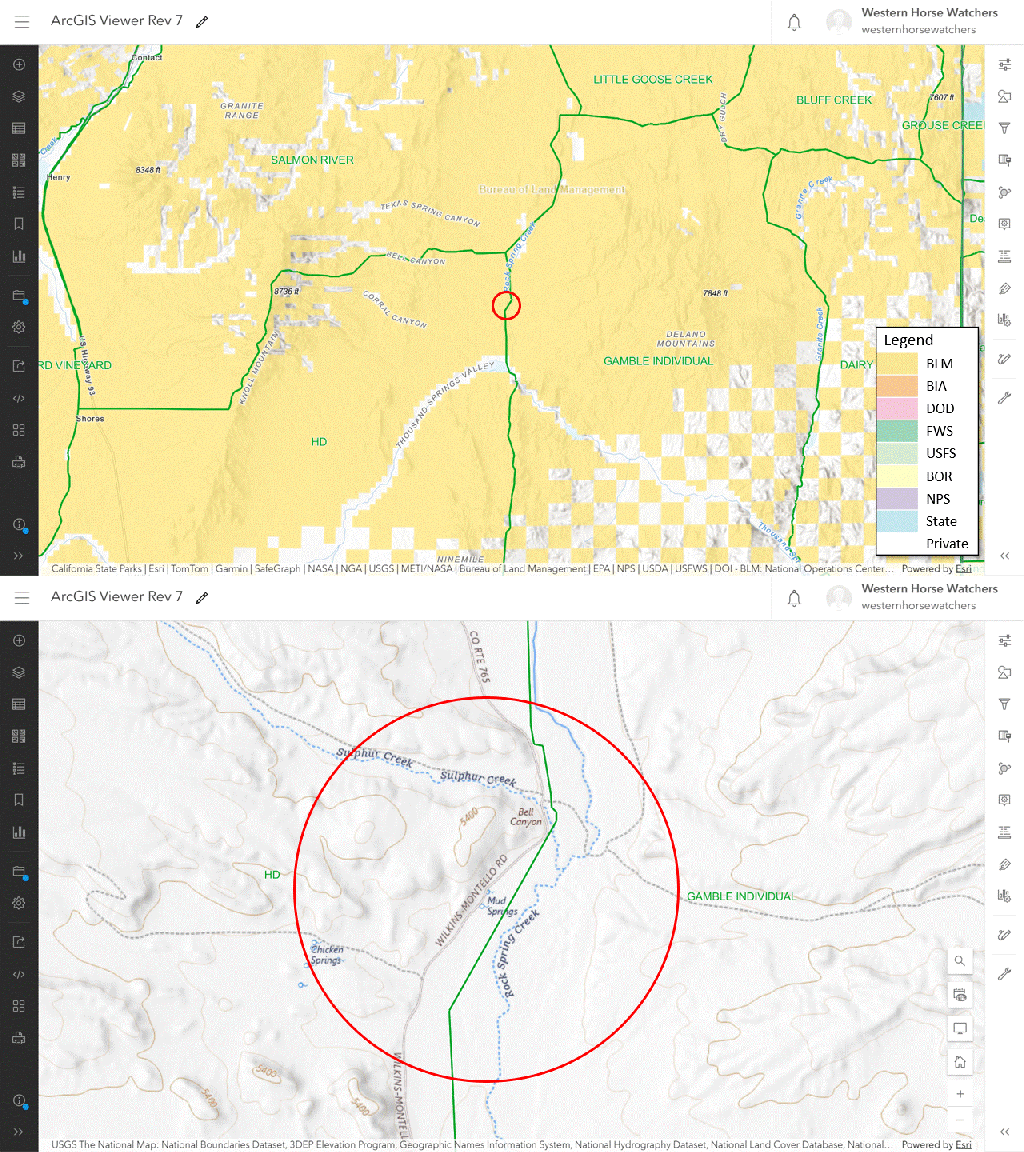
Remnants of the old spa are on deeded acreage in the Montezuma Allotment, between the Paymaster and Montezuma Peak HMAs.
The PLSS layer in the ArcGIS Viewer indicates the property covers two 40-acre parcels in section 26 of T1S R41E, MDB&M.
The spa is in the southwest quadrant of the easterly parcel.
The allotment master report puts forage availability on the public lands at 13.6 AUMs per year per thousand public acres, barely enough to support one wild horse or two wild burros per thousand acres.
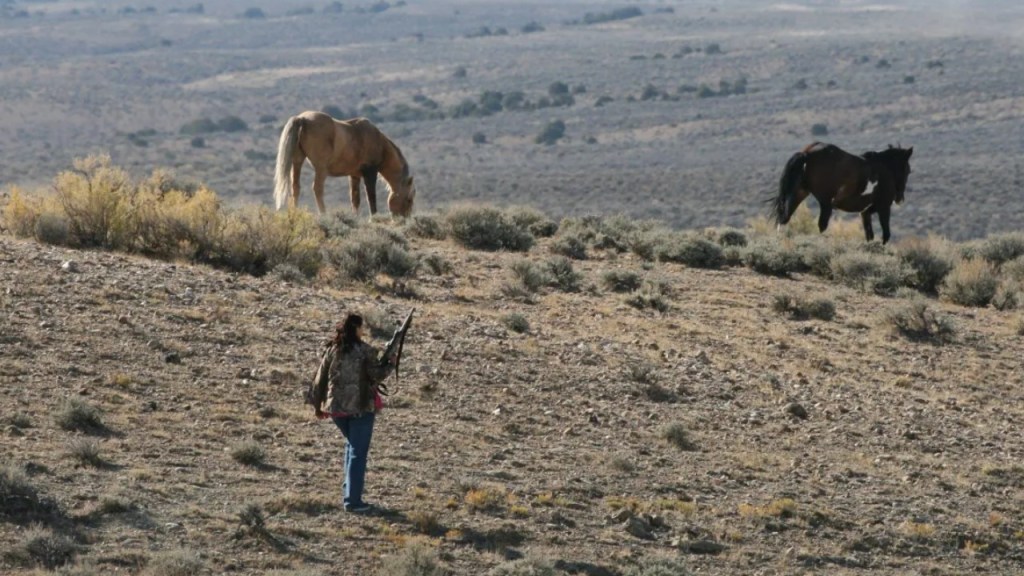
The landscape and animals are documented in this video by Windy Bill.
W Bar Ranch covers 23,894 total acres according to the agent’s listing, including 1,618 deeded acres, 2,390 state acres and 19,886 BLM acres.
The numbers are very close to those in the allotment master report for Cornucopia Ranch, located a few miles south of Piñon, NM.
The allotment is currently permitted for cattle according to the authorization use report, with a twelve-month grazing season.
The permittee receives 5,032 active AUMs per year, enough to support 419 wild horses.
The stocking rate would be 21.1 wild horses per thousand public acres, despite claims by your faithful public servants that public lands in the western U.S. can only support one wild horse per thousand acres.
The land ratio is good, 17 public acres per deeded acre.
The property might be suitable as a wild horse refuge, saving taxpayers 419 × 6 × 365 = $917,610 per year.
The simple payout period would be 4.4 years.
Wild horses can be placed on public lands not identified for their use by acquiring base properties tied to one or more grazing allotments and flipping the preference to horses.
The advocates could be investing in such projects, which would likely gain value over time, instead of wasting your donations on programs that benefit ranchers.
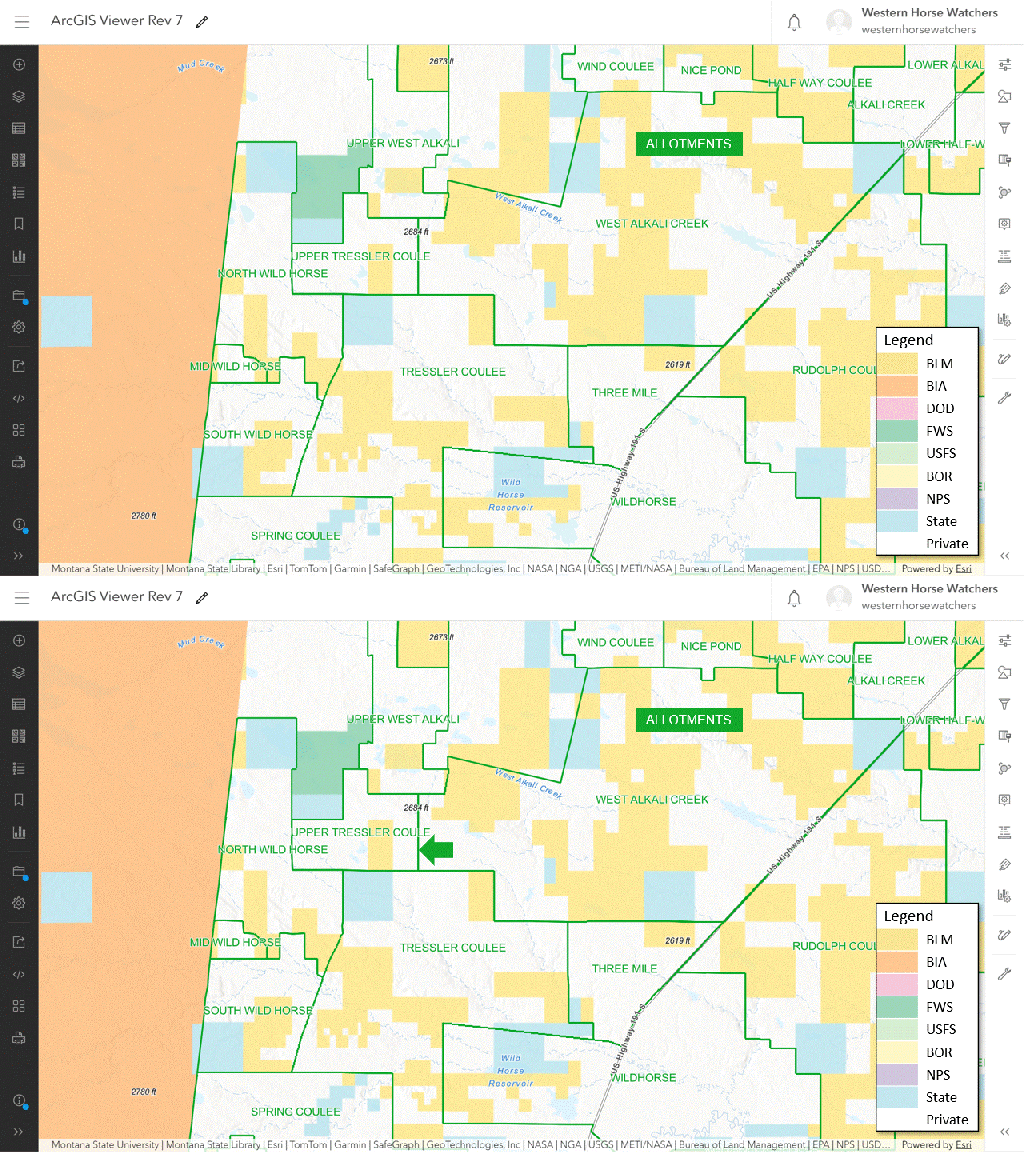
The allotment contains an area identified for wild horses, which is unacceptable.
The ArcGIS Viewer shows the arrangement.
About 70% of the HA is managed principally for livestock.
Horses are tolerated in the HMA, the remaining piece in the northeast corner.
The allotment offers 8,279 active AUMs on 68,879 public acres according to the allotment master report, equivalent to ten wild horses per thousand public acres.
Your faithful public servants claim that public lands in the western U.S. can only support one wild horse per thousand public acres.
You don’t need to buy the base property to put wild horses back in the HA.
You just need to rid the bureaucracy of ranchers and ranching sympathizers and overturn the planning process that zeroed it out.
The advocacy groups could have special funds to acquire base properties not associated with HMAs and WHTs, opening up new spaces on public lands for wild horses.
Instead, they use your donations to buy pesticides so they can beat the horse numbers down in favor of livestock.
The authorization use report indicates the preference on the Spruce allotment has not been flipped to horses, which was part of the deal when she bought the base property.
Her rescued mustangs are probably on the deeded acreage.
Its southern border stops short of a checkerboard area and the western edge omits a slice of public lands, but the rest of it coincides roughly with that of the allotment.
The 140 wild horses allowed by plan require 1,680 AUMs per year.
The stocking rate allowed by plan is 1.3 wild horses per thousand public acres, slightly more than the target rate across all HMAs of one wild horse per thousand acres.
The allotment offers 12,050 active AUMs on 142,361 public acres, equivalent to 7.1 wild horses per thousand public acres.
The HMA should be able to support 1.3 + 7.1 = 8.4 wild horses per thousand acres.
Given that it covers 103,802 public acres, the estimated carrying capacity is 872.
Under the current management plan, the BLM collects $11,858 per year from grazing activity inside the HMA while it spends $1.6 million per year to care for 872 – 140 = 732 wild horses displaced thereby.
Nobody in the private sector would do that.
The advocates would solve the problem by sterilizing the mares, eliminating the need for roundups and off-range holding while ensuring that most of the authorized forage goes to livestock in the lawful home of wild horses.
Horses in and around the burned area, which includes portions of the Snowstorm Mountains and Little Humboldt HMAs, will be pushed into the traps by a helicopter.
The announcement did not indicate if operations would be open to public observation.
Captured animals will be taken to the off-range corrals in Winnemucca.
There are no plans to treat any of the mares with fertility control pesticides and return them to the range.
The fire burned 26% of Snowstorm Mountains and 90% of Little Humboldt according to the project description in ePlanning.
The DNA Worksheet and Decision Record are silent about the Bullhead and Little Humboldt allotments, which overlap the HMAs.
The Complex also includes the Little Owyhee, Owyhee and Rock Creek HMAs.
Fees, permits and base properties are discussed in this report by the Congressional Research Service.
In FY24, the BLM issued 17,045 authorizations for grazing, with 88% written for cattle, yearlings and bison, 6% for horses and burros, and 6% for goats and sheep.
Footnote 158 equates the resource loading of burros with that of cattle and horses while the customary relationship puts the ratio at 2:1, 2 burros = 1 horse = 1 cow/calf pair.
The report gives the acreage identified for grazing but does not give the AUMs sold thereon for a recent fiscal year.
Western Horse Watchers believes the figure is around nine million annually for BLM allotments, equivalent to 750,000 wild horses on 155 million acres or 4.8 wild horses per thousand acres.
Your faithful public servants claim that rangeland health will suffer if horse populations exceed one animal per thousand acres.
NOTE: An article by the Los Angeles Times alleges that some of the deaths were caused by people who went into the forest to feed the horses, giving them too much, too fast, without water.
The parcel offers 540 active AUMs on 2,371 acres according to the allotment master report, equivalent to 19 wild horses per thousand public acres.
Given that the target stocking rate across all HMAs is one wild horse per thousand acres, the allotment is at 19X AML but it’s in the Maintain category!
Your faithful public servants warn that rangeland health will suffer if wild horse populations exceed AML (25,600 animals on 25.6 million acres).