Pathfinder’s Stewart Creek Unit Clashes with Red Desert Horses

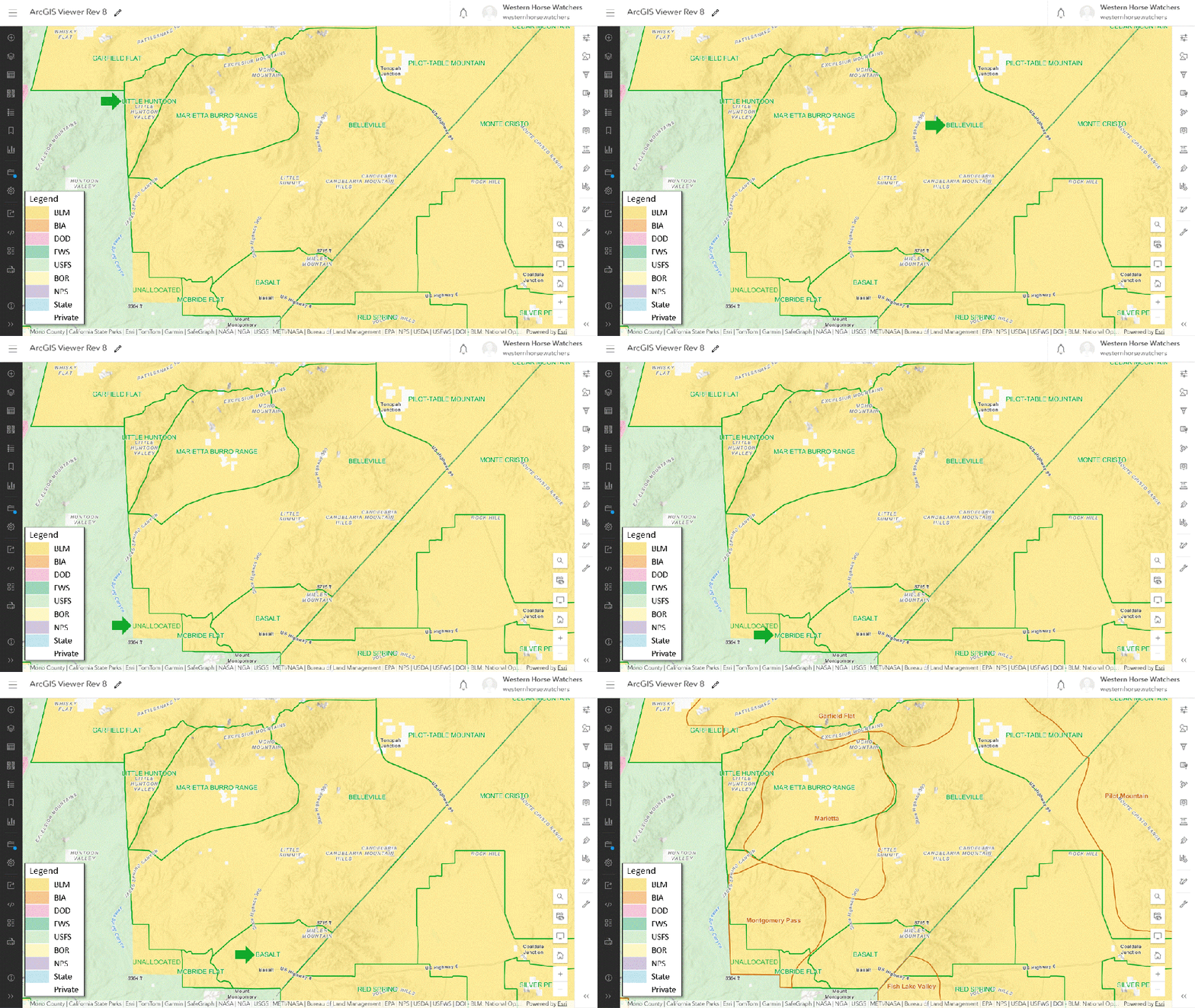
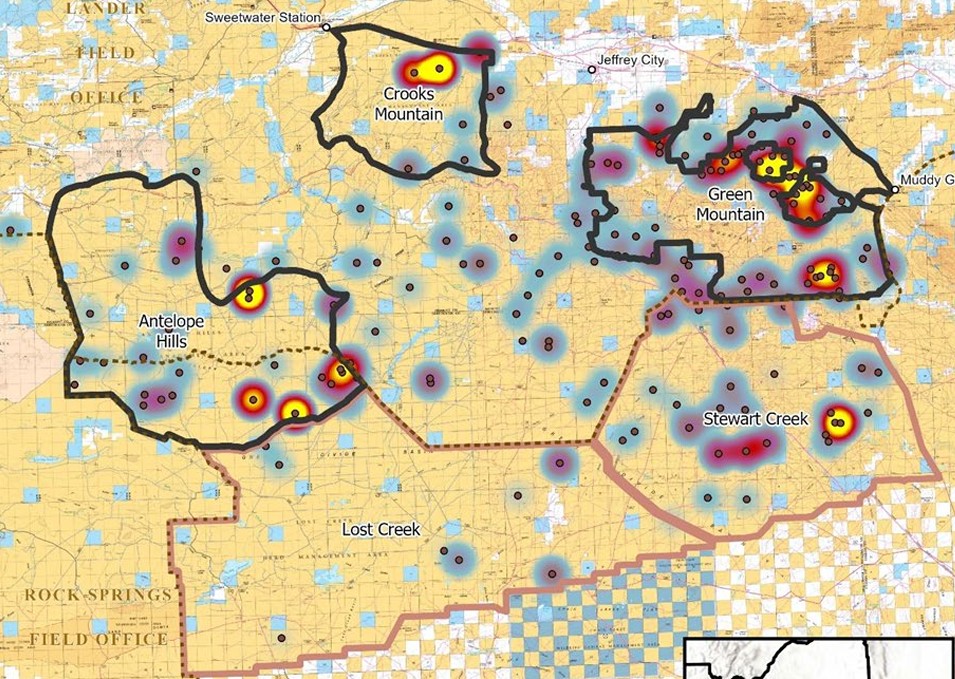
The map supplied with the listing shows the ranch with a red border.

Deeded acreage, which secures grazing preference on public lands, is black.

If you plot the ranch outline on a map of the HMAs, you’ll find it overlaps all of Crooks Mountain and Stewart Creek, and most of Green Mountain.

A small portion extends into the checkerboard near Rawlins.

Click on image to enlarge.

RELATED: Wyoming’s Pathfinder Ranches Changing Hands.

Foal-Free Friday, Reserves for Preserves Edition

You’d think the advocates would have special funds devoted to the purchase of base properties, so wild horses could be placed on public lands at the expense of privately owned livestock.

Instead, they use your donations to buy pesticides, so they can beat the horse populations down in favor of livestock.

They are frauds and don’t deserve a penny of your support.

RELATED: Foal-Free Friday, Toxic Relationships Edition.

Wyoming’s Pathfinder Ranches Changing Hands

The listing indicates it’s under contract, with an asking price of $79.5 million.

The operation consists of twelve ranches organized into four units:

  • Two Crosses
    • 180,061 total acres
      • 39,034 deeded
      • 25,228 state
      • 115,799 BLM
      • 3.0 BLM acres per deeded acre
    • 37,909 AUMs
      • Equivalent to 3,159 wild horses
      • Stocking rate would be 27.3 wild horses per thousand BLM acres
  • Beulah Belle
    • 98,357 total acres
      • 23,146 deeded
      • 7,962 state
      • 67,248 BLM
      • 2.9 BLM acres per deeded acre
    • 19,810 AUMs
      • Equivalent to 1,651 wild horses
      • Stocking rate would be 24.6 wild horses per thousand BLM acres
  • Stewart Creek
    • 569,053 total acres
      • 22,470 deeded
      • 8,999 state
      • 537,584 BLM
      • 23.9 BLM acres per deeded acre
    • 23,734 AUMs
      • Equivalent to 1,978 wild horses
      • Stocking rate would be 3.7 wild horses per thousand BLM acres
  • Wooden Rifle
    • 68,606 total acres
      • 14,537 deeded
      • 6,797 state
      • 47,272 BLM
      • 3.3 BLM acres per deeded acre
    • 8,991 AUMs
      • Equivalent to 749 wild horses
      • Stocking rate would be 15.8 wild horses per thousand BLM acres

Your faithful public servants claim that public lands in the western U.S. can only support one wild horse per thousand BLM acres.

Stewart Creek, the unit with the best land ratio but lowest stocking rate, overlaps three of the five HMAs in the Red Desert Complex.  Not disclosed by the agent.

If the operation was repurposed as a refuge, it would support 7,500 wild horses, saving taxpayers an estimated $13.7 million per year and paying for itself in six years.

The project would likely face stiff opposition from ranchers, farm bureaus and stock grower’s associations.

Wild horses can be placed on public lands not identified for their use by acquiring base properties associated with grazing allotments and flipping the preference to horses.

RELATED: Key Indicators for New Wild Horse Preserves.

Maybell Base Property Offered for $6 Million

Snake River Land & Cattle covers 38,899 total acres, including 5,675 deeded acres and 33,224 BLM acres according to the agent’s listing.

The map puts the deeded acreage inside the Douglas-Sawmill Allotment, a few miles south of the Sand Wash Basin HMA.

The ranch lies within a game management unit so not only will you get pushback from ranchers in trying to flip the preference to horses but from hunters as well.

The allotment master report shows one pasture, so it may operate as a general use area shared by three permittees.

Livestock owned by the other two would remain.

The active AUMs are probably wrong and may be off by a factor of ten.

One of the bullet points in the listing says the ranch receives 743 AUMs, equivalent to 62 wild horses.

The land ratio is good, almost six public acres per deeded acre.

But the allotment overlaps the Douglas Mountain HA according to the ArcGIS viewer, so the ranch meets two out of four requirements for a refuge.

You don’t have to spend millions of dollars on a base property to get wild horses back on these public lands.  You just need to rid the bureaucracy of ranchers and ranching sympathizers and overturn the planning process that zeroed out the HMA.

Don’t expect any help from the advocates.  They want the ranchers to win.

RELATED: Key Indicators for New Wild Horse Preserves.

If Wild Horses Had Principal Use of Pumpkin Creek, Goblin Gulch

Both allotments are in Wyoming.

Pumpkin Creek is southwest of Gillette and Goblin Gulch is northwest of Kemmerer.

The allotment master report puts Pumpkin Creek in the Improve category, suggesting that your stewards of the public lands are not taking their responsibilities seriously.

The report for Goblin Gulch says it’s in the Maintain category.

The Pumpkin Creek permittee receives 1,456 active AUMs on 13,235 public acres, equivalent to 121 wild horses or 9.2 wild horses per thousand public acres.

Your faithful public servants claim that public lands in the western U.S. can only support one wild horse per thousand acres (25,600 animals on 25.6 million acres according to the last page of the 2025 population dataset).

The advocates bolster the narrative with their darting programs.

Goblin Gulch offers 287 active AUMs on 2,845 public acres, equivalent to 24 wild horses or 8.4 wild horses per thousand public acres.

If Pumpkin Creek was an HMA, the AML would be 13 and 108 wild horses would be consigned to off-range holding because of permitted grazing.

If Goblin Gulch was an HMA, the AML would be 3 and 21 wild horses would be shipped to off-range holding.

Both areas would be held to a small fraction of carrying capacity to accommodate high-net-worth individuals who pay almost nothing for the resources they consume, which explains why their wealth grows along with the burden laid on American taxpayers.

Don’t be fooled by politicians who tiptoe around this.

BLM allotments in Wyoming support livestock equivalent to 158,425 wild horses on 17,312,214 public acres, or 9.2 wild horses per thousand public acres.

Wild horses can be placed on public lands not identified for their use by acquiring base properties associated with grazing allotments and flipping the preference to horses.

RELATED: The Allotments Tell the Story: They’re Lying, All of Them.

Chincoteague Ponies Struggle with Brackish Water

The southern herd had no fresh water for nearly two weeks according to a story by Shore Daily News.

High tides from Hurricane Erin and lack of rain are thought to be responsible for the contamination.

The northern herd was not affected.

The ponies are unique as stated in the article, not because of adaption to island life, but because of the highly abnormal sex ratio and unprecedented birth rate.

In August, after the pony swim but before the hurricane, the herd consisted of 23 males and 126 females.

The population limit is 150.

The saltwater cowboys have turned the wildlife refuge into a puppy mill for wild horses, raking in over $1 million from this year’s auction.

RELATED: Chincoteague Stallions Produce 103rd Foal of 2025.

Flipping the Buckeye Preference to Horses

The allotment master report gives authorization #2700562 for the Campaign Against America’s Wild Horses.

The authorization use report indicates 267 cattle on a 5.5-month grazing season.

How many horses would the resource support?

The livestock type and grazing season would change but not the AUMs.

AUMs for horses = AUMs for livestock

The grazing season would be 12 months.

Let x = number of horses.

12x = 5.5(267)

Solve for x.

x = 122

The permit would be written for 122 wild horses.

RELATED: How Would Buckeye Rate as a Wild Horse Refuge?

SHOCKER: Wild Horses Adapt, Thrive on Variety of Forage

Researchers at the University of Wyoming found that the animals can maintain good body condition across a variety of landscapes and different seasons according to an October 16 news release.

The study confirms previous research showing high dietary overlap of free-roaming horses and cattle.

Let’s put that finding into practice.

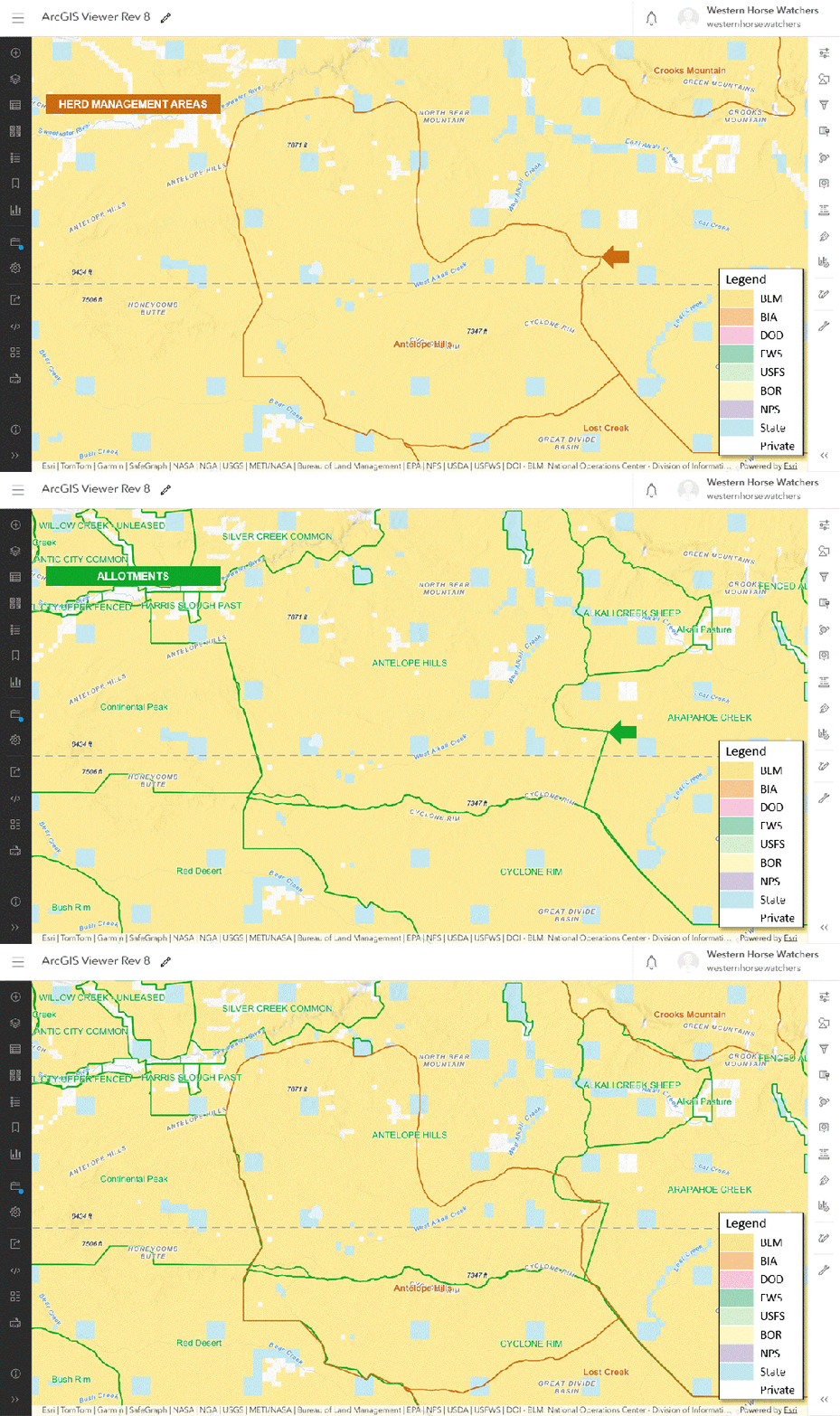
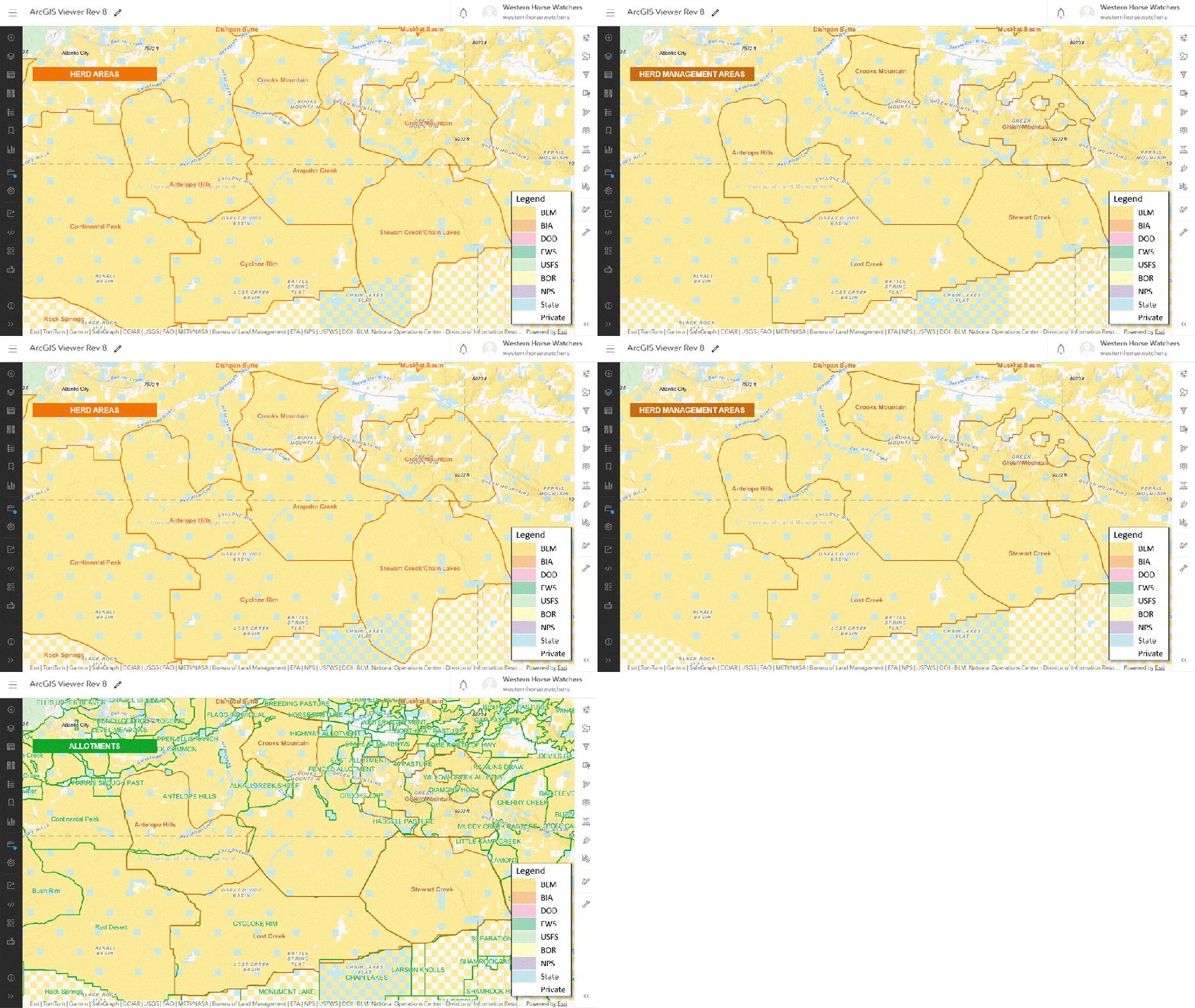
The Stewart Creek HMA lies within the Stewart Creek Allotment.  Their borders coincide, more or less, except for the northeast corner.

The 175 horses allowed by plan receive 2,100 AUMs per year.

The permittees receive 8,267 AUMs per year, equivalent to 689 wild horses due to the interchangeability of forage.

Therefore, the land should be able to support 175 + 689 = 864 wild horses.

The herd is held to 20% of carrying capacity because the HMA is managed primarily for livestock.

Advocates with the Wyoming Wild Horse Improvement Partnership enforce the plan by beating the horse numbers down with ovary-killing pesticides.

RELATED: History of Consent Decree and Rock Springs RMP Amendments.

Foal-Free Friday, Massive Human Involvement Edition

The advocates convert free-roaming self-reliant herds into curated horse exhibits with their darting and feeding programs.

Signs of their presence:

  • Barren mares
  • Confused stallions
  • Shrinking herds
  • Injuries and infections
  • Abnormal sex ratios
  • Increasing death rates
  • Tiny breeding populations
  • Loss of genetic diversity
  • Sterility
  • Acclimation to people
  • Prevalence of livestock

They talk about wild horses and put photos of such on socialist media, but when they get through the herds are anything but.

RELATED: Foal-Free Friday, the Great Replacement Edition.

History of Consent Decree and Rock Springs RMP Amendments

Three interesting characteristics of the in-depth article by WyoFile:

  • The author did not include remarks from the Campaign Against America’s Wild Horses, a departure from established practice when writing about wild horses
  • He did not imply that drillers and miners were the greatest threat to said animals
  • He did not try to sell mass sterilization as wild horse conservation

However, he did give considerable airtime to Christi Chapman, co-founder of the Wyoming Wild Horse Improvement Partnership, who, according to an undated brochure posted by the state legislature, was raised in a ranching lifestyle, received a formal education in soils and livestock production and has worked in the agriculture industry for over 20 years.

Volunteers with WYWHIP are certified in the remote delivery of PZP and are active in the Stewart Creek HMA, earning the nonprofit a spot on the list of charlatans.

RELATED: Advocates Prevail in Rock Springs RMP Appeal.

Advocates Dispatch, Eulogize Currituck Stallion

He was taken off the beach and treated for colic but last week his condition went south so they put him down according to a report by The Outer Banks Voice.

They said he lived the kind of life they want for every foal born on the beach but did not mention the declining number of foals born on the beach or anywhere else, thanks to their use of PZP, so the long-term prospects for the herd remain uncertain.

How to Set AMLs

Your faithful public servants claim that public lands in the western U.S. can only support one wild horse per thousand acres (25,600 animals on 25.6 million acres according to the last page in the 2025 population dataset).

A simple way to apply this rule is to round the acreage to the nearest thousand and drop the last three digits.

For example, Thirty Mile Spring, an allotment in eastern Nevada, covers 178,716 public acres.

If it was an HMA, the AML would be 179.

  • Acreage rounded to the nearest thousand = 179,000
  • Remainder after dropping the last three digits = 179

The permittee receives 8,405 active AUMs (per year), equivalent to 700 wild horses.

Thus, the horse population would be held to approximately 25% of carrying capacity, with 75% devoted to livestock, which means 700 – 179 = 521 wild horses would be consigned to off-range holding because of permitted grazing.

The advocates like the arrangement and want it enforced with ovary-killing pesticides, not low-flying helicopters.

RELATED: AMLs Don’t Indicate Genetic Diversity or Carrying Capacity.