The nonprofit is expanding its scope from the Virginia Range to all of Nevada’s wild horses and burros.
The news release did not include condemnation of the mass sterilization program inflicted on the Virginia Range herd by the Campaign Against America’s Wild Horses.
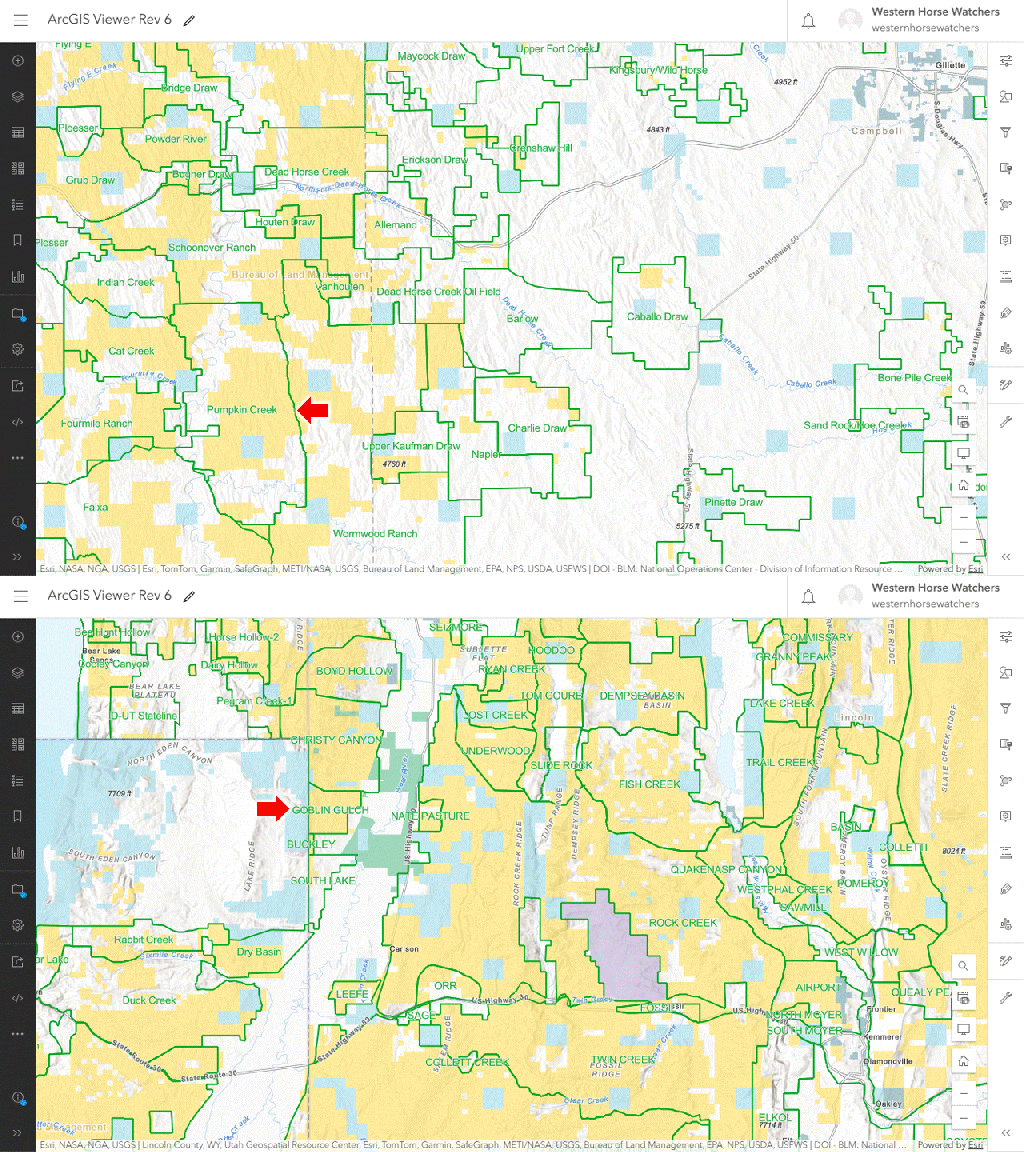
Pumpkin Creek is southwest of Gillette and Goblin Gulch is northwest of Kemmerer.
The allotment master report puts Pumpkin Creek in the Improve category, suggesting that your stewards of the public lands are not taking their responsibilities seriously.
The Pumpkin Creek permittee receives 1,456 active AUMs on 13,235 public acres, equivalent to 121 wild horses or 9.2 wild horses per thousand public acres.
Your faithful public servants claim that public lands in the western U.S. can only support one wild horse per thousand acres (25,600 animals on 25.6 million acres according to the last page of the 2025 population dataset).
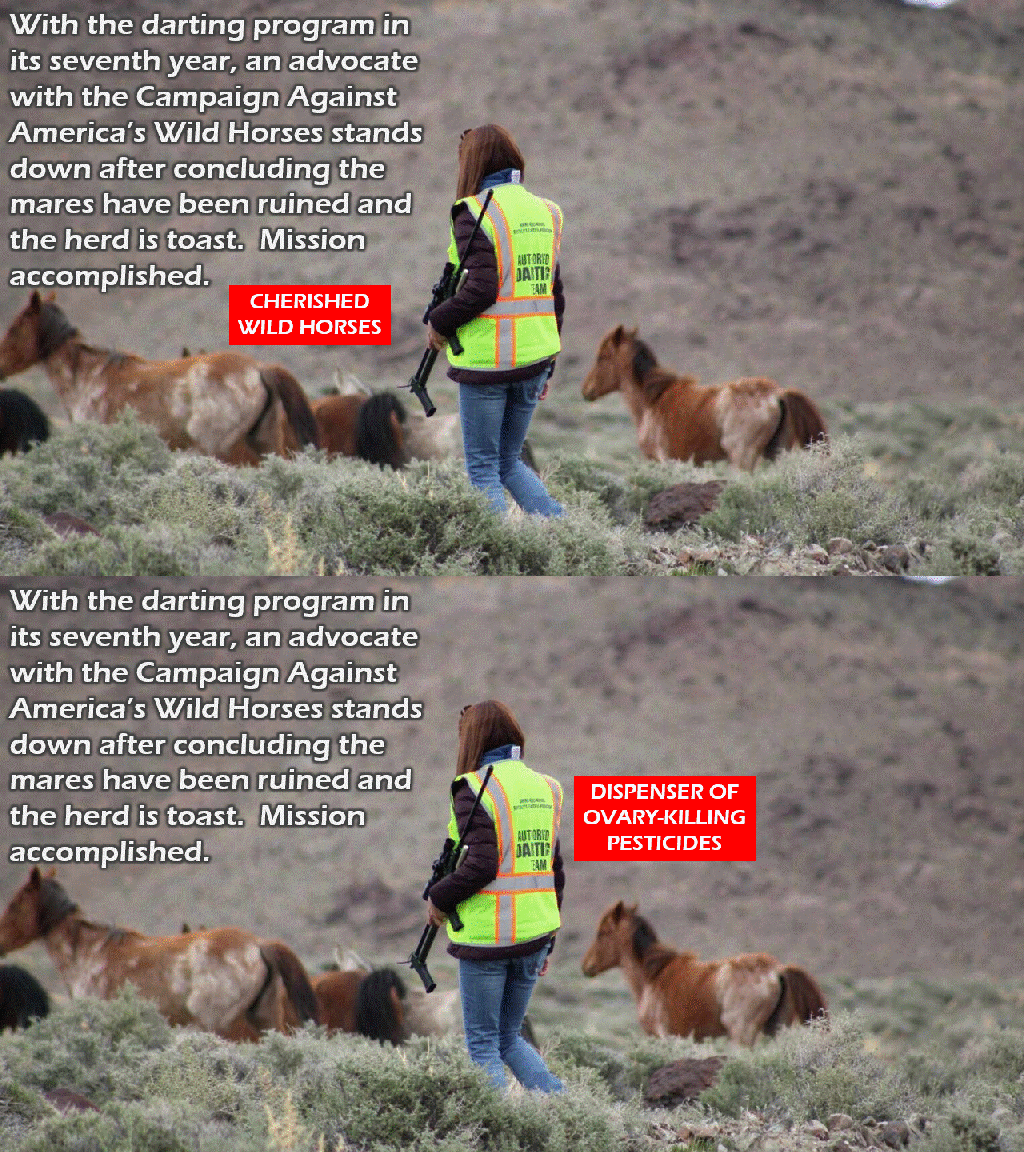
The advocates bolster the narrative with their darting programs.
Goblin Gulch offers 287 active AUMs on 2,845 public acres, equivalent to 24 wild horses or 8.4 wild horses per thousand public acres.
If Pumpkin Creek was an HMA, the AML would be 13 and 108 wild horses would be consigned to off-range holding because of permitted grazing.
If Goblin Gulch was an HMA, the AML would be 3 and 21 wild horses would be shipped to off-range holding.
Both areas would be held to a small fraction of carrying capacity to accommodate high-net-worth individuals who pay almost nothing for the resources they consume, which explains why their wealth grows along with the burden laid on American taxpayers.
Wild horses can be placed on public lands not identified for their use by acquiring base properties associated with grazing allotments and flipping the preference to horses.
HR 5829 would direct the Secretary of the Interior to establish a grant program to support the use of unmanned aerial systems for the humane roundup and management of wild horses and burros.
As of today, the bill text has not been published.
The southern herd had no fresh water for nearly two weeks according to a story by Shore Daily News.
High tides from Hurricane Erin and lack of rain are thought to be responsible for the contamination.
The northern herd was not affected.
The ponies are unique as stated in the article, not because of adaption to island life, but because of the highly abnormal sex ratio and unprecedented birth rate.
In August, after the pony swim but before the hurricane, the herd consisted of 23 males and 126 females.
Researchers at the University of Wyoming found that the animals can maintain good body condition across a variety of landscapes and different seasons according to an October 16 news release.
The study confirms previous research showing high dietary overlap of free-roaming horses and cattle.
He did not imply that drillers and miners were the greatest threat to said animals
He did not try to sell mass sterilization as wild horse conservation
However, he did give considerable airtime to Christi Chapman, co-founder of the Wyoming Wild Horse Improvement Partnership, who, according to an undated brochure posted by the state legislature, was raised in a ranching lifestyle, received a formal education in soils and livestock production and has worked in the agriculture industry for over 20 years.
Volunteers with WYWHIP are certified in the remote delivery of PZP and are active in the Stewart Creek HMA, earning the nonprofit a spot on the list of charlatans.
He was taken off the beach and treated for colic but last week his condition went south so they put him down according to a report by The Outer Banks Voice.
They said he lived the kind of life they want for every foal born on the beach but did not mention the declining number of foals born on the beach or anywhere else, thanks to their use of PZP, so the long-term prospects for the herd remain uncertain.
Your faithful public servants claim that public lands in the western U.S. can only support one wild horse per thousand acres (25,600 animals on 25.6 million acres according to the last page in the 2025 population dataset).
A simple way to apply this rule is to round the acreage to the nearest thousand and drop the last three digits.
For example, Thirty Mile Spring, an allotment in eastern Nevada, covers 178,716 public acres.
If it was an HMA, the AML would be 179.
Acreage rounded to the nearest thousand = 179,000
Remainder after dropping the last three digits = 179
The permittee receives 8,405 active AUMs (per year), equivalent to 700 wild horses.
Thus, the horse population would be held to approximately 25% of carrying capacity, with 75% devoted to livestock, which means 700 – 179 = 521 wild horses would be consigned to off-range holding because of permitted grazing.
The advocates like the arrangement and want it enforced with ovary-killing pesticides, not low-flying helicopters.






 Western Horse Watchers Association