
Rick Gore says it for the umpteenth time: Your horse is a reflection of you.
Category: Ranch
Around the ranch
WHB Coming to Norco, CA
BLM will offer twenty wild horses and ten burros for adoption at the George Ingalls Event Center October 5 – 7. For more information, refer to this news release, issued today. You do the heavy lifting for a year as a foster home, then you get title.
RELATED: Adopting a Wild Horse.
Salt River Horses on the Rocks
At the Saguaro Del Norte Recreation Site. H/T Broken English Books.
Man Rescues Horses in Wake of Florence
A man described as the ‘Hurricane Cowboy’ has been working with others to save horses and burros from floodwaters in South Carolina. See this syndicated report posted today by KPLR-11, a FOX affiliate in St. Louis, MO.
Horses Attract Bullies
Refer to the story posted today in the Arizona Daily Sun about pack horses on the Havasupai Indian Reservation near Grand Canyon National Park. Witnessess have reported seeing a downed horse kicked in the face to get him back on his feet and other horses whipped or forcefully yanked to keep them on the trail.
The Horse Carries Your Burdens
Fundraiser set for 11/11/18, help them if you can. Save a Mustang Save a Vet.
What is a Freeze Mark?
It’s an identification symbol burned into the hide of a wild horse or burro after capture, usually on the upper left side of the neck. The procedure is often carried out in the field before the animals are brought to BLM corrals for adoption.

The last four digits correspond to the number on the neck tag worn by the animal at adoption. Freeze marks can be hidden by manes and will change in appearance as the horse ages and as his winter coat comes and goes.
RELATED: The Mark of Authenticity.
More Trouble for ISPMB
A man who bought a 660 acre ranch from the ISPMB so it could be leased back has sued the organization for $135,000 in delinquent rent, according to a report in AP News posted earlier today.
The International Society for the Protection of Mustangs and Burros, established by Velma Johnston, gave up most of its horses in 2016 when a whistleblower revealed the conditions at the ranch. The horses were placed into private hands the following year through an adoption program coordinated by Fleet of Angels.
RELATED: ISPMB Update.
Horse Barn Kits
Here is an example of what you can get nowadays. Everything is cut at the factory, with some items pre-assembled. This photo shows a 40 ft x 36 ft Great Plains Western model by Sand Creek Post & Beam. Also available with living quarters on the second level.
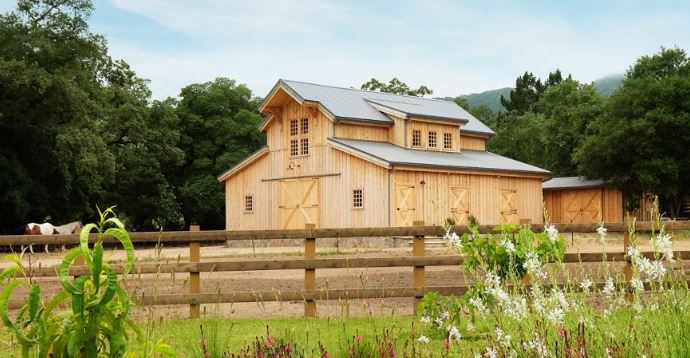
Would be nice to add open shedrows on both sides so the horses could find shelter from rain or snow without going in the barn. No stalls, no paddocks to keep them separated.
The fence would have to be more substantial if you were adopting mustangs. The rails should be on the side of the posts where the horses are. Pipe panels would be more durable but probably cost more. BLM requires a six foot fence but if you adopt from a rescue or sanctuary that requirement might be waived.
BLM ‘Repos’ Adopted Horse
A wild horse adopted last month at the Cheshire Fairgrounds in Swanzey, NH, escaped from its new home three weeks ago but was recaptured by personnel from the BLM, according to a story in the Keene Sentinel posted today. She was in good condition but was taken to a BLM holding facility in Illinois, where she will be gentled.
In general, adopters who recapture their mustangs can keep them, but if the BLM has to do it, the horse goes back to them. Adopters must provide foster homes for a year, after which they can receive titles from the BLM.
RELATED: WHB Coming to Swanzey, NH.
Shots Fired at Salt River Wild Horse Rescue Facility
Two men have been taken into custody after firing shots into the corral facility operated by the Salt River Wild Horse Management Group in Arizona. No volunteers and none of the horses were injured in the incident.
Not a word on the immigration status of the perps!
UPDATE: The shooting happened on 09/16/18 around 5:00 PM. See this report by FOX-10 in Phoenix.
R3C Adoption Today
Go to jail, get a horse. H/T Good Day Sacramento.
RELATED: Saddle-Started Horses Available at R3C Next Weekend.
Cactus Babies!
Large cactus fell down last year, now there are many offspring.

More Joys of Country Living
Crack in PVC adapter at check valve. Leak stops when pump shuts off. The corrugated plastic sheet deflects the spray away from electrical equipment.
Fortunately, the defect was upstream of the check valve. If it was downstream, the system would continually lose pressure and the pump would be running frequently to refill the tanks.
Make sure your horses have enough water before attempting a repair!
Joys of Country Living
Short video of the branch that fell on the roof of an old horse shelter 09/05/18.
RELATED: Country Living at Its Best, Murphy Was An Optimist.
Saddle-Started Horses Available at R3C Next Weekend
Ten to twelve inmate-trained horses will be offered for adoption September 15 at the Rio Cosumnes Correctional Center in Elk Grove, CA. Refer to the BLM news release posted earlier today. Bidding starts at $300.
Joe Misner, on the right in this photo from the 2018 Western States Horse Expo, coordinates the R3C wild horse training program.
RELATED: 2018 WSHE – BLM Mustangs.

Country Living at Its Best
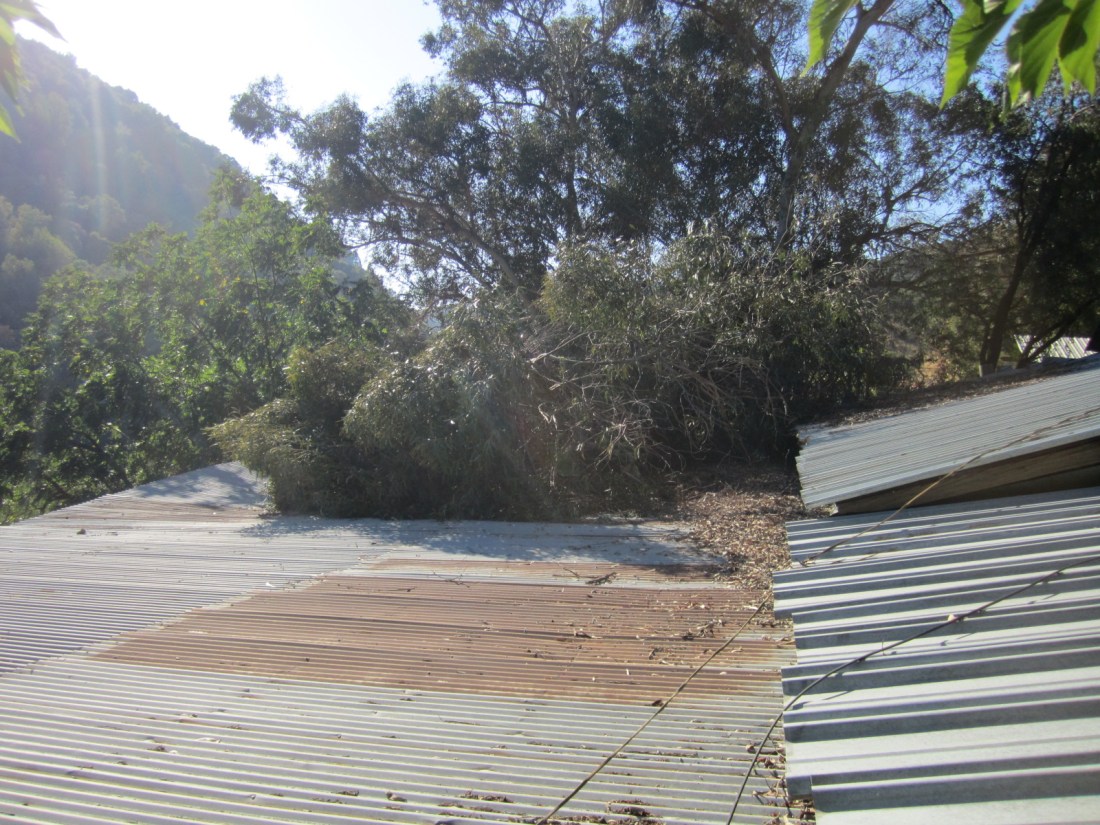
Large branch fell on old horse shelter 09/05/18, caving in roof. Horses have not been kept in there for over ten years.

Think Like a Horse #3
Why is it a good idea to keep water troughs away from fences, gates and other obstructions?

Think Like a Horse #2
Why is it a bad idea to clip a horse’s whiskers?

Think Like a Horse #1
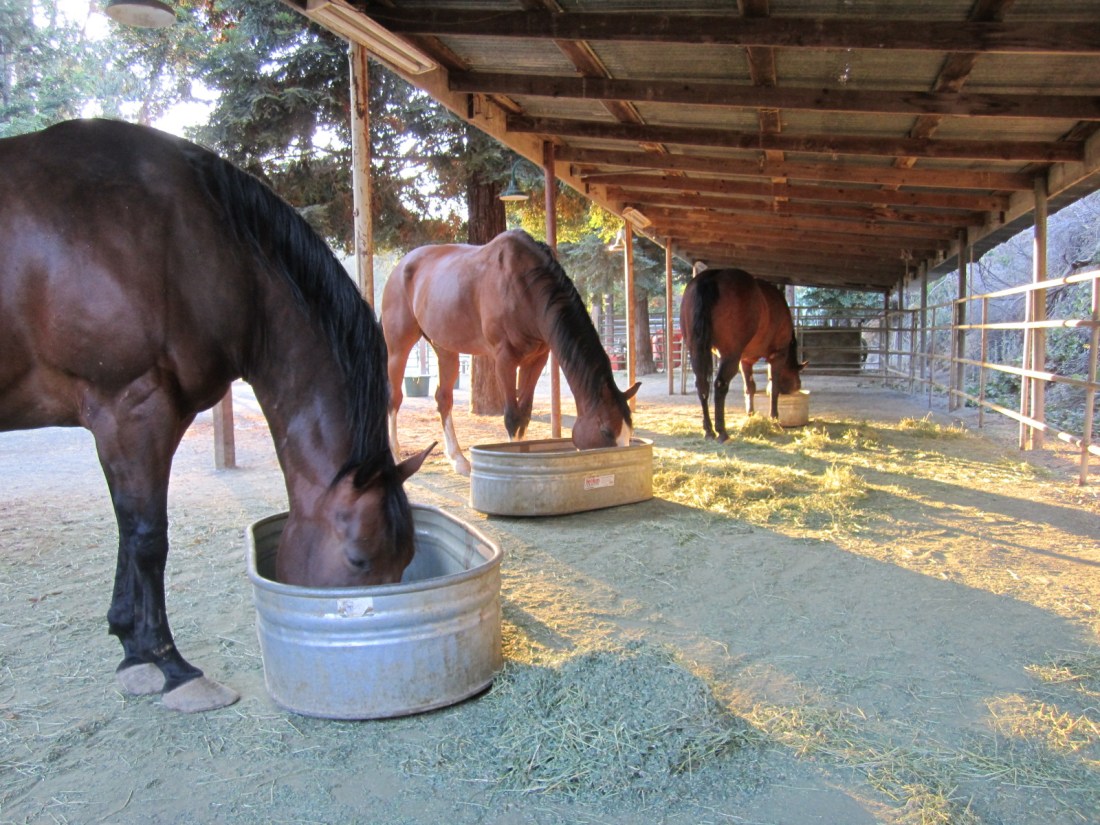
The hay troughs below are only about twelve inches deep. You can buy them with taller sidewalls. Why would a shallow trough be better for the horses?
 Western Horse Watchers Association