“He’ll fight to ban helicopter roundups, demand full transparency from the Bureau of Land Management, and push for humane, science-based herd management solutions. That includes fertility control, strategic rewilding, and support for sanctuaries and tribal partnerships doing the real work on the ground.”
An attorney representing plaintiffs in a new lawsuit said they won’t happen before the summer of 2026 according to a report by Wyofile.
The case was brought by two advocacy groups and two women, all PZP adherents, who may have been offended by being described as “pro-horse groups and individuals.”
This year’s event will be held at Gracias Madre in West Hollywood (sometimes referred to as the city of the sodomites), according to an announcement on Average Socialite.
The venue features Mexican food made from plant-based ingredients only, a must-have for liberals.
The online flyer shows a mare and foal, antithetical to the CAAWH mission.
The general admission ticket gets you drinks and hors d’oeuvres.
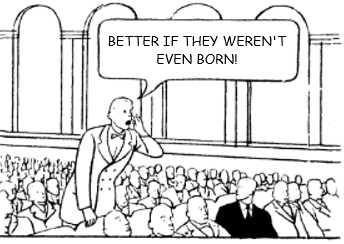
The foal friend ticket pays for care of an orphaned foal. There aren’t supposed to be any foals.
The meadow guardian ticket funds the reseeding of one acre of scorched earth in their bogus land trust. The name of the affected allotment was not given.
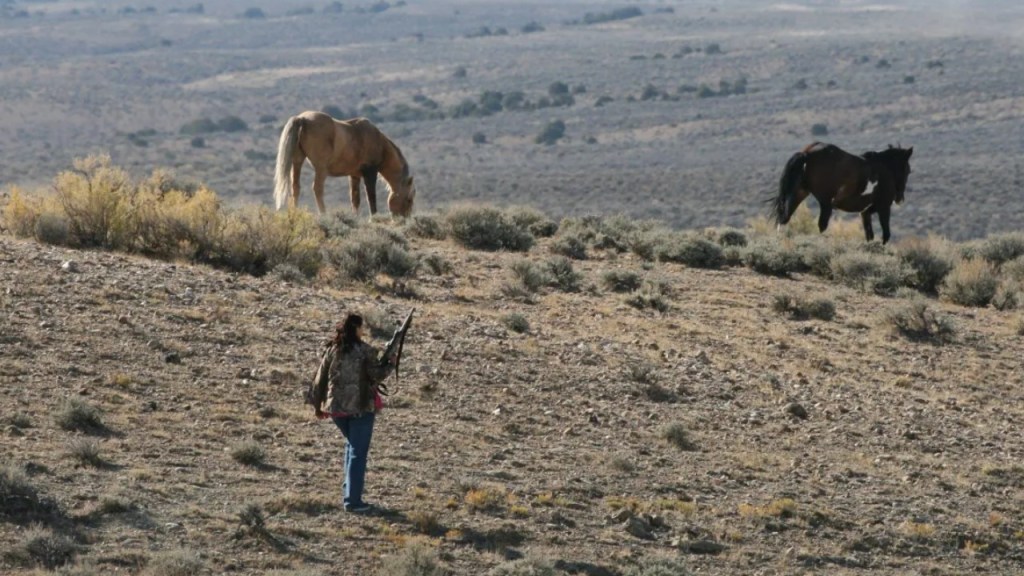
The herd protector ticket buys 20 doses of PZP. In exchange, you get an 8×10 photo taken by the head darter in charge at Cedar Mountain, where the BLM pays them to ruin the mares.
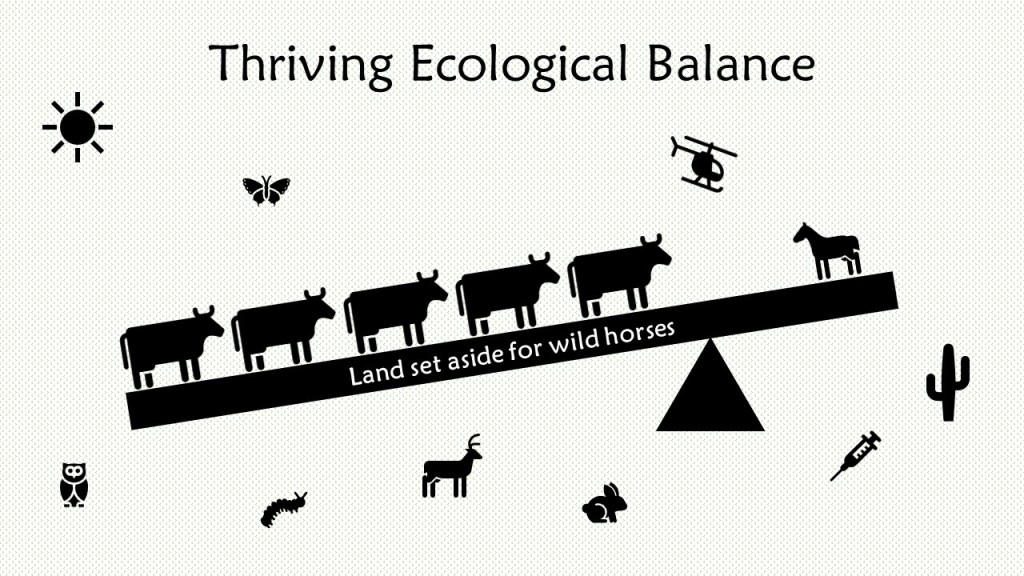
The organizers say the event is dedicated to protecting America’s wild horses and burros, yet there are no remarks about stopping competition from livestock, fixing unfair resource allocations and restoring lost habitat.
If your opponent appears to be winning, should you rethink your strategy or continue on the same path?
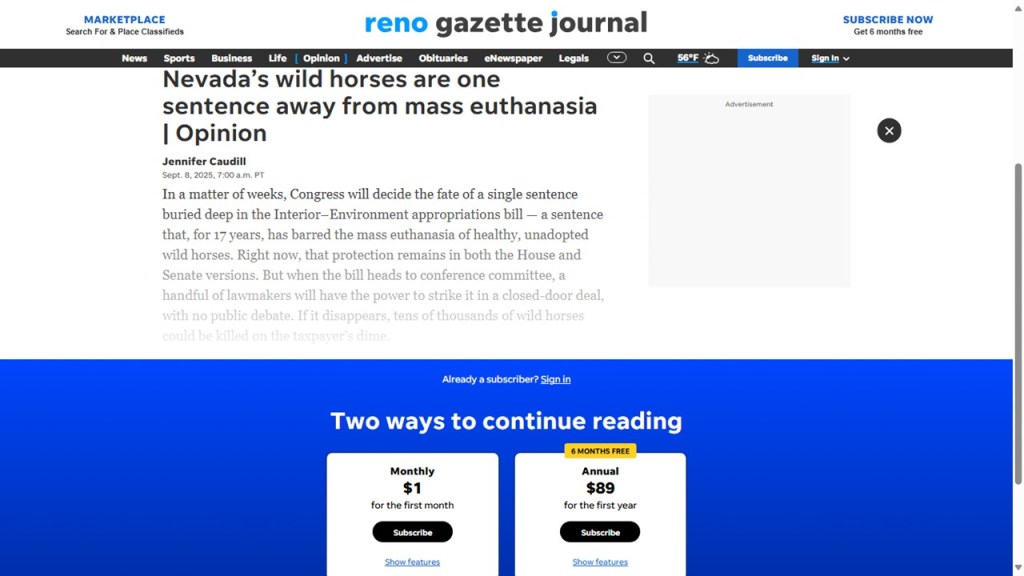
Consider this commentary in today’s edition of Nevada Current, written by the State Director for the Campaign Against America’s Wild Horses.
The author identifies the problem, but instead of offering a solution, shows how to make it worse.
“America’s wild horses have faced competition from livestock, unfair resource allocation, and shrinking habitat for generations.”
Fair statement.
The answer?
Sterilize the mares.
Give the ranchers what they want.
While you’re at it, feed the public a steady diet of lies.
“The Virginia Range program uses an immunocontraceptive vaccine known as PZP (porcine zona pellucida). Administered by trained volunteers via remote darting, PZP prevents pregnancy in mares without harming hormone cycles or behaviors, and it’s reversible.”
PZP is a restricted-use pesticide that tricks the immune system into attacking the ovaries.
After five years of treatment, the mares can no longer bear fruit.
“The USA now has more wild horses in captivity than running free on the rangelands in the West.”
Why is that?
Refer to the problem statement at the beginning of your op-ed, about which you, and your army of nitwits, do nothing.
The flyer says wild horses are a living symbol of America’s spirit of freedom, but career politicians and bureaucrats in Washington have sold them out to special interests.
What special interests?
If the speakers don’t talk about livestock, forage allocations and the way your public lands are managed, shake the dust from your sandals and leave.
The organizer, who served eight months in prison for wire fraud, is trying to unseat Dina Titus, a left-wing kook, co-founder of the Pesticide Caucus and close supporter of the Campaign Against America’s Wild Horses, from Nevada’s 1st congressional district.
Why did KNXV News of Phoenix go to the Campaign Against America’s Wild Horses, a leader in nonmotorized removal and instigator of the largest attempted eradication of wild horses in Nevada, to write a report about a herd in its own back yard?
Perhaps the Salt River Wild Horse Darting Group, hired by the state to manage the herd and one of the contenders for the new contract, was not allowed to comment.
Why are statements in the report inconsistent with remarks in the video?
For example, the report says that federal fencing and reduced access to habitat—not the advocates—have pushed the population down from 460 horses to around 280.
But the video says it’s a combination of fertility control—the handiwork of the Salt River advocates—and the boundary fence.
Both include an allegation by CAAWH that the Tonto National Forest and Governor Katie Hobbs’ office discussed a plan with the Arizona Department of Agriculture that would leave as few as 21 horses on the range, which would doom the herd.
The herd is already doomed, thanks to the advocates.
A minimum of 150 to 200 horses is needed to preserve genetic diversity according to CAAWH, which does not take into account the number of mares ruined, or being ruined, by the fertility control program.
A herd of 500 would not be enough when you can count the breeding population on one hand.
Humane disposal of wild horses, demonstrated by Jay Kirkpatrick on Assateague Island and popularized by the advocates, has two components:
Like the original commentary, this one is for subscribers only.
Other parties are equally culpable, such as the wild horse advocates, farm bureaus, wildlife associations and public lands councils.
The aim of the grazing program is to ensure that high net worth individuals receive generous government benefits with no means testing and no expiration date.
Presiding over the scam are the Secretaries of Interior and Agriculture.
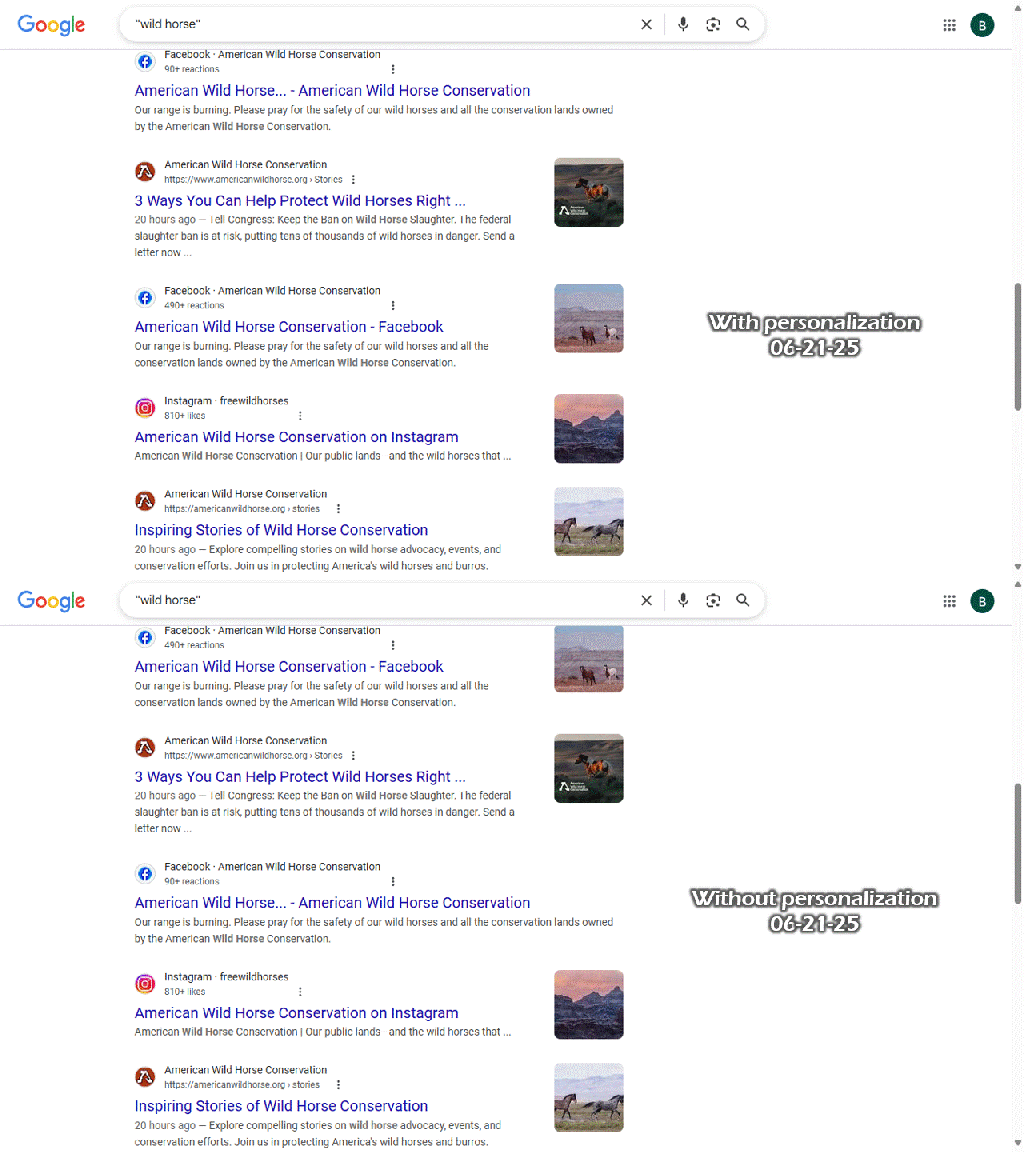
When you see a search result like this you know you’re about to be led down the garden path to a glorious place envisioned by ranchers and their allies.
How much of the material was sourced from the Bureau of Livestock Multiplication and the Campaign Against America’s Wild Horses?
Western Horse Watchers was unable to access the article.
Public lands in the western U.S. may have 47,500 wild horses and burros than allowed by plan, but not 47,500 more than the land can support.
The issue is not overpopulation, but the way your public lands are managed.
Abnormal sex ratios are usually seen in herds treated with PZP, a byproduct of the effort to sterilize the mares, but in the case of the Chincoteague herd, it’s probably intentional.
While some folks talk about humane disposal of wild horses, the advocates deliver, referring to the practice as humane management or in-the-wild management.
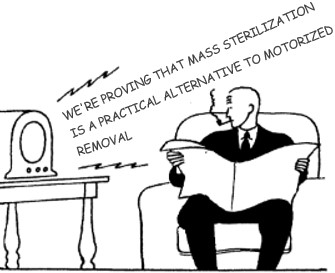
Those are codewords for mass sterilization with PZP.
The unspoken word in news circles, apparently, is if you’re doing a story about wild horses, go to the Bureau of Livestock Multiplication and the Campaign Against America’s Wild Horses for comments.
Even Google—an appendage of the Democrat Party—is in on it.
Exhibit #1, a report by KRNV News on the Lahontan Management Plan, featuring the genetic diversity narrative and overpopulation narrative.
The first interview is with Tracy Wilson, defeatist, pesticide pusher and overseer of the largest attempted wild horse eradication in Nevada, who argues that the AML is too small to support genetic diversity and should be at least 150.
Unfortunately, herd size is poor indicator of genetic viability. Breeding population is more important. An AML of 500 would be too small if you’re poisoning the mares with PZP, the raison d’être of CAAWH.
Next, the camera turns to Holley Kline of the BLM who says there are far more wild horses than the land can support, which is misleading.
There are more wild horses than allowed by plan and they’re robbing forage from high net worth individuals who receive generous government benefits with no means testing.
Exhibit #2, a report by KLAS News on FY26 appropriations affecting wild horses, featuring the fertility control narrative.
Suzanne Roy, Wilson’s boss, said the BLM should “make humane management—not removals—the foundation of its program,” implying that fertility control is not removal, even though wild horse numbers go down as the advocates pummel the mares with pesticide-laced darts.











 Western Horse Watchers Association