The third edition of the National Pesticide Applicator Certification Manual should be available for sale this week—giving you plenty of time to order one for Valentine’s Day.
It’s a no-brainer. What advocate isn’t striving to become a certified applicator of restricted-use pesticides?
Unfortunately, the publisher does not donate a percentage of the selling price to Rifles for WretchesTM or similar charity that equips the advocates with the tools of their trade.
The manual is intended as a study guide for those planning to take the Pesticide Applicator Certification Core Exam.
The 2014 edition states on page 51 that restricted-use pesticides (such as PZP) demand special attention because there is reason to believe they could harm humans, livestock, wildlife or the environment even when used according to label directions.
Such as permanent infertility in mares.
Unlawful use of pesticides is discussed on page 39.
Failure to use the product as directed on the label.
The advocates want you to think of PZP as a medication, always referring to the product as a vaccine.
As stated in its Year Two Report, the Colorado Wild Horse Working Group believes that strategic darting should be the cornerstone of wild horse management.
It’s an indication that the stakeholders are willing to play the long game in support of their goals and a major win for the advocates.
Not mentioned in the discussion are the long-term effects of the fertility control pesticides and the eventual disappearance of the herds.
The fertility control program was launched in Magoffin County early last year according to a story by WHAS News.
The report refers to PZP as a contraceptive vaccine, not a restricted-use pesticide.
Contrary to another statement in the article, the product is not reversible if applied for more than five years.
The group expects the population to stabilize in three years.
The story did not indicate if the partner organizations would become obsessed with pesticides as they have out west and if the effort would morph into a mass sterilization program across the nine-county region where the horses are found.
The hypergeometric function in Excel lets you compute the probabilities of matching one to five numbers in the first part of the Powerball drawing.
Suppose your favorite number is seven. What is the probability that it appears in the sample of five taken at random from a field of 69, as it did on November 15?
Using Excel’s nomenclature, the number of successes in the sample would be one, the sample size would be five, the number of successes in the population would be one, the population size would be 69 and the cumulative argument would be set to false.
The result is approximately .072, about 7.2%. The probability that seven does not appear would be 1 – .072 = .928 or 92.8%.
What is the probability of matching all five numbers? Change the number of successes in the sample to five and the number of successes in the population to five.
The result is almost zero, .000000089, or 1 in 11,238,513.
Unfortunately, Excel does not have a function for computing the probability of the advocates telling the truth about PZP in 2026, that you can’t use the pesticide for “humane population reduction” without sterilizing the mares.
A report by The Hill says President Trump is in a full-fledged feud with politicians in Colorado due to the prosecution of former Mesa County elections clerk Tina Peters, who has aligned herself with the president’s claims of election fraud in 2020.
The article suggests that actions by the administration are retribution over Peters.
Vetoing a bill that would have completed the Arkansas Valley Conduit, a project that would send water to the southeastern part of the state
Dismantling the National Center for Atmospheric Research, an institution specializing in climate science
Denial of a disaster declaration following wildfires and flooding last year in southwestern Colorado
The writer did not cite the scuttling of the inmate training program at Cañon City.
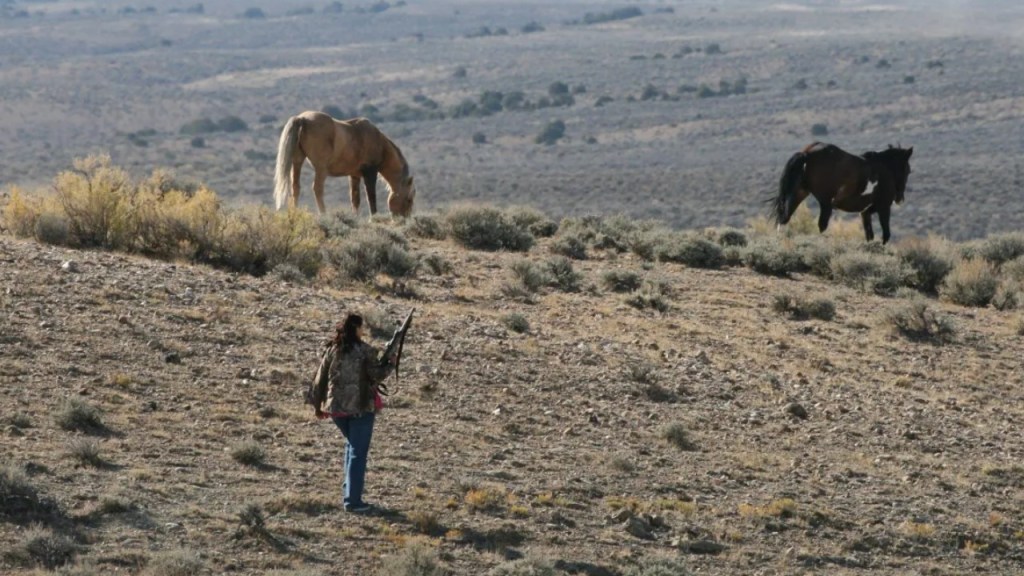
Some folks say 2026 is the Year of the Horse, the perfect time to raise awareness about helicopter roundups.
They don’t see it as an opportunity to stop the removals and restore basic concepts such as principal use and management at the minimum feasible level.
Instead, they see it as an opportunity to expand the use of RUPs, to replace motorized removal with mass sterilization.
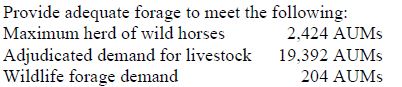
They don’t want you to know that public lands in the western U.S. can sustain many more wild horses than the government admits.
They are servants of the ranchers and don’t deserve a penny of your support.
This year’s update to the Colorado Wild Horse Eradication Plan provides the clearest indication yet of what the advocates think about wild horses and who they’re really trying to protect.
Strategic Darting as the Cornerstone of Wild Horse Management
Who will turn this vision into reality? The largest consumers of abortion, contraception and sterilization in the nation.
As they destroy the herds, they’ll tell you they’re living wild and free as nature intends.
The advocates have discovered that lying is the best way to keep their coffers filled.
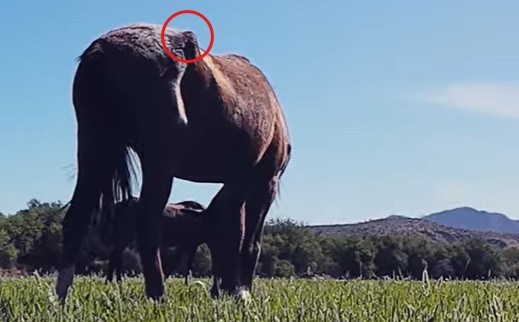
Sorry, but barren mares, confused stallions, shrinking herds, injuries and infections, abnormal sex ratios, increasing death rates, tiny breeding populations, loss of genetic diversity and acclimation to people do not qualify as living as nature intended.
The executive summary argues that strategic darting must be the cornerstone of sustainable wild horse management, and that the group expects the Colorado BLM to champion the method, along with other findings, conveying them forcefully to the national office.
These are the same lunatics who put a couple of sodomites in the governor’s mansion.
A keyword search of the document yielded these results:
Adoption – 125 occurrences
Darting – 53
Fertility control – 10
Immunocontraceptive – 7
Treatable mares – 7
Cattle – 2
Sheep – 0
AUM – 0
Allotment – 0
Permit – 0
Rancher – 0
Pesticide – 0
Reversible – 0
Sterility – 0
Sterilization – 0
Breeding population – 0
Genetic diversity – 1
Principal use – 0
Management at the minimum feasible level – 0
Nature’s way – 0
The group claims on page 33 that large tracts of private land, suitable for wild horse preserves, are scarce, which is nonsense.
There are hundreds of such parcels in the state, known as base properties, that could be repurposed for wild horses, with the added benefit that they have grazing preference on public lands—and therefore provide the best value to taxpayers and/or donors.
But the idea was not supported by some members, who were concerned about removing land from agricultural production.
And that’s the point of the entire exercise: To charter a group that would do what’s best for the ranchers, not the horses.