Wild Horse Advocacy in One Word

FAILURE.  In four words: Collaboration with the enemy.

Symptoms:

  • Habitat loss
  • Resource mismanagement
  • Roundups
  • Adoption incentive program
  • Sale with or without limitations
  • Off-range holding
  • Sanctuaries
  • Darting programs
  • Mass training

These are signs of victory if you’re a public-lands rancher.

This year may see more horses in off-range holding than on the range, another sign of failure—or success if you’re a rancher.

RELATED: How to Bring the Advocates to Their Knees.

Working Together for a Horse-Free Future 12-21-22

Virginia Range Darting Update for December 2023

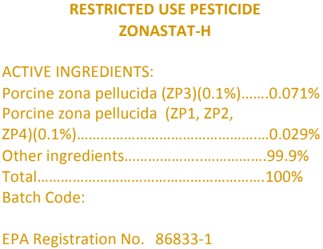
The Campaign Against America’s Wild Horses indicated in the December report that 123 mares received 125 doses of Zonastat-H during the month, 20 given as a primer and 105 as a booster.

Over the life of the program, which began in 2019, the advocates have pumped 8,527 doses of the ovary-killing pesticide into 1,989 mares.

Of the 176 foals born during the year in the primary target zone, 100 died, yielding a 43% chance of survival.

The current population is thought to be 3,471 with 336 horses listed as missing, compared to 3,479 with 350 listed as missing in November.

A goal for January is to “Continue to maximize booster treatments to mares across the Virginia Range before spring breeding season to prevent pregnancies, and continuing to allow for population decrease.”

Protect Wild Horses from Advocates 08-29-21

Not discussed in the report:

  • Long-term population goal
  • Size of breeding population
  • Loss of genetic diversity
  • Herd demographics
  • Changes in death rates as herd ages

The program is now in its fifth year and many of the mares are at risk of sterility.

We Can Do What Helicopters Can't 12-27-23

The report will be submitted to the Nevada Department of Agriculture.

The Campaign Against America’s Wild Horses is a leader in nonmotorized removal.

RELATED: Virginia Range Darting Update for November 2023.

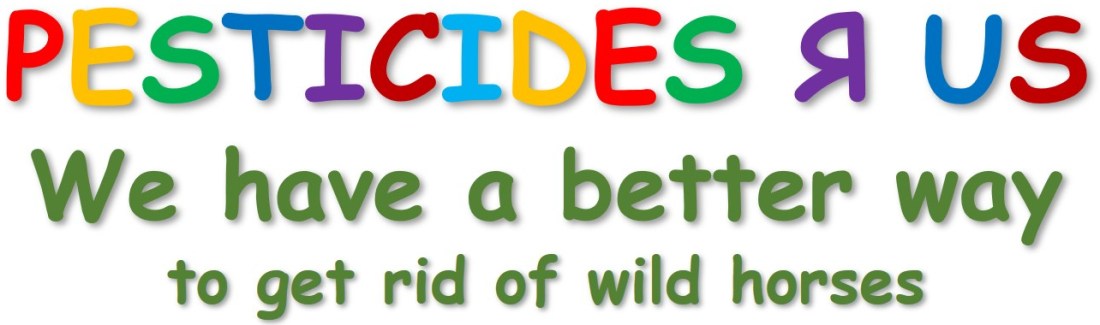
Pesticides R Us Better Way 11-07-23

CAAWH Upset with East Pershing Roundup, Envies Contractor?

In a January 7 article by the Las Vegas Sun, Suzanne Roy, ringleader of the Campaign Against America’s Wild Horses, said “These practices should be relegated to the past where they belong and should be replaced by modern, humane conservation practices that keep wild horses wild.”

Refer to the decoder for the meaning of this statement.  Roy lumps several concepts together in one sentence.

Getting Rid of Wild Horses Is Our Job 10-14-23

Like most advocates, she wants the roundups to stop but not the removals.

She wants helicopters replaced with pesticides.

Zonastat Ingredients 12-20-23

She doesn’t tell the reporter why roundups occur.

She doesn’t discuss habitat loss and the difference between HAs and HMAs.

She doesn’t comment on the prevalence of livestock and the mismanagement of resources in the lawful home of wild horses.

In short, Roy and her staff want the ranchers to prevail and they want to be active participants in their victory.

RELATED: CAAWH Now an Appendage of BLM, Wants Ranchers to Win.

Understanding Advocatespeak

Provided as a public service.

What They SayWhat They Mean
Cherished/beloved/innocent/majestic wild horsesPests
Fertility control vaccineOvary-killing pesticide
Humane managementNonmotorized removal
Mares living longerAbnormal sex ratio
Stay wildStay barren
Self-boostingSterile
Keeping them in balance with their environmentWe want the ranchers to win
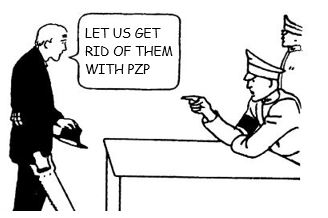
Protecting them from removalGetting rid of them with PZP
ConservationEradication
Better wayPummel mares with pesticide-laced darts

RELATED: How to Bring the Advocates to Their Knees.

Goicoechea’s Focus on Virginia Range Not About Public Safety

In the January 4 article by SFGATE about horse-car collisions near Reno, Nevada Department of Agriculture Director J.J. Goicoechea put the carrying capacity of the Virginia Range at 500 to 600 wild horses, even though it’s been supporting around 3,000 for years.

At roughly 300,000 acres, the stocking rate is ten wild horses per thousand acres.

That’s what the bureaucrats don’t like about it.  The area defies their carrying capacity narrative, namely, that western rangelands can only support one wild horse per thousand acres (27,000 animals on 27 million acres).

They repeat the lie to conceal their mismanagement of said rangelands: For every AUM assigned to wild horses, livestock receive three to five.

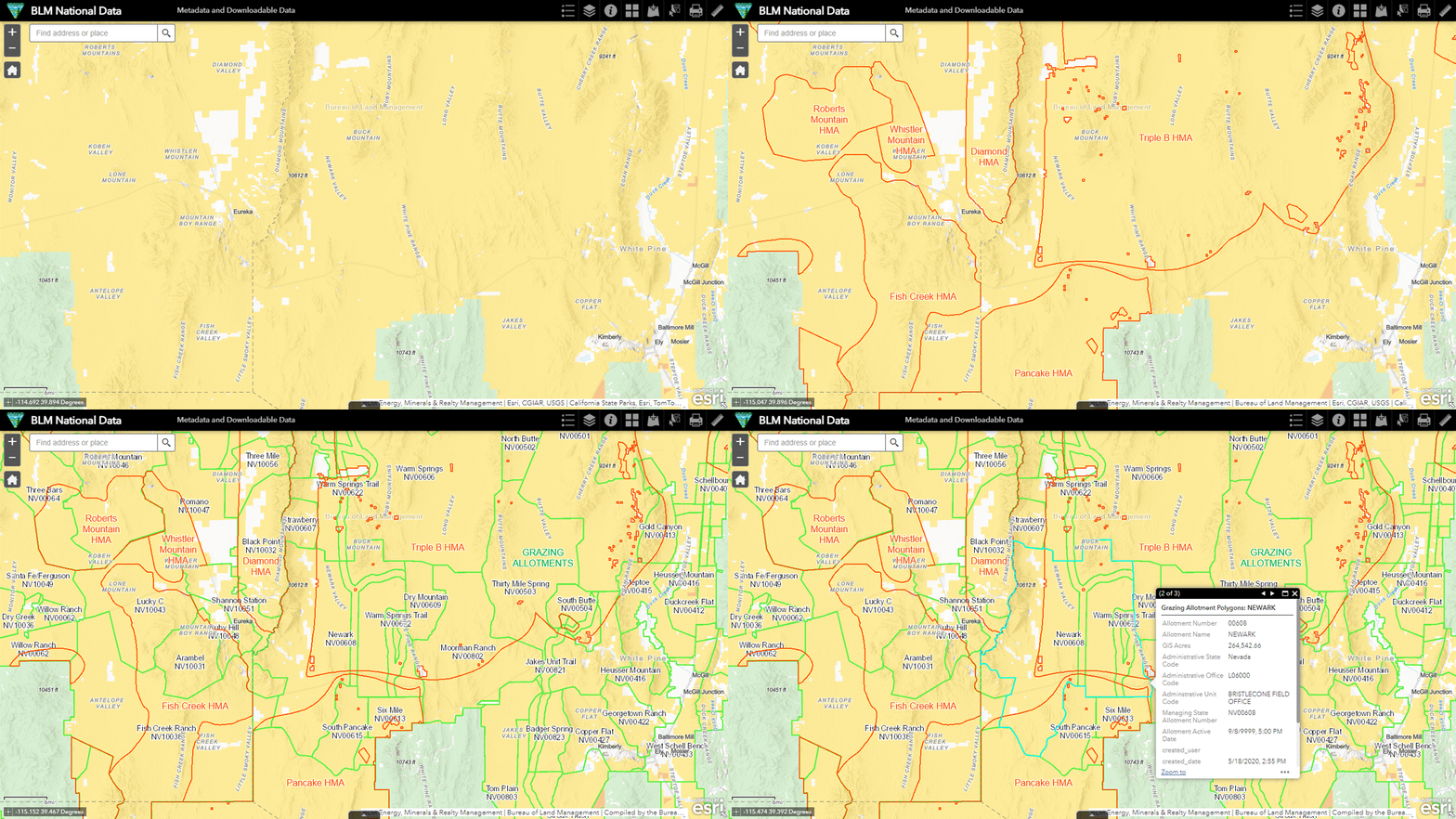
Let’s take a look at Goicoechea’s home range, the Newark Allotment.  It’s a few miles east of Eureka, NV and overlaps the Triple B and Pancake HMAs.

The National Data Viewer shows the arrangement.  Click on image to open in new tab.

Goicoechea receives a very modest 158 AUMs per year, a symbolic gesture that gins up support of the public-lands ranchers.

But the allotment offers 9,867 AUMs per year on 218,105 acres, or 45.2 AUMs per thousand acres, equivalent to 3.8 wild horses per thousand acres.

That’s almost four times higher than the carrying capacity lie!

The NDV does not show pastures within the allotment but given that it’s surrounded by HMAs, Goicoechea’s financial interests are likely affected.

In the old days we called that a conflict of interest.

RELATED: NDA Program to Reduce Horse-Car Collisions on Virginia Range?
Newark Allotment with HMAs 01-06-24

Pesticide Pushers Concerned about Alpine Wild Horses?

Both parties in this story by ABC 15 News of Phoenix, the Salt River Wild Horse Darting Group and the Forest Service, are unsavory.

There are no heroes in the wild horse world, only sellouts.  Get over it.

Let Us Fix Your Wild Horse Problem 02-18-23

The three tenets of rangeland management also apply to the Forest Service.

The Salt River Wild Horse Darting Group is an affiliate of the Campaign Against America’s Wild Horses.

RELATED: Alpine Horses Wild or Feral?

Foal-Free Friday, Go Forth but Don’t Multiply Edition

That’s what the advocates mean by “keeping them wild and free.”

The mares are barren, the herd is shrinking, and the ranchers are winning, but there have been no motorized removals, so the program is a success.

Protecting Them From Removal 12-03-23

Meanwhile, hundreds of cow/calf pairs have been turned loose in the same HMA to consume 80% of the authorized forage.

Good work, guys.

RELATED: Foal-Free Friday, Truth or Consequences Edition.

AML-1

You Can Help CAAWH Sterilize the Virginia Range Mares!

Just give them thirty bucks as requested in this news flash, enough to buy one dose of their favorite pesticide.

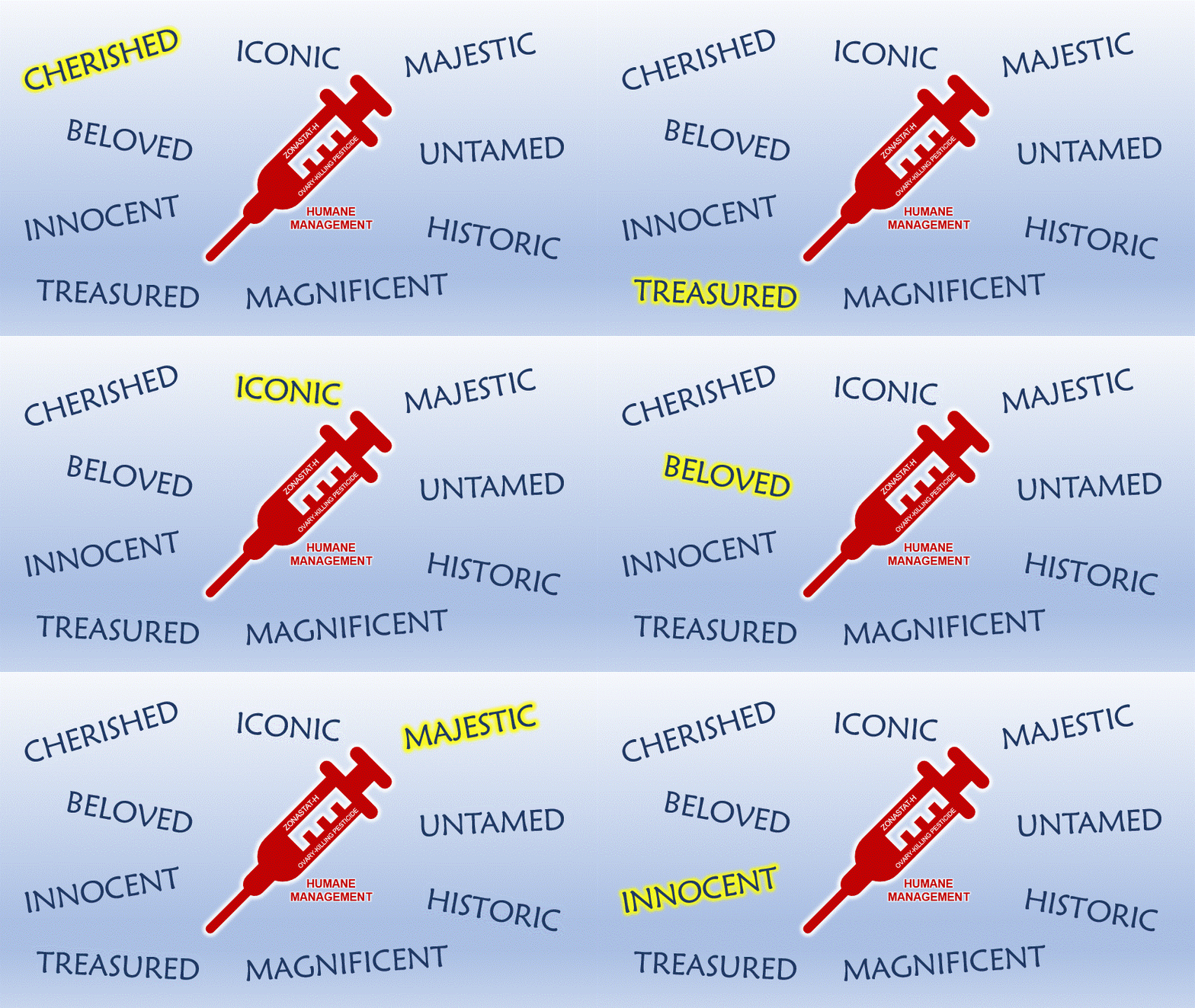
Adjectives used in the exhortation: Innocent.

The darting program, described as conservation by Tracy “You need to manage the numbers to fit what’s available for the horses” Wilson, ensures the herd remains wild and free in the face of shrinking habitat and rapid development.

Nonsense!

While there is some growth on the outskirts of Reno and in the Tahoe Reno Industrial Center, most of the original 300,000 acres is lightly populated and still available to the horses, with the exception of BLM lands consigned to grazing.

There are other more sinister reasons for getting rid of the horses.

Wilson is a sellout and, like others at the Campaign Against America’s Wild Horses, is interested primarily in developing their pest control business and cementing their relationship with the bureaucrats and ranchers.

Worse, there are thousands of followers, mostly women, who will come to the aid of these frauds, begging the question “Are there any voices for wild horses in America?”

RELATED: Assessing the Risk of Sterility in PZP Darting Programs.

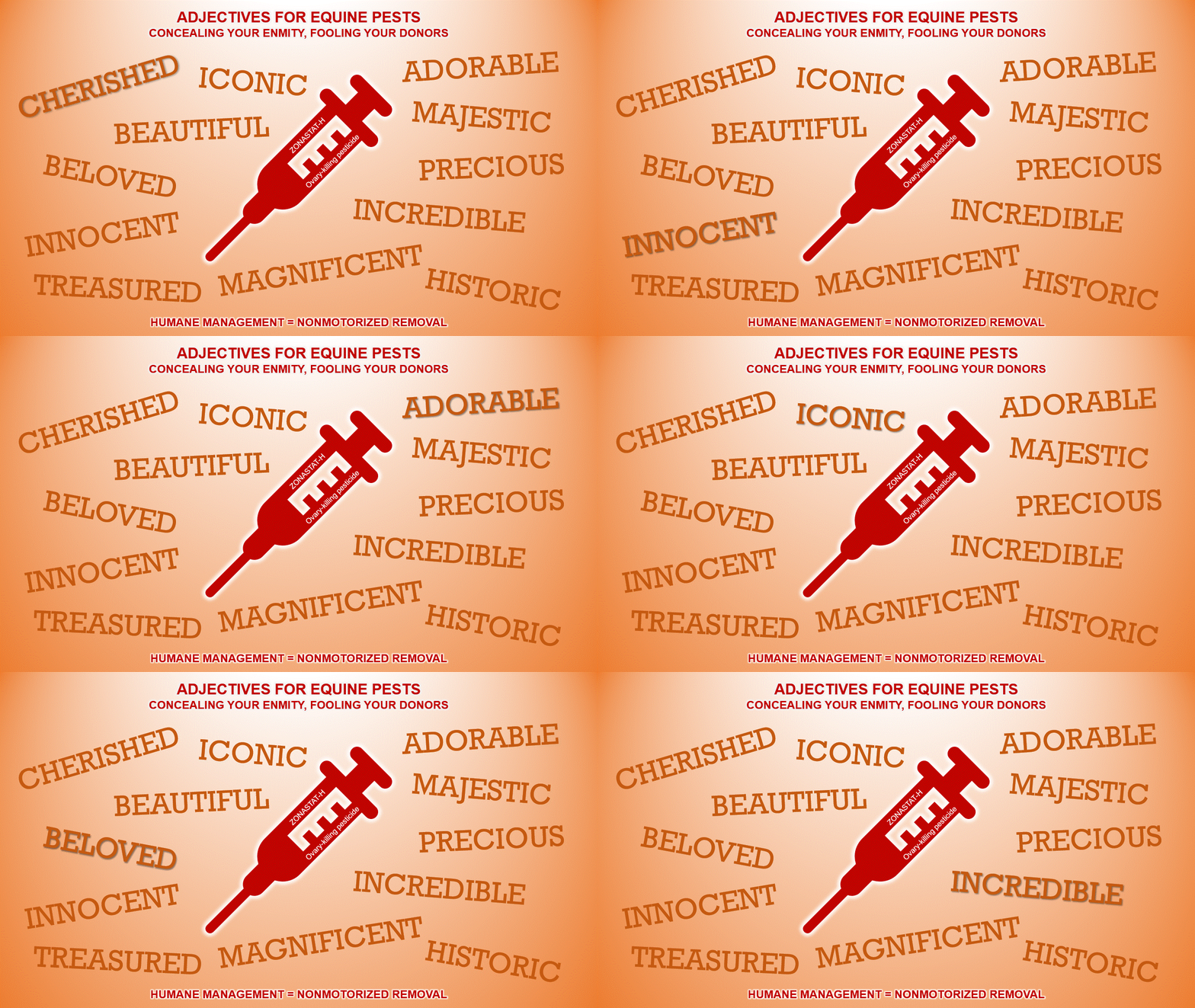
Adjectives for Equine Pests 01-03-24

What Do the Advocates Want in 2024?

More poison.

Removal by helicopters bad, removal by pesticides good.

Sterilizing the mares, as they are doing at the Salt River, Virginia Range and elsewhere, is part of the plan.

We Can Do What Helicopters Can't 12-27-23

Anything to win the approval of the bureaucrats and ranchers.

What about areas identified for wild horses that have been zeroed out and are now managed almost exclusively for livestock?

Silence.

What about areas identified for wild horses that have nonzero AMLs corresponding to 20% of the authorized forage—which is most of them?

They’re OK with that too.

What about managing principally for wild horses as specified in the original statute?

Irrelevant.  That was a long time ago.

What about the unlawful use of said pesticides?

Crickets.  They’re not going to incriminate themselves.

That’s our job.

RELATED: Options for End-of-Year Giving.

East Pershing Roundup in the News

There’s not enough water and forage to support the current number of horses according to a story dated December 22 by AP News.

Actually, there is.

The last paragraph in Section 3.12 of the Final EA for pest control and resource enforcement explains: “Livestock are currently experiencing direct competition by wild horses for available forage and water, both within HMAs and HAs.”

It’s not about rangeland health and endangered species.

The bureaucrats have assigned most of the resources to the public-lands ranchers, so the horses have to go.

RELATED: East Pershing Roundup Starts Next Week.

CAAWH Continues Work of Wild Horse Annie?

Yep, “Velma B. Johnston, or Wild Horse Annie, was a tireless advocate for wild horses and burros, and her legacy lives on through the work AWHC does and through the Wild and Free-Roaming Horses and Burros Act of 1971.”

You didn’t know Velma was a defeatist, pesticide pusher and ranching sympathizer?

VR Darting Injury 09-15-21

“Today, 52 years later, the Act has been significantly weakened thanks to the lobbying efforts of special interest groups.”

Such as the American Petroleum Institute?

They’re not trying to reverse those changes.  They’re working with the bureaucrats and ranchers to implement them.

Adjectives used in the news flash: Beloved, Incredible, Innocent.

Just as the Democrat Party has convinced millions of voters to act against their own interests, CAAWH has duped thousands of donors into funding its anti-horse agenda.

RELATED: How CAAWH Stands Up to the Federal Government.

Battle of Adjectives 12-09-23

McCullough Update

The incident was set to begin on or about November 27.

As of today, no activity has been reported.

The advocates don’t think the roundup is necessary.

They’re praying for the older horses to die.

They’re praying for foals to be killed by predators.

They’re praying for the herd to shrink on its own, aided by pesticide-laced darts, so ranchers can access most of their food and water.

Why are you still giving them money?

RELATED: McCullough Roundup Looms?

McCullough Peaks Darting-1

How CAAWH Stands Up to the Federal Government

They need $200,000 from you by the end of the year to fund their important work.

Their representative doesn’t want to talk about wild horses and burros, she wants to talk about wild horse and burro management.

Reading from a carefully prepared script, she mentions fertility control four times in three minutes.

Adjectives used in the presentation: Beautiful, Magnificent.

From public comments at the WHBAB meeting on December 14.

RELATED: After Raking in $147K, CAAWH Wants More.

After Raking in $147K, CAAWH Wants More

Using the National Day of the Horse as a backdrop, the Campaign Against America’s Wild Horses, a leader in nonmotorized removal, announced earlier this week an ambitious goal to raise $200K by the end of the month.

Adjectives used in the news flash: Iconic, Cherished.

“Hitting this goal will set our 2024 wild horse protection agenda.”

Protecting Them From Removal 12-03-23

“By making a contribution towards our end-of-year goal, you can help ensure AWHC has the resources we need to stand up to the federal government and be a voice for these voiceless animals.”

What a bunch of crap!

Protect Wild Horses from Advocates 08-29-21

They’re not standing up to the federal government, they’re working hand-in-hand with the federal government to poison as many mares as possible, liberating more and more resources for the public-lands ranchers.

RELATED: CAAWH Rakes in $146,690 on Defund the Advocates Day.

BLM Offers $7.5 Million for WHB On-Range Partnerships

Grants awarded under this opportunity will support the agency’s mission of managing and protecting wild horses and burros on public lands, according to the news release.

Projects should align with the three tenets of rangeland management and could involve, for example, application of fertility control to slow herd growth, monitoring herd and land health, and improving rangeland habitat.

A useful topic in the area of land health would be to determine the forage allocations for wildlife, wild horses and livestock in every HMA and attach those results to existing pages about the HMAs, so the American people can see how resources are managed.

Then they will realize that overpopulation means more horses than allowed by plan, not more horses than the land can support, and that all of the off-range corrals could be emptied several times over if the ranchers were confined to their base properties or discouraged from using public lands by bringing grazing fees in line with market rates.

RELATED: BLM Offers $7.5 Million for WHB Adoption Partnerships.