The incident started on October 1 with 46 horses captured, 35 shipped, none released and no deaths.
RELATED: Twin Peaks Roundup Announced.
Western Horse Watchers Association
Exposing the Hypocrisy, Lies and Incompetence of the Wild Horse Advocates
The incident started on October 1 with 46 horses captured, 35 shipped, none released and no deaths.
RELATED: Twin Peaks Roundup Announced.
The Campaign Against America’s Wild Horses, a leader in nonmotorized removal and staunch opponent of principal use, will explain what they are doing to ensure the safety of all employees and drivers at the Tahoe Reno Industrial Center, according to an announcement on Eventbrite.
The facility is the epicenter of their mass sterilization program. More horses are darted in that area than anywhere else on the Virginia Range.
The event, set for October 30, is sponsored by the Nevada Wildlife Alliance.

It’s dated September 27 but was not there when Western Horse Watchers checked the page on September 28.
An article by KX News indicates that the horses to be removed will be mares and their foals and yearlings.
Traffic from Facebook and Twitter accounted for 8.8% of the total during the month, down considerably from the same period two years ago.
Did you know that the new PLC president is a public-lands rancher?
You didn’t hear that from the advocates.
The aim of socialist media is to get you to vote for liberals.
RELATED: Socialist Media Update for August 2024.

The Forest Service will host the meeting ahead of the Devil’s Garden and Montogomery Pass roundups according to a September 30 report by Sierra Daily News.
Western Horse Watchers is not aware of any hearings for nonmotorized removal, the domain of the advocates.
RELATED: Seventh Annual Devil’s Garden Roundup Announced.

Geldings usually don’t do this, but stallions may pee on the poop of their mares as a sign to other stallions.
In this case he was a bit off aim.

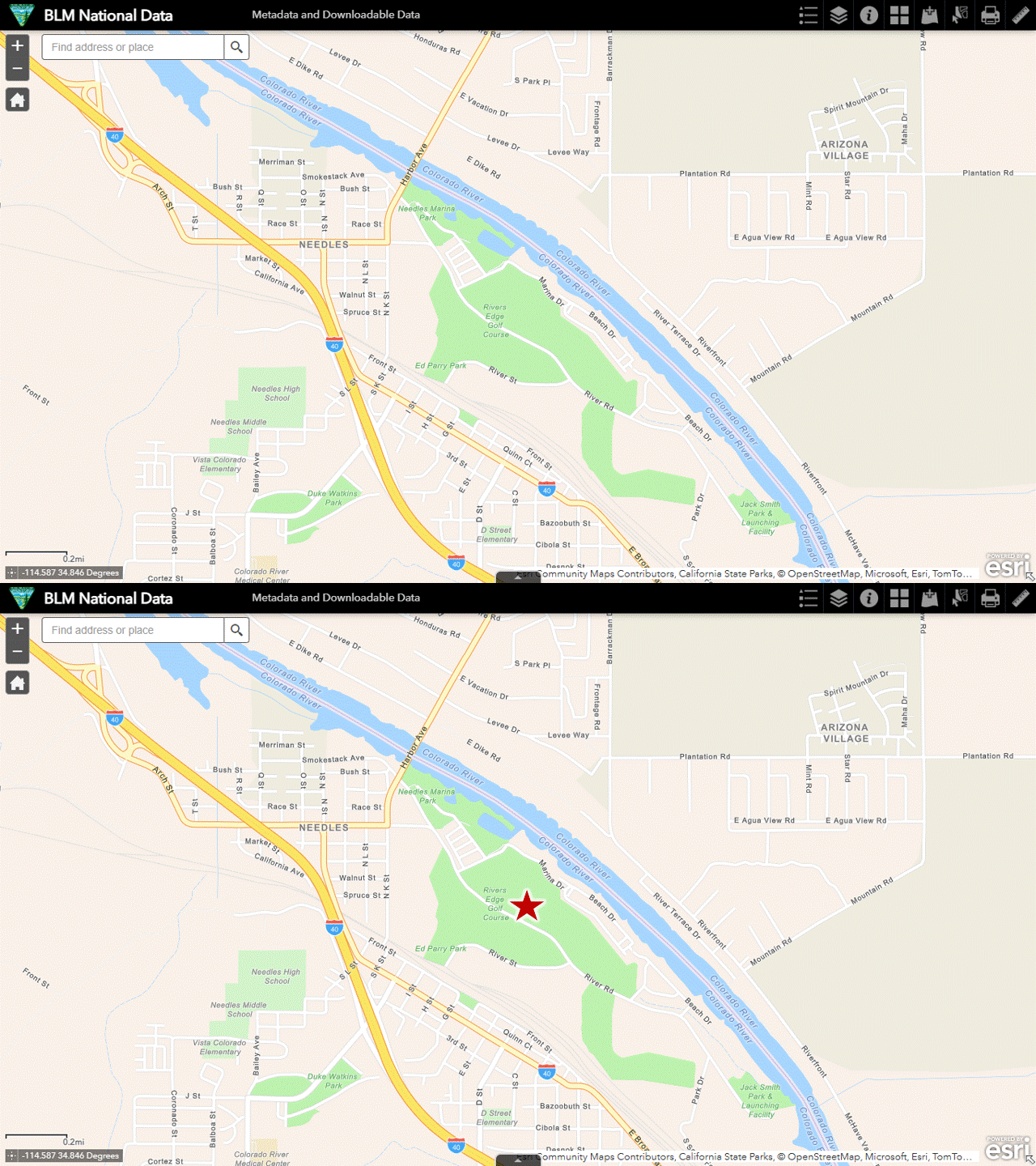
At the Salt River with Mommabird Arizona.
You can’t poison their water holes per 18 USC 3 §47, a common practice before 1959.

Today, the advocates poison the mares with Zonastat-H, a restricted-use pesticide that tricks their immune systems into attacking their ovaries.

The ranchers are also involved, but they prefer GonaCon Equine.
Their methods may differ but their goal is the same: Ranching superiority in the lawful homes of wild horses.
RELATED: If You Want to Help the Ranchers Give Money to the Advocates.
We know what the advocates think about foals.
One is bad enough but two will put them into high earth orbit.
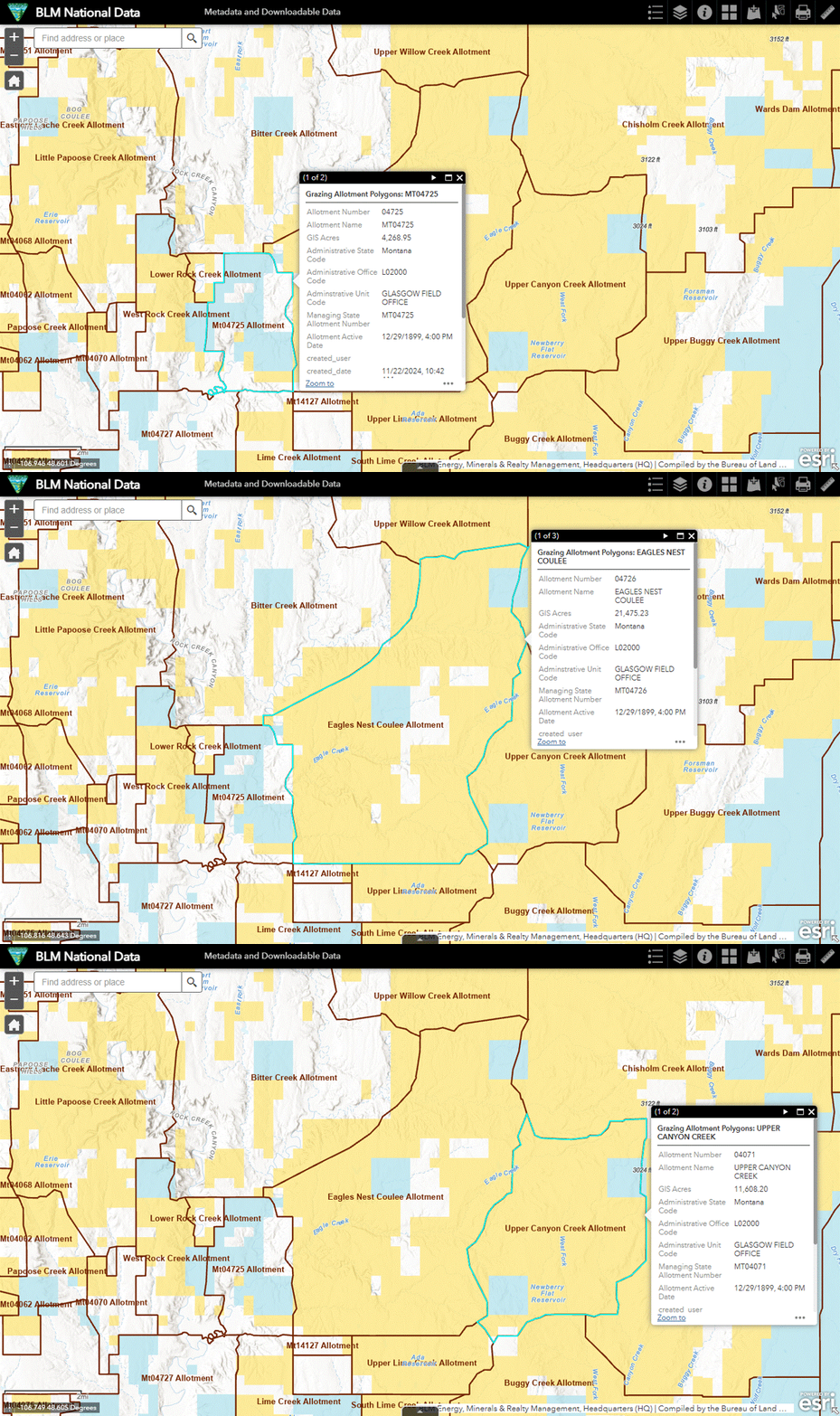
The allotments overlap an area known as Y U Bench near Cody, WY, where livestock fencing was modified to facilitate pronghorn migration.
They offer 3,793 active AUMs on 35,181 public acres, according to the Allotment Master Report.

The forage assigned to horses is zero.
How many wild horses could live there?
Using the principle of forage interchangeability, the True AML would be 317, the number of horses the land could support if it was managed principally for them as specified in the original statute.
The stocking rate would be nine wild horses per thousand public acres.
Why is this important?
The bureaucrats and ranchers claim that public lands in the western U.S. can only support one wild horse per thousand acres (27,000 animals on 27 million acres).
The advocates, defeated a long time ago and now in their camp, reinforce the narrative with their darting programs.
If the allotments were an HMA, the AML would be 35 and 282 horses would be consigned to off-range holding because of permitted grazing.
BLM allotments in Wyoming carry livestock equivalent to 158,425 wild horses on 17,312,214 public acres, or 9.2 wild horses per thousand public acres.
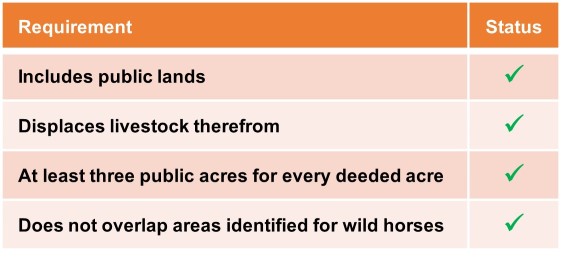
Wild horses can be placed on public lands not identified for their use by acquiring base properties associated with grazing allotments and flipping the preference to horses, as American Prairie did for bison in Montana.
RELATED: The Allotments Tell the Story: They’re Lying, All of Them.
The incident will begin on October 5, according to a report by KFYR News, with 400 bison captured and 200 removed.
On October 18, 200 wild horses will be captured and 15 removed.
A helicopter will push the animals into the traps and operations will not be open to public observation.
Western Horse Watchers was unable to find an announcement at the TRNP news page.
A link to the NEPA analysis covering the action was not given.
The location of gather stats and daily reports is not known.
Volunteers with the Absaroka Fence Initiative and nearby community modified over two miles of barbed wire fence on Y U Bench southeast of Cody, WY to facilitate the migration of the Carter Mountain pronghorn herd, according to a BLM news release.
The changes maintain functionality for livestock grazing.
The offending allotment was not identified.
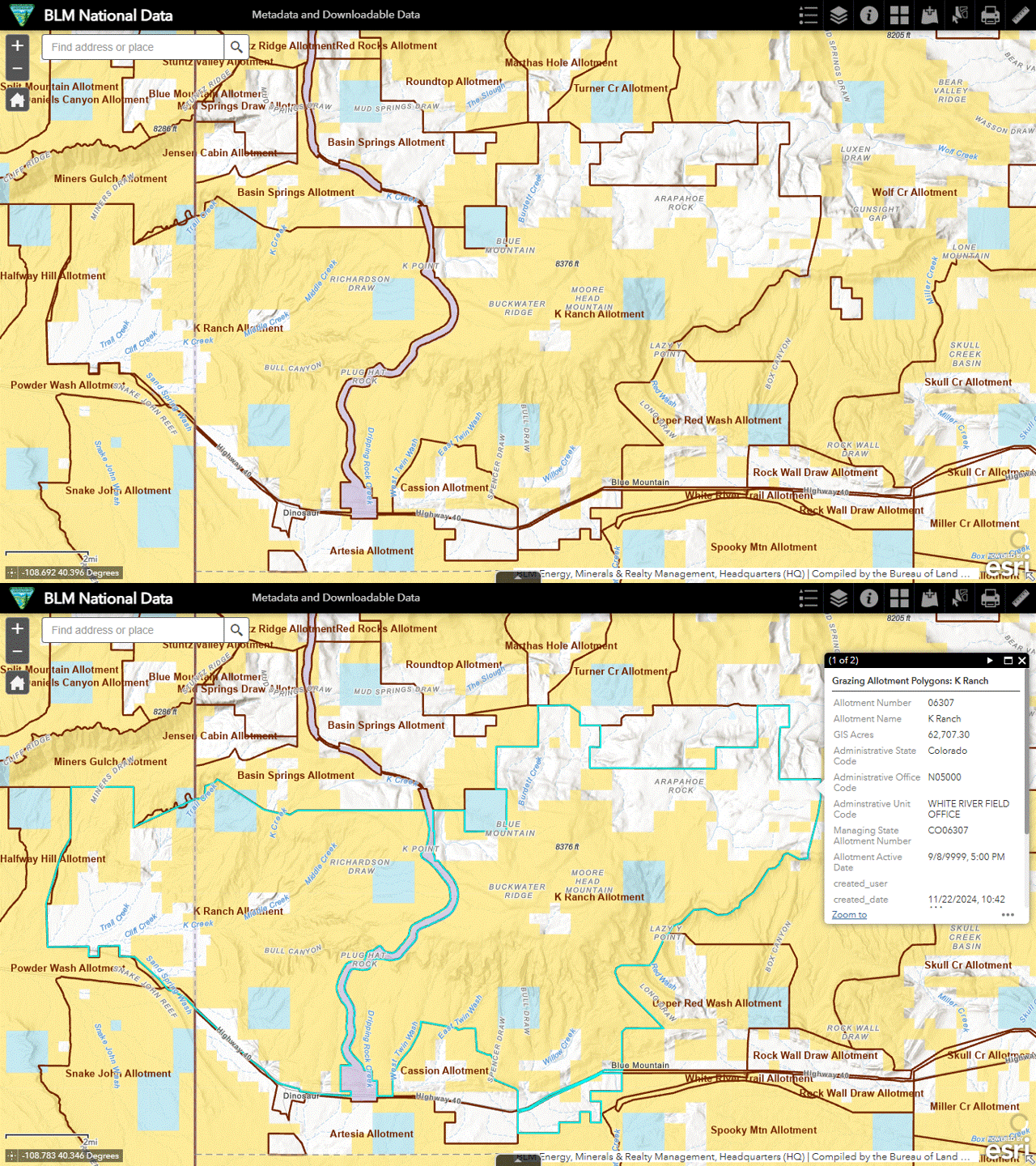
The National Data Viewer shows numerous allotments in and around Y U Bench, all in the Cody Field Office.
Western Horse Watchers searched the Allotment Master Report for parcels containing “Bench” and selected five.
The report puts all of them in the Improve category, another indication that our stewards of the public lands are not taking their responsibilities seriously.
The event was covered by the Cody Enterprise in a September 12 article, but nobody explained why the permittees aren’t accountable for wildlife-friendly fences.

Perhaps the fences are just a symptom and the real problem is animal agriculture, along with its enablers, cheerleaders and collaborators.
Wild horses and burros might have a few things to say about that.
Y U Bench lies between the McCullough Peaks and Fifteenmile HMAs, not shown in the following map. Click on image to open in new tab.
The one-horse pony made it official in this proclamation.
It’s a reminder that wild horses have been cheated by the bureaucrats in favor of the ranchers with the cooperation of the advocates.

It’s not about healthy horses on healthy rangelands as suggested in the September 26 blog post, it’s about ranching superiority in the lawful homes of wild horses, sometimes referred to as achieving and maintaining AMLs.
The advocates stopped playing for the home team years ago. Today, they support the effort through their darting programs (first part of schedule).
Ranchers perform the task in Oregon.
In herds where field-darting is not practical, the BLM will capture the animals, provide the treatment and return them to the range. These incidents have been marked “CTR.”
The column did not indicate how much forage had been assigned to livestock in the areas targeted for removal, which would allow you to decide by calculation if they’re really overpopulated.
FY25 begins on October 1.
RELATED: FY25 Roundup Schedule Issued.

You can follow the action, set to begin on September 30, here.
RELATED: Twin Peaks Roundup Announced.
The advocates say that wild horse adopters should not receive cash incentives because they turn the process into a money-making venture, with some animals ending up in slaughter.
Similarly, the advocates should not be given financial support because it fuels their obsession with pesticides, primarily PZP.
Instead, they should be given vouchers for treatment at Betty Ford clinics or similar institutions, where they can be deprogrammed and educated in basic math, rational thought and intellectual integrity.
RELATED: Foal-Free Friday, Gaslighting Your Supporters Edition.

You’re seeing cow poop where you previously saw horse poop.
The Campaign Against America’s Wild Horses, a leader in nonmotorized removal and staunch opponent of principal use, pursues the Virginia Range mares relentlessly.
The PZP darting program, now in its sixth year, has moved into the sterilization phase, which may explain why it hasn’t posted the Year 6 agreement with NDA to its darting resources page.
It may contain terms like “tipping point” and “no looking back,” as its adherents lucture you about the safety and reversibility of the pesticide.
This bogus advocacy group will do anything to win the approval of the bureaucrats and ranchers, including total herd destruction.
RELATED: If You Want to Help the Ranchers Give Money to the Advocates.

The HMA sits on top of nine grazing allotments, discussed in Section 3.2.2 of the Final EA for pest control and resource enforcement therein.
The map in Appendix H shows the arrangement (page 103 in the pdf).
The National Data Viewer indicates that some of the allotments extend beyond the HMA boundary, taking with them a small percentage of the active AUMs, but that will be ignored in this report.
The management plan allows 758 wild horses in the HMA plus 116 wild burros.
These animals require 758 × 12 + 116 × 6 = 9,792 AUMs per year.
The Allotment Master Report provides management status, acreage and active AUMs.

The allotments offer 26,803 active AUMs per year on 656,475 public acres.
Approximately 99% of that acreage is in the Improve category.
The AUMs would support 2,234 wild horses, on top of the 758 allowed by plan.
The pre-gather population of 1,800 is well within this range.
Current management practices give the resource to the ranchers, who pay $1.35 per AUM, while consigning 2,234 wild horses to off-range holding at a cost of $5 per head per day.
The cash flow in this scenario, Alternative A, is:
1.35 × 26,803 – 2,234 × 5 × 365 = -$4,040,865.95 per year
The Proposed Action, Alternative B, would shift the resource back to the horses by confining the ranchers to their base properties, for a cash flow of zero.
No income from grazing, no expenditure for off-range holding, with net savings to taxpayers of $4 million per year.
RELATED: Twin Peaks Roundup Announced.

The permits on these allotments, located west of Hawthorne, NV, are up for renewal.
They offer a combined 5,102 active AUMs on 71,998 public acres, according to the Allotment Master Report.
The forage assigned to horses is zero.
How many wild horses could live there?
Using the principle of forage interchangeability, the True AML would be 5,102 ÷ 12 = 425, the number of horses the land could support if it was managed principally for them as specified in the original statute.
The stocking rate would be 425 ÷ 71,998 × 1,000 = 5.9 wild horses per thousand public acres.
Why is this important?
The bureaucrats and ranchers tell us that public lands in the western U.S. can only support one wild horse per thousand acres (27,000 animals on 27 million acres).
The advocates, defeated a long time ago and now one of their allies, give their assent through their darting programs.
If the allotments were an HMA, the AML would be 72 and 353 horses would be consigned to off-range holding because of permitted grazing.
BLM allotments in Nevada carry livestock equivalent to 173,144 wild horses on 40,194,360 public acres, or 4.3 wild horses per thousand public acres.
Wild horses can be placed on public lands not identified for their use by acquiring base properties associated with grazing allotments and flipping the preference to horses, as American Prairie did for bison in Montana.
RELATED: The Allotments Tell the Story: They’re Lying, All of Them.