There must be a mistake. One got through. Not a link to a specific post but to the blog.

“We have spoken to the developers and it won’t happen again.”

Western Horse Watchers Association
Exposing the Hypocrisy, Lies and Incompetence of the Wild Horse Advocates
There must be a mistake. One got through. Not a link to a specific post but to the blog.
“We have spoken to the developers and it won’t happen again.”
Webinar presented by Return to Freedom, with Neda DeMayo and Celeste Carlisle.
Didn’t see any Virginia Range mustangs yesterday while working on the watering station so this will have to do. H/T Dr. Jennifer Jewel.
Stock tanks were empty when checked on 11/16/18. A mustang probably bumped the handle on the yard hydrant, snapping it shut. Trailcam photos suggest it happened between 11/02/18 and 11/04/18. No human interference was observed. A small wood block was placed under the handle to keep it open. Tanks were bleached and refilled.

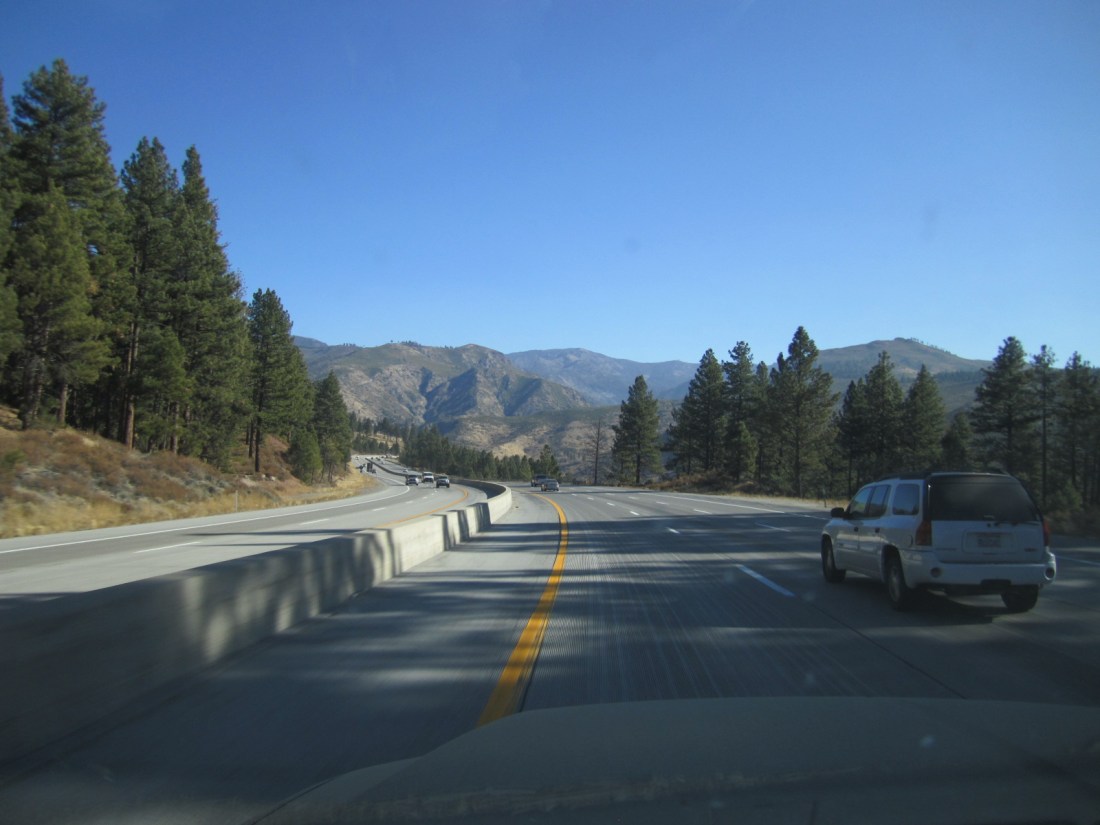
Eastbound on I-80, descending from Truckee, CA on 11/16/18. A chance to get away from the smoke-filled valleys of the west. On the return trip, haze from the Camp Fire was encountered at Auburn, CA, with a strong odor filling the vehicle at Penryn.
Virginia Range mustangs enjoy some down time (literally) at the watering station.

Wild horse advocates want motorists to slow down on HWY 48 in Alto, NM. Refer to this report by KRQE posted yesterday. Includes video.
RELATED: Alto Horses Settling In.
This speech may have been produced for a homework assignment, but it’s a fairly good assessment of the current situation in the wild horse world. H/T Amanda WH.
Helicopters will be used to remove 980 ‘excess’ wild horses from the Silver King HMA, beginning 11/26/18, according to a BLM news release issued today. The roundup will be open to public observation.
Captured animals will be taken to the Indian Lakes off-range corrals in Fallon, NV, where they will be checked by a veterinarian and prepared for adoption. Given that the system has been flooded with 12,000 wild horses and burros removed from western rangelands in 2018, most will end up in segregated long-term holding. No family, no foals, no legacy.
The HMA covers 575,460 acres and has an AML of 128, for an aimed-at population density of 0.22 horses per thousand acres, almost nothing. The post-gather population will be 244 horses, according to the announcement. The HMA is in eastern Nevada.

The stated reason for the roundup is overpopulation. The real reason may forage losses.
This map, which appears at the BLM page for livestock grazing in Nevada, indicates the HMA is subject to several grazing allotments.

Three hundred wild horses were pushed off the Eagle HMA, immediately east of Silver King, in September. Perhaps this roundup will finish the job and clear the way for more livestock in 2019?
Anything for the public-lands ranchers.™
UPDATE: Gather stats and daily reports will be posted to this page.
Helicopters were grounded on 11/08/18, with 932 wild horses shipped from the Devil’s Garden Plateau WHT. Refer to this USFS news release. Gather stats were not provided:
Approximately 250 horses will be offered for adoption this weekend, according to a story posted yesterday by the Herald and News of Klamath Falls, OR. They have probably been hand-picked for the event.
An advocacy group argued that the adoption should be cancelled due to an outbreak of pigeon fever that could spread to domestic horses.
Another 650 horses were taken to the BLM Litchfield Corrals where they will be placed into an adoption program that has been flooded by roughly 12,000 horses and burros already gathered from western rangelands in 2018.
A roundup of similar size is planned for 2019.
RELATED: CBS Covers Roundup at Devil’s Garden WHT.
This map, sourced from the WHB maps page, shows Herd Areas and Herd Management Areas in southeast Oregon. The HMAs, which are managed for wild horse and burros, have blue borders. The HAs, which may or may not contain HMAs, have red borders.
Jackies Butte HA includes Jackies Butte HMA plus some additional land to the north that is not managed for WHB. The Warm Springs HA has the same boundaries as the HMA. The Diamond Craters HA has no land managed for WHB, although horses and burros were found there when the WHB Act became law (that’s the definition of a HA).

Herd Areas are not managed for horses and burros because they don’t have adequate resources, according to the BLM. Go to 08:30 in this video.
This map, sourced from Data Basin, shows grazing allotments in the same area. HMAs from the map above have been added in red. Allotments are shaded green.

Most of the land in this part of the state is subject to BLM grazing permits. Same for the HMAs. Some HMA boundaries coincide with allotment boundaries. Which came first?
Note that lands outside the HMAs also fall within permitted grazing allotments—lands that can’t support horses and burros. But they can support cattle and sheep?
Would the situation be any different in Nevada? Utah? Wyoming?
If the Wild Horse and Burro Program is not run by ranching interests for the benefit of ranching interests, what would be done differently it was?
On the Salt River. H/T Mark Formo.
Today we honor our veterans. H/T Heart Of The Homefront for the video.
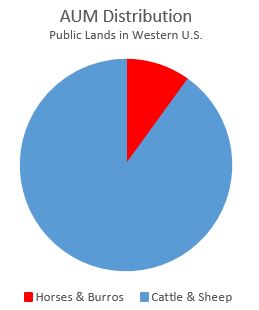
Wild horses and burros consume one million AUMs per year, cattle and sheep consume nine million AUMs per year. Ten percent vs. ninety percent. A ‘thriving ecological balance’ is only a few more roundups away.
Looking up and down the valley on 11/10/18. Smoke from northern California wildfires gives everything an orange tint.


Looking west around 4:00 PM on 11/09/18, Contra Costa County, CA. Wildfires about 150 miles to the north.

Ten wild stallions will be removed from the Fish Springs area next week, according to a report posted today by The Record-Courier of Gardnerville, NV. Written complaints to the BLM have described their behavior as ‘aggressive.’ Damage to private property and a concern for personal safety were also cited in the complaints.
“A formal request for their removal was submitted by the Pine Nuts Wild Horse Advocates group.”
Bait traps will be used to capture the ‘excess’ stallions.
In September the BLM demanded that the Fish Springs herd be reduced from 78 horses to 58 by 2020. Could it be that the PN ‘advocates’ see this as opportunity to partially achieve that goal? Will they help the BLM set the traps?
The Fish Springs horses reside in the Pine Nut Mountains Herd Area, south of the Pine Nut Mountains HMA.
See also this news release issued today by the BLM.
RELATED: BLM Dictates Terms of Surrender to Fish Springs Advocates.
Sessions is out. Who’s next? See the report posted yesterday by The Hill.
One million AUMs consumed by horses and burros on western rangelands in a year, compared to nine million AUMs for cattle and sheep. Eighty thousand horses and burros, millions of cattle and sheep.
But the helicopters never chase any livestock, only the horses and burros. Who will clean up this mess? Classic ‘swamp.’
That’s what ranchers in northern Colorado said about wild horses in 1904. Although the story is much the same across western rangelands today, the horses have survived and some have become rock stars. One such example is the Sand Wash Basin. Refer to this story posted 11/06/18 by the Craig Press for a perspective of this herd.
Refer to this post which appeared this evening in Carol Walker’s Wild Hoofbeats blog.
“…the BLM has withdrawn completely…”
RELATED: Sterilization Delay in the News.
UPDATE: See this report by Oregon Live, dated 11/07/18.

