Devil’s Garden Horses Face Third Adoption Event

Fourteen former wild horses, younger than ten years of age, will be offered for adoption April 8 – 12 at the Double Devil Corrals, according to a report dated March 27 by the Herald and News of Klamath Falls, OR.

Presumably, the $1,000 incentive applies but was not mentioned in the story.  Most of the horses unloaded so far have exited via ‘sale with limitations.’

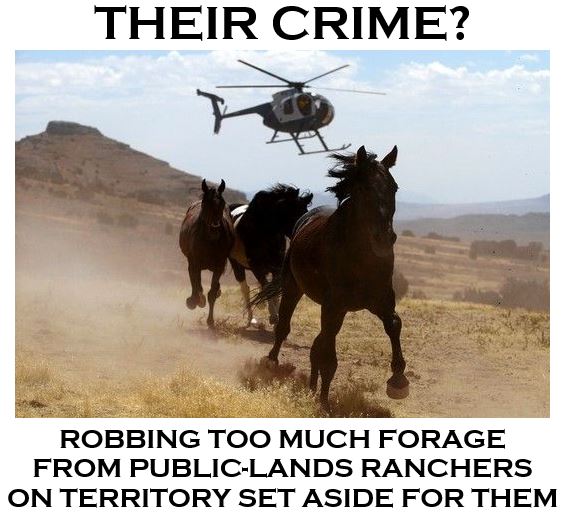
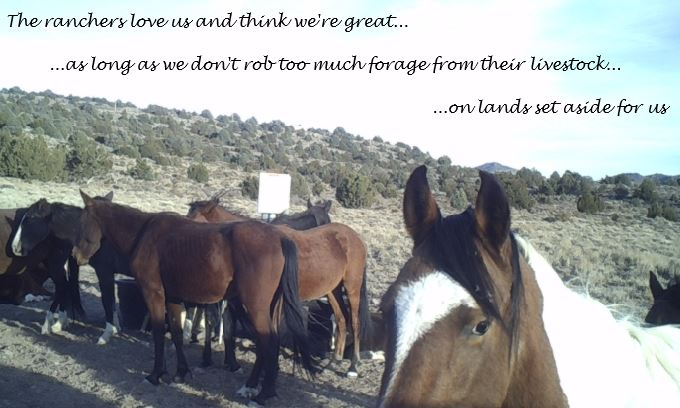
These animals were forced off their home range—public lands set aside for them—to make way for privately owned livestock.

RELATED: Ranchers Encouraged by Devil’s Garden Roundup.

Inmates Turn BLM Wild Horses Into Pets?

They are companion animals but calling them ‘pets’ may be a bit misleading, especially after just 120 days of training.

Nevertheless, inmates at the Northern Nevada Correctional Center do give them a good foundation, which makes them more attractive to adopters.

Refer to this article, posted today by the Las Vegas Sun for details.

RELATED: Saddle-Started Horses Available Later This Month in Carson City.

BLM to Host Adoption Event for Little Bookcliffs Horses

A field office manager, quoted in today’s news release about the upcoming event in Fruita, CO, said the agency wants to see these animals find good homes.

The event will include a training demonstration on the first day.  The adoption fee has been lowered to $25 and the $1,000 incentive applies.

The best home for these animals, of course, is the range from which they were pushed, which is the last place these people want to see them.

That is the meaning of ‘healthy horses on healthy rangelands.’  Kick most of them out so their food can be sold to public-lands ranchers.

RELATED: Stupid Horses Won’t Take the Bait at Little Bookcliffs.

Explosive Growth of Wild Horse Populations?

That’s how it looks if you’re a public-lands rancher.  Consider this piece, posted today in the Elko Daily Free Press.  Long on numbers about wild horses and burros, but devoid of facts about privately owned cattle and sheep.

There were roughly 82,000 wild horses and burros on public lands in the western U.S. last year, according to the story.  About 10,000 were removed in 2018 but the 2019 foal crop has probably replaced them.

Given that roughly nine million AUMs are sold to ranchers annually, there must be about 1.5 million cow/calf pairs grazing on public lands in the western U.S., assuming they feed six months per year.

Livestock population densities, computed elsewhere on these pages, also show a huge margin beyond that for wild horses and burros.

Wild Horse Overpopulation Current-1

But it doesn’t matter.  The wild horse population exceeds AML, the number of horses on public lands the ranchers are willing to tolerate, roughly one animal per thousand acres.

Wild Horse Overpopulation Planned-1

The population needs to be reduced, now.

You’d think it was their land but it’s not.

It’s not about cost.  It’s not about rangeland degradation.  It’s about deceit and greed on the part of the ranchers, their overlords and political allies.

The forage currently allocated to privately owned cattle and sheep on public lands in the western U.S. would support 750,000 wild horses and burros, enough to empty all of the off-range corrals and long-term pastures fifteen times over.

The Voice of Dependency

What is the Public Lands Council?  The description for the following video says the organization represents 22,000 public lands ranchers in the Western United States.

Given its location in Washington DC, most of its resources are probably devoted to public relations and political influence.

One thing is clear: Its anti-horse agenda.

Public Lands Council Anti Horse Agenda-1

Curiously, the first goal has been accepted by most of the so-called advocacy groups, with some of them involved in the second item as well.

The fourth item is perhaps the most troubling—elimination of HMAs and WHTs so forage consumed by wild horses and burros can be allocated to privately owned cattle and sheep.

Consider this definition regarding public lands from Section 103 of FLPMA:

Principal Uses FLPMA-1

Go ahead and find a trade group representing oil companies, mining companies, timber companies or outdoor recreation companies that’s as hostile to WHB as these guys.

BLM Shortens Lead Time for Gather Announcements

Public notifications for wild horse roundups will now be given 14 days before the expected start date, according to a report posted today by Return to Freedom in Lompoc, CA.  The previous window was 31 to 76 days.

The decision was praised by a spokesman for the Public Lands Council, a front group for the public-lands ranchers and influence peddler in the 1970s when the Federal Land Policy and Management Act was drafted.

Gathers can still be performed on an emergency basis, with little or no advance notice.

Such was the case last year at the Wheeler Pass, Pancake and Antelope Valley HMAs, Nevada Wild Horse Range, Spruce-Pequop and Eagle HMAs, and the Owyhee Complex.