
Family fun with the Wandering Wassoms. Might be the Onaqui Mountain horses.
Author: Western Horse Watchers
Ranchers Challenged by Water Shortages and Wild Horses
It may cost less to bring the animals to the feed than the feed to the animals, but that’s not always the case for water. Sometimes public lands have enough forage to support livestock but not enough water, according to a report posted today by AgAlert, a trade publication based in Sacramento, CA.
One of the ranchers interviewed for the story noted that grazing by the AUM makes more sense than grazing by the acre [especially when the fee is five percent, give or take, of the going rate on private lands]. Pay only for what you use.
As for the horses, they’re going after the same water, so in some cases the ranchers have to haul it in for their animals.
RELATED: Montana Grazing Fees.
Triple B Emergency Wild Horse Roundup Begins This Week
BLM announced today that approximately 360 wild horses will be removed from the Triple B and Maverick-Medicine HMAs starting July 24, due to lack of water.
The HMAs belong to the Triple B Complex, which was gathered about a year ago.
The operation will be carried out with bait traps, according to the news release, and will not be open to public observation.
Triple B covers 1,232,494 acres in eastern Nevada. Maverick-Medicine, to the north, contains 323,562 acres. The AML at Triple B is 518, for a target stocking rate of 0.4 wild horses per thousand acres. At Maverick-Medicine, the AML is 276, for a target stocking rate of 0.9 wild horses per thousand acres.
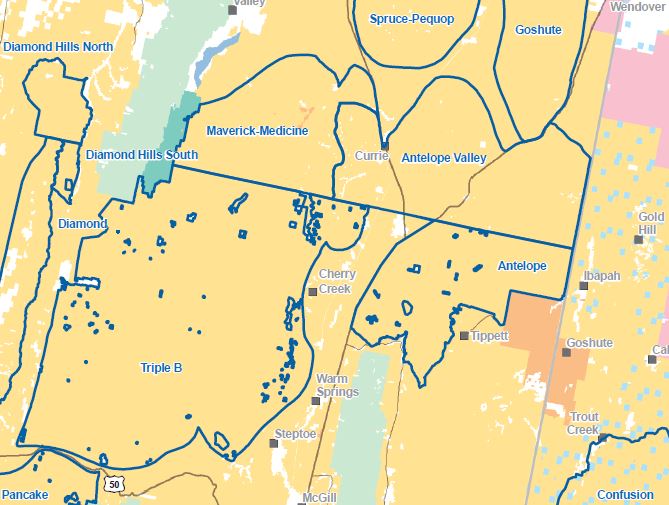
Recall from the discussion in April that fractional stocking rates may indicate large amounts of forage diverted to privately owned livestock.
The estimated population at Triple B is 1,618 wild horses, with an estimated 1,944 wild horses at Maverick-Medicine.
Captured animals will be taken to the off-range corrals at Palomino Valley, about 20 miles north of Reno.
Gather stats and daily reports will appear on this page.
RELATED: Triple B Horses Get Short End of Stick.
Comments on Saylor Creek Wild Horse Roundup
The stocking rate allowed by plan is 0.5 wild horses per thousand acres. That should raise an eyebrow. The plan assigns 95% of the authorized forage on the HMA, omitting wildlife, to livestock, with the balance to horses.
It’s one of the best examples of mismanagement in the WHB program.
The pre-gather population of 131 horses is 2.6 times above AML, yet it represents just 13% of the carrying capacity of the land.
Unlike Swasey, which reached its capacity, the HMA is not overpopulated, at least not with horses, so what’s driving the roundup? What’s the rationale for contraceptives?
Could it be that the herd was approaching the minimum recommended size for genetic viability? Or might it be the attitudes, loyalties and beliefs of those who wrote and approved the management plan?
RELATED: Saylor Creek Roundup Pending.

Wild Burros Hit By Vehicles Near Riverside
Five wild burros were killed earlier today when struck by vehicles on northbound I-215 northeast of Riverside, CA. A report by FOX 11 News of Los Angeles said the animals are known to inhabit the Reche Canyon area between Colton and Moreno Valley.
They would have had to migrate several miles to the west to reach the freeway.
RELATED: Reche Canyon Burro Rescued from Sinkhole.
Saylor Creek Roundup Pending
BLM said today that all wild horses on the Saylor Creek HMA will be gathered, with 50 to be returned, beginning later this month. Mares selected for return will be treated with contraceptives.
The operation will be carried out with bait traps, according to the news release, and will not be open to public observation.
The HMA covers approximately 101,900 acres in southern Idaho. The AML is 50, for an aimed-at stocking rate of 0.5 wild horses per thousand acres. The current population is 131, including 81 ‘excess’ animals.
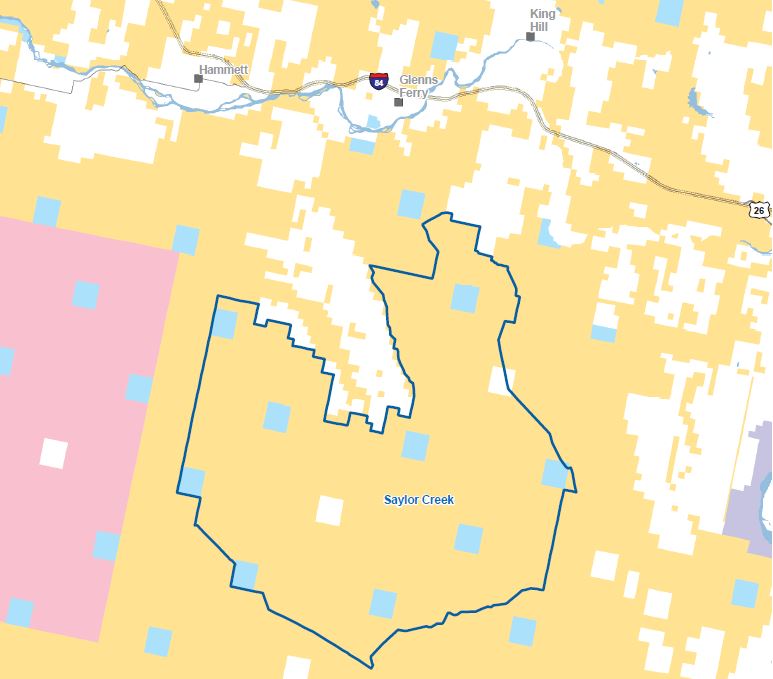
The HMA intersects eight grazing allotments. There are no naturally occurring water sources in the area and the horses survive on water provided by ranchers.
The management plan for the HMA assigns 18 times more forage to livestock than the horses. That resource would support an additional 932 wild horses, over ten times the number of animals claimed to be ‘excess.’
Captured animals will be taken to the off-range corrals in Boise. Gather stats and daily reports will be posted at this page.
War Wounds on Virginia Range

Swasey Progress Report Day 6
The daily reports show 506 wild horses captured through July 20, with none returned to their home range. The contractor has been removing an average of 84 horses per day.
Most body condition scores over the last two days ranged from three to five, although a few of the horses were rated two.
Foals accounted for 14% of the animals gathered since July 15.
RELATED: Swasey Progress Report Day 4.
Sleep All Day Out All Night
Trailcam photos from the Virginia Range. They probably look for shady spots on hot summer days, among the pinyon pines and juniper trees.
The title of this post comes from an old James Gang tune, Funk #49.

Mustang Monday
Horses have the day off. At Custer State Park with Gary Brandt.
Swasey Wild Horse Fatality Justifies Contraceptives?
A press release issued today by AWA and AWHC, in the wake of a death yesterday during the Swasey wild horse roundup, calls for an $11 million expenditure in 2021 to dart wild horses with PZP.
They need better protection, according to the writers.
Contraceptives mean they won’t even be born—never to be harmed by roundups—a strategy that dovetails perfectly with approved plans to divert most of their food to privately owned livestock.
The announcement suggests that AWHC was the client behind the opinion piece that appeared in several publications on Friday. Whose side are they on?
RELATED: Swasey Progress Report Day 4.
BLM Opinion Piece Acclaims ‘Path Forward,’ Ignores Livestock
“Now is the time to chart a bold new course for the management and protection of the horses and burros and prevent unnecessary degradation to their habitat,” according to the writer of a guest column appearing this evening in the Las Vegas Review Journal.
The current population of 95,000 wild horses and burros on BLM-managed public lands is more than three and a half times what the land can support [given the amount of resources we’ve diverted to privately owned livestock].
He forgot that part.
Swasey Progress Report Day 4
The daily reports show 398 wild horses captured through July 18, with none returned to their home range. One death occurred today, a five year old mare died after hitting a panel. Body condition scores since the last update were 3s and 4s, with a few 2s.
Foals accounted for thirteen percent of the total animals gathered.
RELATED: Swasey Progress Report Day 2.
AWA Urges Lawmakers to Accept PZP for Wild Horses
Animal Wellness Action, a lobbying group in Washington D.C., said yesterday in an opinion piece published by the Pagosa Daily Post that “lawmakers have the opportunity to land on the right side of history – and the American taxpayer – by requiring BLM to implement PZP contraceptive in 2021.”
Never mind that the EPA was ordered to reconsider the registration of the pesticide earlier this year.
And you should ignore the Assateague census results that show its long-term effects on wild horse herds.
Lobbyists do as their clients require. In this case, a photo of a wild horse roundup, provided by AWHC, was included. Might they be the client?
That group has thrown in with the public-lands ranchers. They’re using your hard earned donations to do the rancher’s dirty work, which is to ensure that seventy, eighty, ninety percent or more of authorized forage on lands set aside for wild horses goes to privately owned livestock.
Don’t pay attention to their words, pay attention to their deeds.
Wild Horses Robbing School Kids’ Lunches!
You can’t make this stuff up! Segment begins at 13:38.
Swasey Progress Report Day 2
The daily reports indicate 253 wild horses captured as of July 16, with none returned to their home range and no deaths.
Body condition scores ranged from three to five(!) with a few twos.
Not exactly what you’d expect for an area that’s grossly overpopulated.
The fives tell the story: The horses are robbing too much forage from the poor ranchers.
The management plan for the HMA assigns six times more forage to privately owned livestock than horses.
Sand Springs Wild Horses Get Short End of Stick
Sand Springs is the third and final HMA in the Barren Valley Complex, an area subject to wild horse management actions per the Decision Record dated June 9.
The number of wild horses and privately owned livestock on the HMA vary with time and rangeland conditions but resource allocations don’t change that much. What do they reveal about the attitudes and beliefs of those who wrote them?
The management plan allows 200 wild horses on 192,524 acres per Section 1.2 of the Final EA. The current wild horse population is 422.
The forage requirement for horses is 200 × 12 = 2,400 AUMs per year. The stocking rate allowed by plan is 200 ÷ 192,524 × 1,000 = 1.0 wild horses per thousand acres and the number of excess horses on the HMA is 422 – 200 = 222.
Like Sheepshead, Sand Springs does not have a fractional stocking rate, so the proportion of forage diverted to livestock may not be as large as Coyote Lake.
The HMA intersects one grazing allotment. Table 6 in the EA provides the allotment size, permitted forage and grazing season. Few calculations are required. The forage budget was converted to cow/calf pairs, as their resource requirements are said to be equivalent to those of wild horses.
The HMA is not 100% subject to permitted grazing but close. The forage available to livestock inside the HMA is 6,314 AUMs per year.

The Saddle Butte ranchers would have to place 1,263 cow/calf pairs inside the HMA to graze off 6,314 AUMs in five months (6,314 ÷ 5). The stocking rate allowed by plan is 6.8 cow/calf pairs per thousand acres (1,263 ÷ 185,636 × 1,000).
These management indicators are compared in the following charts.

The management plan allocates 2.6 times as much forage to domestic livestock as it does for wild horses, on land set aside for the horses. The plan allows over six times as many cow/calf pairs per thousand acres as it does for horses.
Wild horses were not a priority when the plan was written. The “principally but not exclusively” clause of the WHB Act was ignored.
The forage assigned to livestock would support an additional 526 horses (6,314 ÷ 12), for a new AML of 726 (200 + 526).
There are no excess horses on the HMA (222 < 526). Carrying capacity has not been exceeded. So what is the rationale for roundups and contraceptives?
RELATED: Barren Valley Gather EA Comes and Goes, No News Release.
What to Do with 68,000 ‘Excess’ Wild Horses?
For your viewing enjoyment, a video report by Chief Meteorologist Ginger Zee of ABC News, distributed this evening by Yahoo! News.
What’s next, an engineer getting involved in the wild horse debate?
UPDATE: YouTube video here.
Jackson Mountains Roundup Ends Early
BLM announced this morning that the roundup was complete, with 85 wild horses removed from their home range on an emergency basis. No deaths were reported.
The operation began July 4. The original plan was to remove 300 wild horses over a period of 45 to 60 days.
Captured animals were taken to the Indian Lakes off-range corrals in Fallon, NV.
RELATED: Studs Outnumber Mares 2:1 in Jackson Mountains Roundup.
Currituck Horses at Great Risk?
Only 100 remain on the barrier island and “every single one lost is devastating to the genetic health and diversity,” said the herd manager in a report following last week’s choking incident.
She continued, “It’s hard enough to lose one to natural causes … but to lose one to something caused by humans and so easily avoided is just … I don’t even have a word for how bad that is.”
The greatest threat to these animals is not the tourists but the so-called advocates who stalk them with clipboards and darting rifles.
It’s bad when one dies but it’s okay if they’re never born.
You only need to look at Assateague Island (Maryland side) to see where this is going.
The PZP zealots have run that herd into the ground and they know it.

