FOAL Receives Matching Funds for Fall Auctions

The pledge will support activities such as

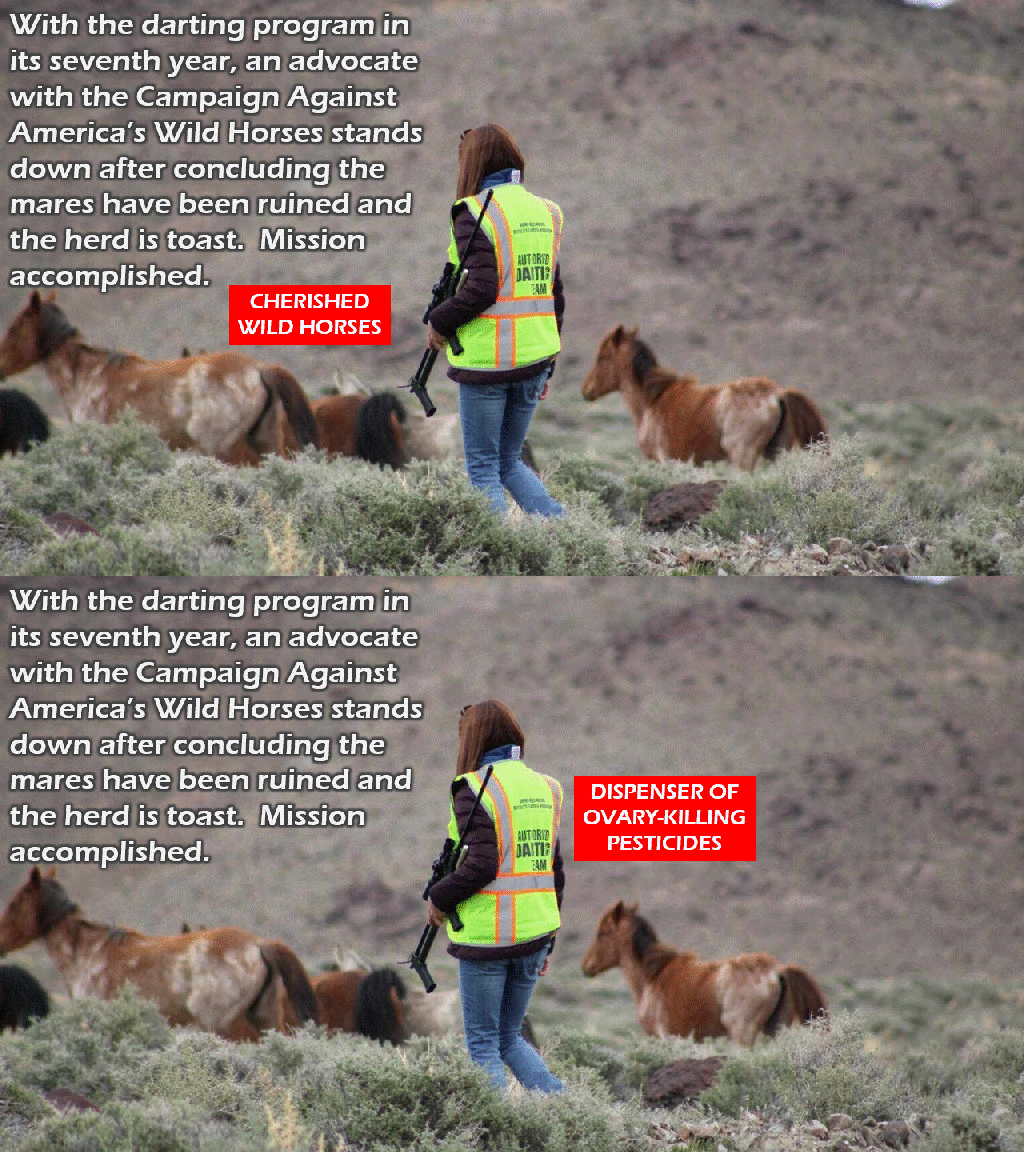
  • Beating the horse numbers down with ovary-killing pesticides
  • Restoring reservoirs that benefit wildlife and livestock
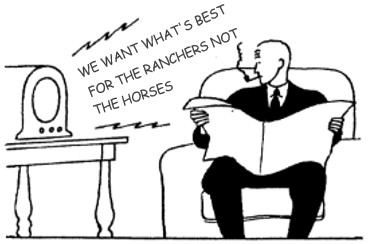
  • Working with the BLM to protect the ranchers

A story by the Cody Enterprise refers to an anonymous donor but the advocates know exactly who she is.

The group’s mission is to protect and preserve the wild horses of McCullough Peaks.

File under: Charlatans.

Where Is Wood Hills?

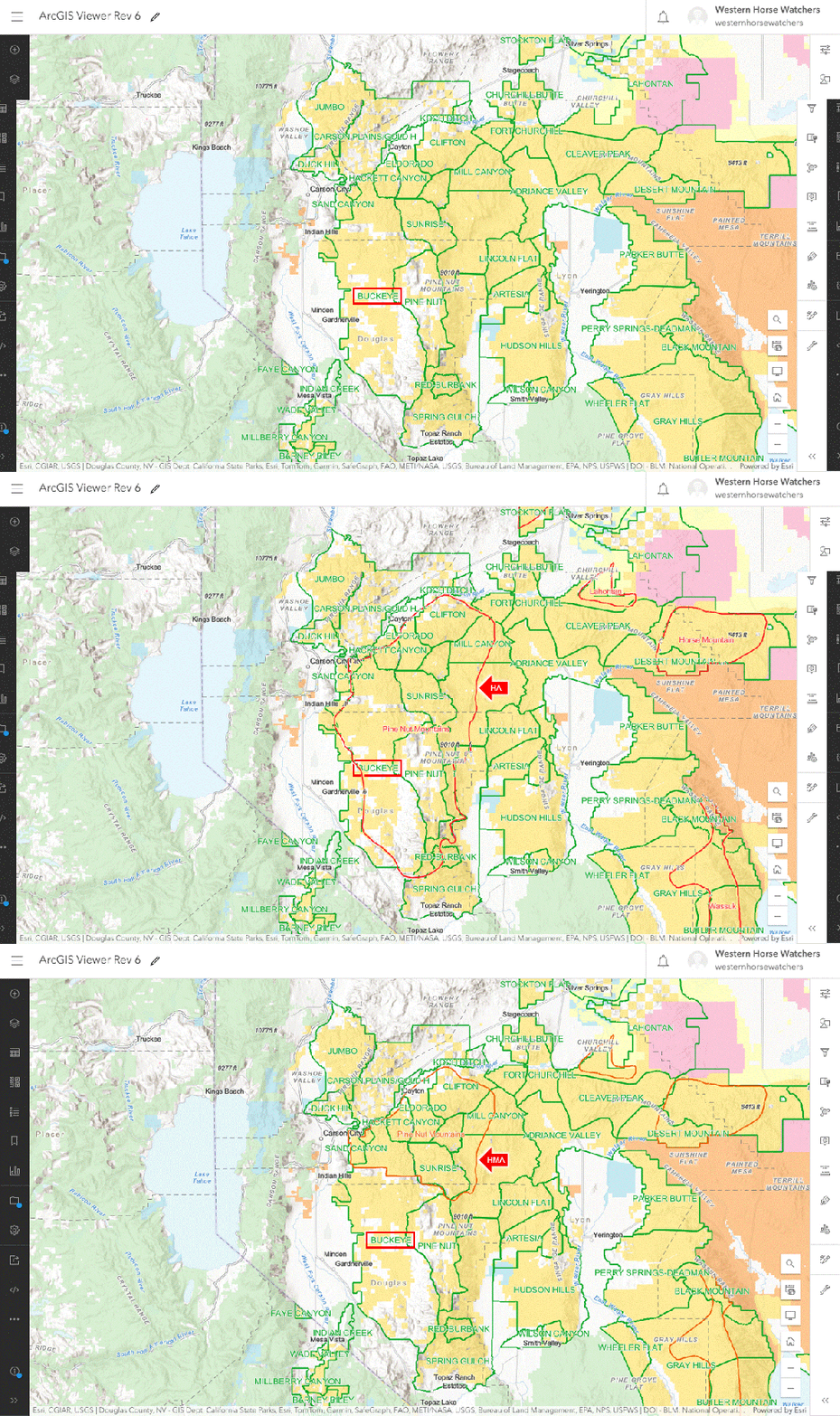
It’s west of the Spruce-Pequop HA and southeast of Wells in the I-80 checkerboard.

The ArcGIS Viewer indicates that wild horses were not found there when the WHB Act was signed into law.

Three allotments meet in the area: Moor Summit, Wood Hills and West Big Springs.

The allotment master report provides management status, acreage and available forage.

Together they offer 5,883 active AUMs on 153,602 public acres, equivalent to 3.2 wild horses per thousand public acres.

Your faithful public servants claim that public lands in the western U.S. can only support one wild horse per thousand public acres.

The Maverick-Medicine emergency roundup targets 75 wild horses in Wood Hills.

RELATED: Maverick-Medicine Emergency Roundup Starts August 8.

Salt Wells Roundup Marked ‘TBA’ in Latest Schedule

The incident is on hold due to a July 15 appeals court ruling.

The August 5 update indicates an ongoing roundup at Saylor Creek but there is no link to the daily reports at the Idaho gather page.

The schedule also indicates that the Maverick-Medicine emergency capture goal includes 75 wild horses from Wood Hills.

RELATED: Kiger/Riddle Dropped from Latest Schedule.

Denver Post Misleads Readers About Wild Horses

When you see a search result like this you know you’re about to be led down the garden path to a glorious place envisioned by ranchers and their allies.

How much of the material was sourced from the Bureau of Livestock Multiplication and the Campaign Against America’s Wild Horses?

Western Horse Watchers was unable to access the article.

Public lands in the western U.S. may have 47,500 wild horses and burros than allowed by plan, but not 47,500 more than the land can support.

The issue is not overpopulation, but the way your public lands are managed.

RELATED: Narratives, Collusion Drive Wild Horse Reporting.

Foal-Free Friday, Outliers and Counterexamples Edition

The conventional wisdom among the advocates is that procreation is bad for wild horses because the herds might outgrow the tiny resource boxes established for them by the bureaucrats, necessitating removal.

Their solution is to sterilize the mares with PZP.

However, there is an area where breeding is not only tolerated but expected.

It’s not compensatory reproduction, it’s factory farming.

Foals are harvested once a year and sold at auction.

Where is this herd?

On Chincoteague National Wildlife Refuge, the most profitable grazing allotment on the east coast, generating over $1 million for the Chincoteague Fire Company in 2025.

RELATED: Foal-Free Friday, Honey I Shrunk the Herd Edition.

BLM Scraps Plan to Expand East Pershing Complex

The project would apply population controls to more lands in the Stillwater Field Office, conferring the authority of a 2017 EA on acreage that wasn’t analyzed.

One of the goals was to sterilize approximately 30 percent of the low-AML population of each herd, even though it was not approved in the 2018 decision.

The practice will undoubtedly play a larger role in wild horse management, as the advocates demand greater use of fertility control pesticides in lieu of motorized removal.

RELATED: Introduction to the East Pershing Complex.

Maverick-Medicine Emergency Roundup Starts August 8

The project scope includes Wood Hills, an area north of Spruce-Pequop in the I-80 checkerboard according to the ArcGIS Viewer.

The capture and removal goals are 215 each.

Horses will be drawn into the traps with bait.

Operations will not be open to public observation.

There are no plans to treat any of the mares with fertility control pesticides and return them to the range.

Captured animals will be taken to the off-range corrals at Palomino Valley.

Progress reports will be posted to the gather page.

The impact of drought on permitted grazing was not discussed in the news release.

Chincoteague Ponies: Cash Cows of Assateague Island

No response yet from the Chincoteague Fire Company on the number of adult males and females on the island.

The herd would need at least 100 females to produce 100 foals.

That leaves 50 males out of a herd of 150, the maximum number of ponies allowed by FWS, for a sex ratio two mares for each stallion.

Abnormal sex ratios are usually seen in herds treated with PZP, a byproduct of the effort to sterilize the mares, but in the case of the Chincoteague herd, it’s probably intentional.

RELATED: Unsolved Mystery: Chincoteague Pony Demographics.

Callaghan EA Out for Review

Alternative A, the Proposed Action, features

  • Forcible removal to low AML
  • Population growth suppression using fertility control pesticides and IUDs
  • Sterilizing up to 25% of the mares
  • Skewing the sex ratio in favor of males

The new HMAP was copied to the project folder as Appendix XII.

Both were posted as Word documents.

Comments will be accepted through September 3 according to the news release.

RELATED: Scoping Begins for Callaghan HMAP.

Adobe Town Roundup Ends

The incident concluded on August 2 with 1,676 horses captured, 1,664 shipped, two released and seven dead according to figures in the sidebar.

There were three unaccounted-for animals.

1,676 – 1,664 – 2 – 7 = 3

The capture total does not include a mule caught on July 21.

The capture and removal goals were 1,675 each.

The daily reports indicate eight deaths, revised downward from nine, for a death rate of 0.5%.

The average daily take was 88.2.

Foals represented 21.2% of the animals gathered.

Of the adults, 45.6% were male and 54.4% were female.

There were no plans to treat any of the mares with fertility control pesticides and return them to the range.

The HMA is subject to permitted grazing.

The operation liberated 20,088 AUMs per year.

RELATED: Adobe Town Roundup Pending.

Unsolved Mystery: Chincoteague Pony Demographics

Assuming that foals are produced by a simple random process centered at 50% males / 50% females, a herd of 150 adults should contain between 37.75% and 62.25% females according to this relationship, where n = 150 and p-bar = .5.

Converting to integers, the number of female adults should range between 57 and 93.

Given that twins are very rare for horses, a herd of 150 adults should not be able to produce 100 foals unless something has occurred that invalidates the assumption of 50% males and 50% females.

Your host sent an email to the Chincoteague Volunteer Fire Company this morning seeking the current size of the herd and the number of adult males and females.

RELATED: Trends in Chincoteague Pony Auction Results.