
The management plan allows 362 wild horses on 151,435 public acres, or 2.4 wild horses per thousand public acres.
Beyond that, rangeland health will suffer according to your faithful public servants.
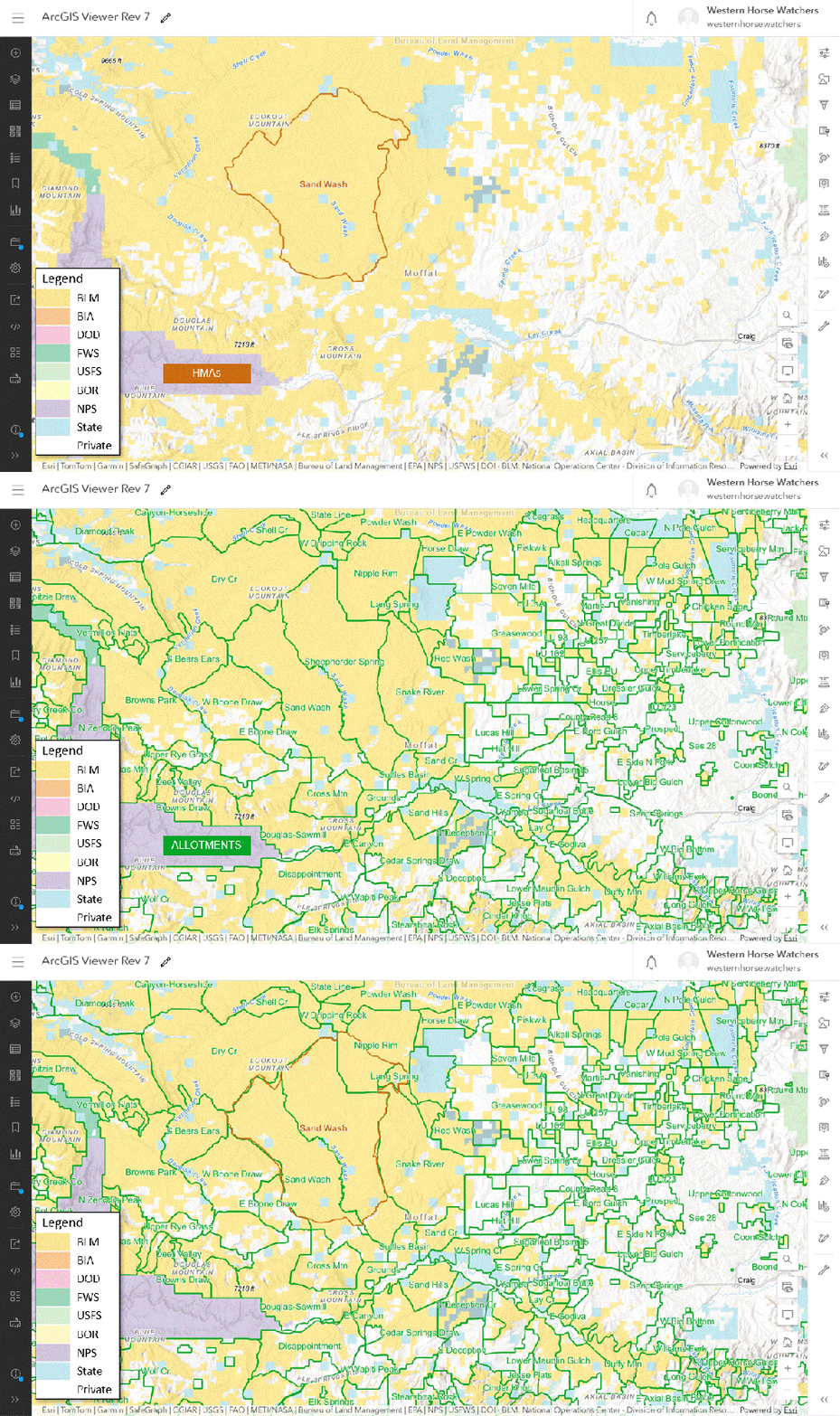
The Sand Wash and Sheepherder Spring allotments lie mostly within the HMA.
Sand Wash offers 7,568 active AUMs on 69,457 public acres according to the allotment master report, equivalent to 9.1 wild horses per thousand public acres.
Livestock should be kept below this limit, which is almost four times higher than that for the horses, to maintain rangeland health.

The allotment is in the Improve category but none of the AUMs have been moved into the suspended column to help the land recover.
There is no need for such action when you can blame the horses for the problems.
Sheepherder Spring offers 9,042 active AUMs on 74,147 public acres, equivalent to 10.2 wild horses per thousand public acres.
It’s in the Improve category but no AUMs have been suspended.
The current population in Sand Wash Basin is thought to be 505, or 3.3 wild horses per thousand public acres, over the limit for wild horses but under the limit for livestock.
That is the double standard for rangeland health.
► Get the truth about wild horses and the wild horse advocates at westernhorsewatchers.com.
 Western Horse Watchers Association