
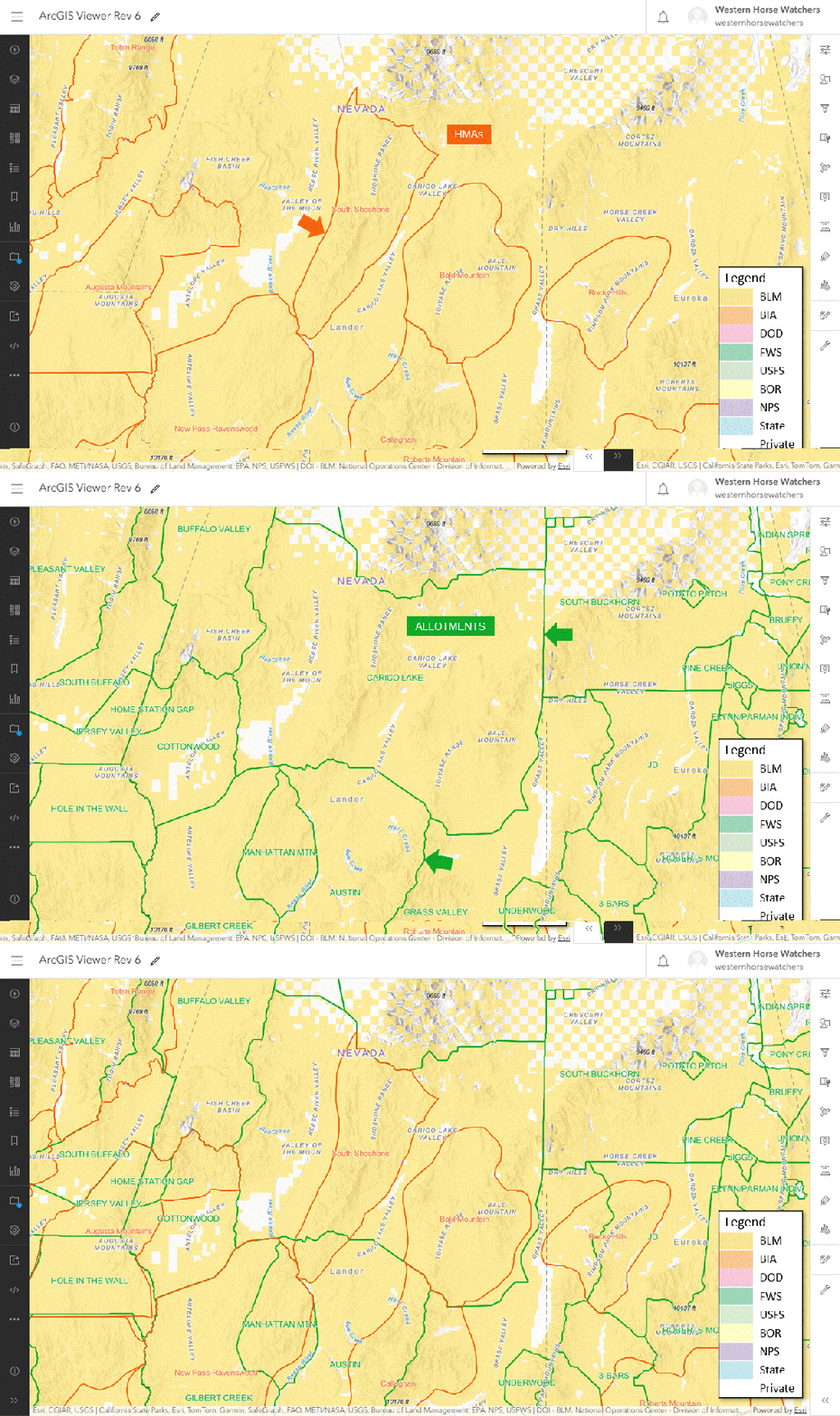
The HMA overlaps the Carico Lake and Austin allotments, with 11% in Austin and 89% in Carico Lake according to Table 8 of the Final EA for the Callaghan Complex.
The 100 wild horses allowed by plan require 1,200 AUMs per year.
Carico Lake offers 24,954 active AUMs per year on 562,465 public acres, equivalent to 3.7 wild horses per thousand public acres.
Austin offers 14,478 active AUMs per year on 235,185 public acres, equivalent to 5.1 wild horses per thousand public acres.
If the resource is evenly distributed across the parcels, it’s present in the HMA but your faithful public servants gave it to the ranchers.
To estimate the carrying capacity, shift it back to the horses. Forage assigned to wildlife stays with wildlife.
The HMA covers 132,401 public acres so the forage granted to the Carico Lake ranchers should support 132,401 × .89 × 3.7 ÷ 1,000 = 436 wild horses.
The forage granted to the Austin permittees inside the HMA should support 132,401 × .11 × 5.1 ÷ 1,000 = 74 wild horses.
The HMA should be able to sustain 100 + 436 + 74 = 610 wild horses (6X AML) if it was managed principally for them, as specified in the original statute.
The new stocking rate would be 610 ÷ 132,401 × 1,000 = 4.6 wild horses per thousand public acres, a bit more than the target stocking rate across all HMAs of one wild horse per thousand acres.
The allotment master report puts Austin and Carico Lake in the Improve category, which could be due to overgrazing or there may be some other environmental concern that needs monitoring.
The allotments would not make a good wild horse preserve because they overlap areas identified for wild horses and there is more than one authorization attached to each, so you’d have to acquire or control several base properties to access all of the AUMs.
RELATED: BLM Publishes Callaghan Final Planning Documents.
► Get the truth about wild horses and the wild horse advocates at westernhorsewatchers.com.
 Western Horse Watchers Association