
Both allotments are in Wyoming.
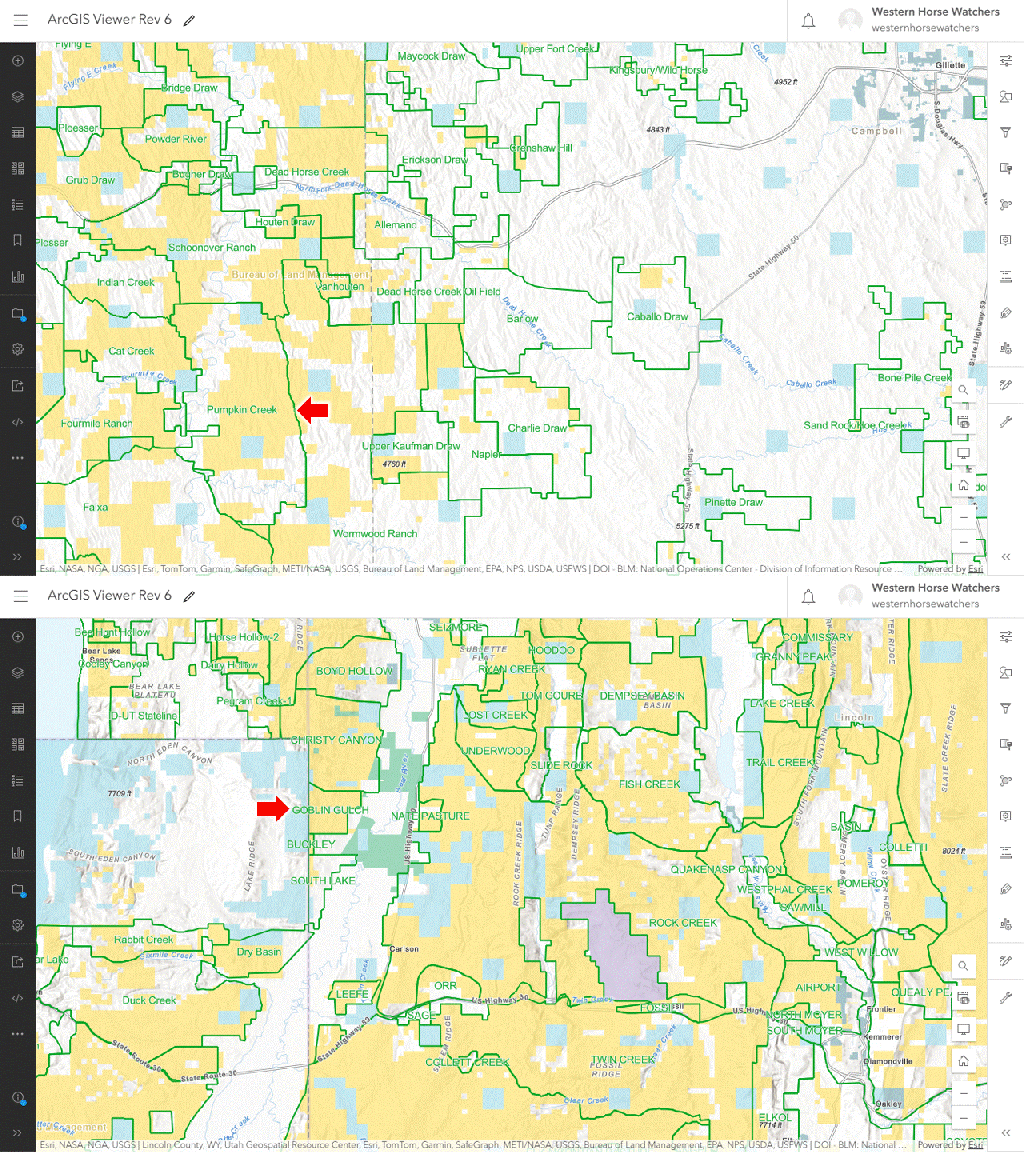
Pumpkin Creek is southwest of Gillette and Goblin Gulch is northwest of Kemmerer.
The allotment master report puts Pumpkin Creek in the Improve category, suggesting that your stewards of the public lands are not taking their responsibilities seriously.
The report for Goblin Gulch says it’s in the Maintain category.
The Pumpkin Creek permittee receives 1,456 active AUMs on 13,235 public acres, equivalent to 121 wild horses or 9.2 wild horses per thousand public acres.
Your faithful public servants claim that public lands in the western U.S. can only support one wild horse per thousand acres (25,600 animals on 25.6 million acres according to the last page of the 2025 population dataset).
The advocates bolster the narrative with their darting programs.
Goblin Gulch offers 287 active AUMs on 2,845 public acres, equivalent to 24 wild horses or 8.4 wild horses per thousand public acres.
If Pumpkin Creek was an HMA, the AML would be 13 and 108 wild horses would be consigned to off-range holding because of permitted grazing.
If Goblin Gulch was an HMA, the AML would be 3 and 21 wild horses would be shipped to off-range holding.
Both areas would be held to a small fraction of carrying capacity to accommodate high-net-worth individuals who pay almost nothing for the resources they consume, which explains why their wealth grows along with the burden laid on American taxpayers.
Don’t be fooled by politicians who tiptoe around this.
BLM allotments in Wyoming support livestock equivalent to 158,425 wild horses on 17,312,214 public acres, or 9.2 wild horses per thousand public acres.
Wild horses can be placed on public lands not identified for their use by acquiring base properties associated with grazing allotments and flipping the preference to horses.
RELATED: The Allotments Tell the Story: They’re Lying, All of Them.
 Western Horse Watchers Association