The inevitable result of humane population reduction is mass sterilization.

Tell AZDA they should have removed the Salt River Wild Horse Darting Group from the case five years ago because they’re sterilizing the mares.

Western Horse Watchers Association
Exposing the Hypocrisy, Lies and Incompetence of the Wild Horse Advocates
The inevitable result of humane population reduction is mass sterilization.
Tell AZDA they should have removed the Salt River Wild Horse Darting Group from the case five years ago because they’re sterilizing the mares.
The allotment was recognized for a virtual fencing project in this year’s rangeland stewardship award.
The Allotment Master Report puts it in the Maintain category.
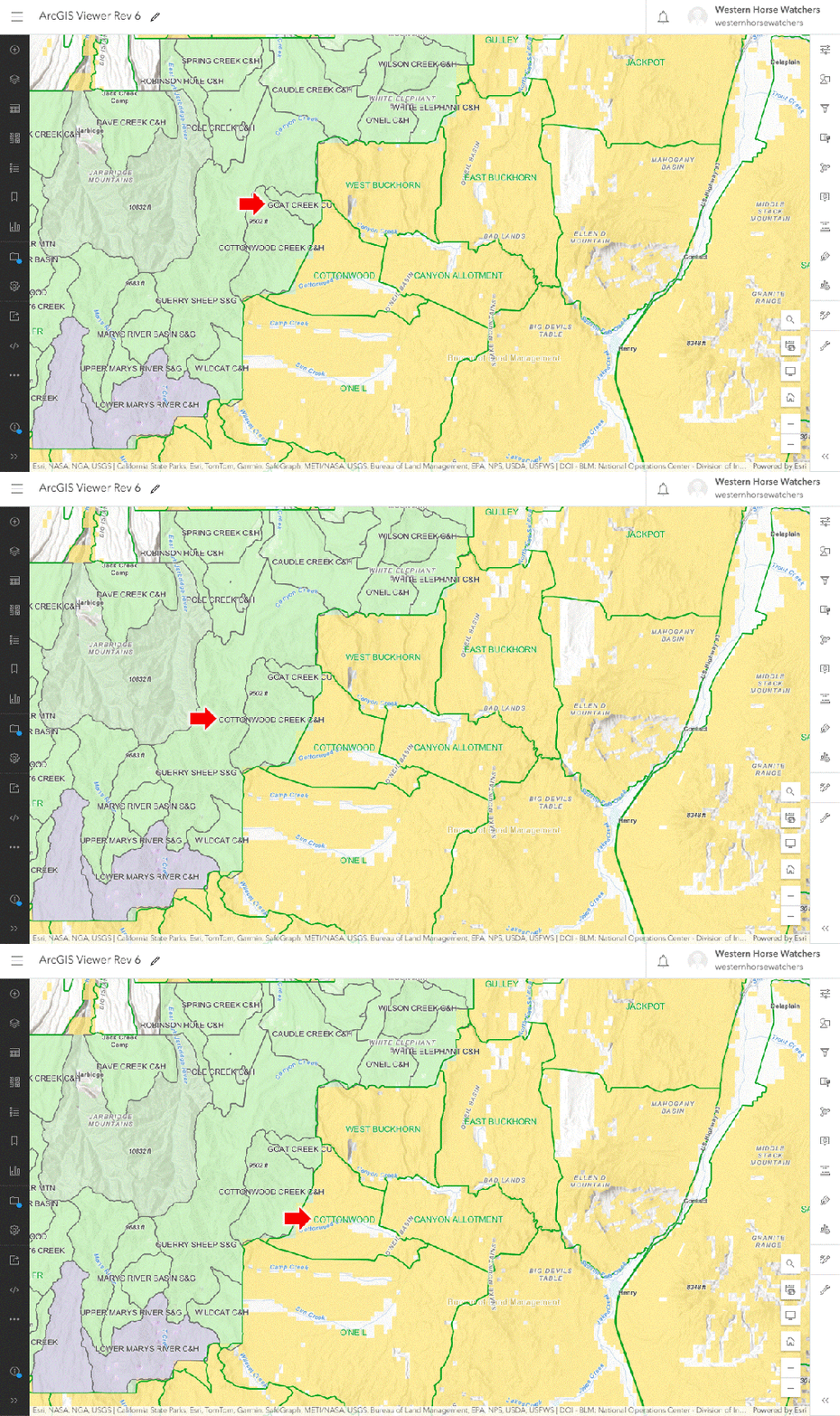
The permittee receives 2,144 active AUMs on 16,689 public acres, equivalent to 179 wild horses, or 10.7 wild horses per thousand public acres, roughly the same stocking rate as the Virginia Range.
Your faithful public servants claim that public lands in the western U.S. can only support one wild horse per thousand acres (25,500 animals on 25.6 million acres).
The advocates, defeated a long time ago, give their assent through their darting programs.
If the allotment was an HMA, the AML would be 17 and 162 wild horses would be consigned to off-range holding because of permitted grazing.
BLM allotments in the Nevada support livestock equivalent to 173,144 wild horses on 40,194,360 public acres, or 4.3 wild horses per thousand public acres.
Wild horses can be placed on public lands not identified for their use by acquiring base properties associated with grazing allotments and flipping the preference to horses.
RELATED: The Allotments Tell the Story: They’re Lying, All of Them.

A representative of the BLM will present the award today to Cottonwood Ranch at the 57th annual meeting of the Public Lands Council, according to the announcement.
The owners have preference on the Cottonwood Allotment, managed by the Wells Field Office, and the Cottonwood Creek and Goat Creek Allotments, managed by the Jarbidge Ranger District.
The award pertains to virtual fencing on the BLM allotment. Use of the technology on Forest Service lands was not disclosed.
The aim of the grazing program is to ensure that high net worth individuals receive generous government benefits, often at the expense of America’s wild horses, with no means testing and no expiration date.
RELATED: Winners of 2024 Stewardship Awards Announced.
The job walk will occur on September 19, followed by in-person bidding on September 26, according to the news release.
In the past, auction results showed that the American people were not receiving a fair price for livestock grazing covered by term permits.
A Board of Agriculture meeting was set for September 9 but no reports have been posted to the documentation page.
RELATED: Can’t Access NDA Website?
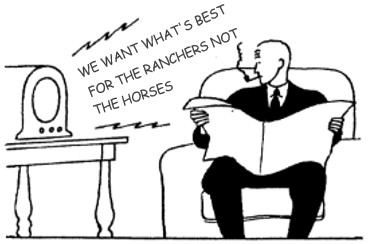
Do what WyoFile did. Refer to them as pro-horse groups and individuals.
RELATED: Sterility Is a Goal, Not a Defect of Fertility Control Programs.

On the Virginia Range with Western Horse Watchers.
The aim of the project is to improve riparian habitat while continuing to provide water to free-roaming horses, wildlife and livestock.
Map 1 in the preliminary decision gives you the location but doesn’t tell you the HMA.
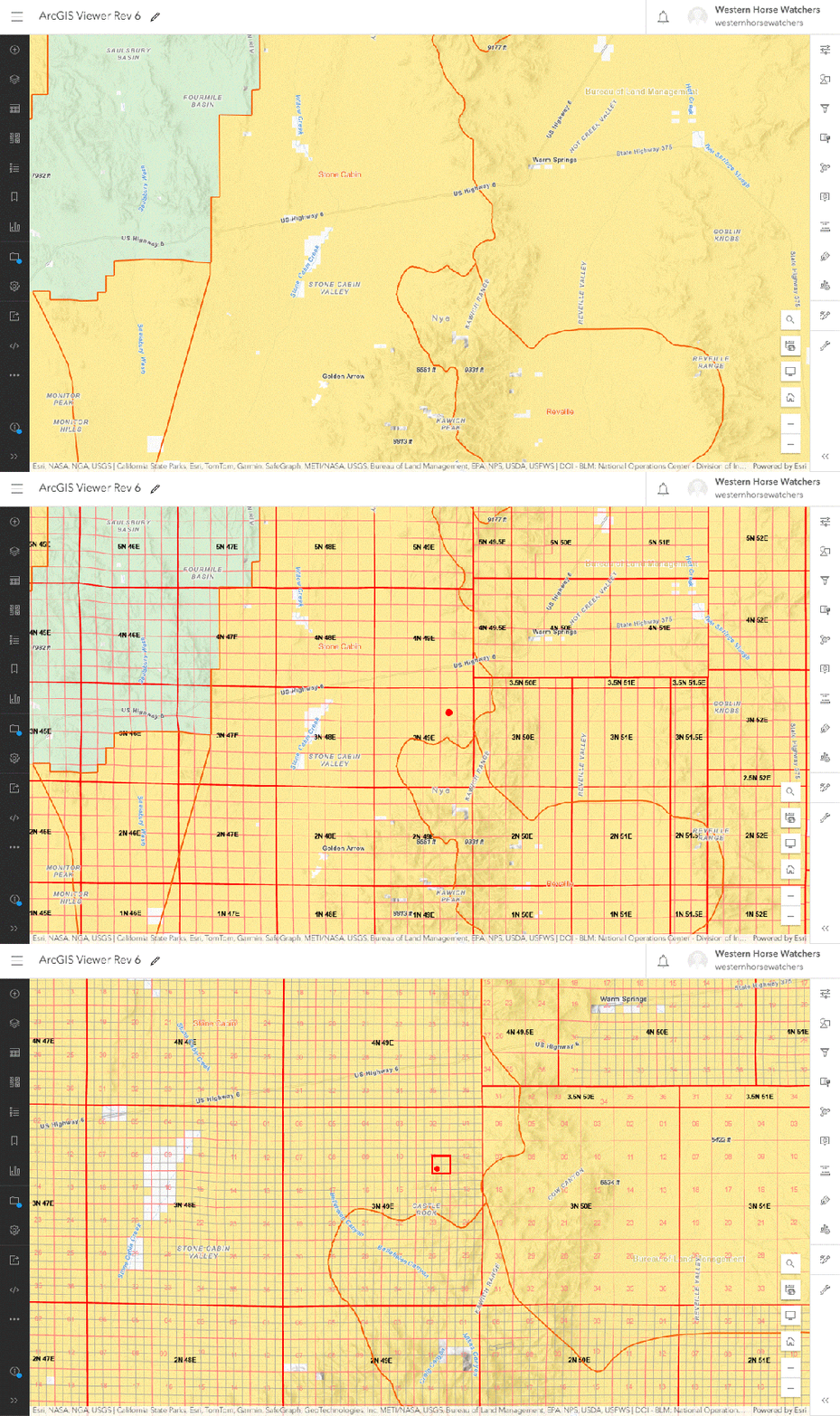
The last page gives the legal description as T. 3 N., R. 49 E., sec. 11, SW1/4SE1/4.
That means the southwest quarter of the southeast quadrant of Section 11 in Township 3 North, Range 49 East (Mount Diablo base and meridian). Probably a 40-acre parcel.
The PLSS layer in the ArcGIS viewer puts the spring in the Stone Cabin HMA, which lies mostly within the Stone Cabin Allotment.
The Proposed Action, discussed in the CX, would install 730 feet of metal fence around the spring, two gates, up to 360 feet of buried water lines, one in-ground tank equipped with a thermoriser and one tire trough located outside the exclosure.
Comments will be accepted through September 19.
She was captured and taken to an equine hospital where most of the projectile was removed but another surgery is needed to retrieve the head according to a report by KTLA News.
A local sanctuary has offered a reward of $14,000 for information leading to an arrest and conviction of the person(s) responsible.
Curiously, there would be no charges if the advocates were hitting the jennies with pesticide-laced darts.
RELATED: Archer Hits Two Wild Burros, Location Not Disclosed.
An attorney representing plaintiffs in a new lawsuit said they won’t happen before the summer of 2026 according to a report by Wyofile.
The case was brought by two advocacy groups and two women, all PZP adherents, who may have been offended by being described as “pro-horse groups and individuals.”
As of today, the agency has not released a roundup schedule for FY26.
The incident started on August 27.
Figures for Day 12 indicate three stallions captured plus one mare but the total is 11.
The documented capture total through September 10 is 111, including 46 stallions, 54 mares and 11 foals.
Youngsters represented 9.9% of the sample.
Of the adults, 46% were male and 54% were female.
The average daily take is 7.4.
The death rate is 3.6%.
Body condition scores were not given.
The number of horses shipped is not known.
The operation supports three tenets of rangeland management.
So says one of the challengers vying for the management contract.
If that’s true then why not move them to one or more vacant allotments to the north?
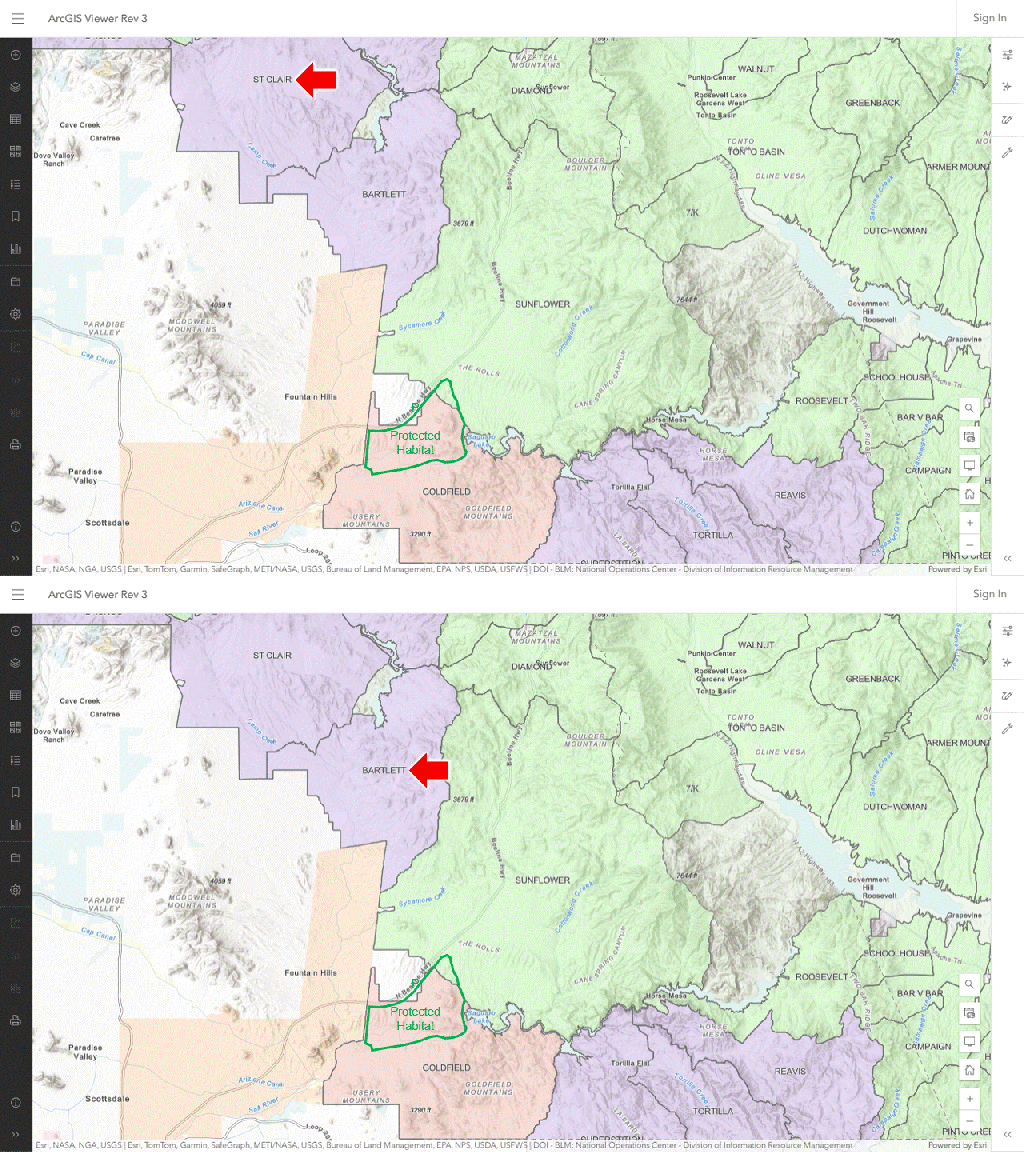
Their current habitat is in the Goldfield Allotment and previously extended into the Sunflower Allotment.
RELATED: McDowell Commissioners to Hear Plan for Salt River Horses.
When will the advocates explain how mass sterilization, the inevitable result of humane population reduction, preserves wild horses for future generations?

When will they stop lying about the reversibility of PZP?
RELATED: Foal-Free Friday, Casting Your Pearls to the Swine Edition.
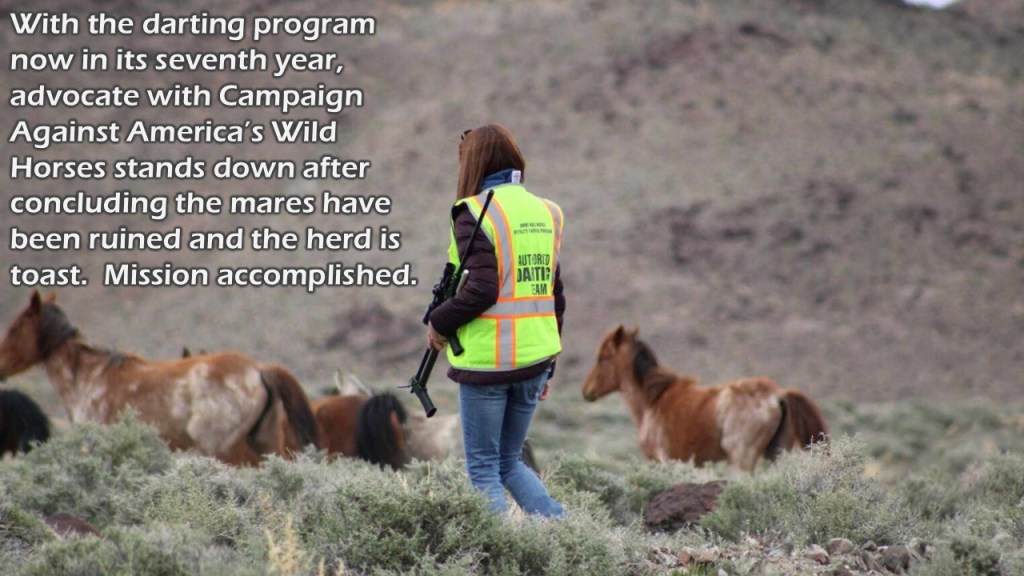
This year’s event will be held at Gracias Madre in West Hollywood (sometimes referred to as the city of the sodomites), according to an announcement on Average Socialite.
The venue features Mexican food made from plant-based ingredients only, a must-have for liberals.
The online flyer shows a mare and foal, antithetical to the CAAWH mission.
Ticket options:
The general admission ticket gets you drinks and hors d’oeuvres.
The foal friend ticket pays for care of an orphaned foal. There aren’t supposed to be any foals.
The meadow guardian ticket funds the reseeding of one acre of scorched earth in their bogus land trust. The name of the affected allotment was not given.
The herd protector ticket buys 20 doses of PZP. In exchange, you get an 8×10 photo taken by the head darter in charge at Cedar Mountain, where the BLM pays them to ruin the mares.
The organizers say the event is dedicated to protecting America’s wild horses and burros, yet there are no remarks about stopping competition from livestock, fixing unfair resource allocations and restoring lost habitat.
RELATED: Advocates to Fleece West Coast Liberals at Wild Horse Gala?
The September 9 commentary in Nevada Current reveals the duplicity and betrayal of the Campaign Against America’s Wild Horses.
The problem: America’s wild horses have faced competition from livestock, unfair resource allocation, and shrinking habitat for generations.
Their solution: Sterilize the mares, beat the horse numbers down with ovary-killing pesticides.
How does that stop the competition from livestock, fix the resource allocations and restore lost habitat?
It doesn’t. They don’t want any changes, other than more government spending on services they provide.
These people are phonies, allies of the bureaucrats and ranchers, and don’t deserve a penny of your support.

RELATED: Capitulation, Surrender, Defeat on the Virginia Range.
She’s the ninth foal this year according to a report by WCTI News.
The status of the darting program is unknown.
Black is dominant, red is recessive.
You can have heterozygous black but not heterozygous red.
If that’s her mom, maybe she’s a liver chestnut.
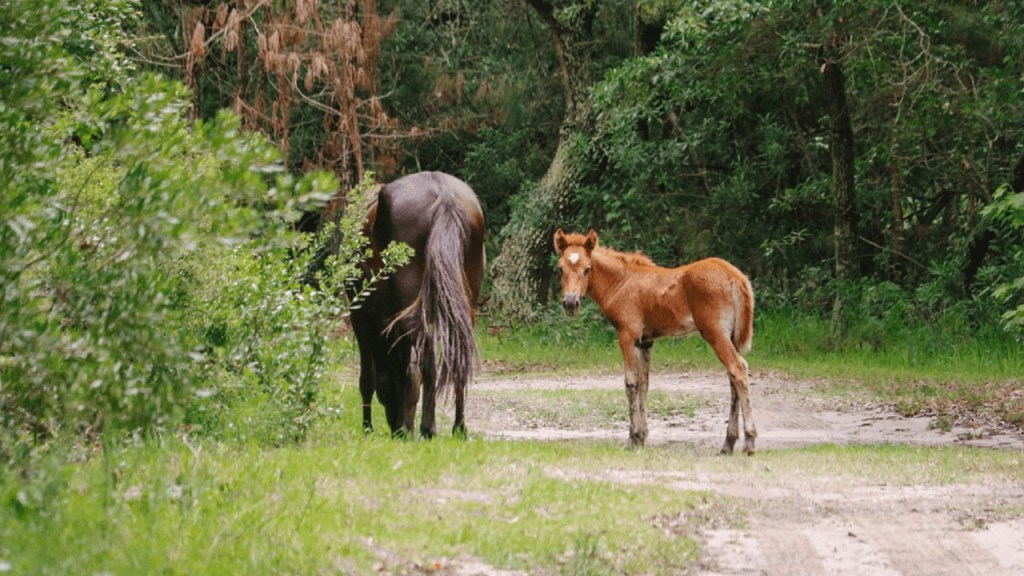
The advocates, not known for charity or integrity, want Congress to spend more money on services they provide.

Western Horse Watchers recommends that you send letters about wild horses to news outlets that don’t put them behind paywalls.
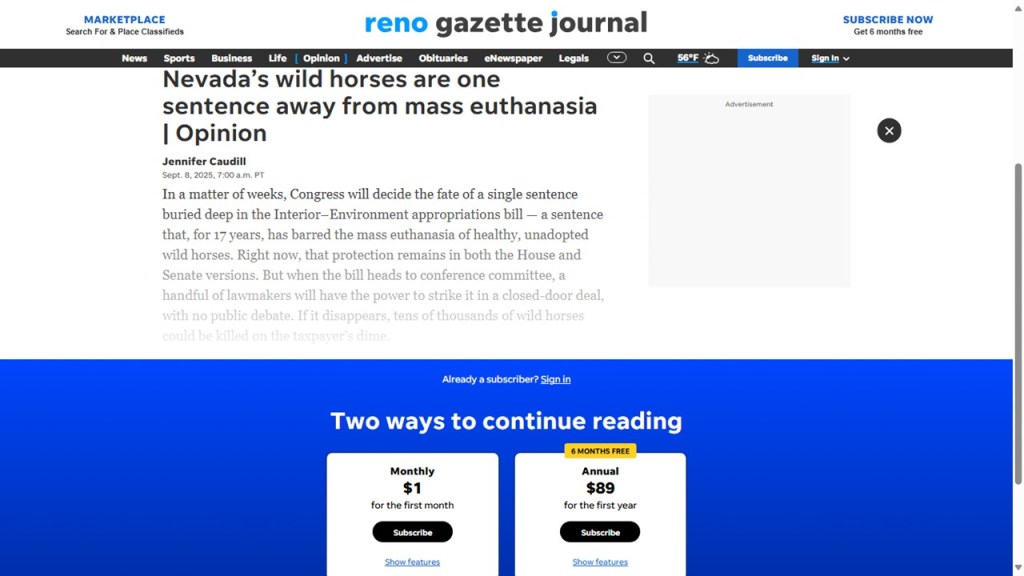
If your opponent appears to be winning, should you rethink your strategy or continue on the same path?
Consider this commentary in today’s edition of Nevada Current, written by the State Director for the Campaign Against America’s Wild Horses.
The author identifies the problem, but instead of offering a solution, shows how to make it worse.
“America’s wild horses have faced competition from livestock, unfair resource allocation, and shrinking habitat for generations.”
Fair statement.
The answer?
Sterilize the mares.
Give the ranchers what they want.
While you’re at it, feed the public a steady diet of lies.
“The Virginia Range program uses an immunocontraceptive vaccine known as PZP (porcine zona pellucida). Administered by trained volunteers via remote darting, PZP prevents pregnancy in mares without harming hormone cycles or behaviors, and it’s reversible.”
PZP is a restricted-use pesticide that tricks the immune system into attacking the ovaries.
After five years of treatment, the mares can no longer bear fruit.

“The USA now has more wild horses in captivity than running free on the rangelands in the West.”
Why is that?
Refer to the problem statement at the beginning of your op-ed, about which you, and your army of nitwits, do nothing.
On the Mogollon Rim with TDWM Outdoors. Association with Heber WHT unknown.
The Forest Service copied the following documents to the project folder on August 29:
Scroll down to the Project Summary, expand the Project Documents section and click on the AdminReview folder.
Only those who participated in the planning process are eligible to object.
The DN would authorize Alternative 2, the Proposed Action, discussed on page 18 of the EA (page 24 in the pdf) and beyond.
Horses currently occupy an area much larger than the 19,700-acre WHT so initial management actions will be directed at achieving AML within the designated space.
Active AUMs and acreages of surrounding allotments should be reviewed to determine if the proposed AML (104) and stocking rate (5.3 wild horses per thousand acres) are reasonable.
Surgical sterilization was dropped from the analysis.
Chemical sterilization, via PZP and GonaCon, is on the table.
Expanding the territory, increasing the AML and reducing livestock grazing didn’t make the cut.
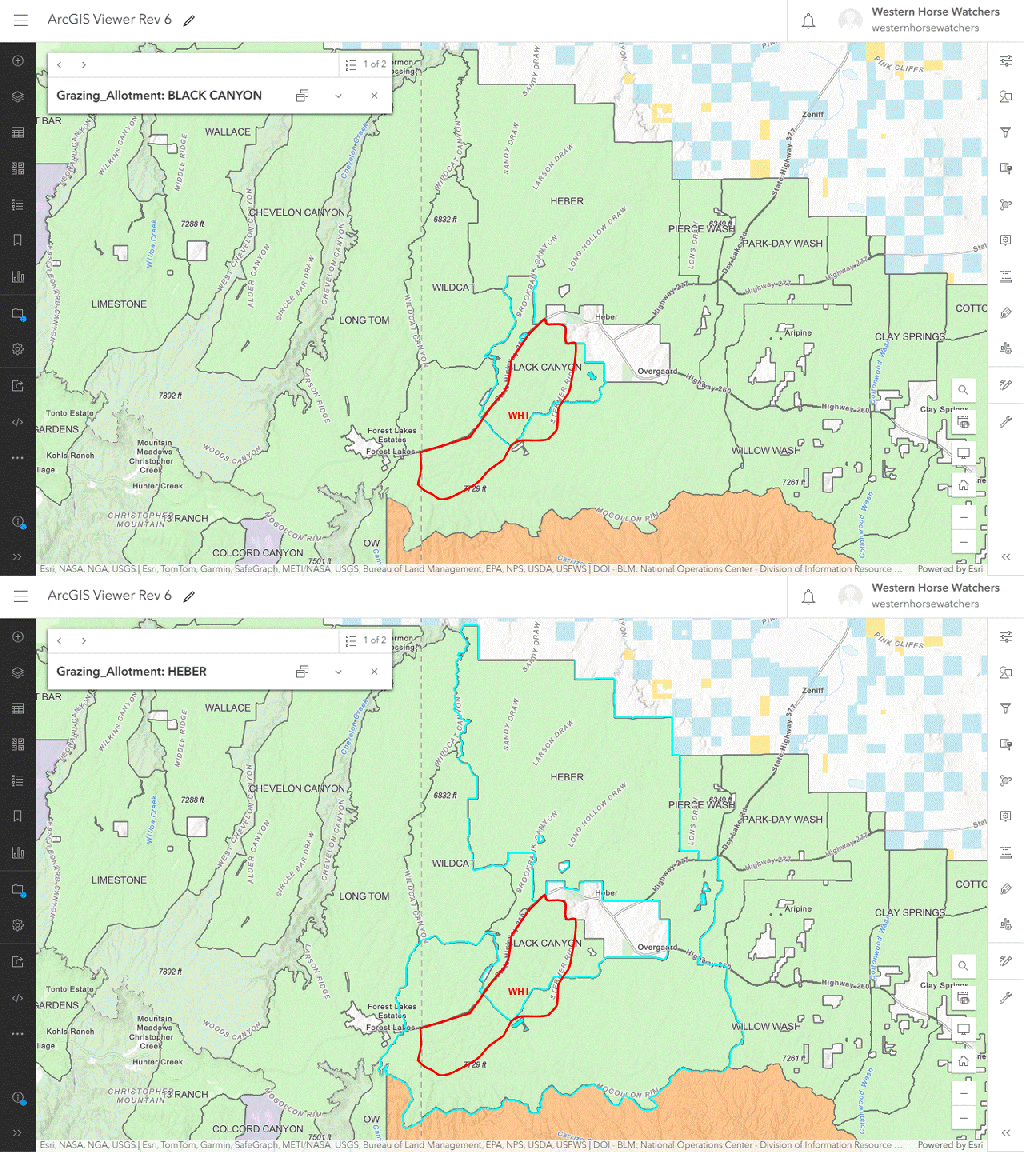
The WHT lies within the Heber and Black Canyon Allotments. Figure 6 in the EA shows the overlapping pastures.
RELATED: Status of Heber Wild Horse Management Plan?
 Western Horse Watchers Association