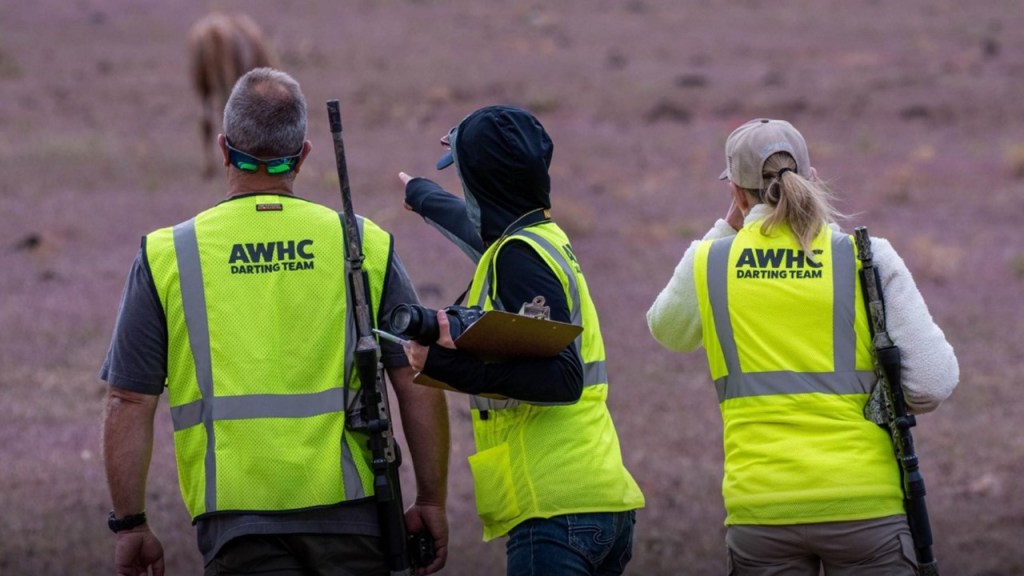
Three Rivers Roundup, Day 32

The incident started on June 9.  Results through July 10:

  • Scope: Alamo, Big Sandy, Havasu HMAs
  • Target: Burros
  • AML: 160 + 139 + 166 = 465
  • Pre-gather population: Not given, 2,644 according to 2025 population dataset
  • Type: Planned
  • Method: Bait
  • Goals: Capture 1,100, remove 1,000
  • Captured: 689, up from 643 on Day 28
  • Shipped: 665, up from 547 on Day 28
  • Released: None
  • Deaths: 3, up from 2 on Day 28
  • Average daily take: 21.5
  • Unaccounted-for animals: 21
  • Snippet from statute: It is the policy of Congress that wild free-roaming horses and burros shall be protected from capture, branding, harassment, or death
  • Snippet from manual: To protect wild horses and burros from unauthorized capture, branding, harassment or death

The figures above are based on the daily reports.

A burro died of a fractured neck or back on Day 32, lifting the death rate to 0.4%.

The capture total includes 335 jacks, 296 jennies and 58 foals.

Youngsters represented 8.4% of the animals gathered.

Of the adults, 53.1% were male and 46.9% were female.

The location of the trap site is not known.

The name of the contractor was not provided.

No jennies were treated with PZP since the last report, leaving the total at 78.

The July 1 schedule indicates the designated pesticide was GonaCon Equine.

The Complex is subject to permitted grazing.  Resources liberated to date:

  • Forage: 4,134 AUMs per year
  • Water: 3,445 gallons per day

RELATED: Three Rivers Roundup, Day 28.

BLM Imposes Saylor Creek DNA

The document was posted to a new project yesterday with no public input.

The Decision Record authorizes bait-trap removal of 44 wild horses based on a 2019 environmental assessment.

The current population is thought to be 82 adults and 12 foals.

A roundup appears on the July 1 schedule with a start date of July 1 but as of today the incident has not been added to the Idaho gather page.

The HMA is subject to permitted grazing.

Roundup Schedule Altered Ahead of Rock Springs Decision

The start dates for the Salt Wells Creek and Adobe Town roundups were delayed in the July 1 schedule as parties trying to stop them await a decision from the Tenth Circuit Court of Appeals according to an article by WyoFile.

The June 3 schedule gave them a start date of July 15.

Wild horse removal begins tomorrow in the retained portion of Adobe Town (outside the checkerboard), while operations in Salt Wells Creek and the zeroed-out portion of Adobe Town (inside the checkerboard) are set for August 25.

RELATED: Kiger/Riddle Dropped from Latest Schedule.

Protests Erupt in Rock Springs Ahead of Adobe Town Roundup

Demonstrations organized by the Wyoming Wildlife Protection Group occurred at the BLM Field Office and near the Chamber of Commerce on July 10 according to a story by the Rocket Miner.

It’s not clear if the protesters wanted the BLM to switch to nonmotorized removal.

Advocates in Arizona and Nevada are getting rid of over 3,000 wild horses with PZP and there are no complaints.

RELATED: Adobe Town Roundup Pending.

Protest After Mount Charleston Wild Horse Roundup

A small group gathered yesterday demanding answers from the Forest Service, including photos from the holding facility, according to a report by KTNV News.

The band was taken to an undisclosed location in Utah.

The agency may have handed them off to the BLM, which has three off-range corrals in the state: Axtell, Delta and Sutherland.

Unlike the Campaign Against America’s Wild Horses and its army of nitwits, the protesters did not try to sell mass sterilization, the inevitable result of “humane population reduction,” as wild horse conservation.

RELATED: Mount Charleston Roundup in Progress?

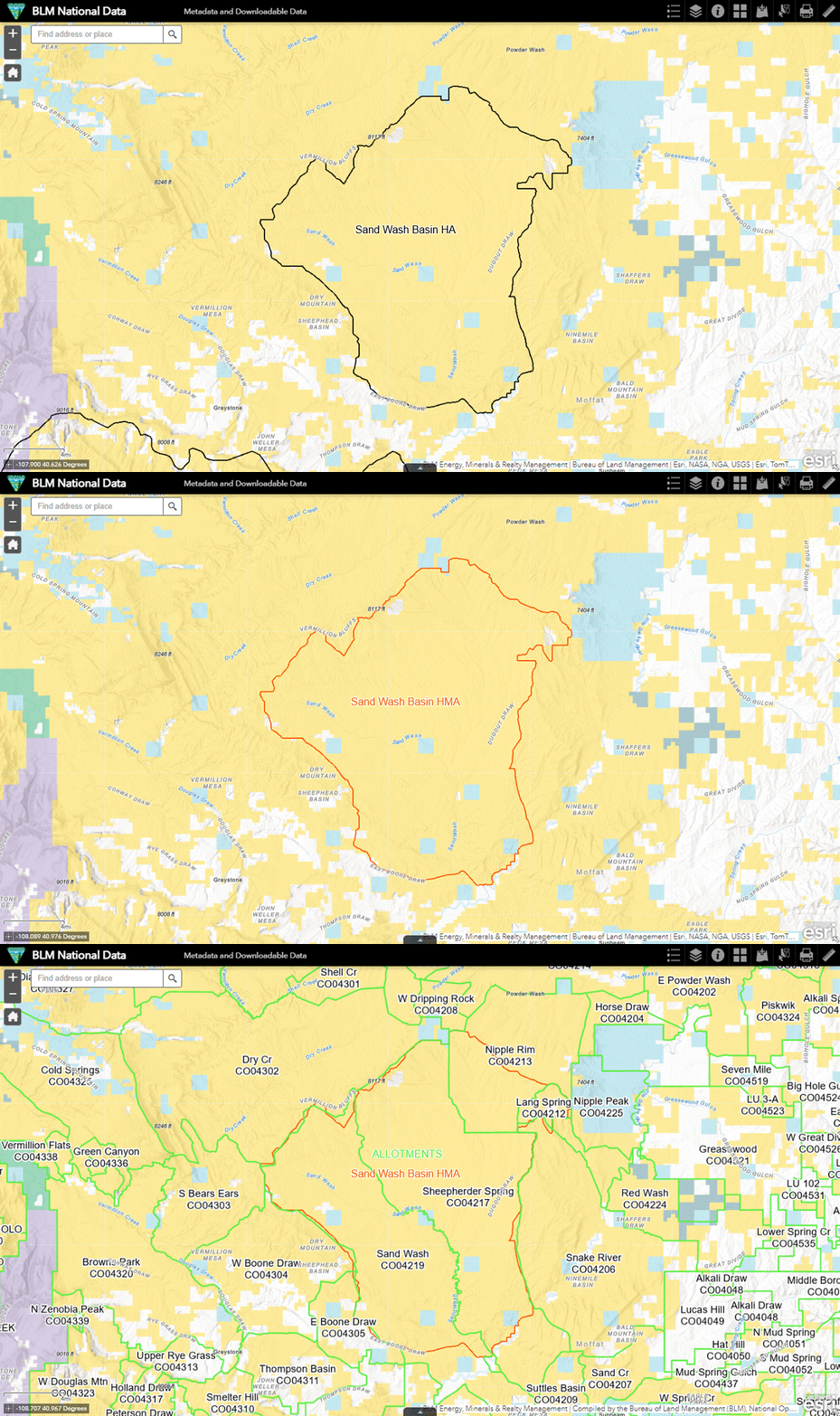
Sand Wash Roundup, Day 5

The incident started on July 7.  Results through July 11:

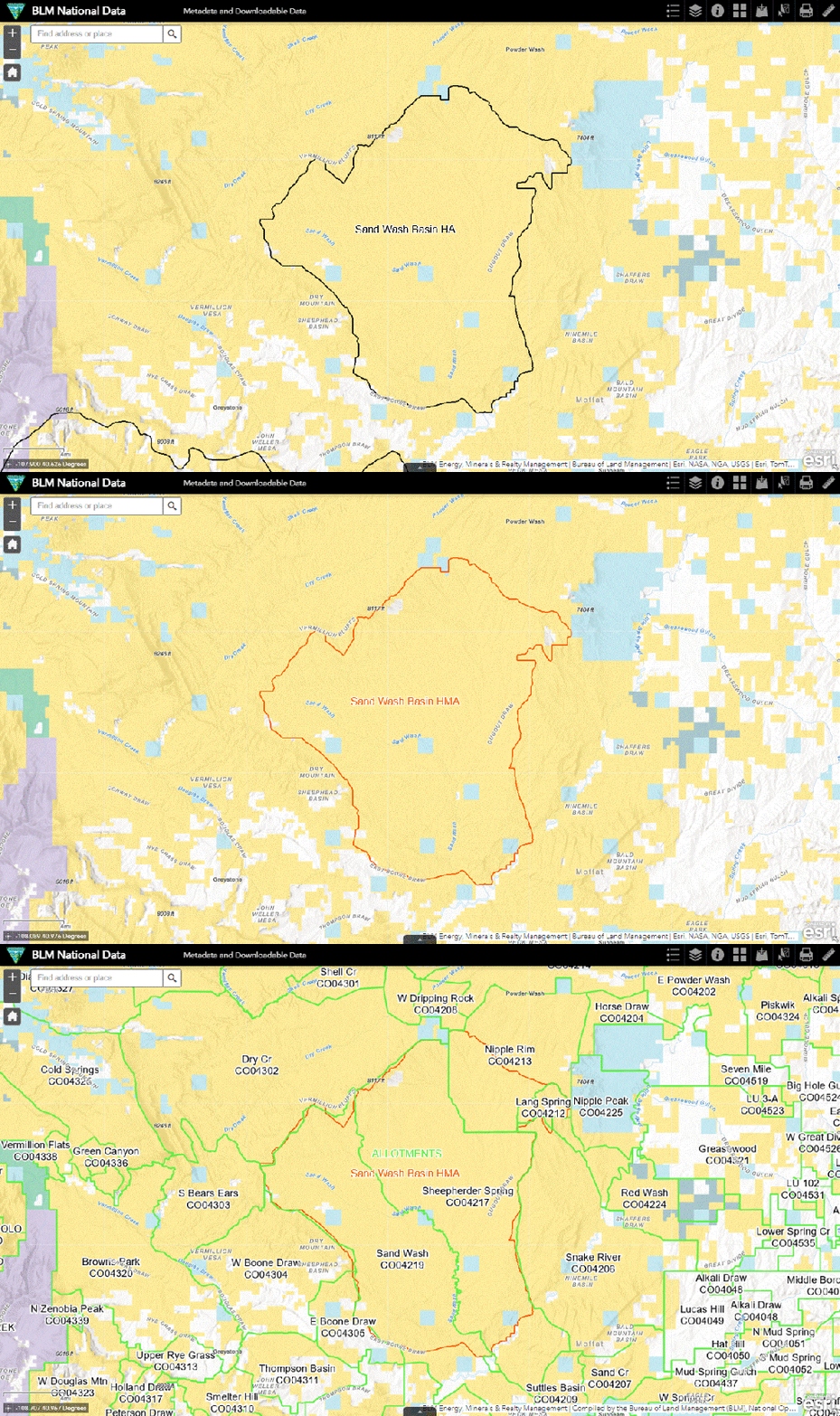
  • Scope: Sand Wash Basin HMA
  • Target: Horses
  • AML: 362
  • Pre-gather population: 487
  • Type: Planned
  • Method: Bait
  • Capture goal: 60
  • Removal goal: 45
  • Captured: 24, up from 9 on Day 1
  • Shipped: 24, up from zero on Day 1
  • Released: None
  • Deaths: None
  • Average daily take: 4.8
  • Unaccounted-for animals: None
  • Snippet from statute: It is the policy of Congress that wild free-roaming horses and burros shall be protected from capture, branding, harassment, or death
  • Snippet from manual: To protect wild horses and burros from unauthorized capture, branding, harassment or death

The figures above are based on the daily reports.

The capture total includes 11 stallions, 10 mares and 3 foals.

Youngsters represented 12.5% of the animals gathered.

Of the adults, 52.4% were male and 47.6% were female.

The gather page does not indicate if BLM staff are using the permanent trap site.

Up to 15 mares will be treated with PZP and returned to the range according to the July 1 schedule.

The HMA is subject to permitted grazing.  Resources liberated to date:

  • Forage: 288 AUMs per year
  • Water: 240 gallons per day

RELATED: Sand Wash Basin Roundup in Progress, No Announcement.

Helicopter Ban Rises from Ashes

The co-chair of the House Pesticide Caucus has reintroduced a bill that would stop the roundups but not the removals according to a report by KLAS News.

Predictably, the Campaign Against America’s Wild Horses, a leader in mass sterilization and fierce opponent of principal use, endorsed it.

Originally known as the Save a Horse, Hire a Cowboy Act, the bill supports three tenets of rangeland management, forcing a change in methods but not the goals.

It will likely go nowhere in a Republican-controlled Congress.

Casper Base Property Available for $45 Million

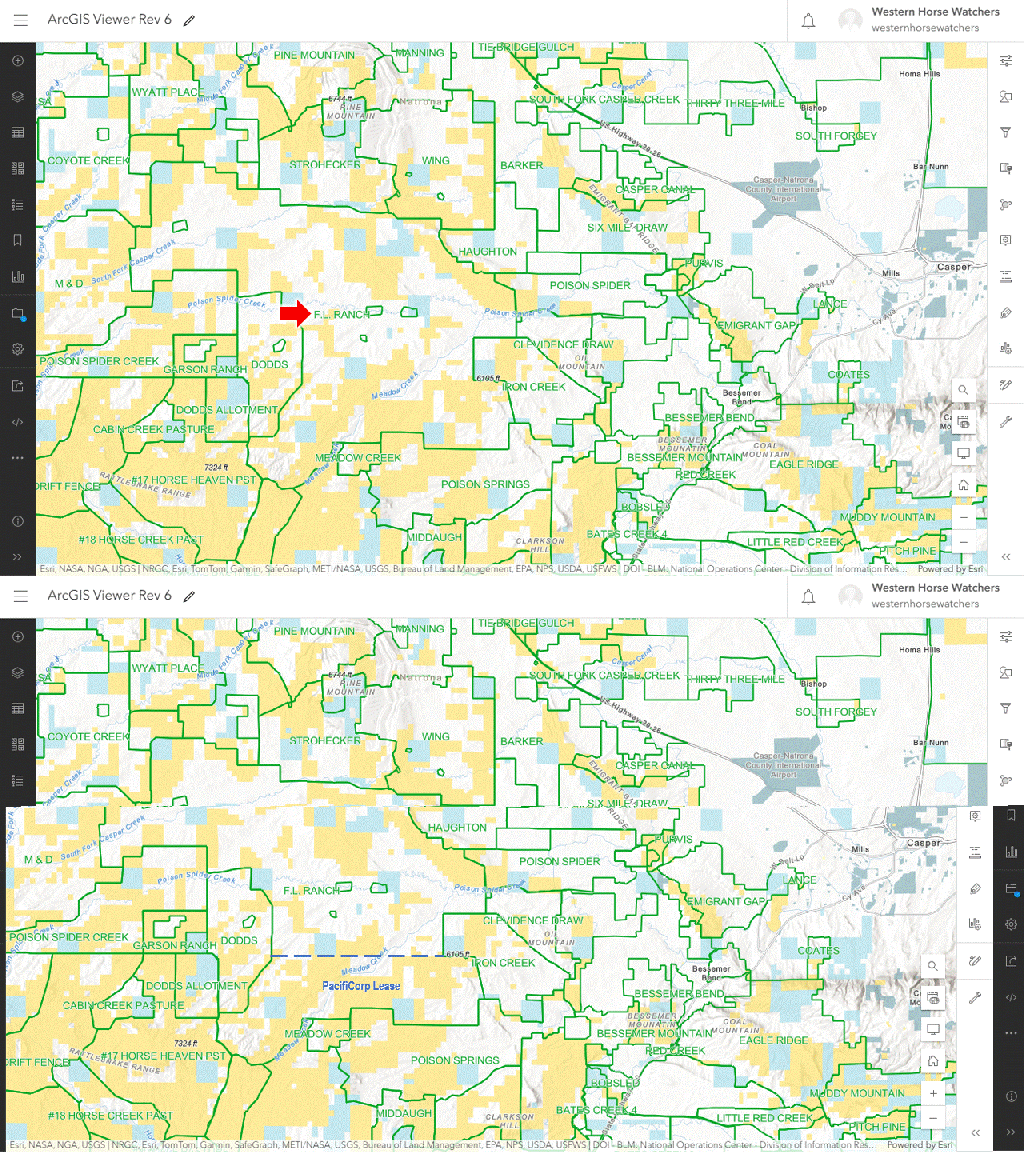
Wild Horse Basin Ranch covers 92,351 acres according to the agent’s listing.

The ranch boundary coincides roughly with that of the FL Ranch Allotment.

The allotment master report puts it in the Improve category, with 5,548 active AUMs on 35,098 public acres, equivalent to 13.2 wild horses per thousand public acres.

Your faithful public servants claim that public lands in the western U.S. can only support one wild horse per thousand acres (25,500 animals on 25.6 million acres).

The ArcGIS Viewer shows state and private lands within the allotment but the acreage is not given in the report.

The successful bidder will likely be a high net worth individual or corporation but will be eligible for generous government benefits with no means testing.

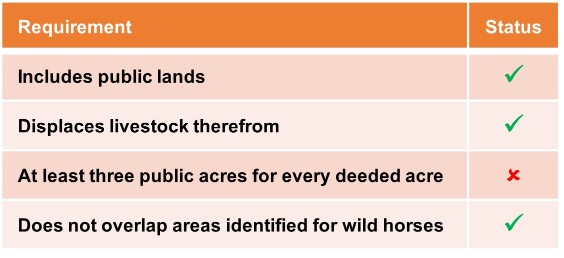
The listing does not give the deeded acreage but the difference between the total acreage and leased acreage is 31,892.

Thus, the ranch meets three out of four requirements for a wild horse refuge.

The agent’s video says the ranch can support 1,000 head year around, so that would be an estimate of the carrying capacity if it was repurposed as a refuge.

Wild horses can be placed on public lands not identified for their use by acquiring or controlling base properties tied to one or more grazing allotments and flipping the preference to horses.

There is no assurance that the stakeholders would agree to such a change and opposition at the state and local levels may be intense.

Adobe Town Roundup Pending

The incident will begin on or about July 15 according to the BLM news release.

A helicopter will push the horses into the traps and operations will be open to public observation.

The capture and removal goals are 1,675 each.

The size of the herd was not given but the 2025 population dataset put it at 2,382 as of March 1.

The management plan allows 259 to 536.

The destination of captured animals was not given.

The name of the contractor was not disclosed.

There are no plans to treat any of the mares with fertility control pesticides and return them to the range.

The HMA, downsized as a result of the Rock Springs RMP Amendments, is subject to permitted grazing.

RELATED: Adobe Town DNA Approved.

Sand Wash Basin Roundup in Progress, No Announcement

The incident started on July 7 with nine horses captured, none shipped, none released and no deaths.

It was not billed as an emergency and there was no news release.

The method of capture is bait.

The capture goal is 60.  The removal goal was not given.

Operations are not open to public observation.

Animals identified for removal will be taken to the off-range corrals in Cañon City.

The HMA is subject to permitted grazing.

Three Rivers Roundup, Day 28

The incident started on June 9.  Results through July 6:

  • Scope: Alamo, Big Sandy, Havasu HMAs
  • Target: Burros
  • AML: 160 + 139 + 166 = 465
  • Pre-gather population: Not given, 2,644 according to 2025 population dataset
  • Type: Planned
  • Method: Bait
  • Goals: Capture 1,100, remove 1,000
  • Captured: 643, up from 444 on Day 18
  • Shipped: 547, up from 337 on Day 18
  • Released: None
  • Deaths: 2, up from 1 on Day 18
  • Average daily take: 23.0
  • Unaccounted-for animals: 94
  • Snippet from statute: It is the policy of Congress that wild free-roaming horses and burros shall be protected from capture, branding, harassment, or death
  • Snippet from manual: To protect wild horses and burros from unauthorized capture, branding, harassment or death

The figures above are based on the daily reports.

Results for Days 20 to 28 were posted today.

An abandoned foal was euthanized on Day 25, lifting the death rate to 0.3%.

The capture total includes 311 jacks, 279 jennies and 53 foals.

Youngsters represented 8.2% of the animals gathered.

Of the adults, 52.7% were male and 47.3% were female.

The location of the trap site is not known.

The name of the contractor was not provided.

Eighteen jennies were treated with PZP on Day 19, bringing the total to 78.

The July 1 schedule indicates the pesticide of choice was GonaCon Equine.

The Complex is subject to permitted grazing.  Resources liberated to date:

  • Forage – 3,858 AUMs per year
  • Water – 3,215 gallons per day

RELATED: Three Rivers Roundup, Day 18.