
The BLM purchased the ranch in 2022 with support from the Land and Water Conservation Fund, taking much of the deeded acreage public.
A 2023 article by Cowboy State Daily said the Marton family retained some grazing privileges and will continue to graze cattle there.
A meeting to receive public input on the future of the property, scheduled for May 14, has been postponed according to a BLM news release.
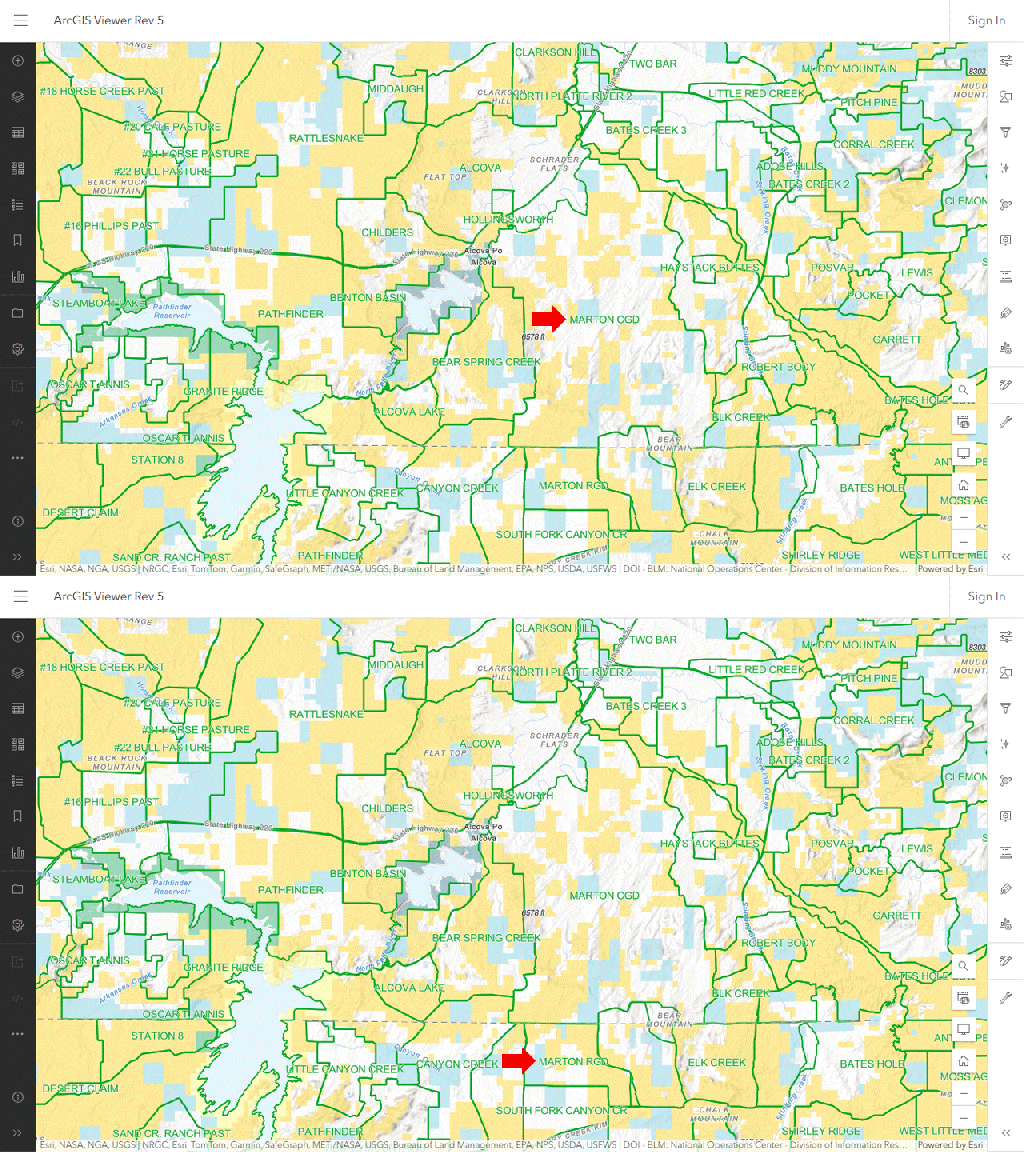
The project boundary in Figure 1 of the Final EA coincides roughly with that of the Marton CGD and RGD allotments, east of the Alcova Reservoir.
Together they offer 10,636 active AUMs on 61,519 public acres.
The Allotment Master Report puts both in the Improve category, suggesting that your stewards of the public lands have not been taking their responsibilities seriously.
If the area was designated for wild horses, how many could live there?
The forage assigned to livestock is equivalent to 886 wild horses, or 14.4 per thousand public acres.
Your faithful public servants claim that rangelands in the western U.S. can only support one wild horse per thousand acres (25,500 animals on 25.6 million acres).
The advocates, defeated a long time ago, reinforce the narrative with their darting programs.
If the allotments were an HMA, the AML would be 62 and 824 wild horses would be consigned to off-range holding because of permitted grazing.
BLM allotments in Wyoming support livestock equivalent to 158,425 wild horses on 17.312,214 public acres, or 9.2 wild horses per thousand public acres.
Wild horses can be placed on public lands not identified for their use by acquiring base properties associated with grazing allotments and flipping the preference to horses.
RELATED: The Allotments Tell the Story: They’re Lying, All of Them.
 Western Horse Watchers Association