Fish Creek Roundup, Day 5

The incident started on January 6.  Results through January 10:

  • Scope: Fish Creek HMA
  • Target: Wild horses
  • AML: 180
  • Pre-gather population: 245
  • True AML: 440
  • Type: Planned
  • Method: Helicopter
  • Category: Cruel and costly (according to advocates)
  • Better way: Sterilize mares with PZP (according to advocates)
  • Capture goal: 196
  • Removal goal: 144
  • Captured: 194, up from 123 on Day 3
  • Shipped: 112, up from 39 on Day 3
  • Released: 50, up from zero on Day 3
  • Deaths: None
  • Average daily take: 38.8
  • Unaccounted-for animals: 32
  • Snippet from statute: It is the policy of Congress that wild free-roaming horses and burros shall be protected from capture, branding, harassment, or death
  • Snippet from manual: To protect wild horses and burros from unauthorized capture, branding, harassment or death

The figures above are based on the daily reports.

The capture total includes 91 stallions, 100 mares and 3 foals.

Youngsters represented 1.5% of the animals gathered, much lower than expected and too small to support herd growth.

Of the adults, 47.6% were male and 52.4% were female, no indication of an abnormal sex ratio in the population at large.

Body condition scores were not given.

The location of the trap site was not disclosed.

On Day 5, 23 mares treated with PZP were returned to the range with 27 stallions.

The roundup supports three tenets of rangeland management.

Resources liberated to date:

  • Forage: 1,728 AUMs per year
  • Water: 1,440 gallons per day

RELATED: Fish Creek Roundup, Day 3.
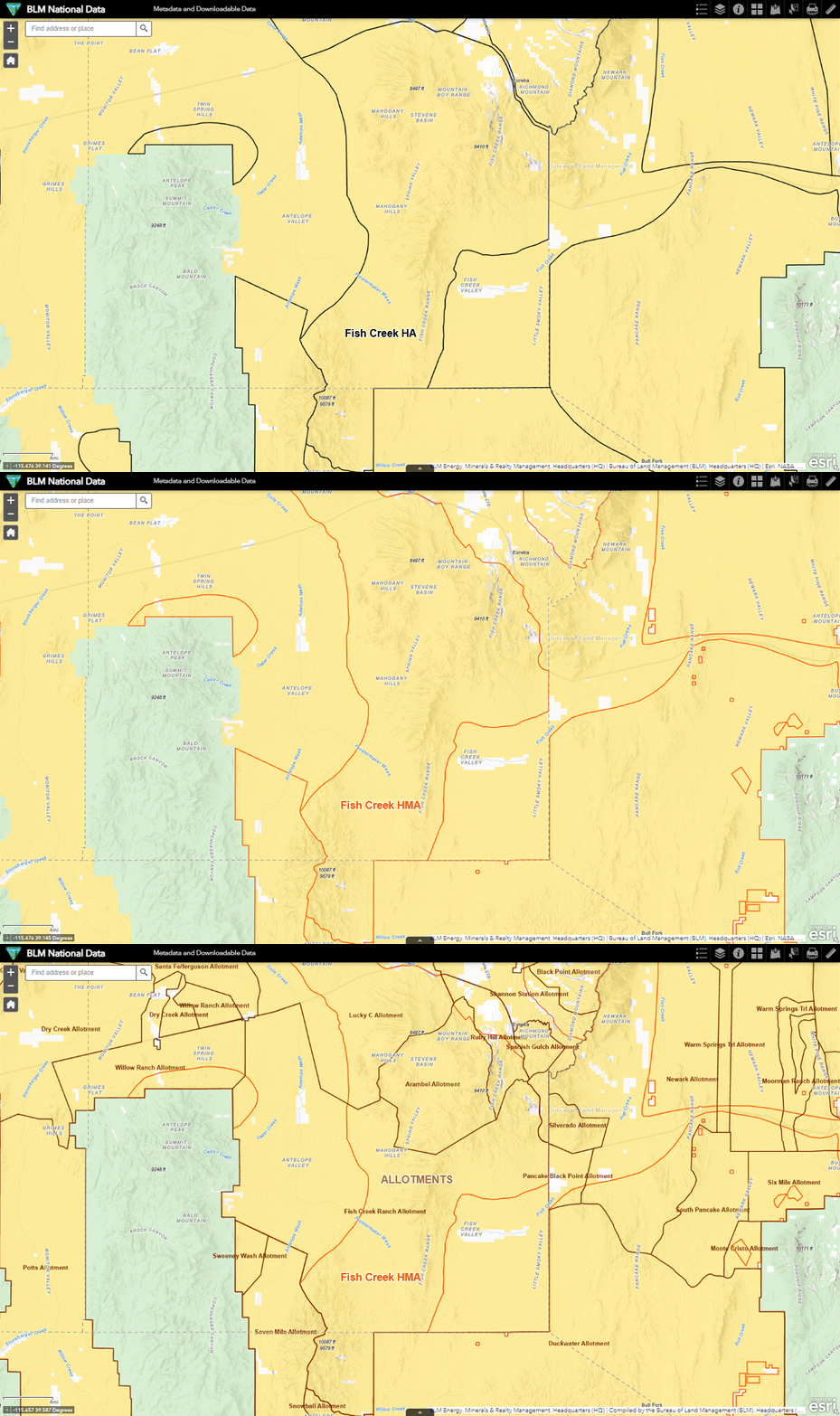
Fish Creek HMA with Allotments 11-07-24

Foal-Free Friday, Speed of Light Edition

A speed limit is an administrative constraint, not a physical constraint.

Speed Limit 40 10-27-22

Cars can easily exceed 40 mph.

The speed of light is a physical limit.  No faster method of signaling has been discovered.

Proponents of animal agriculture, which include the wild horse advocates, want you to believe that AMLs represent physical limits.

The herds must stay within AMLs if they are to survive.

It’s pure nonsense but it drives the roundups and fertility control programs.

One of the best ways to tell if an advocate has gone over to the dark side is if she offers her help or declares or her intent to achieve and maintain AMLs.

Another clue is that she wears a “Stay Wild” tee shirt.

RELATED: Foal-Free Friday, R.I.P. Edition.

Fish Creek Roundup, Day 3

The incident started on January 6.  Results through January 8:

  • Scope: Fish Creek HMA
  • Target: Wild horses
  • AML: 180
  • Pre-gather population: 245
  • True AML: 440
  • Type: Planned
  • Method: Helicopter
  • Category: Cruel and costly (according to advocates)
  • Better way: Sterilize mares with PZP (according to advocates)
  • Capture goal: 196
  • Removal goal: 144
  • Captured: 123, up from 55 on Day 1
  • Shipped: 39, up from zero on Day 1
  • Released: None
  • Deaths: None
  • Average daily take: 41.0
  • Unaccounted-for animals: 84
  • Snippet from statute: It is the policy of Congress that wild free-roaming horses and burros shall be protected from capture, branding, harassment, or death
  • Snippet from manual: To protect wild horses and burros from unauthorized capture, branding, harassment or death

The figures above are based on the daily reports.

The capture total includes 59 stallions, 61 mares and 3 foals.

Youngsters represented 2.4% of the animals gathered.

Of the adults, 49.2% were male and 50.8% were female.

Body condition scores were not given.

The location of the trap site was not disclosed.

Up to 26 mares will be treated with PZP and returned to the range with up to 26 stallions.

The roundup supports three tenets of rangeland management.

RELATED: Fish Creek Roundup in Progress.

Fish Creek HMA with Allotments 11-07-24

AMLs Not Artificially Low?

If the bureaucrats assign forage to livestock in areas identified for wild horses, the AMLs are artificially low.

They represent the number of horses allowed by plan, not the number of horses the land can support.

For example, the Little Colorado HMA supports livestock equivalent to 3,750 wild horses and has an AML of 100.  It could go as high as 3,850.

The AML is artificially low, carefully chosen to protect ranching interests, not wild horses.

Proponents of animal agriculture want you to think that AMLs represent a physical limit, such as the speed of light, not an administrative limit.

This line of thinking drives the roundups and darting programs.

AMLs Artificially Low 01-09-25

The link in the Google search result above pointed to a story about the January 3 decision that allowed the Forest Service to move ahead with management actions in the Big Summit WHT.

RELATED: Court Sides with Forest Service in Big Summit Appeal.

AML-1

Murderer’s Creek Roundup, Day 39

The incident started on November 29.  Results through January 6:

  • Scope: Murderer’s Creek HMA, WHT
  • Target: Wild horses
  • AML: 140
  • Pre-gather population: 650
  • True AML: TBD
  • Type: Emergency
  • Method: Bait
  • Capture goal: 350 – 400
  • Removal goal: 350 – 400
  • Captured: 210, up from 193 on Day 35
  • Shipped: 186, no change from Day 35
  • Released: None
  • Deaths: 4, no change from Day 35
  • Average daily take: 6.0
  • Unaccounted-for animals: 20
  • Snippet from statute: It is the policy of Congress that wild free-roaming horses and burros shall be protected from capture, branding, harassment, or death
  • Snippet from manual: To protect wild horses and burros from unauthorized capture, branding, harassment or death

The figures above are based on the daily reports.

The death rate is 1.9%.

The capture total includes 73 stallions, 90 mares and 47 foals.  The gather page says 72/91/47.

Youngsters represented 22.4% of the animals gathered, consistent with a herd growth rate of 17% per year.  The Rule of 72 says the herd size will double in 4.2 years.

Of the adults, 44.8% were male and 55.2% were female, no indication of an abnormal sex ratio in the population at large.

Body condition scores were not given.

The location of the trap site was not disclosed.

The name of the contractor was not provided.

There are no plans to treat any of the mares with fertility control pesticides and return them to the range.

No decisions have made regarding the long-term disposition of horses, which means they could be treated or altered in off range holding, including the stallions.

The status of livestock grazing in the burned area is not known.

RELATED: Murderer’s Creek Roundup, Day 35.

Murderers Creek HMA with Allotments 10-24-24

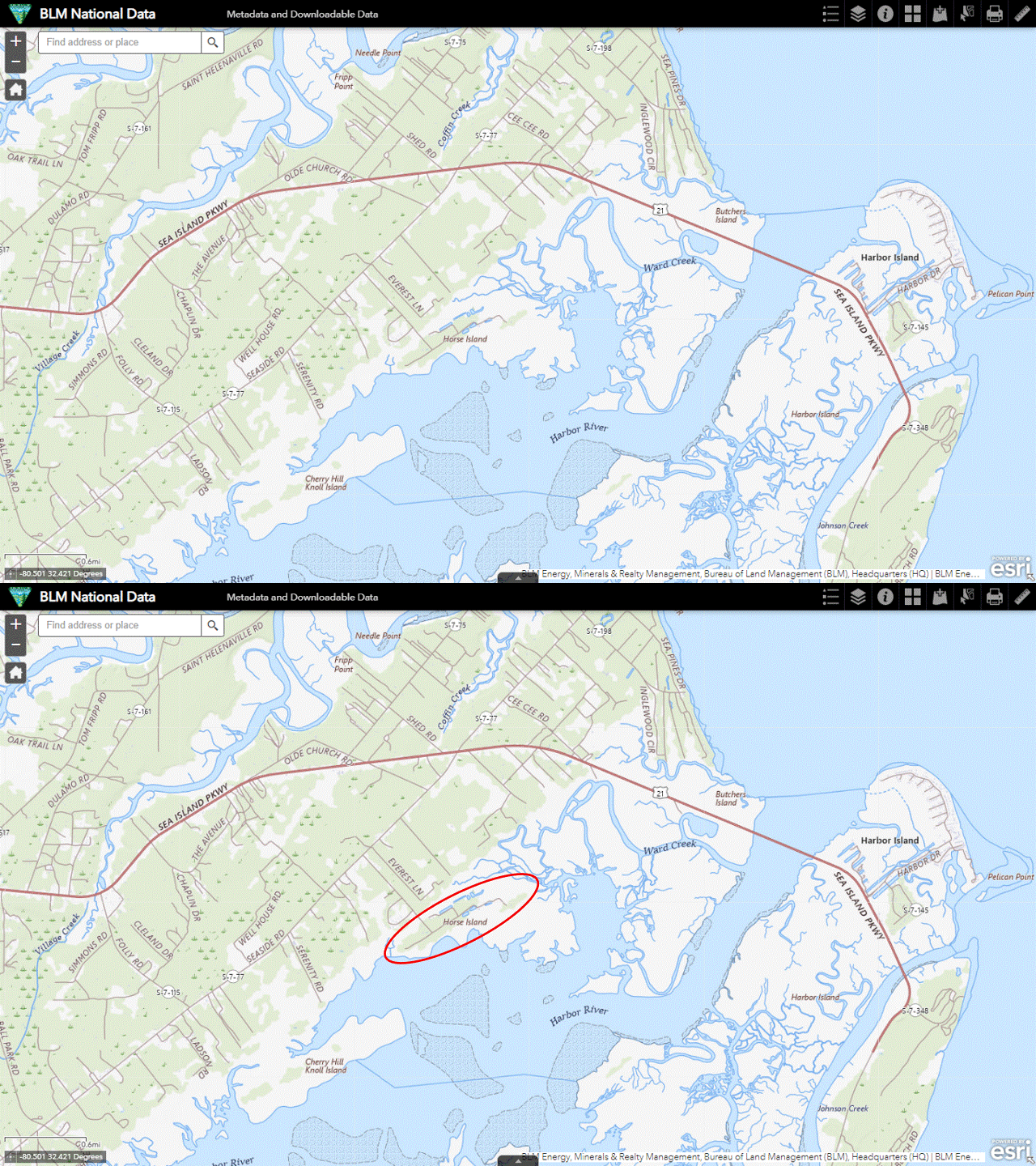
Three Wild Horses Found Dead Near Minersville

The incident occurred in Beaver County, Tammy Pearson’s stomping ground (Beaver County commissioner, public-lands rancher and member of the WHBAB).

The BLM news release said they were found northwest of the Minersville Reservoir on the Mineral Range Mountains.

That puts them in the Minersville #2 Allotment or the south end of the Mineral Range Allotment.

The agency has offered a $5,000 reward for information leading to the arrest and conviction of the person(s) responsible.

The nearest HMA is Frisco, about 25 miles to the northwest (not visible in map).

Mineral Range with Allotments 01-06-25

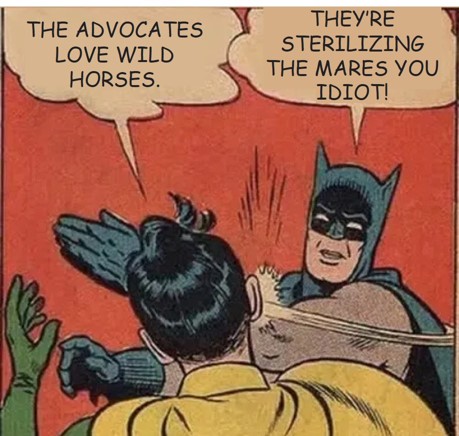
Batman Saves Robin from Wild Horse Advocates

He could have sent the boy to a Betty Ford clinic or similar institution, where he would be deprogrammed, cured of his obsession with pesticides and educated in intellectual honesty, but this is faster and more effective.

Advocates Sterilizing Mares 01-04-25

Beware of the wild horse advocates.

RELATED: If You Want to Help the Ranchers Give Money to the Advocates.

How Did Mustang Monument Rate as a Wild Horse Refuge?

The plan was to convert the Spruce Allotment to a wild horse eco-sanctuary with a capacity of 900 animals.

The base property consisted of approximately 14,000 deeded acres with grazing preference on over 500,000 public acres.

The facility included public lands, would displace livestock therefrom and had a land ratio of roughly 36 public acres for every deeded acre.

Mustang Monument Scorecard 01-05-25

The downside was that it overlapped three HMAs, resulting in the loss of up to three breeding populations, which is unacceptable.

The resort offered high-end guest accommodations, fine dining and other amenities, which are not necessary for a wild horse refuge.

RELATED: Starting a Nonprofit That Actually Helps Wild Horses.

Sand Wash Advocate Illustrates Unlawful Use of Pesticides

Image from the Year One Report by the Colorado Wild Horse Working Group.

  • Finding: Failure to wear proper PPE
  • Standard: Zonastat label
  • Parties involved: Little Snake Field Office, Sand Wash Advocate Team

Sand Wash Advocate 01-04-25

A diploma from the Billings School of PZP Darting and Public Deception won’t protect you from criminal investigation.

Fortunately, those who would look into the matter want the horses gone as much as those pulling the trigger, so there’s not much to worry about.

RELATED: Colorado Wild Horse Working Group Releases Year One Report.

Court Sides with Forest Service in Big Summit Appeal

The U.S. Court of Appeals for the Ninth Circuit has affirmed the district court’s ruling granting summary judgment for the U.S. Forest Service in its decision to approve the Ochoco Herd Management Plan.

The court rejected all of the plaintiffs’ claims according to the January 3 ruling, allowing the plan to go forward.

The agency is currently renovating a facility near Prineville that will house wild horses removed from the WHT.

Although the case cited the availability of winter forage as the limiting factor in setting the AML, there was no discussion of the forage assigned to livestock in the Reservoir Allotment, which overlaps most of the WHT.

RELATED: Ninth Circuit Hears Arguments in Big Summit Appeal.

Big Summit WHT Map 11-19-22

BLM to Launch Wild Horse Annie Donations Website?

The program would allow individuals to donate up to $249 per year to support the protection and management of wild horses and burros on public lands according to the Off-Range Report for the January 7 WHBAB meeting.

The report does not acknowledge that the land can support many more animals than the government admits and that the wild horse and burro program has become a grazing program ancillary.

RELATED: WHBAB Meeting Materials Now Available.

Thriving Ecological Balance-3