
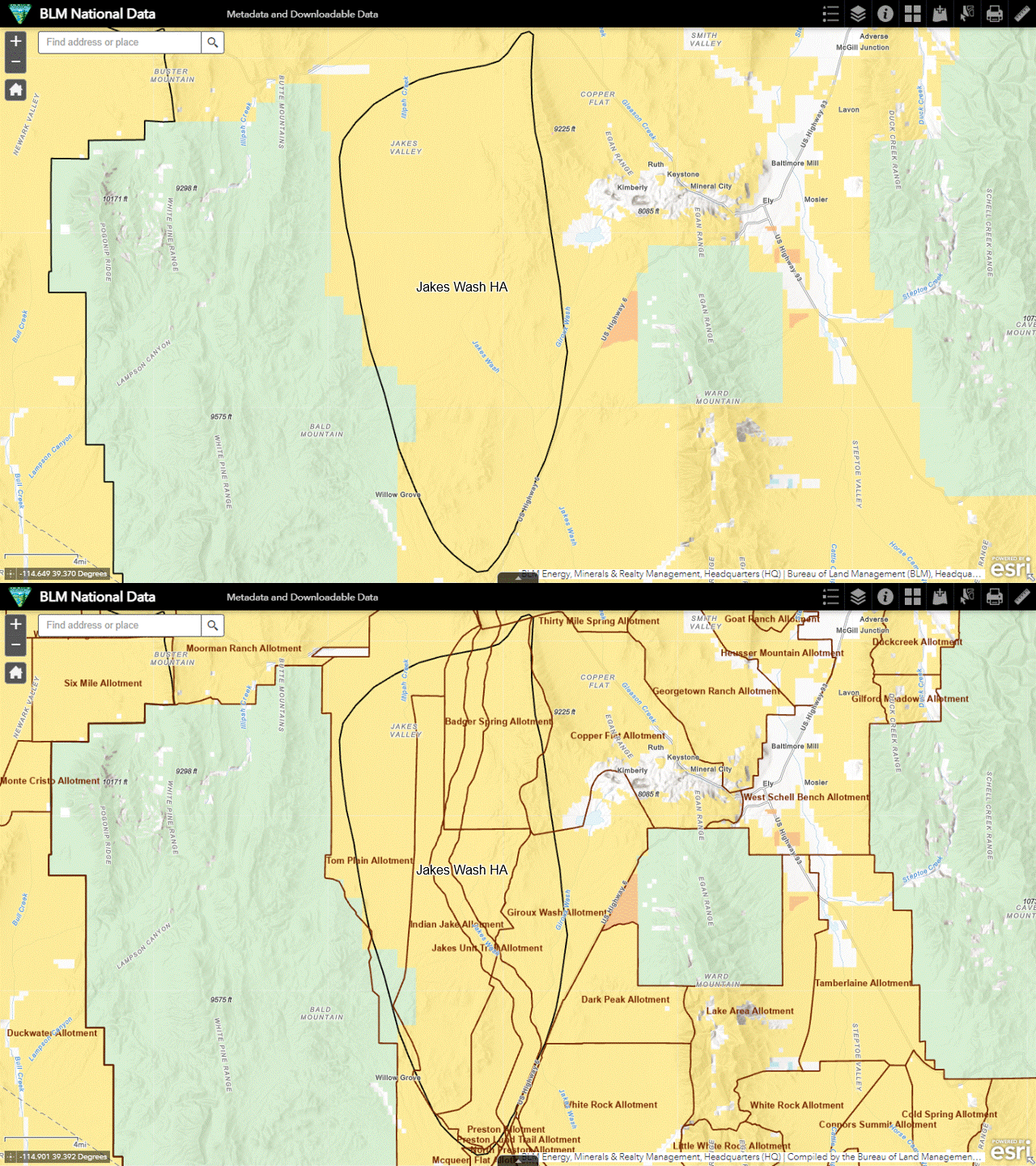
The allotments overlap the Jakes Wash HA in eastern Nevada, part of the Pancake Complex. Refer to Section 3.7 of the Draft EA for the new HMAP.
The forage assigned to horses is zero.
How many wild horses could live there?
The Allotment Master Report provides management status, acreage and active AUMs.

The Jakes Unit Trail passes through the area according to the National Data Viewer but this has been ignored.
The allotments offer 15,722 active AUMs on 202,421 public acres.
Approximately 60% of the land is in the Improve category.
Using the principle of forage interchangeability, the True AML would be 1,310, the number of horses the land could support if it was managed principally for them as specified in the original statute.
The stocking rate would be 6.5 wild horses per thousand public acres.
Why is this important?
Your faithful public servants claim that public lands in the western U.S. can only support one wild horse per thousand acres (27,000 animals on 27 million acres).
The advocates bolster the narrative with their darting programs.
If the allotments were an HMA, the AML would be 202 and 1,108 horses would be consigned to off-range holding because of permitted grazing.
BLM allotments in Nevada carry livestock equivalent to 173,144 wild horses on 40,194,360 public acres, or 4.3 wild horses per thousand public acres.
Wild horses can be placed on public lands not identified for their use by acquiring base properties associated with grazing allotments and flipping the preference to horses, as American Prairie did for bison in Montana.
RELATED: The Allotments Tell the Story: They’re Lying, All of Them.
 Western Horse Watchers Association