Foal-Free Friday, He Said – She Said Edition

How many supporters of Wild Horse Connection are PZP darters with the Campaign Against America’s Wild Horses?

How many darters with CAAWH assisted WHC in the botched rescue that landed 24 Virginia Range mustangs in the Carson City prison?

The two groups work closely to “manage” the horses, a codeword for sterilizing the mares and letting the herd die off.

RELATED: Foal-Free Friday, Aiding and Abetting the Ranchers Edition.

If Wild Horses Had Principal Use of Willow Ridge

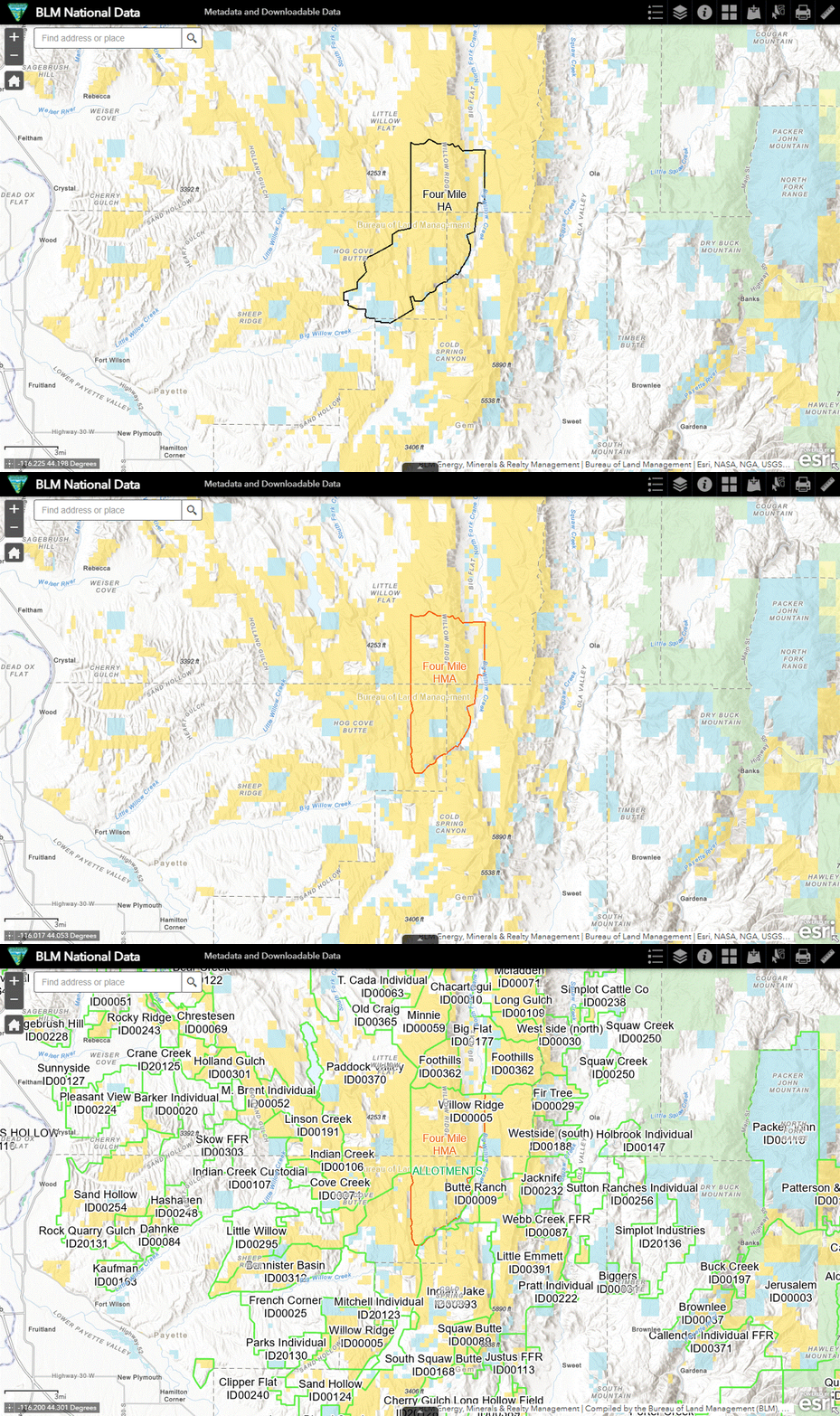
The allotment, which contains the Four Mile HMA, offers 4,450 active AUMs on 30,374 public acres, according to the Allotment Master Report.

The 60 horses allowed by plan receive 720 AUMs per year.

How many wild horses could the allotment support?

Using the principle of forage interchangeability, the True AML would be 60 + 4,450 ÷ 12 = 431, the number of horses the land could support if it was managed principally for them as specified in the original statute.

The stocking rate would be 431 ÷ 30,374 × 1,000 = 14.2 wild horses per thousand public acres.

Why is this important?

The bureaucrats and ranchers claim that public lands in the western U.S. can only support one wild horse per thousand acres (27,000 animals on 27 million acres).

The advocates give their assent through their darting programs.

If the allotment was an HMA, the AML would be 30 and 401 horses would be consigned to off-range holding because of permitted grazing.

BLM allotments in Idaho carry livestock equivalent to 110,141 wild horses on 11,003,206 public acres, or 10.0 wild horses per thousand public acres.

Wild horses can be placed on public lands not identified for their use by acquiring the base property associated therewith and converting the grazing preference to horses, as American Prairie did for bison in Montagna.

RELATED: The Allotments Tell the Story: They’re Lying, All of Them.

Willow Ridge Allotment 08-22-24

Sulphur Roundup, Day 8

The incident started on August 13.  Results through August 20:

  • Scope: Sulphur HMA
  • Target: Horses
  • AML: 250
  • Pre-gather population: 606
  • True AML: 1,105
  • Type: Planned
  • Method: Helicopter
  • Category: Cruel and costly (according to advocates)
  • Better way: Shoot mares with pesticide-laced darts (according to advocates)
  • Goals: Gather 420, remove 360
  • Captured: 364, up from 258 on Day 6
  • Shipped: 256, up from 212 on Day 6
  • Released: None
  • Deaths: 3, up from 1 on Day 6
  • Average daily take: 45.5
  • Unaccounted-for animals: 105

The figures above are based on the daily reports.

The sidebar at the gather page says 257 horses shipped.

Two stallions were dispatched on Day 8 due to knee fractures, lifting the death rate to 0.8%.

The capture total includes 119 stallions, 173 mares and 72 foals.

Youngsters represented 19.8% of the animals gathered, consistent with a herd growth rate of 15% per year.

Of the adults, 40.8% were male and 59.2% were female, outside the expected range of variation from a random process centered at 50% males / 50% females.

Body condition scores were not provided.

The location of the trap site is not known.

The HMA is subject to permitted grazing.  Resources liberated to date:

  • Forage: 4,368 AUMs per year
  • Water: 3,640 gallons per day

The July 31 schedule indicates that 30 mares will be treated with GonaCon Equine and be returned to the range with 30 stallions.

The roundup supports three tenets of rangeland management.

RELATED: Sulphur Roundup, Day 6.

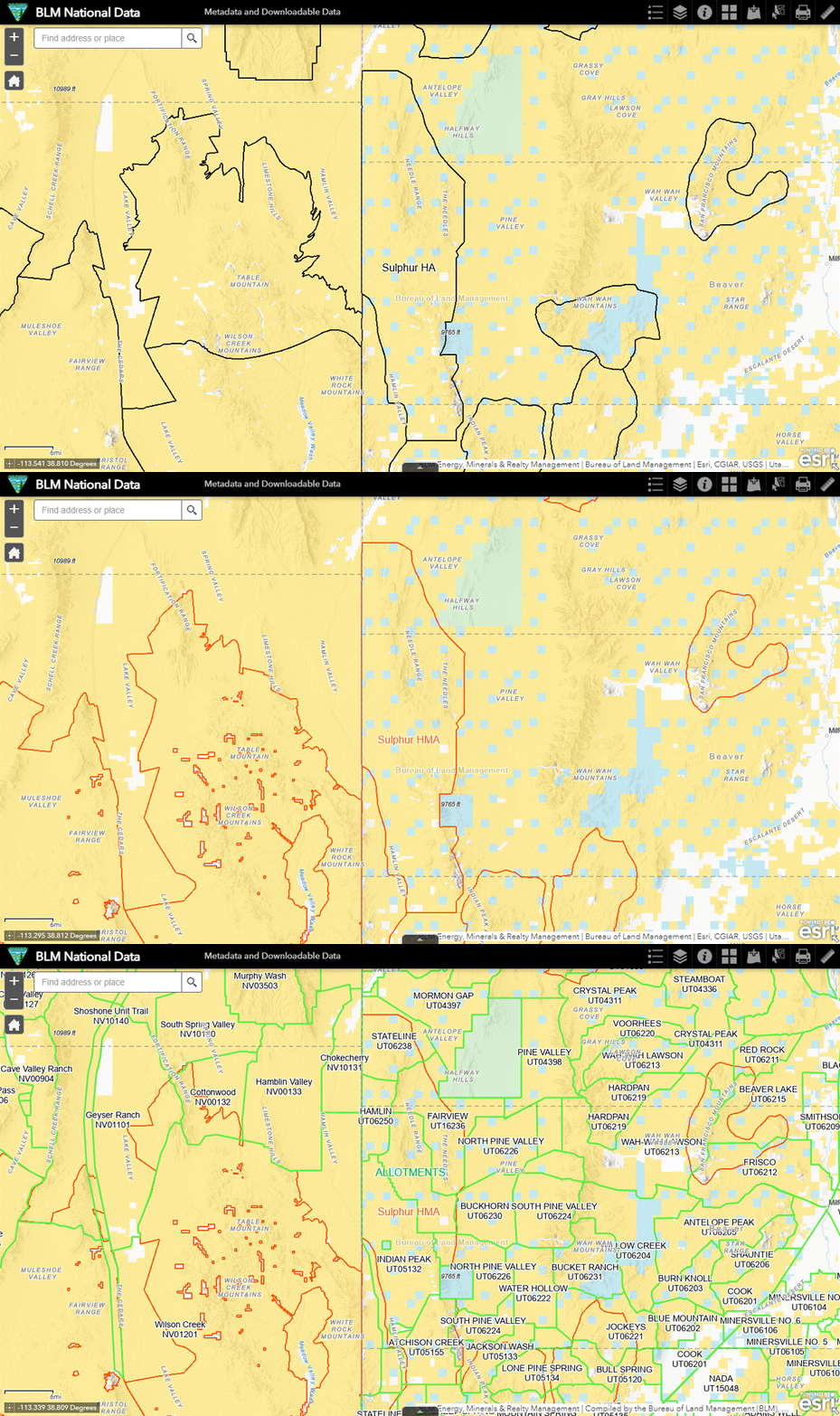
Sulphur HMA with Allotments 08-11-24

South Steens Roundup, Day 6

The incident started on August 15.  Results through August 20:

  • Scope: South Steens HMA
  • Target: Horses
  • AML: 304
  • Pre-gather population: 946
  • True AML: 1,162
  • Type: Planned
  • Method: Helicopter
  • Category: Cruel and costly (according to advocates)
  • Better way: Shoot the mares with pesticide-laced darts (according to advocates)
  • Goals: Gather 760, remove 722
  • Captured: 824, up from 574 on Day 4
  • Shipped: 731, up from 489 on Day 4
  • Released: None
  • Deaths: 8, no change from Day 4
  • Average daily take: 137.3
  • Unaccounted-for animals: 85

The figures above are based on the daily reports.

The capture goal has been exceeded by 8.4%.

The death rate is 1.0%.

The capture total includes 291 stallions, 354 mares and 179 foals.

Youngsters represented 21.7% of the animals gathered, consistent with a herd growth rate of 17% per year.

Of the adults, 45.1% were male and 54.9% were female, within the expected range of variation of a random process centered at 50% males / 50% females.

Body condition scores were not given.

The location of the trap site is not known.

The HMA is subject to permitted grazing.  Resources liberated to date:

  • Forage: 9,888 AUMs per year
  • Water: 8,240 gallons per day

The July 31 schedule indicates that up to 19 mares will be treated with fertility control pesticides and be returned to the range with up to 19 stallions but the gather page says 35 and 35.

The roundup supports three tenets of rangeland management.

RELATED: South Steens Roundup, Day 4.

South Steens HMA with Allotments 07-11-24

Google Search Results Leave Users Hanging

Here’s what you’ll see today if you type in “wild mustangs” and set the time interval to the past 24 hours:

CAAWH on Google 08-21-24

Which one of these clauses best completes the sentence?

a.) Help the ranchers win

b.) Get rid of the horses with pesticides

c.) Convince the bureaucrats that mass sterilization is a practical alternative to motorized removal

d.) All of the above

e.) None of the above

The correct answer is D, All of the above.

Better Way 10-25-23

Beware of the wild horse advocates.

Advocates Knew NDA Would Remove Sunny Hills Wild Horses

The agency’s director indicates at 1:36 in this report that “Our cooperator [Wild Horse Connection] was aware that if they were unsuccessful in removing the horses the NDA would remove the horses.”

The advocates want you to think they were victims not villains, even though they’ve been trying to get rid of the horses since 2019.

Wild Horse Connection works hand-in-hand with the other cooperator, the Campaign Against America’s Wild Horses, to eradicate the Virginia Range herd.

RELATED: Boulders, Not Advocates, Cause of Sunny Hills Roundup?

White Mountain Roundup Ends

The incident concluded on August 19 with 586 horses captured, 575 shipped, none released and 11 dead.

There were no unaccounted-for animals.

The capture and removal goals were 586 each.

The pre-gather population was thought to be 791.

The death rate was 1.9%.

The average daily take was 117.2.

The capture total included 219 stallions, 258 mares and 109 foals.

Youngsters represented 18.6% of the animals gathered.

Of the adults, 45.9% were male and 54.1% were female.

There were no plans to treat any of the mares with immunocontraceptive pesticides and return them to the HMA.

The roundup liberated 7,032 AUMs per year, giving new hope to the White Mountain permittees.

RELATED: White Mountain Roundup Set for Mid-August.

Sands Basin Emergency Roundup Next Week

The DNA has been copied to the project folder.

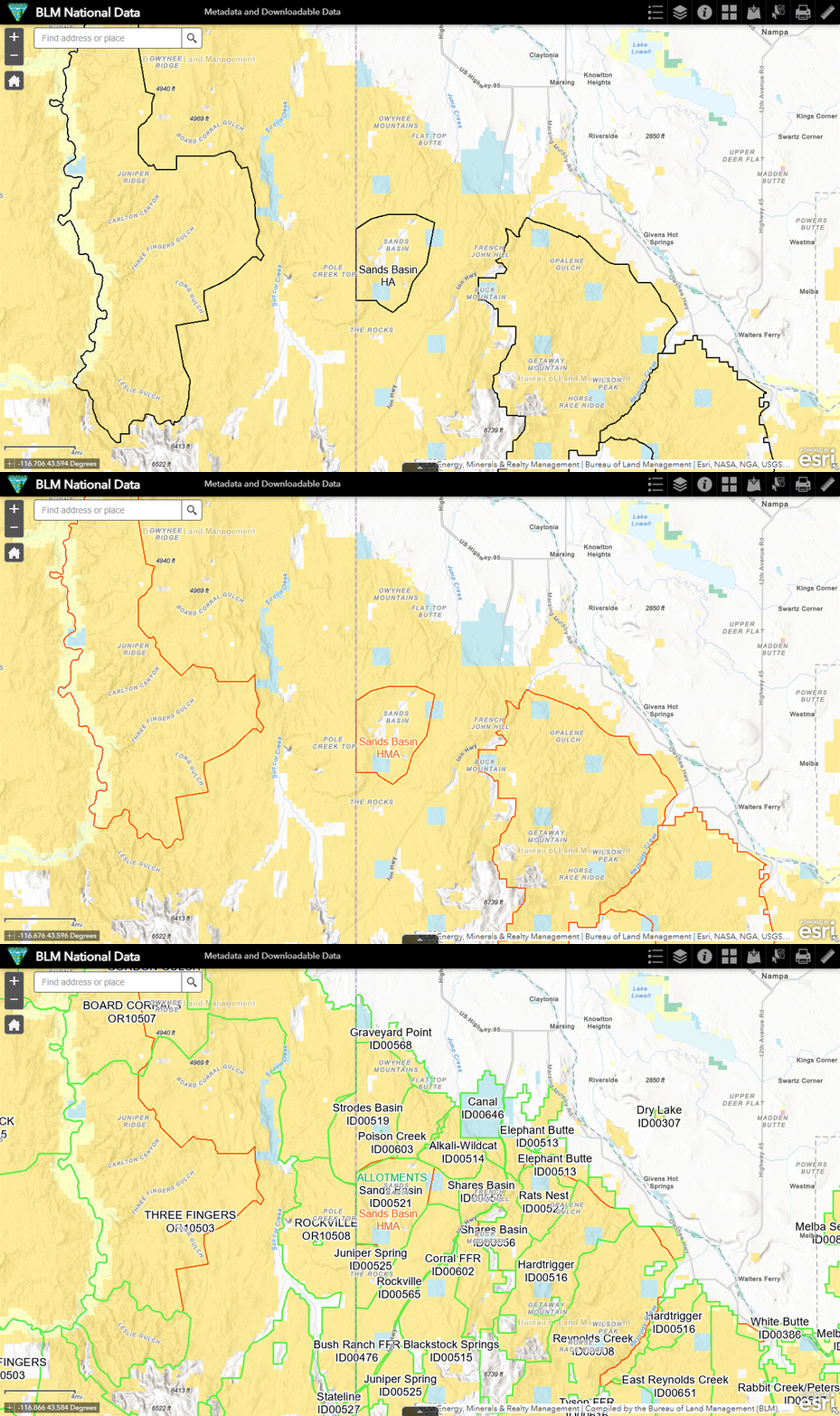
Attachment 1 in the Decision Record shows that the fire spread across several grazing allotments, including Sands Basin, which contains the HMA.

The news release did not indicate if the active AUMs will be moved into the suspended column and if the off season will be extended until the land recovers.

The capture and removal goals are 40 each.

The pests will be taken to the Boise off-range corrals, with possible transfer to Bruneau after vaccination and preparation.

The DR indicates that seven horses will be selected for permanent removal.

Mares over two years old will be treated with PZP or GonaCon before release.

Gather stats and daily reports will be posted to this page.

RELATED: Sands Basin Emergency Roundup in the Works?

Sands Basin HMA with Allotments 08-20-24

Four Mile Emergency Roundup Next Week

The DNA has been copied to the project folder in ePlanning.

Attachment 1 in the Decision Record shows that many grazing allotments were affected by the fire, including Willow Ridge, which contains the HMA.

The impact on permitted grazing was not discussed in the news release.

The capture and removal goals are 52 each.

The horses will be taken to the off-range corrals in Boise and eventually transferred to Bruneau, where they will be held until their home recovers from the fire.

Gather stats and daily reports will be posted to this page.

RELATED: Four Mile Emergency Roundup?

Four Mile HMA with Allotments 08-19-24

South Steens Roundup, Day 4

The incident started on August 15.  Results through August 18:

  • Scope: South Steens HMA
  • Target: Horses
  • AML: 304
  • Pre-gather population: 946
  • True AML: 1,162
  • Type: Planned
  • Method: Helicopter
  • Category: Cruel and costly (according to advocates)
  • Better way: Shoot the mares with pesticide-laced darts (according to advocates)
  • Goals: Gather 760, remove 722
  • Captured: 574, up from 154 on Day 1
  • Shipped: 489, up from 36 on Day 1
  • Released: None
  • Deaths: 8, up from 1 on Day 1
  • Average daily take: 143.5
  • Unaccounted-for animals: 77

The figures above are based on the daily reports.  Results for Days 2, 3 and 4 were not posted until today.

Three horses were put down for pre-existing conditions on Day 2, followed by one on Day 3 and three more on Day 4, bringing the death rate to 1.4%.

The capture total includes 200 stallions, 248 mares and 126 foals.

Youngsters represented 22% of the animals gathered, consistent with a herd growth rate of 17% per year.

Of the adults, 44.6% were male and 55.4% were female, within the expected range of variation of a random process centered at 50% males / 50% females.

Body condition scores were not given.

The location of the trap site is not known.

The HMA is subject to permitted grazing.  Resources liberated to date:

  • Forage: 6,888 AUMs per year
  • Water: 5,740 gallons per day

The July 31 schedule indicates that up to 19 mares will be treated with fertility control pesticides and be returned to the range with up to 19 stallions but the gather page says 35 and 35.

The roundup supports three tenets of rangeland management.

RELATED: South Steens Roundup Begins.

South Steens HMA with Allotments 07-11-24

Sulphur Roundup, Day 6

The incident started on August 13.  Results through August 18:

  • Scope: Sulphur HMA
  • Target: Horses
  • AML: 250
  • Pre-gather population: 606
  • True AML: 1,105
  • Type: Planned
  • Method: Helicopter
  • Category: Cruel and costly (according to advocates)
  • Better way: Shoot mares with pesticide-laced darts (according to advocates)
  • Goals: Gather 420, remove 360
  • Captured: 258, up from 203 on Day 4
  • Shipped: 212, up from 131 on Day 4
  • Released: None
  • Deaths: 1, no change from Day 4
  • Average daily take: 43.0
  • Unaccounted-for animals: 45

The figures above are based on the daily reports.

The sidebar at the gather page says 213 horses shipped.

The death rate is 0.4%.

The capture total includes 87 stallions, 120 mares and 51 foals.

Youngsters represented 19.8% of the animals gathered.

Of the adults, 42.0% were male and 58.0% were female.

Body condition scores were not provided.

The location of the trap site is not known.

The HMA is subject to permitted grazing.  Resources liberated to date:

  • Forage: 3,096 AUMs per year
  • Water: 2,580 gallons per day

The July 31 schedule indicates that 30 mares will be treated with GonaCon Equine and be returned to the range with 30 stallions.

The roundup supports three tenets of rangeland management.

RELATED: Sulphur Roundup, Day 4.

Sulphur HMA with Allotments 08-11-24

Any Nuclear Test Sites in Nevada Wild Horse Range?

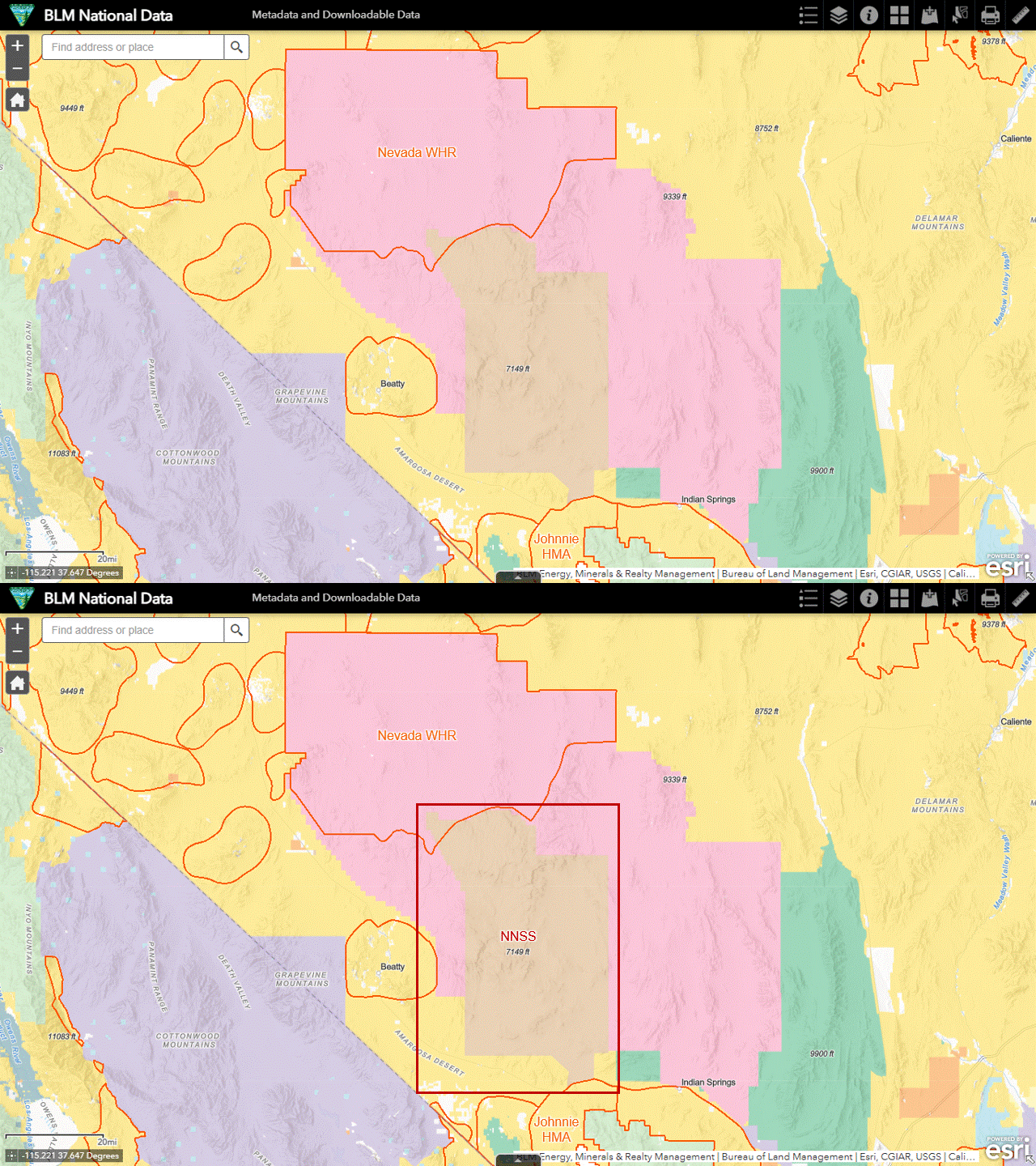
The northwest corner of the Nevada National Security Sites, sometimes referred to as the Nevada Test Site, overlaps the HMA.

NNSS 08-18-24

The map at Wikipedia indicates it’s Area 20, with one red dot in the upper left corner.

The National Data Viewer shows a crater in that area.

The measurement tool puts the diameter at slightly less than one thousand feet.

Western Horse Watchers does not know when the detonation occurred, if the horses can access the area, and how much radiation is present.

Any Nuclear Tests in Nevada WHR 08-18-24

White Mountain Roundup, Day 3

The incident started on August 15.  Results through August 17:

  • Scope: White Mountain HMA
  • Target: Horses
  • AML: 300
  • Pre-gather population: 791
  • True AML: 1,889 (300 + 19,063 ÷ 12)
  • Type: Planned
  • Method: Helicopter
  • Category: Cruel and costly (according to advocates)
  • Better way: Shoot the mares with pesticide-laced darts (according to advocates)
  • Goals: Gather 586, remove 586
  • Captured: 436, up from 144 on Day 1
  • Shipped: 304, up from zero on Day 1
  • Released: None
  • Deaths: 8, up from zero on Day 1
  • Average daily take: 145.3
  • Unaccounted-for animals: 124

The figures above are based on the daily reports.

Four horses were intentionally killed on Day 2 for leg deformities.  Four more were dispatched on Day 3 for pre-existing conditions, bringing the death rate to 1.8%.

The capture total includes 161 stallions, 198 mares and 77 foals.

Youngsters represented 17.7% of the animals gathered, consistent with a herd growth rate of 13% per year.

Of the adults, 44.8% were male and 55.2% were female.

Body condition scores were not given.

The location of the trap site is not known.

The HMA is subject to permitted grazing.  Resources liberated to date:

  • Forage: 5,232 AUMs per year
  • Water: 4,360 gallons per day

There are no plans to treat any of mares with fertility control pesticides and return them to the range.

The roundup supports three tenets of rangeland management.

RELATED: White Mountain Roundup Begins.

White Mountain HMA with Allotments 07-04-24

Lake Havasu Roundup Ends

The incident concluded on August 14 with 110 burros captured, 109 shipped, none released and one dead.

There were no unaccounted-for animals.

The daily reports indicate 108 burros shipped, leaving one unaccounted-for animal.

The capture and removal goals were 100 each.

The death rate was 0.9%.

The average daily take was 13.8.

The capture total included 44 jacks, 56 jennies and 10 foals.

Youngsters represented 9.1% of the animals gathered.

Of the adults, 44% were male and 56% were female.  These proportions are consistent with a random process centered at 50% males / 50% females.

The July 31 schedule classified the roundup as an emergency but the gather page said nuisance.

RELATED: BLM to Remove Burros Near Lake Havasu City.

Coalition Appeals Rock Springs RMP Decision

Attorneys for the American Wild Horse Campaign, Animal Welfare Institute, Western
Watersheds Project and three individuals gave notice on August 16 to the United States Court of Appeals for the Tenth Circuit according to a news release by AWI.

Earlier in the week Judge Kelly Rankin affirmed the BLM’s plan to remove 5,000 wild horses and eliminate two million acres of their habitat in the Wyoming Checkerboard.

RELATED: Court Upholds Rock Springs RMP Amendments.