North Lander Roundup, Day 19

The incident started on July 1.  Results through July 19:

  • Scope: North Lander Complex
  • Target: Horses
  • AML: 536
  • Pre-gather population: 3,035
  • True AML: 4,616
  • Type: Planned
  • Method: Helicopter
  • Category: Cruel and costly (according to advocates)
  • Better way: Sterilize mares with PZP (according to advocates)
  • Goals: Gather 2,766, remove 2,716
  • Captured: 2,462, up from 2,454 on Day 17
  • Shipped: 2,424, up from 2,310 on Day 17
  • Released: None
  • Deaths: 14, no change from Day 17
  • Average daily take: 129.6
  • Unaccounted-for animals: 24

The figures above are based on the daily reports.

The gather page says 2,425 horses shipped.

The trap was moved to a new location on Day 18, no horses caught.

The death rate is 0.6%.

The capture total includes 965 stallions, 1,050 mares and 447 foals.

Youngsters represented 18.2% of the animals gathered, consistent with a herd growth rate of 13% per year.  Land managers often use a growth rate of 20% per year to predict herd sizes and management actions.

Of the adults, 47.9% were male and 52.1% were female.

Body condition scores were not given.

The location of the trap site is not known.  Four HMAs are involved.

The Complex is subject to permitted grazing.  Resources liberated to date:

  • Forage: 29,544 AUMs per year
  • Water: 24,620 gallons per day

The June 3 schedule indicates that 20 mares will be treated with fertility control pesticides and returned to the range but this is not discussed at the gather page.

The roundup supports three tenets of rangeland management.

RELATED: North Lander Roundup, Day 17.

North Lander Allotments 06-27-24

Blue Wing Roundup, Day 11

The incident started on July 8.  Results through July 18:

  • Scope: Blue Wing Complex
  • Target: Horses and burros
  • AML: 555 horses and 90 burros
  • Pre-gather population: 1,912 horses and 476 burros
  • Type: Planned
  • Method: Helicopter
  • Category: Cruel and costly (according to advocates)
  • Better way: Snuff out new life with PZP (according to advocates)
  • Goals
    • Horses: Gather 1,373 and remove 1,333
    • Burros: Gather 356 and remove 356
  • Captured
    • Horses: 638, up from 357 on Day 9
    • Burros: 360, no change from Day 9
  • Shipped
    • Horses: 531, up from 293 on Day 9
    • Burros: 353, no change from Day 9
  • Released
    • Horses: 2, up from 1 on Day 9
    • Burros: None
  • Deaths
    • Horses: 13, up from 8 on Day 9
    • Burros: 8, no change from Day 9
  • Average daily take
    • Horses: 58.0
    • Burros: 32.7
  • Unaccounted-for animals
    • Horses: 92
    • Burros: -1
  • Snippet from statute: It is the policy of Congress that wild free-roaming horses and burros shall be protected from capture, branding, harassment, or death

The figures above are based on the daily reports.

Horses

The number of horses shipped on Day 8 was changed from 126 to 127.

A stallion was released (or escaped) on Day 11.

Five horses were dispatched on Day 11 for various reasons, including lameness, poor body condition and leg injuries, bringing the death rate to 2.0%.

The capture total includes 248 stallions, 263 mares and 127 foals.

Youngsters represented 19.9% of the animals gathered, consistent with a herd growth rate of 15% per year.  Land managers typically use 20% per year to predict herd sizes and management actions.

Of the adults, 48.5% were male and 51.5% were female.

Body condition scores were not given.

Burros

The capture goal has been reached.

More burros were processed than caught, throwing the numbers out of balance.

CapturedShippedReleasedDead = 360 – 353 – 0 – 8 = -1

The death rate is 2.2%.

The capture total includes 186 jacks, 152 jennies and 22 foals.

Youngsters represented 6.1% of the animals gathered.

Of the adults, 55% were male and 45% were female.

General

The location of the trap site is not known.  Five HMAs are involved.

The Complex is subject to permitted grazing.  Resources liberated to date:

  • Forage: 9,792 AUMs per year
  • Water: 8,160 gallons per day

The June 3 schedule indicates that 40 mares will be treated with a fertility control pesticide but this is not acknowledged at the gather page.

There are no such plans for the burros.

The roundup supports three tenets of rangeland management.

RELATED: Blue Wing Roundup, Day 9.

Blue Wing Complex with Allotments 05-02-24

Would Smith Creek Ranch Be a Good Investment as an ORP?

The allotments can support approximately 900 wild horses.

The price is $8.75 million.

If the BLM pays $2.50 per head per day for horses in off-range pastures, the annual revenue would be $821,250.

The simple rate of return would be 9.4% per year.

The agency would retain title and the ranch would be subject to periodic inspections.

If the herd had to retreat to the deeded acreage because of wildfire or drought, the stocking rate would be 324 wild horses per thousand acres, which means you’ll be feeding them until they can get back on public lands.

RELATED: Desatoya Base Property Available for $8.75 Million.

Desatoya Base Property Available for $8.75 Million

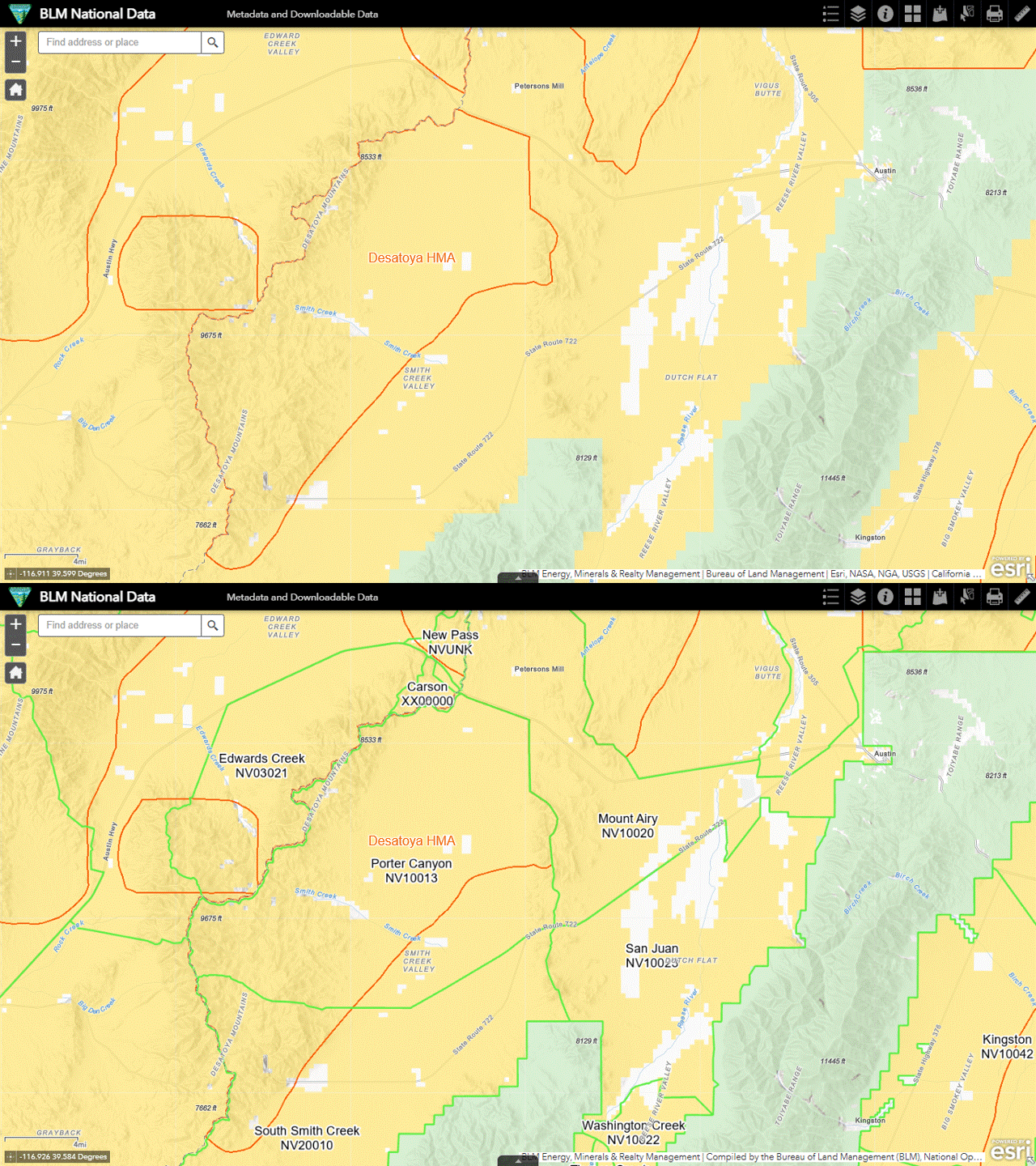
HMAs don’t have base properties but the overlapping allotments do.

Smith Creek Ranch covers 2,778 deeded acres near Austin, NV according to the listing on Land & Farm.

The map at the agent’s listing shows grazing preference on the Carson, Edwards Creek and Porter Canyon allotments.

Edwards Creek and Porter Canyon overlap the Desatoya HMA according to the National Data Viewer.

The agent’s remark about strictly maintained horse management suggests that buyers of these properties consider the herds to be liabilities not assets.

The Allotment Master Report puts all three in the Improve category.

Together they offer 10,733 AUMs per year on 183,970 public acres, or 58.3 AUMs per year per thousand public acres, enough to support 4.9 wild horses per thousand public acres.

Believers of the overpopulation narrative think public lands in the western U.S. can only support one wild horse per thousand acres (27,000 animals on 27 million acres).

The livestock type is cattle and all three allotments have 12-month grazing seasons according to the Authorization Use Report.

Thus, if a buyer wanted to convert the preference to horses, there’d be no change to the AUMs and grazing seasons, only the livestock type.

The authorized forage would support up to 894 wild horses.

RELATED: When Are Sanctuaries Helpful to Wild Horses?

North Lander Protest Set for July 22

The roundup will likely be over but the advocates will meet at the Rock Springs Off-Range Corrals at 11 AM local time and march to the BLM office according to a story dated July 17 by KGWN News.

Would they stay home if the agency got rid of the horses with pesticides instead of helicopters?  Maybe write thank you letters for conserving the herd?

Better Way 10-25-23

If the pesticide of choice was PZP, would they band together and offer to apply it for free?

RELATED: North Lander Roundup, Day 17.

North Lander Roundup, Day 17

The incident started on July 1.  Results through July 17:

  • Scope: North Lander Complex
  • Target: Horses
  • AML: 536
  • Pre-gather population: 3,035
  • True AML: 4,616
  • Type: Planned
  • Method: Helicopter
  • Category: Cruel and costly (according to advocates)
  • Better way: Sterilize mares with PZP (according to advocates)
  • Goals: Gather 2,766, remove 2,716
  • Captured: 2,454, up from 2,247 on Day 15
  • Shipped: 2,310, up from 2,046 on Day 15
  • Released: None
  • Deaths: 14, up from 13 on Day 15
  • Average daily take: 144.4
  • Unaccounted-for animals: 130

The figures above are based on the daily reports.

A mare, age unknown, was found dead in temporary holding on Day 16.  Necropsy revealed head/neck trauma.

The death rate is 0.6%.

The capture total includes 961 stallions, 1,047 mares and 446 foals.

Youngsters represented 18.2% of the animals gathered, consistent with a herd growth rate of 13% per year.  Land managers often use a growth rate of 20% per year to predict herd sizes and management actions.

Of the adults, 47.9% were male and 52.1% were female.

Body condition scores were not given.

The location of the trap site was not disclosed.  Four HMAs are involved.

The Complex is subject to permitted grazing.  Resources liberated to date:

  • Forage: 29,448 AUMs per year
  • Water: 24,540 gallons per day

The June 3 schedule indicates that 20 mares will be treated with fertility control pesticides and returned to the range but this is not discussed at the gather page.

The roundup supports three tenets of rangeland management.

RELATED: North Lander Roundup, Day 15.

North Lander Allotments 06-27-24

Blue Wing Roundup, Day 9

The incident started on July 8.  Results through July 16:

  • Scope: Blue Wing Complex
  • Target: Horses and burros
  • AML: 555 horses and 90 burros
  • Pre-gather population: 1,912 horses and 476 burros
  • Type: Planned
  • Method: Helicopter
  • Category: Cruel and costly (according to advocates)
  • Better way: Snuff out new life with PZP (according to advocates)
  • Goals
    • Horses: Gather 1,373 and remove 1,333
    • Burros: Gather 356 and remove 356
  • Captured
    • Horses: 357, up from 255 on Day 7
    • Burros: 360, no change from Day 7
  • Shipped
    • Horses: 293, up from 97 on Day 7
    • Burros: 353, no change from Day 7
  • Released
    • Horses: 1, no change from Day 7
    • Burros: None
  • Deaths
    • Horses: 8, up from 5 on Day 7
    • Burros: 8, no change from Day 7
  • Average daily take
    • Horses: 39.7
    • Burros: 40.9
  • Unaccounted-for animals
    • Horses: 55
    • Burros: -1
  • Snippet from statute: It is the policy of Congress that wild free-roaming horses and burros shall be protected from capture, branding, harassment, or death

The figures above are based on the daily reports.

Horses

A stallion was dispatched on Day 8 because of a club foot, a mare was put down for a leg deformity and another stallion was killed because of a fractured shoulder, boosting the death rate to 2.2%.

The capture total includes 138 stallions, 144 mares and 75 foals.

Youngsters represented 21% of the animals gathered.

Of the adults, 48.9% were male and 51.1% were female.

Body condition scores were not given.

Burros

The capture goal has been reached.

More burros were processed than caught, throwing the numbers out of balance.

CapturedShippedReleasedDead = 360 – 353 – 0 – 8 = -1

The death rate is 2.2%.

The capture total includes 186 jacks, 152 jennies and 22 foals.

Youngsters represented 6.1% of the animals gathered.

Of the adults, 55% were male and 45% were female.

General

The location of the trap site is not known.  Five HMAs are involved.

The Complex is subject to permitted grazing.  Resources liberated to date:

  • Forage: 6,432 AUMs per year
  • Water: 5,360 gallons per day

The June 3 schedule indicates that 40 mares will be treated with a fertility control pesticide but this is not acknowledged at the gather page.

There are no such plans for the burros.

The roundup supports three tenets of rangeland management.

RELATED: Blue Wing Roundup, Day 7.

Blue Wing Complex with Allotments 05-02-24

Largest Wild Horse Eradication in History of WHB Act?

It’s not in Wyoming, it’s in Nevada, and the plaintiff should be the defendant.

Yesterday, the Campaign Against America’s Wild Horses presented oral arguments in U.S. District Court against the Rock Springs RMP Amendments, according to a news flash distributed by Lucky Three Ranch.

The communiqué said the changes “represent the first time in the 53-year history of the Wild Free-Roaming Horses and Burros Act that the BLM has eliminated entire wild horse herds where sufficient habitat characteristics (i.e., forage, water, space, and cover) exist on public lands,” which is not true.

The agency has a long history of zeroing-out areas identified for wild horses and managing them principally for livestock.  The Caliente, Blue Wing and East Pershing Complexes are three examples.

They don’t have enough forage, water, space and cover to sustain wild horses, supposedly, yet roundups are needed to keep the populations in check.

Moreover, the nonprofit, a leader in nonmotorized removal, claimed that, so far, it’s held off the largest wild horse eradication in the history of the Act, but needs your money to continue the fight.

Nonsense.  The largest wild horse eradication in the American west is on the Virginia Range, where volunteers with CAAWH are sterilizing the mares with PZP, a restricted-use pesticide that tricks the immune system into attacking the ovaries.

The herd, now at risk of collapse, consists of approximately 3,500 horses, while Divide Basin and Salt Wells Creek contain 1,050 + 1,204 = 2,254 wild horses according to the 2024 population dataset.

Thus, CAAWH and its supporters are responsible for the greatest loss of America’s wild horses, not the BLM.

The judge should take this into consideration as he weighs the testimony of their attorneys.

RELATED: What If the Rock Springs HMAs Were Zeroed Out with Pesticides?

Pesticide Pushers 07-17-23

It’s Official: South Steens Roundup Set for August 15

A helicopter will push the horses into the trap and the incident will be open to public observation according to today’s news release.

The HMA covers 134,459 total acres, including 127,608 public acres, in southeastern Oregon.

The current population is thought to be 781 adults and 165 foals.

The 304 horses allowed by plan receive 3,648 AUMs per year, compared to 10,299 AUMs per year for livestock.

The True AML is 1,162.

The stocking rate allowed by plan is 2.4 wild horses per thousand public acres.

The stocking rate at the True AML would be 9.1 wild horses per thousand acres, which brings more embarrassment to the bureaucrats and ranchers, who claim that public lands in the western U.S. can only support one wild horse per thousand acres (27,000 animals on 27 million acres).

Horses identified for removal will be taken to the off-range corrals in Hines.

The roundup supports three tenets of rangeland management.

RELATED: South Steens Gather Page Doubles as News Release?

South Steens HMA with Allotments 07-11-24

PBS to Air Redford’s Film About Wild Horses

The broadcast premieres on PBS stations in New York, Philadelphia and Miami this month, followed by Los Angeles, Chicago and San Francisco in August according to today’s announcement.

Released in 2020, the documentary appeals to defeatists, pesticide pushers and ranching sympathizers, sometimes referred to as advocates, and a gullible public.

Subscribers to the overpopulation narrative will not go unsatisfied.

Advocates are the Predators 11-30-21

South Steens Gather Page Doubles as News Release?

The subtitle says “Today the Bureau of Land Management announced tentative plans to gather wild horses within and immediately adjacent to the Souths Steens Herd Management Area in southeast Oregon.  A Determination of NEPA Adequacy is currently in progress and will determine gather implementation.”

The incident will be open to public observation unless the DNA, which was not announced, is successfully challenged.

The AML is 159 – 304.

The current population is 781 adults and 165 foals.

The June 3 schedule indicates that mares returned to the HMA will be treated with GonaCon but the DNA calls for PZP.

RELATED: South Steens DNA Out for Public Review.

UPDATE: News release published day after gather page.

North Lander Roundup, Day 15

The incident started on July 1.  Results through July 15:

  • Scope: North Lander Complex
  • Target: Horses
  • AML: 536
  • Pre-gather population: 3,035
  • True AML: 4,616
  • Type: Planned
  • Method: Helicopter
  • Category: Cruel and costly (according to advocates)
  • Better way: Sterilize mares with PZP (according to advocates)
  • Goals: Gather 2,766, remove 2,716
  • Captured: 2,247, up from 1,924 on Day 13
  • Shipped: 2,046, up from 1,661 on Day 13
  • Released: None
  • Deaths: 13, up from 10 on Day 13
  • Average daily take: 149.8
  • Unaccounted-for animals: 188

The figures above are based on the daily reports.

A mare died of a broken neck on Day 14 while being transported in a trailer.  Another mare died of a brain aneurysm but no details were given.  A foal was put down for a spinal deformity.

The death rate is 0.6%.

The capture total includes 876 stallions, 953 mares and 418 foals.

Youngsters represented 18.6% of the animals gathered, consistent with a herd growth rate of 13% per year.  Land managers often use a growth rate of 20% per year to predict herd sizes and management actions.

Of the adults, 47.9% were male and 52.1% were female.

Body condition scores were not given.

The location of the trap site is not known.

The Complex is subject to permitted grazing.  Resources liberated to date:

  • Forage: 26,964 AUMs per year
  • Water: 22,470 gallons per day

The June 3 schedule indicates that 20 mares will be treated with fertility control pesticides and returned to the range but this is not discussed at the gather page.

The roundup supports three tenets of rangeland management.

RELATED: North Lander Roundup, Day 13.

North Lander Allotments 06-27-24

Blue Wing Roundup, Day 7

The incident started on July 8.  Results through July 14:

  • Scope: Blue Wing Complex
  • Target: Horses and burros
  • AML: 555 horses and 90 burros
  • Pre-gather population: 1,912 horses and 476 burros
  • Type: Planned
  • Method: Helicopter
  • Category: Cruel and costly (according to advocates)
  • Better way: Snuff out new life with PZP (according to advocates)
  • Goals
    • Horses: Gather 1,373 and remove 1,333
    • Burros: Gather 356 and remove 356
  • Captured
    • Horses: 255, up from 94 on Day 5
    • Burros: 360, no change from Day 5
  • Shipped
    • Horses: 97, up from zero on Day 5
    • Burros: 353, up from 303 on Day 5
  • Released
    • Horses: 1, up from zero on Day 5
    • Burros: None
  • Deaths
    • Horses: 5, up from zero on Day 5
    • Burros: 8, no change from Day 5
  • Average daily take
    • Horses: 36.4
    • Burros: 51.4
  • Unaccounted-for animals
    • Horses: 152
    • Burros: -1
  • Snippet from statute: It is the policy of Congress that wild free-roaming horses and burros shall be protected from capture, branding, harassment, or death

The figures above are based on the daily reports.

Horses

A stallion was released (or escaped) on Day 7.

Two stallions were dispatched on Day 6, one due to injuries sustained in capture and the other due to a pre-existing condition.  Two stallions and a mare were put down on Day 7 for pre-existing conditions, lifting the death rate to 2%.  All would be alive today if there was no roundup.

The capture total includes 103 stallions, 99 mares and 53 foals.

Youngsters represented 20.8% of the animals gathered.

Of the adults, 51% were male and 49% were female.

Body condition scores were not given.

Burros

More burros were processed than caught, throwing the numbers out of balance.

CapturedShippedReleasedDead = 360 – 353 – 0 – 8 = -1

The death rate is 2.2%.

The capture total includes 186 jacks, 152 jennies and 22 foals.

Youngsters represented 6.1% of the animals gathered.

Of the adults, 55% were male and 45% were female.

General

The location of the trap site is not known.  Five HMAs are involved.

The Complex is subject to permitted grazing.  Resources liberated to date:

  • Forage: 5,208 AUMs per year
  • Water: 4,340 gallons per day

The June 3 schedule indicates that 40 mares will be treated with a fertility control pesticide but this is not mentioned at the gather page.

There are no such plans for the burros.

The roundup supports three tenets of rangeland management.

RELATED: Blue Wing Roundup, Day 5.

Blue Wing Complex with Allotments 05-02-24

Conflict of Interest at Colorado Wild Horse Working Group?

It’s probably an isolated case.

Donald Broom is a rancher and Moffatt County Commissioner according to his bio.

He manages Sombrero Ranches, “where he oversees the nation’s largest herd of broke horses, supplying riding stables, movie scenes and outfitters with ridable livestock.”

A search of the Operator Information Report at RAS linked Sombrero Ranches to authorization #0501087.

The Allotment Information Report tied the authorization to West Boone Draw and Thompson Basin, both in the Little Snake Field Office.

The National Data Viewer puts them on the west side of Sand Wash Basin.

The Allotment Master Report puts both in the Improve category.

The Authorization Use Report indicates that most of the AUMs go to domestic horses, with some to cattle.

Broom may not be the owner, but his personal fortune, and the profitability of his employer, may be inversely related to the number of wild horses in and around the HMA.

Thus, they’d want the herd minimized, which may be consistent with the aim of the committee but not the people of Colorado.

Western Horse Watchers does not know if the allotments were always permitted for horses or if Sombrero had to go through the planning process as American Prairie did for bison in Montana.

RELATED: Wild Horse Working Group Will Serve Ranchers Not Horses.

Sombrero Ranch Allotments 07-15-24

What You Can Do to Help America’s Wild Horses

Tell your U.S. representative (you have one) and senators (you have two) to

  • Confine the ranchers to their base properties in a year-round off season
  • Give the horses principal use of all areas identified in 1971
  • Restore the Wild Horse and Burro Act to its original form
  • Vote against any measure authorizing or expanding the use of fertility control

Tip for building wealth: Don’t give a penny to the advocates.  They protect the ranchers, not the horses.

RELATED: Project 2025 Targets America’s Wild Horses and Burros?

Pesticide Pushers 07-13-23

North Lander Roundup, Day 13

The incident started on July 1.  Results through July 13:

  • Scope: North Lander Complex
  • Target: Horses
  • AML: 536
  • Pre-gather population: 3,035
  • True AML: 4,616
  • Type: Planned
  • Method: Helicopter
  • Category: Cruel and costly (according to advocates)
  • Better way: Sterilize mares with PZP (according to advocates)
  • Goals: Gather 2,766, remove 2,716
  • Captured: 1,924, up from 1,640 on Day 11
  • Shipped: 1,661, up from 1,461 on Day 11
  • Released: None
  • Deaths: 10, no change from Day 11
  • Average daily take: 148.0
  • Unaccounted-for animals: 253

The figures above are based on the daily reports.

The death rate is 0.5%.

The capture total includes 760 stallions, 812 mares and 352 foals.

Youngsters represented 18.3% of the animals gathered, consistent with a herd growth rate of 13% per year.

Land managers often use a growth rate of 20% per year to predict herd sizes and management actions.

Of the adults, 48.3% were male and 51.7% were female.

Body condition scores were not given.

The location of the trap site is not known.

The Complex is subject to permitted grazing.  Resources liberated to date:

  • Forage: 23,088 AUMs per year
  • Water: 19,240 gallons per day

The June 3 schedule indicates that 20 mares will be treated with fertility control pesticides and returned to the range but this is not discussed at the gather page.

The roundup supports three tenets of rangeland management.

RELATED: North Lander Roundup, Day 11.

North Lander Allotments 06-27-24

Blue Wing Roundup, Day 5

The incident started on July 8.  Results through July 12:

  • Scope: Blue Wing Complex
  • Target: Horses and burros
  • AML: 555 horses and 90 burros
  • Pre-gather population: 1,912 horses and 476 burros
  • Type: Planned
  • Method: Helicopter
  • Category: Cruel and costly (according to advocates)
  • Better way: Snuff out new life with PZP (according to advocates)
  • Goals
    • Horses: Gather 1,373 and remove 1,333
    • Burros: Gather 356 and remove 356
  • Captured
    • Horses: 94, up from zero on Day 3
    • Burros: 360, up from 308 on Day 3
  • Shipped
    • Horses: None
    • Burros: 303, up from 108 on Day 3
  • Released
    • Horses: None
    • Burros: None
  • Deaths
    • Horses: None
    • Burros: 8, up from 6 on Day 3
  • Average daily take
    • Horses: 18.8
    • Burros: 72.0
  • Unaccounted-for animals
    • Horses: 94
    • Burros: 49
  • Snippet from statute: It is the policy of Congress that wild free-roaming horses and burros shall be protected from capture, branding, harassment, or death

The figures above are based on the daily reports.

Horses

Capture began on Day 5.

The capture total includes 39 stallions, 36 mares and 19 foals.

Youngsters represented 20.2% of the animals gathered.

Of the adults, 52% were male and 48% were female.

Burros

A jenny died of colic on Day 5.  Location unknown.

Another jenny was found dead in a truck when it arrived at Indian Lakes.

The death rate is 2.2%.

The capture total includes 186 jacks, 152 jennies and 22 foals.

Youngsters represented 6.1% of the animals gathered.

Of the adults, 55% were male and 45% were female.

General

The location of the trap site was not given.  Five HMAs are involved.

The Complex is subject to permitted grazing.  Resources liberated to date:

  • Forage: 3,288 AUMs per year
  • Water: 2,740 gallons per day

The June 3 schedule indicates that 40 mares will be treated with a fertility control pesticide but this is not mentioned at the gather page.

There are no such plans for the burros.

The roundup supports three tenets of rangeland management.

RELATED: Blue Wing Roundup, Day 3.

Blue Wing Complex with Allotments 05-02-24

Project 2025 Targets America’s Wild Horses and Burros?

Many of the advisors in the Trump administration were rats.

They’re still rats, intent on sabotaging a second administration or advancing an agenda that’s not compatible with conservative principles, so it’s understandable that his supporters would want to screen them out now along with their nefarious ideas.

That’s the goal of Project 2025: To have the right people in the right place with the right ideas, starting on Day 1.

Chapter 16 in the policy agenda covers the Department of the Interior.

It was written by William Perry Pendley, a controversial figure from the first administration and a defender of government dependency and redistribution of wealth, ideas championed by the Left.

On page 9 of the pdf he describes wild horses and burros as western icons.

On page 10 they’re tough issues.

A few paragraphs later they’re an existential threat.

On page 12: “For decades, Congress watched as these herds overwhelmed the land’s ability to sustain them, crowded out indigenous plant and other animal species, threatened the survival of species listed under the Endangered Species Act, invaded private and permitted public land, disturbed private property rights, and turned the sod into concrete.”

“There are 95,000 wild horses and burros roaming nearly 32 million acres in the West—triple what scientists and land management experts say the range can support.  These animals face starvation and death from lack of forage and water.”

“This is not a new issue—it is not just a western issue—it is an American issue.”

Nonsense.  It’s an issue for a special interest, a select group that profits from cheap feed on government lands.

Wild horses and burros interfere with the process.

“Congress must enact laws permitting the BLM to dispose humanely of these animals.”

Are these the views of the project organizers?

Why do they allow this thinly veiled attempt to push leftist ideals?

Pendley was one of the rats and should not be allowed anywhere near a second Trump administration.

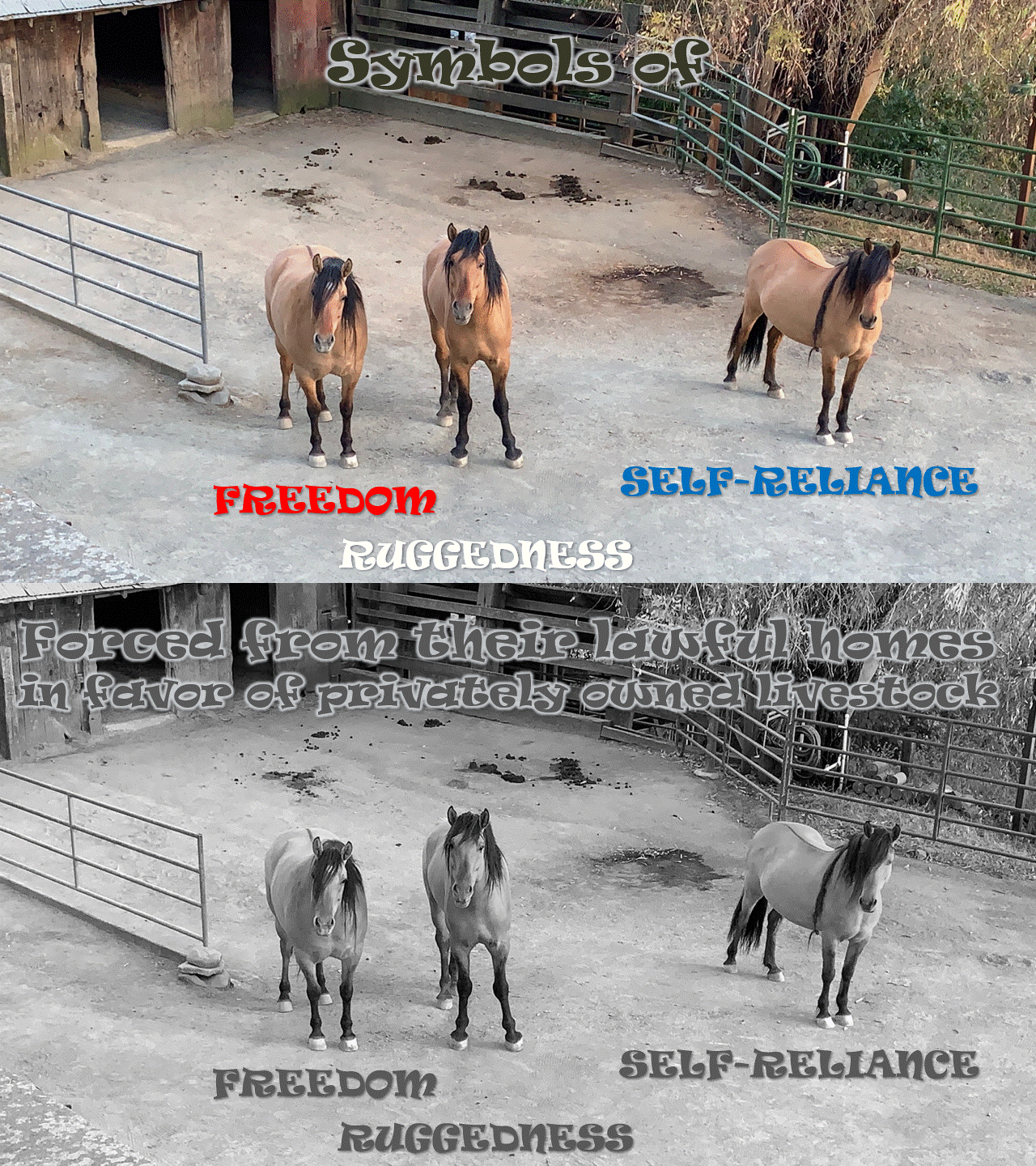
As for the public-lands ranchers, they’ve spent years trying to portray themselves as symbols of freedom, ruggedness and self-reliance.

That image needs to be demolished along with their influence at DOI.

Symbols of Independence 07-04-24