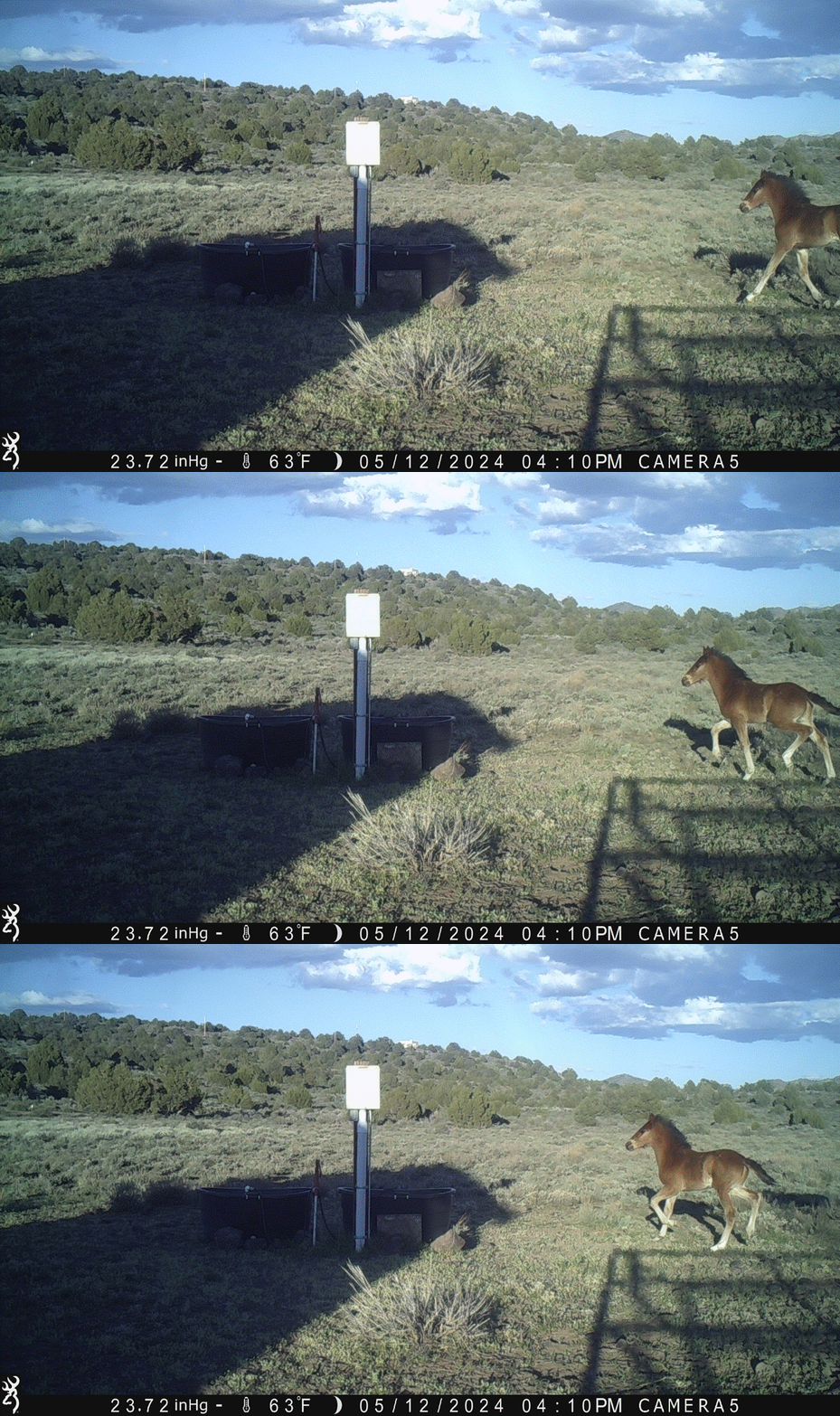
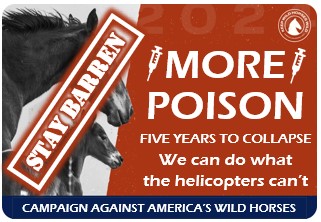
Foal-Free Friday, Replacing Life with Death Edition

The advocates oppose motorized removal because of injuries and deaths that occur during capture, sorting, transportation and off-range holding.

They could push back against the causes of roundups—policies and practices designed for ranching superiority in the lawful homes of wild horses—but they don’t.

Instead, they invite death, the object of their criticism.

They snuff out new life with PZP, a restricted-use pesticide that tricks the immune system into attacking the ovaries, and hope for the older horses to die.

Like the bureaucrats and ranchers, whose approval they seek, they’ll never let the herds fill their niche and manage themselves.

They are phonies, teachers of the law, leaders of the blind.

RELATED: Foal-Free Friday, Abnormal Sex Ratios Edition.
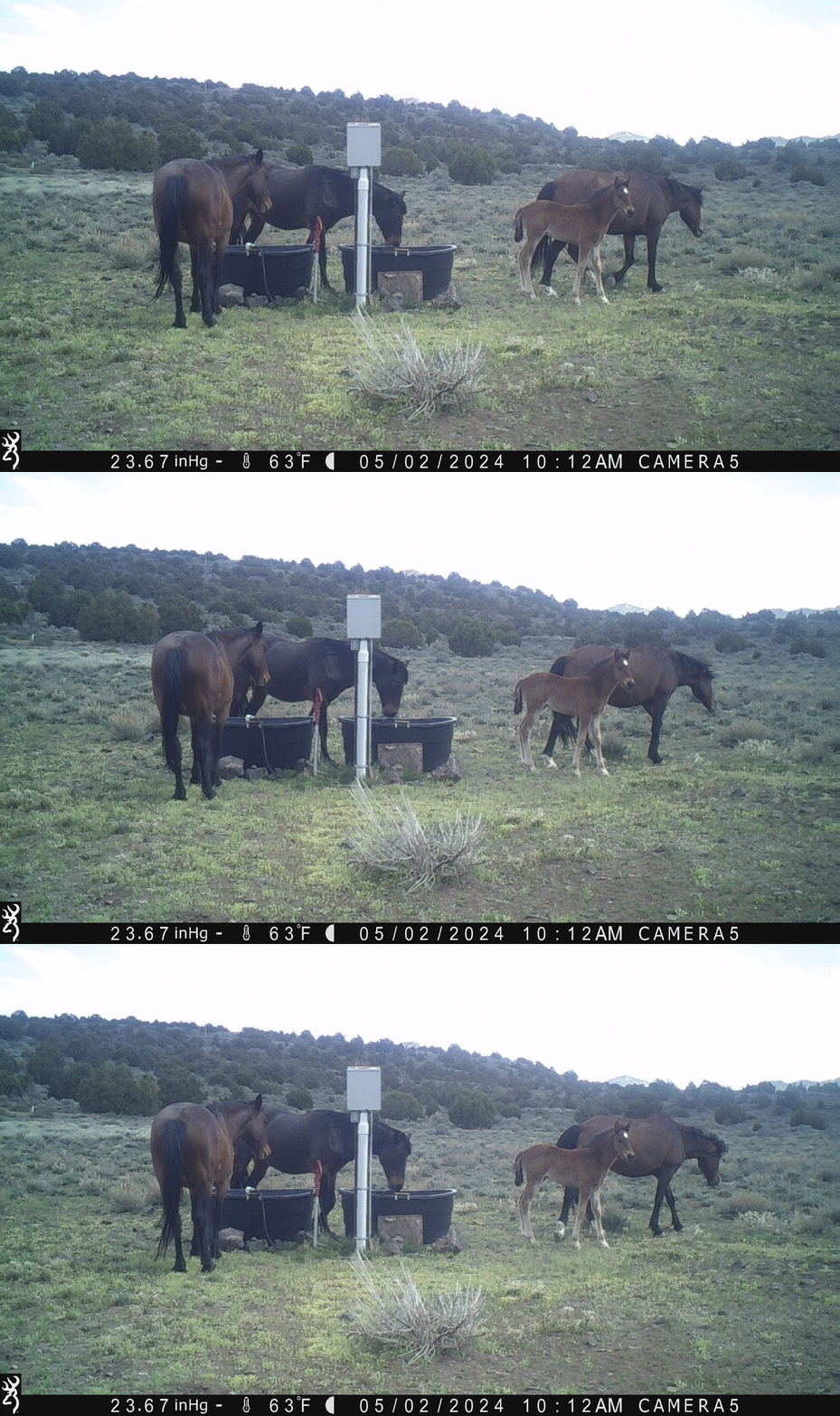
New Foal on Virginia Range 05-02-24

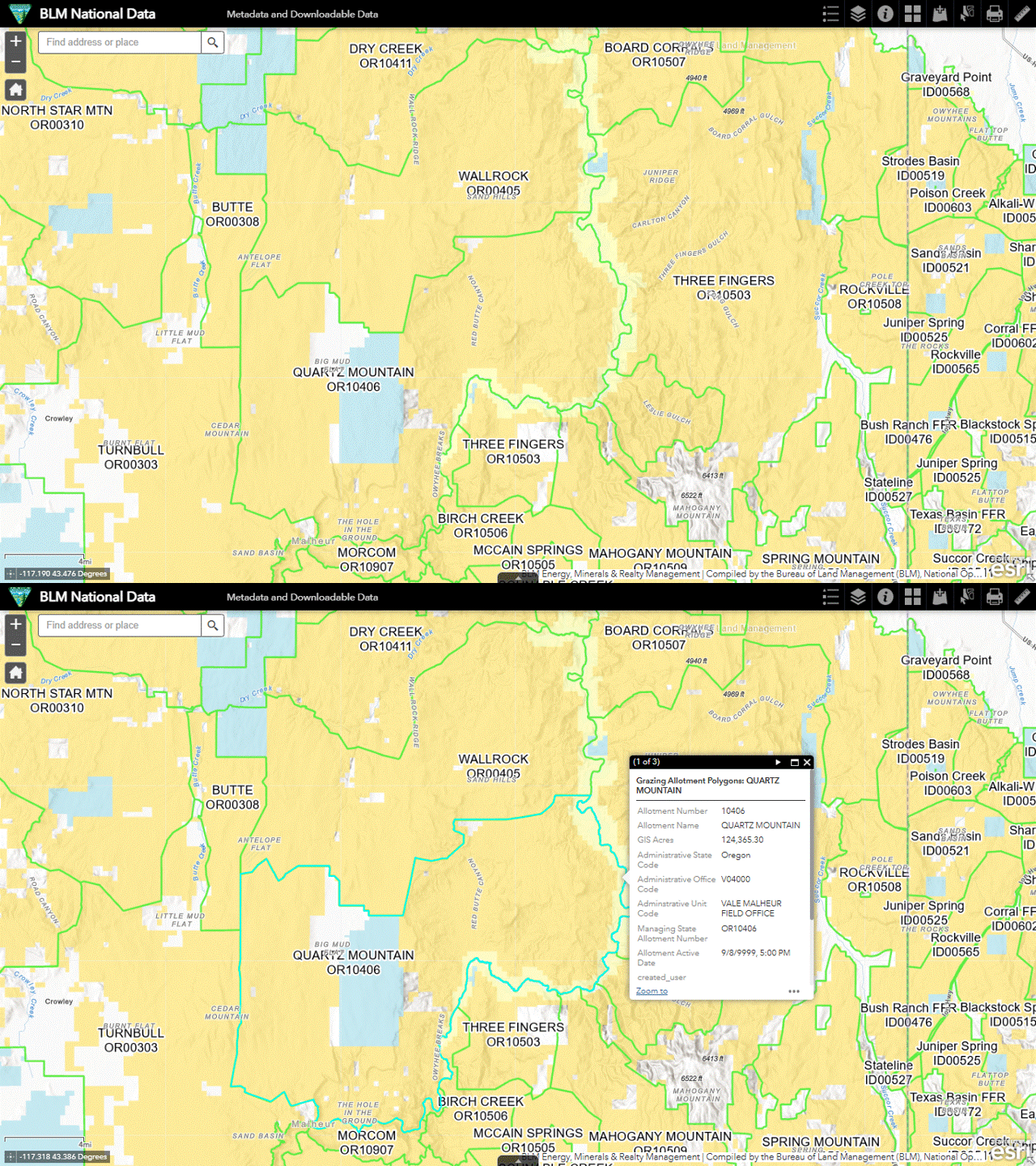
If Wild Horses Had Principal Use of Quartz Mountain

The allotment, on the west side of Three Fingers HMA in Oregon, offers 7,472 active AUMs on 89,550 public acres, according to the Allotment Master Report.

The forage assigned to horses is zero.

How many wild horses could live there?

Using the principle of forage interchangeability, the True AML would be 7,472 ÷ 12 = 623, the number of horses the land could support if it was managed principally for them as specified in the original statute.

The stocking rate would be 623 ÷ 89,550 × 1,000 = 7.0 wild horses per thousand public acres.

Why is this important?

The bureaucrats and ranchers claim that public lands in the western U.S. can only support one wild horse per thousand acres (27,000 animals on 27 million acres).

The advocates reinforce the narrative with their darting programs.

If the allotment was an HMA, the AML would be 90, and 623 – 90 = 533 horses would be consigned to off-range holding because of permitted grazing.

BLM allotments in the state carry livestock equivalent to 87,934 wild horses on 13,130,302 public acres, or 6.7 wild horses per thousand public acres.

RELATED: The Allotments Tell the Story: They’re Lying, All of Them.

Quartz Mountain Allotment 05-23-24

AIP Turns 5

With the price of hay 80 percent higher than it was three years ago, the incentive offers little help to wild horse adopters, despite claims to the contrary in this BLM blog post.

Saving taxpayer money?  Liberals control the bureaucracy and spending taxpayer money is always the goal, the more the better.  As long as there’s a private sector, the government isn’t big enough.

Healthy herds on public lands?  These are codewords for ranching superiority in the lawful homes of wild horses.

Placing animals into loving homes?  The only thing that matters is getting them off the range in favor of privately owned livestock.

Curiously, the birthday coincides with the release of a report by PERC calling for an increase in the payout.

RELATED: New Rules for AIP Announced.

Bordo Atravesado Roundup, Day 21

The incident started on May 1.  Results through May 21:

  • Scope: Bordo Atravesado HMA
  • Target: Horses
  • Type: Planned
  • Method: Bait
  • AML: 60
  • Estimated population: 276
  • Goals: Gather 235, remove 225
  • Captured: 143, up from 140 on Day 16
  • Shipped: None
  • Released: None
  • Deaths: 5, up from 2 on Day 16
  • Average daily take: 6.8
  • Unaccounted-for animals: 138

The figures above are based on the daily reports.

Two horses were lost on Day 20, followed by another on Day 21, boosting the death rate to 3.5%.  No details were given.

The capture total includes 72 stallions, 53 mares and 18 foals.

Youngsters represented 12.6% of the animals gathered.

Of the adults, 57.6% were male and 42.4% were female.

Body condition scores are not known.

The location of the trap site is not known.

The destination of captured animals is not known.

The HMA is subject to permitted grazing.  Resources liberated to date:

  • Forage: 1,716 AUMs per year
  • Water: 1,430 gallons per day

Ten mares will be treated with GonaCon Equine, a fertility control pesticide, and be returned to the range according to the latest schedule.

The roundup supports three tenets of rangeland management.

RELATED: Bordo Atravesado Roundup, Day 16.

Bordo Atravesado HMA with Allotments 11-17-23

Caliente Roundup, Day 35

The incident started on April 16.  Results through May 20:

  • Scope: Caliente Complex
  • Target: Horses
  • Type: Planned
  • Method: Bait
  • Goals: Gather 350, remove 350
  • Captured: 185, up from 159 on Day 32
  • Shipped: 171, up from 136 on Day 32
  • Released: None
  • Deaths: 6, up from 5 on Day 32
  • Average daily take: 5.3
  • Unaccounted-for animals: 8

The figures above are based on the daily reports.

A mare was dispatched on Day 34 due to a fractured leg, boosting the death rate to 3.2%.

The capture total includes 73 stallions, 83 mares and 29 foals.

Youngsters represented 15.7% of the animals gathered, consistent with a herd growth rate of ten percent per year.

Of the adults, 46.8% were male and 53.2% were female.

Body condition scores were not given.

The location of the trap site is not known.

The Complex is subject to permitted grazing.  Resources liberated to date:

  • Forage: 2,220 AUMs per year
  • Water: 1,850 gallons per day

There are no plans to treat any of the mares with fertility control pesticides and return them to the range.

The roundup supports three tenets of rangeland management.

RELATED: Caliente Roundup, Day 32.

Caliente Complex with Allotments 03-28-24

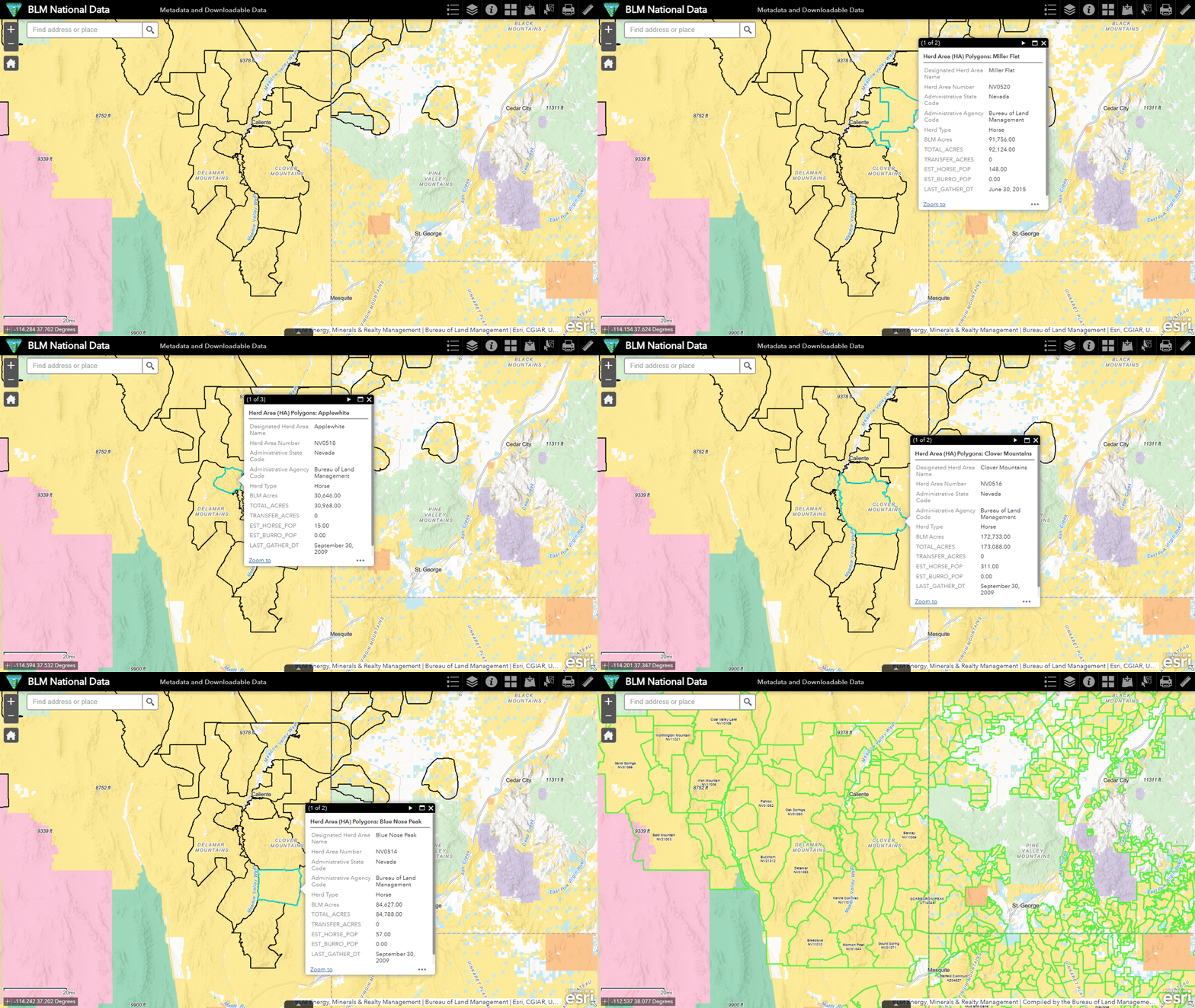
What Sets the Advocates Apart?

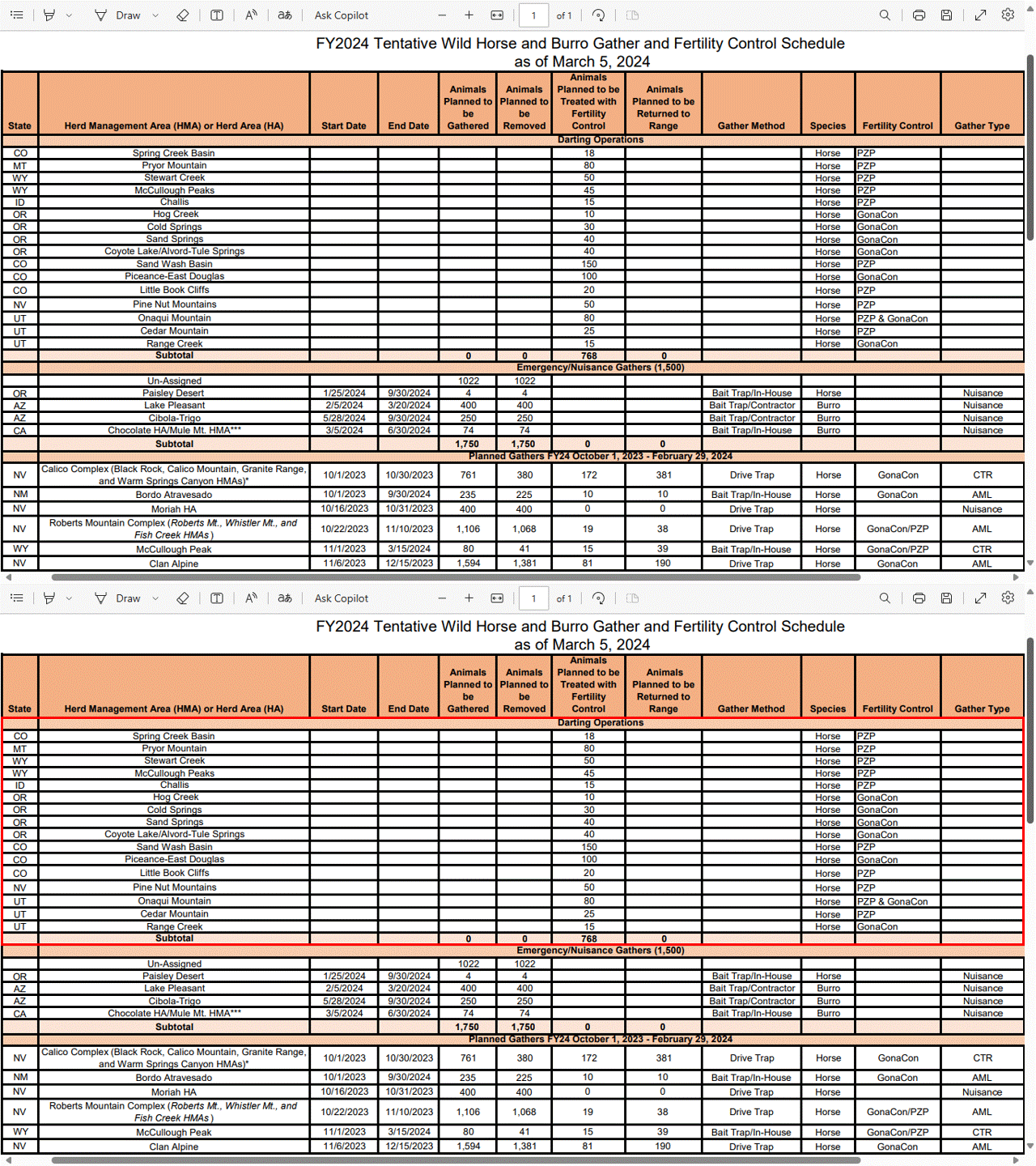
Refer to the first part of the latest schedule for nonmotorized removal of wild horses on BLM lands.

With the exception of those in Oregon, these programs are not run by anti-horse groups such as Protect the Harvest, Public Lands Council or the Coalition for Healthy Nevada Lands.

They’re not run by the legacy contractors such as Cattoor, Sampson and SunJ.

They’re run by the advocates, who claim to be voices for the horses.

High Desert Strategies runs the programs in Oregon, a collaborative effort between local ranchers and the BLM.

The advocates won’t speak out against it because they’re doing the same thing.

File under: Charlatans.

Active Darting Programs 05-21-24

If Wild Horses Had Principal Use of Cedar Mountain

The allotment, in southwestern Wyoming below the I-80 checkerboard, offers 16,298 active AUMs on 181,182 public acres, according to the Allotment Master Report.

The forage assigned to horses is zero.

How many wild horses could live there?

Using the principle of forage interchangeability, the True AML would be 16,298 ÷ 12 = 1,358, the number of horses the land could support if it was managed principally for them as specified in the original statute.

The stocking rate would be 1,358 ÷ 181,182 × 1,000 = 7.5 wild horses per thousand public acres.

Why is this important?

The bureaucrats and ranchers tell us that public lands in the western U.S. can only support one wild horse per thousand acres (27,000 animals on 27 million acres).

The advocates bolster the narrative with their darting programs.

If the allotment was an HMA, the AML would be 181 and 1,177 horses would be consigned to off-range holding because of permitted grazing.

BLM allotments in the state carry livestock equivalent to 158,425 wild horses on 17,312,214 public acres, or 9.2 wild horses per thousand public acres.

RELATED: The Allotments Tell the Story: They’re Lying, All of Them.

Cedar Mountain Allotment 05-20-24

Another Wild Horse Family Struggling on Virginia Range

Mares that don’t respond to PZP have weak immune systems, a trait that can be passed on to their offspring.

The pesticide tricks their immune system into attacking their ovaries.

What does the future hold for this little guy?

Maybe his mom fled from another area in fear of the advocates.

The Campaign Against America’s Wild Horses administers the sterilization program, now in its sixth year, presumably, although the new agreement with NDA has not been posted to its darting resources page.

RELATED: Foal Spotted on Virginia Range!

Mom-Baby Pair on Virginia Range 05-03-24

Advocates Starting Prayer Service for Salt River Horses?

Everything is going according to plan.  The birth rate is almost zero.

If they are to convince the bureaucrats and ranchers that removal by pesticide is a viable alternative to removal by helicopter, the older horses need to die.

Won’t you join them in praying for divine intervention?

While you’re at it, throw them a few bucks so they can buy more poison.

CAAWH Membership Card Exposed 01-01-24

The Salt River Wild Horse Darting Group is an affiliate of the Campaign Against America’s Wild Horses, a leader in nonmotorized removal.

RELATED: Death Wish for Wild Horses?

If Wild Horses Had Principal Use of Snake River

The allotment, on the east side of the Sand Wash Basin HMA, offers 6,082 active AUMs on 53,855 public acres, according to the Allotment Master Report.

The forage allocation for horses is zero.

How many wild horses could live there?

Using the principle of forage interchangeability, the True AML would be 6,082 ÷ 12 = 507, the number of horses the land could support if it was managed principally for them as specified in the original statute.

The stocking rate would be 507 ÷ 53,855 × 1,000 = 9.4 wild horses per thousand public acres.

Why is this important?

The bureaucrats and ranchers claim that public lands in the western U.S. can only support one wild horse per thousand acres (27,000 animals on 27 million acres).

The advocates give their assent though their darting programs.

If the allotment was an HMA, the AML would be 54 and 453 horses would be consigned to off-range holding because of permitted grazing.

BLM allotments in Colorado carry livestock equivalent to 49,546 wild horses on 7,448,367 public acres, for an average of 6.7 wild horses per thousand public acres.

RELATED: The Allotments Tell the Story: They’re Lying, All of Them.

Snake River Allotment 05-18-24

Caliente Roundup, Day 32

The incident started on April 16.  Results through May 17:

  • Scope: Caliente Complex
  • Target: Horses
  • Type: Planned
  • Method: Bait
  • Goals: Gather 350, remove 350
  • Captured: 159, up from 124 on Day 28
  • Shipped: 136, up from 113 on Day 28
  • Released: None
  • Deaths: 5, up from 3 on Day 28
  • Average daily take: 5.0
  • Unaccounted-for animals: 18

The figures above are based on the daily reports.

A stallion was dispatched on Day 31 due to a fractured leg along with a mare because of blindness, lifting the death rate to 3.1%.

The capture total includes 65 stallions, 70 mares and 24 foals.

Youngsters represented 15.1% of the animals gathered, consistent with a herd growth rate of ten percent per year.

Of the adults, 48.1% were male and 51.9% were female.

Body condition scores were not given.

The location of the trap site is not known.

The Complex is subject to permitted grazing.  Resources liberated to date:

  • Forage: 1,908 AUMs per year
  • Water: 1,590 gallons per day

There are no plans to treat any of the mares with fertility control pesticides and return them to the range.

The roundup supports three tenets of rangeland management.

RELATED: Caliente Roundup, Day 28.

Caliente Complex with Allotments 03-28-24

Deerwood Ranch Open House Set for June 8

The event runs from 9 AM to 3 PM, registration is not required and there is no admission fee according to a story dated May 18 by the Laramie Boomerang.

BLM staff will be on-site to answer questions and approve adoption applications.

The January Facility Report put the capacity at 350 and current population at 340.

The off-range pasture, described by its owners as a wild horse ecosanctuary, represents victory for the ranchers and failure for the horses.

Bordo Atravesado Roundup, Day 16

The incident started on May 1.  Results through May 16:

  • Scope: Bordo Atravesado HMA
  • Target: Horses
  • Type: Planned
  • Method: Bait
  • AML: 60
  • Estimated population: 276
  • Goals: Gather 235, remove 225
  • Captured: 140, up from 129 on Day 13
  • Shipped: None
  • Released: None
  • Deaths: 2, no change from Day 13
  • Average daily take: 8.8
  • Unaccounted-for animals: 140

The figures above are based on the daily reports.

The death rate is 1.4%.

The capture total includes 69 stallions, 53 mares and 18 foals.

Youngsters represented 12.9% of the animals gathered.

Of the adults, 56.6% were male and 43.4% were female.

Body condition scores were not given.

The location of the trap site is not known.

The destination of captured animals was not disclosed.

The HMA is subject to permitted grazing.  Resources liberated to date:

  • Forage: 1,680 AUMs per year
  • Water: 1,400 gallons per day

Ten mares will be treated with GonaCon Equine, a fertility control pesticide, and be returned to the range according to the latest schedule.

The roundup supports three tenets of rangeland management.

RELATED: Bordo Atravesado Roundup, Day 13.

Bordo Atravesado HMA with Allotments 11-17-23

Foal-Free Friday, Abnormal Sex Ratios Edition

The Draft EA for Little Book Cliffs WHR, released for public review earlier this week, indicates in Section 2.1.3 that mares outnumber stallions by a margin of nearly two to one, and that the BLM intends to adjust the ratio to one to one.

How did it get so far out of whack?

The advocates and their safe, proven and reversible darting program.

They don’t refer to the condition as an abnormal sex ratio, they say the mares are living longer.

What’s the solution?

More of the same.

Curiously, they’ve scrubbed their home page of any references to PZP and plastered it with images of foals.

As for the Little Book Cliffs herd, the number of viable mares and size of the breeding population are unknown.

RELATED: Foal-Free Friday, Principal Use Edition.

Pesticides R Us Better Way 11-07-23

Wild Horse Pop Quiz

Q. What do you call women who seek nonmotorized removal when the land can support five to ten times more wild horses than the government admits?

A. Advocates.

Q. What do you call men who demand motorized removal when the land can support five to ten times more wild horses than the government admits?

A. Ranchers.

Q. What do you call government workers who bring these groups together to push their anti-horse agenda?

A. Bureaucrats.

Welcome to the Love Triangle on America’s public lands.

Working Together for a Horse-Free Future 12-21-22

Caliente Roundup, Day 28

The incident started on April 16.  Results through May 13:

  • Scope: Caliente Complex
  • Target: Horses
  • Type: Planned
  • Method: Bait
  • Goals: Gather 350, remove 350
  • Captured: 124, up from 115 on Day 13
  • Shipped: 113, up from 112 on Day 13
  • Released: None
  • Deaths: 3, no change from Day 13
  • Average daily take: 4.4
  • Unaccounted-for animals: 8

The figures above are based on the daily reports.

No activity was reported between May 3 and May 13.

The death rate is 2.4%.

The capture total includes 51 stallions, 55 mares and 18 foals.

Youngsters represented 14.5% of the animals gathered, consistent with a herd growth rate of nine percent per year.

Of the adults, 48.1% were male and 51.9% were female.

Body condition scores were not given.

The location of the trap site is not known.

The Complex is subject to permitted grazing.  Resources liberated to date:

  • Forage: 1,488 AUMs per year
  • Water: 1,240 gallons per day

There are no plans to treat any of the mares with fertility control pesticides and return them to the range.

The roundup supports three tenets of rangeland management.

RELATED: Caliente Roundup, Day 13.

Caliente Complex with Allotments 03-28-24