How Many Wild Horses Can the Kiger HMA Support?

The HMA covers 30,305 total acres in eastern Oregon, including 19,998 public acres, according to the 2023 HA/HMA Report.

The 82 horses allowed by plan receive 984 AUMs per year.

The stocking rate allowed by plan is 4.1 wild horses per thousand public acres, four times higher than the target rate across all HMAs of one wild horse per thousand acres.

There are three layers of forage demand in the HMA: Wildlife, wild horses and privately owned livestock.

To estimate the carrying capacity, calculate the forage assigned to livestock, add the result to the allocation above and convert the total to wild horses.

In their zeal to install humane management wherever possible, the advocates ignore the livestock layer because it’s incompatible with the overpopulation narrative, which they ratify with their darting programs.

Chapter IIIB in a 2011 EA for pest control and resource enforcement discusses two allotments that overlap the HMA: Smyth-Kiger and Happy Valley.

Table 2 indicates that 77% of Smyth-Kiger falls within the HMA, which seems reasonable based on the arrangement in the National Data Viewer.

The table indicates that 32% of Happy Valley is inside the HMA but the NDV suggests it’s closer to 60% so that figure will be used in the calculations.

The Allotment Master Report provides management status, acreage and active AUMs.

Kiger Allotment Calcs 02-21-24

Both allotments are in the Improve category.

The estimated forage assigned to livestock inside the HMA is 3,031 AUMs per year, equivalent to 252 wild horses.

The True AML would be 82 + 252 = 334, the number of horses the HMA could support if it was managed principally for them as specified in the original statute, to be achieved by confining the ranchers to their base properties in a year-round off season.

The stocking rate at the new AML would be 16.7 wild horses per thousand public acres.

This brings more embarrassment to the bureaucrats who claim that public lands in the western U.S. can only support one wild horse per thousand acres as noted above.

The BLM collects 3,031 × 1.35 = $4,092 per year from ranching activity inside the HMA while it spends 5 × 252 × 365 = $459,900 per year to care for horses displaced thereby.

Would you say that’s a wise use of the public lands?

RELATED: Pest Control Plan for Kiger and Riddle Mountain HMAs Stalled?

Kiger HMA with Allotments 02-18-24

CAAWH Seeks Operations Leader

The Campaign Against America’s Wild Horses, a recognized expert in nonmotorized removal, has an opening for a full-time operations manager in Davis, CA according to a job posting on Idealist.

The successful candidate will oversee internal operations, including administration, board relations and finance.

Compensation ranges from $29 to $36 per hour.

Some travel is required and WFH is available two days per week.

The announcement did not say if a diploma from the Billings School of PZP Darting and Public Deception was required.

Comments Invited on DNA for White Mountain Roundup

The incident is on the latest schedule with a start date of August 15.

The capture and removal goals are 586 each.

There are no plans to treat any of the mares with fertility control pesticides and return them to the HMA, which differs slightly from the action authorized in 2021.

In that scenario, 478 wild horses would be captured, 358 would be removed and 120 would be treated with pesticides and returned to the HMA.

Western Horse Watchers suspects the deviation from the original plan triggered the NEPA review.

Comments will be accepted through March 22 according to today’s news release.

The DNA worksheet was copied to the project folder in ePlanning.

The HMA, home of the Pilot Butte Wild Horse Loop, is subject to permitted grazing.

The roundup supports three tenets of rangeland management.

Why Your Host Won’t Throw in with the Advocates

Submitted in response to those who say “Keep politics out of it, you’re alienating half of your readers.”

1. Most advocacy groups are unsavory.  They’re obsessed with nonmotorized removal, which they peddle as humane management.  They constantly point to drillers and miners as the boogeymen on western rangelands.  They want the ranchers to win.

2. Liberals control the unelected bureaucracy.  That’s how they keep the Democrat agenda moving forward, even when they’re not in power.  Whatever you see on public lands in the western U.S. is because the Democrat Party wants it that way.

3. Most advocates are liberals.  Innumerate, emotional and unscientific, they couldn’t convert an AML to AUMs if their lives depended on it, much less compute forage allocations for livestock in areas identified for wild horses.  They vote Democrat, perpetuating the cycle.

4. These charlatans enjoy the protections of big tech, socialist media and legacy news services, which are also controlled by liberals.  They marginalize anyone who disagrees with them.

We don’t need to unify around error.  We don’t need to rally around lies.

We need to jettison the old guard and choose new leaders who actually care about wild horses and will restore the WHB Act to its original form.

NOTE: This is not an endorsement of Republicans.  No Democrats are Republicans but many Republicans are Democrats.

RELATED: Wild Horse Advocacy in One Word.

Ranching Juggernaut 11-26-23

AWA to NPS: Depopulate TRNP with PZP

In a news release dated February 19, Animal Wellness Action opposes the removal of wild horses from the park, yet it mentions fertility control four times while trying to downplay the need with terms such as “in the unlikeliest of cases” and “only if warranted.”

The group refers to the pesticide as “a proven and safe method with a 40-year history,” which is nonsense.

PZP is poison, wiping out herds wherever it’s applied.

The best example of long-term harm is Assateague Island and the truth is now leaking out at the Currituck Outer Banks.

RELATED: Bold Prediction for Wild Horses at TRNP.

Tough Choices: SOWH&W Conference Overlaps FREES

You know you’d rather be in Elko shmoozing with the ranchers.

But if your donors found out they’d cut you off at the knees.

What’s an advocate to do?

Keeping up appearances is important, so you’d better spend the week in Reno, at the Saving Our Wild Horses & Wildlife Conference.

The relationship to Save Our Wild Horses is not known.  An email seeking clarification was not immediately answered.

The speakers list includes pesticide pushers and ranching sympathizers.

The field trip on Day 1 will likely involve the Palomino Valley off-range corrals.

In an optional field trip after the conference, participants will travel to Tonopah and the Stone Cabin HMA, described at the birthplace of wild horse advocacy.

The HMA is known for the first wild horse roundup under the WHB Act, but wild horse advocacy was born 25 years earlier on the Virginia Range when Velma first encountered the horse runners on their way to a rendering plant.

HMAs weren’t even a pipedream.

Sadly. her vision for wild horses has been completely lost on today’s advocates.

RELATED: 2024 FREES Conference Set for April.

UPDATE: The email was answered.  SOWH&W is an offshoot of SOWH, which hosted conferences in 2022 and 2023.

Pest Control Plan for Kiger and Riddle Mountain HMAs Stalled?

The scoping period closed four years ago.

As of today, the project folder contains only the scoping letter.

The previous plan was approved in 2011.

The two HMAs are on the February 1 roundup schedule with start dates of September 1 and September 10.

They are subject to permitted grazing.

The last roundup was in 2015.

RELATED: Kiger Scoping Period Comes and Goes, No News Release.

Sperm-Blocking Theory Doesn’t Hold Water

The idea was cooked up to make PZP seem reversible.

If you take a shower with a raincoat on, you don’t get wet.

If you take it off, you get wet.

The pattern holds for as long as you do the experiment.

But that’s not what happens with PZP.

The pesticide tricks the immune system into attacking the ovaries.

Damage begins with the first injection.

The longer they’re on it, the longer to regain fertility.

After five years, they don’t recover.

They’re self-boosting.

The advocates know this.

That means they’re willfully getting rid of wild horses under the guise of protection and they want you to pay for it.

Protecting Them From Removal 12-03-23

Why do you associate with frauds?

RELATED: Sperm-Blocking Theory Doesn’t Account for Self-Boosting Mares.

2024 FREES Conference Set for April

The FREES Network, a ranching advocacy group sponsored by Utah State University Extension, will meet at the Elko Conference Center to discuss interactions of free-roaming equids with wildlife.

The announcement did not indicate if the definition of wildlife would be stretched to include nonnative species such as privately owned cattle and sheep.

The agenda includes a session on Day 2 for fertility control, an opportunity for the wild horse advocates to share their message and cement their relationship with the ranchers.

CAAWH Membership Card Exposed 01-01-24

Day 3 consists of a field trip to an unspecified location, probably hand-picked with the aid of land managers to associate substandard conditions with wild horses.

There are no HMAs in Elko but grazing allotments abound.

The National Data Viewer shows the HAs in black, the HMAs in orange and the allotments in green.  Click on image to open in new tab.

HMAs and Allotments Near Elko 02-18-24

Currituck Outer Banks to Become Like Assateague Island?

The Currituck County Wild Horse Advisory Board met on February 15.

Minutes have not been posted.

The agenda includes minutes from the November 16 meeting and a report by herd manager Meg Puckett.

The minutes indicate that healthy mares were not darted in 2023 due to significant losses over the last several years.

A previous report indicated that mares were not darted in 2022.

The report by Puckett indicates that healthy mares are not being darted in 2024 “Due to significant loss over the last several years, an aging population, and questions about the long-term effects of PZP on the mares’ reproductive systems,” suggesting that “significant loss” refers to genetic diversity and the number of viable mares.

Exactly what you’d expect from an ovary-killing pesticide, not a safe, proven and reversible vaccine.

Curiously, protocols are in place to send the uterus (not the ovaries) of any deceased mares who were darted with PZP to the researchers and veterinarians at the Billings School of PZP Darting and Public Deception.

They also have procedures for introducing horses from other areas, the final attachment to the agenda, a tactic used by the BLM to boost genetic diversity while keeping herd sizes small.

In this case it would be used in desperation to keep the herd from imploding, a consequence of the Montana Solution and its false promises.

RELATED: If PZP Is Reversible, Why Hasn’t Assateague Herd Rebounded?

Fighting a Never-Ending Battle at the Salt River?

Some organizations would rather get rid of wild horses than let them remain in the wild, according to a story dated February 16 by Wrangler News.

But not the Salt River Wild Horse Darting Group.

They’re stabilizing the population with PZP, which they peddle as humane management.

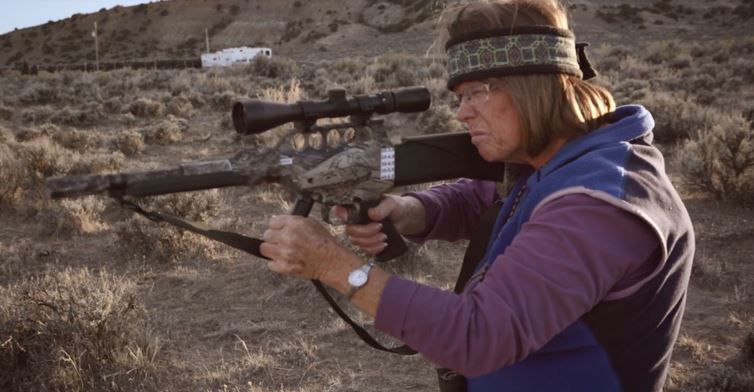
Simone Neterlands with Darting Rifle 09-02-23

That’s the same term used by a staffer with the Campaign Against America’s Wild Horses in a story about the East Pershing roundup.

Apparently, it’s a codeword for getting rid of wild horses with ovary-killing pesticides.

In most circles, stabilize means to brace or support, to stop something from changing.

Not to these charlatans.

They’re getting close to sterilizing the Salt River mares, just as their big-name enabler is doing at the Virginia Range.

RELATED: Ringleader Admits Her Group Is Getting Rid of Salt River Horses!

Foal-Free Friday, Passing the Torch Edition

Nobody talks about wild horse removal more than the advocates.

They’re obsessed with pesticides, their theories don’t hold water and they serve no charitable purpose.

They are the old guard, snake oil salesmen, allies of the ranchers.

America’s wild horses need leadership, not collusion.

Put them out to pasture today!

RELATED: Foal-Free Friday, No Bad Behaviors Edition.

Advocates are the Predators 11-30-21

How to Interpret Sex Data from WHB Roundups

The BLM reported that 16 jacks and 26 jennies had been captured through Day 10 of the Lake Pleasant roundup.

Do those results look like they came from a population that’s 50% males / 50% females?

The observed proportions are 38.1% male and 61.9% female.

The answer must be determined by calculation, using a basic statistical formula that accounts for random variation.

How to Compute p-chart Limits 02-10-22

In this example p-bar = .5 and n = 42.

The calculated range of variation is .269 (26.9%) to .731 (73.1%), which includes the observed values, so there is no evidence that the population is not 50% males / 50% females.

The East Pershing roundup took 1,082 stallions and 1,245 mares off the range (as well as 365 foals).

Do those data look like they came from a herd that’s 50% males / 50% females?

The observed proportions are .465 and .535, and the calculated limits are .469 and .531, so there is some evidence of an abnormal sex ratio.

The problem often occurs in herds subject to the Montana Solution, which the advocates dismiss as mares living longer.

Lake Pleasant Roundup, Day 10

The incident started on February 5.  Results through February 14:

  • Scope: Lake Pleasant HMA
  • Target: Burros
  • Type: Planned
  • Method: Bait trap
  • Goals: Gather 400, remove 400
  • Captured: 55, up from 29 on Day 6
  • Shipped: 28, up from zero on Day 6
  • Released: None
  • Deaths: None
  • Average daily take: 5.5
  • Unaccounted-for animals: 27

The figures above are based on the daily reports.

The capture total included 16 jacks, 26 jennies and 13 foals.

Youngsters represented 23.6% of the animals gathered.

Of the adults, 38.1% were male and 61.9% were female.

The HA and HMA are the same size.  The area is subject to permitted grazing.

  • Forage liberated to date: 330 AUMs per year
  • Water liberated to date: 275 gallons per day

Data quality has been good.

There are no plans to treat any of the jennies with fertility control pesticides and return them to the HMA.

The roundup will remove animals that are damaging private property and creating a public safety hazard, purposes for which PZP was not authorized.

The incident supports three tenets of rangeland management.

RELATED: Lake Pleasant Roundup, Day 6.

Lake Pleasant HMA with Allotments 02-06-23

Advocates Far Greater Threat to Wild Horses Than Holding Pens

This article by the Casper Star-Tribune is not about the loss of a yearling during the McCullough roundup, but the phoniness of the advocates.

The two women interviewed for the story, Sisti and Walker, are pesticide pushers.

If they had their way, there wouldn’t be any yearlings to trap.

They are the old guard, members of the Love Triangle, irrelevant.

RELATED: Cody Enterprise Biased in Favor of McCullough Ranchers?

McCullough Peaks Darting-1

BLM Extends Nomination Period for WHBAB

The original solicitation dated October 2 produced insufficient applications for the natural resources position so a second call for nominations will appear tomorrow in the Federal Register, according to an unofficial pre-publication notice.

The Wild Horse and Burro Advisory Board meets one to four times per year and members serve without compensation.

RELATED: Another WHBAB Nomination Cycle Begins.