McCullough Decision Published

The FONSI, DR and Final EA were copied to the project folder today.

The Cody Field Office authorized Alternative 2 in the EA, the Proposed Action, which features bait trap removals of excess horses, continued use of PZP and application of GonaCon-Equine to mares that don’t respond it, over a ten-year period.

The HMA is subject to permitted grazing.

The new plan supports three goals of rangeland management:

  • Pest control
  • Resource enforcement
  • Rancher protection

The BLM continues to ignore the 2017 labeling amendment for GonaCon-Equine that extended the interval between primers and boosters from 30 days to 90 days.

“GonaCon-Equine is approved for use by authorized federal, state, tribal, public and private personnel, for application to wild and feral equids in the United States (EPA 2013, 2015).”

Bait trapping may occur this year according to the news release.

The agency is not in bed with the livestock industry because Nevada State Senator Hansen said so at the September 7 “Dust Up” debate in Elko.

RELATED: Draft EA for McCullough Pest Control Out for Review.
FY23 Roundups in Review

Consider these two groups.  All were planned, all were carried out by helicopters.

Group 1

Group 2

The first group saw the advocates howling, videos of injured horses, ad hoc lawsuits and news reports about contractor mistreatment.

In the second group, the advocates were silent, with little if any media attention.

Why the difference?

Roundups in the second group were billed as catch-treat-release.

The advocates have their favorite poisons.

Some like Zonastat, others like Gonacon, but all agree that wild horses should be removed from their lawful homes with ovary-killing pesticides, not motorized equipment, even if motorized equipment is needed to apply the poisons!

RELATED: Bold Prediction for Fertility Control Solicitation.

Pesticide Pushers 07-13-23

West Douglas HA Unfit for Wild Horses but not for Livestock

There were an estimated 450 wild horses living in the area before the 2021 roundup.

The contractor took 457 off the range.

End of story?

Nope, another roundup was ordered this year, removing 122 more.

Where did they come from?

The BLM is not in bed with the livestock industry because Nevada State Senator Hansen said so at the September 7 “Dust Up” debate in Elko.

RELATED: How Many Wild Horses Can the West Douglas HA Support?

Desatoya Roundup Announced

The incident will begin on or about September 25, according to a BLM news release.

The agency will gather approximately 122 wild horses, remove approximately 24 excess animals and treat up to 49 mares with GonaCon Equine, a fertility control pesticide.

Those mares will be returned to the area with up to 49 stallions.

The event, billed as catch-treat-release in the August 28 schedule, will be open to public observation.

The current population is thought to be 152, not including this year’s foal crop.

The AML is 127-180.

The HMA covers 161,678 total acres in central Nevada, including 157,838 public acres, and is subject to permitted grazing.

The stocking rate allowed by plan is 1.1 wild horses per thousand public acres, in line with the target rate across all HMAs of one wild horse per thousand acres.

The National Data Viewer shows habitat loss on the east side.

Land managers have determined that the Mount Airy HA is not fit for wild horses but is well-suited for livestock.

The operation supports three goals of rangeland management: Pest control, resource enforcement and rancher protection.

A roundup last year removed approximately 160 will horses from the area.

Excess animals will be taken to the off-range corrals at Palomino Valley.

Gather stats and daily reports will be posted to this page.

Desatoya HA and HMA with Allotments 09-18-23

BLM Announces Surprise-Calico Wild Horse Roundups

The incident starts tomorrow, according to the news release.

Seven HMAs in northwestern Nevada are affected.

The National Data Viewer shows some habitat loss on the west side of the High Rock HA.

Resource confiscation and reapportionment is a much larger problem, indicated by the green borders in the map.  Click on image to open in new tab.

The actions align with three goals of rangeland management: Pest control, resource enforcement and rancher protection.

Surprise-Calico HAs and HMAs with Allotments 09-17-23

Wild Horses and Burros on the Edge of Crisis?

Would an article published by Utah State University, home of the FREES Network, be kind to the horses or the ranchers?

USU Article on Wild Horses 09-16-23

Students under the tutelage of Eric Thacker can recite the overpopulation narrative in their sleep, portraying the public-lands ranchers as victims, but, like the wild horse advocates, couldn’t convert an AML to AUMs if their lives depended on it, much less compute a forage allocation for livestock in an area set aside for wild horses.

RELATED: Tammy Pearson Said We Have a Problem.

NBC Turns to Love Triangle for Answers about Wild Horses

What is an HMA?  It’s an allotment with horses on it according to Ty Berg, husband of Anna Fallini Berg, operators of Twin Springs Ranch in southern Nevada and the only permittees on the massive Reveille Allotment.

And, yes, they are legally obligated to let the horses run wild on land their family has worked for over 150 years because the Reveille Allotment contains the Reveille HA, an area identified in 1971 for wild horses, which contains the Reveille HMA, the remnant where horses are still allowed.  Refer to this post for a discussion of the arrangement, including a map.

The image at 1:21 in the following video tells you why there are few natural predators in the area.

Regarding the current wild horse population across the American west, discussed at 2:34, there are three times more horses than allowed by plan, not three times more than the land can support.  The image at 1:36 explains why this is true.

AMLs are small relative to the available resources because the bureaucrats have assigned most of the forage to the ranchers.

The BLM took 77 horses off the range in July, a detail overlooked by the reporter, making life a little bit easier for the family.  Mares returned to the area were treated with two doses of GonaCon Equine, a fertility control pesticide.

Who paid for that?  You, not the Fallinis!

How to resolve the conflict?

The consensus of the Love Triangle, an informal coalition united not by methodology but by contempt for wild horses, described as “all sides” by the reporter at 5:34, is fertility control.

The video shows unlawful use of PZP by volunteers with the Campaign Against America’s Wild Horses, a leader in nonmotorized removal, at 5:44.

The Fallinis run 1,800 to 2,400 cattle in the allotment on a 12-month grazing season.

RELATED: Catch-Treat-Release, Misuse of GonaCon, Roll Out at Reveille.

BLM Updates Gathers and Removals Page

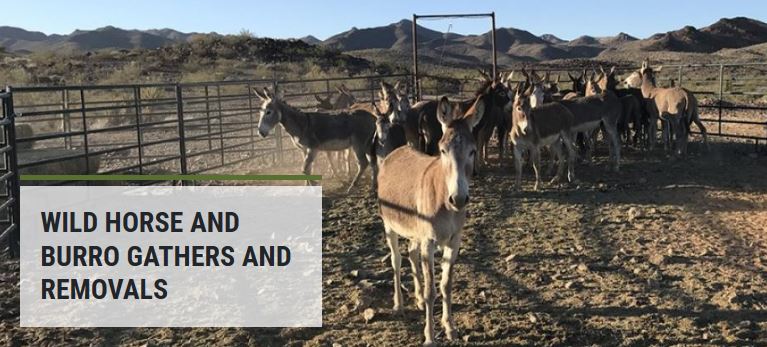
The old page is 404.  It’s now Gathers and Fertility Control Operations.

Same image, new tagline.

As of today, the link still points to the August 28 schedule, which aligns with three goals of rangeland management:

  • Pest control
  • Resource enforcement
  • Rancher protection

The upper section corresponds to nonmotorized removals, dominated by the wild horse advocates and their bogus nonprofits, some made to order.

The lower sections correspond to motorized removals, the domain of BLM staff and their contractors.  (Animals captured with baited traps are hauled off with trucks.)

RELATED: BLM Awards $1 Million for Wild Horse Protection?

Gathers and Removals Image 09-15-23

Foal-Free Friday, Permittees for Pesticides Edition

The revelation last week that High Desert Strategies is a collaboration between the BLM and ranchers indicates the Love Triangle is not only alive and well but gaining strength.

The agency just gave the group $468,033 to poison wild mares in eastern Oregon with GonaCon Equine, an EPA-registered pesticide.

Like the advocates, HDS refers to the product as an immunocontraceptive vaccine.

They describe their work as protecting, preserving and nurturing wild horses, which is nonsense.

They’re protecting their own financial interests with money confiscated from American wage earners!

The closest they come to acknowledging their professions is to say “Healthy rangelands are not only important to wild horse survival but also a wide variety of wildlife and many other resource users.”

They are the other resource users.

The September 8 article by the Malheur Enterprise named Rachel Amick, a rancher from Harper, as one of the volunteers.

The Operator Information Report at RAS ties the Amicks to two grazing authorizations, 3602198 and 3603120.

The Allotment Information Report ties both authorizations to Allotment #4, which contains the Hog Creek HMA, where they receive 1,757 AUMs per year.

That resource is equivalent to 146 wild horses!

Who do you suppose is stalking the Hog Creek mares when she should be looking after her own animals on her own (multi-million dollar?) base property?

RELATED: Foal-Free Friday, Fundamental Transformation Edition.

Hog Creek HMA with Allotments 08-08-23

Sand Wash Roundup on Hold?

The incident depends on results from an August census according to a report dated September 13 by the Steamboat Pilot.

It’s still on the schedule with a start date of September 25.

The capture and removal goals are 80 and 20, respectively.

Of the 60 horses to be returned to the range, 30 were to be treated with fertility control.

The pesticide of choice at Sand Wash Basin is Zonastat-H, on the same EPA list as toxic chemicals, administered outside of roundups by SWAT.

The HMA is subject to permitted grazing.  Livestock receive almost four times more forage than the horses.

Use of PZP to control wild horse populations that interfere with animal agriculture is not consistent with instructions on the label and is therefore unlawful.

PZP Approved Uses 09-13-23

Photos posted by SWAT show several examples of advocates mixing and applying the product without the proper PPE, more violations of federal law.

RELATED: Advocates Concur with Sand Wash Trap Project?

New Regulation to Affect Wyoming Wild Horses

The proposed supplementary rule, which addresses public conduct, safety concerns involving exploding targets, flammable devices and target shooting, the possession or use of alcohol and the burning of wood pallets, among other things, would apply to all public lands in Wyoming, according to a notice appearing today in the Federal Register.

The last two provisions involve wild horses.  Accordingly,

15. You must not intentionally engage in any activity within any distance that disturbs, displaces, or otherwise interferes with the free unimpeded movement of wild horses.

16. You must not feed, water, or touch any wild horse.

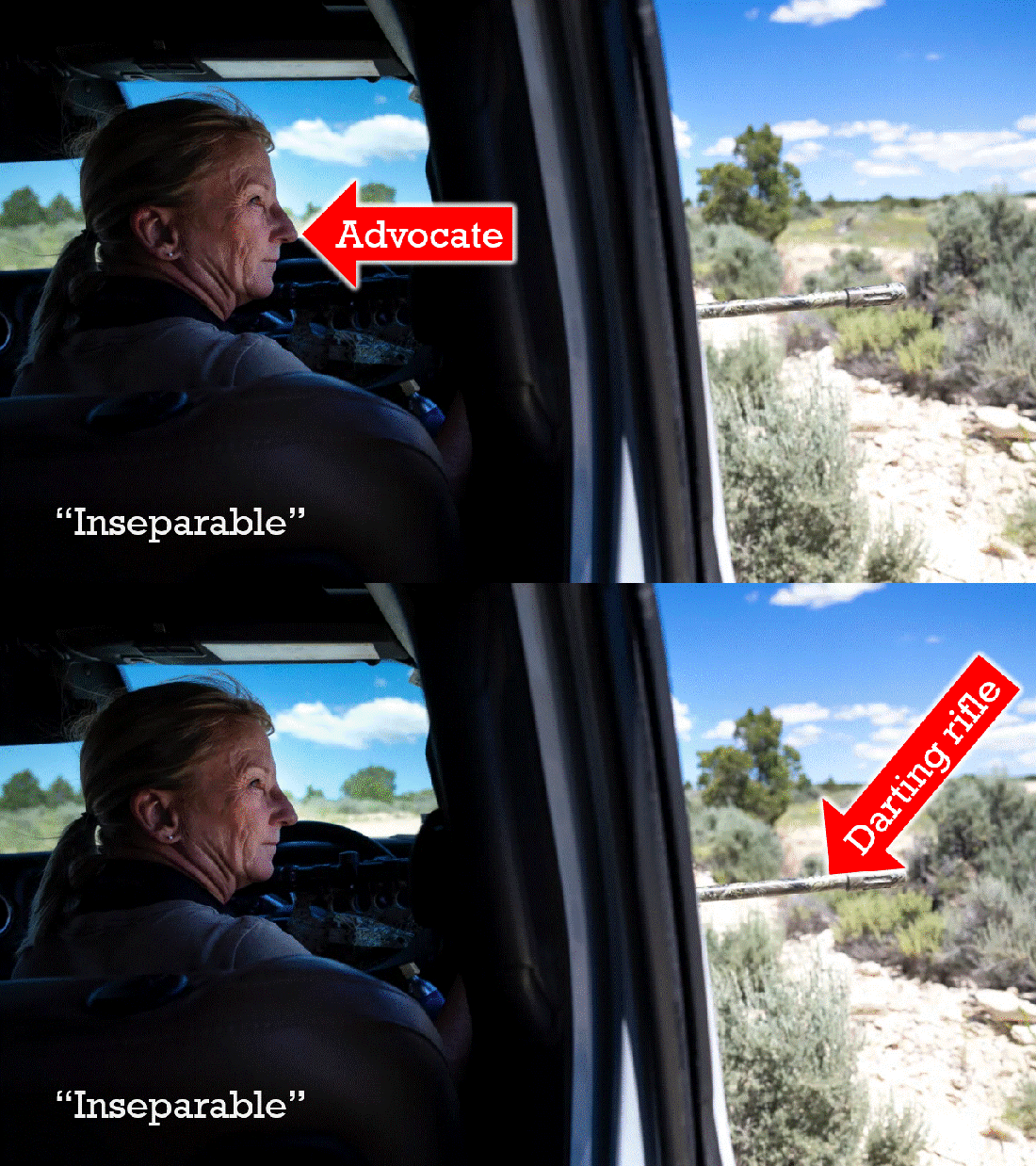
Would #15 include the filming wild herds with drones, chasing them with manned aerial equipment or poisoning the mares with pesticide-laced darts?

The rule would not apply to federal, state, local and military employees or contractors acting within the scope of their official duties.

Only you.

Comments will be accepted through November 13.

Owyhee Roundups Over

The incident concluded today, with 229 horses captured, 228 shipped, none released and one dead.

There were no unaccounted-for animals.

Up to 38 mares will be treated with GonaCon Equine, a fertility control pesticide, and be returned to the area with up to 40 stallions, according to today’s news release.

The capture total included 74 stallions, 93 mares and 62 foals.

Youngsters represented 27.1% of the horses gathered.

Of the adults, 44.3% were male and 55.7% were female.

The death rate was 0.4%.

Three HMAs were affected, all subject to permitted grazing.

RELATED: Owyhee Roundups Announced.

Owyhee HAs and HMAs with Allotments 07-23-23

Big Sandy Planning Documents Out for Public Review

The Preliminary EA has been copied to the project folder with 17 appendices.

Three HMAs, known as the Three Rivers Complex, are affected.

Alternative A, the Proposed Action, features gathers and removals of excess burros, application of fertility control pesticides and sex ratio skewing in favor of males over a ten-year period.  Refer to Section 2.1 in the EA.

The plan aligns with three goals of rangeland management:

  • Pest control
  • Resource enforcement
  • Rancher protection

As noted in Section 1.5, the project will not set or adjust AMLs nor adjust authorized AUMs for livestock within the HMAs.

The current population is thought to be around 2,300 animals, almost 4X AML, according to today’s news release.

Comments will be accepted through October 11.

RELATED: Comment Period Starts for Big Sandy Pest Control Plan?

Big Sandy Alamo Lake Havasu HMAs with Allotments 09-01-23