The incident will begin on or around August 21, according to a BLM news release, but the capture and removal goals were not given.
The July 13 schedule shows 66 and 36.
The current population is thought to be 66, suggesting it’s a purge—all horses will be taken off the range, followed by selective return.
A helicopter will push them into the trap and the two-day operation will be open to public observation.
The announcement did not indicate if any of the retained mares would be treated with fertility control pesticides.
The HMA covers 22,381 total acres in eastern Oregon, including 21,819 public acres, according to the 2023 HA/HMA Report, and the AML ranges from 30 to 50.
At the upper end, the AML corresponds to a forage demand of 27.5 AUMs per year per thousand public acres.
The stocking rate allowed by plan is 2.7 wild horses per thousand public acres.
The HMA lies within Allotment #4.
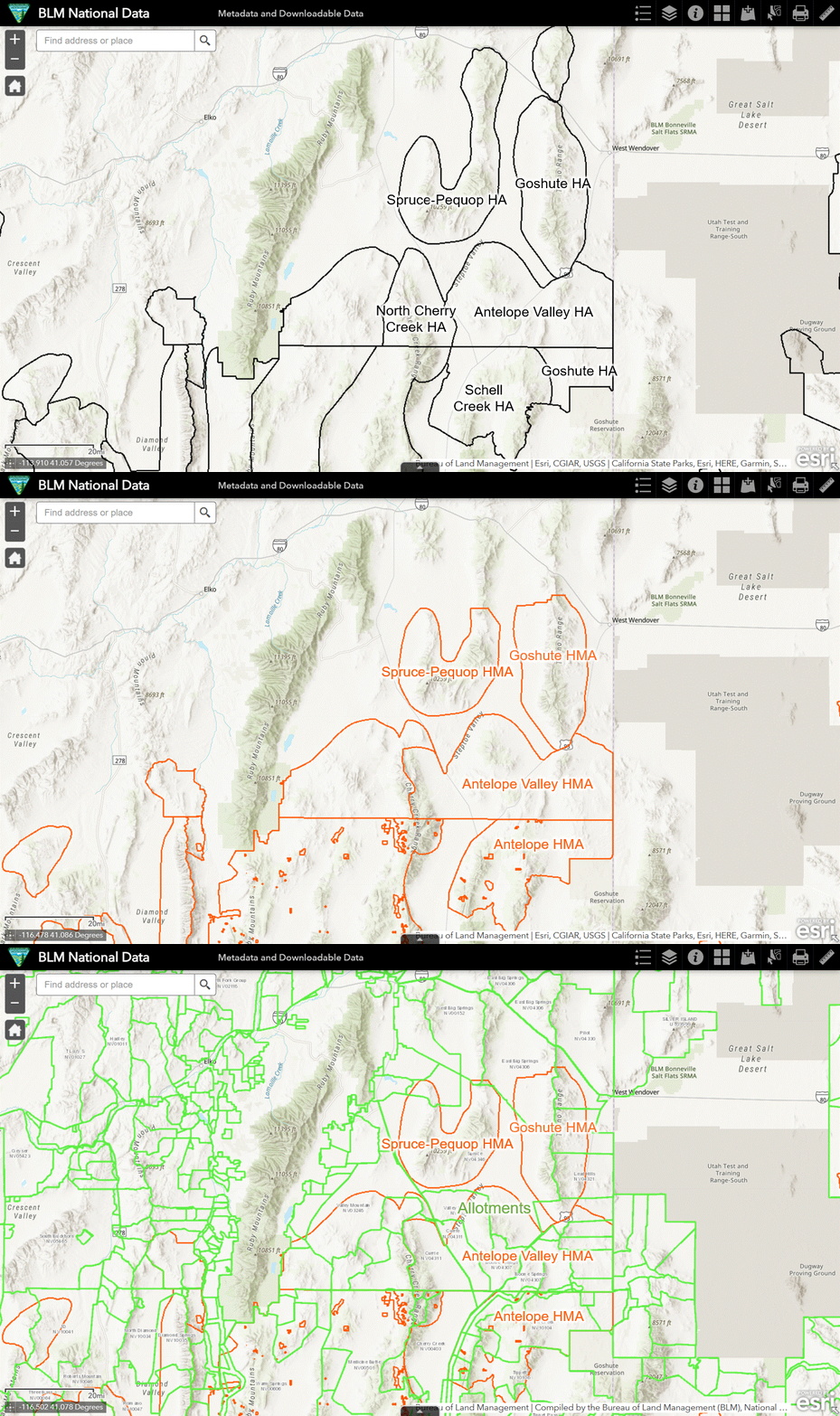
The National Data Viewer shows the arrangement. Click on image to open in new tab.

The parcel offers 5,502 active AUMs on 58,369 public acres, according to the Allotment Master Report, or 94.3 AUMs per year per thousand public acres of forage supply.
That resource would support 94.3 × 21,819 ÷ 1,000 ÷ 12 = 171 wild horses, on top of the 50 allowed by plan, for a True AML of 221.
The stocking rate would be 10.1 wild horses per thousand public acres, on par with the Virginia Range before the advocates got involved.
The HMA is not overpopulated.
You don’t have a wild horse problem, you have a resource management problem.
Animals identified for removal will be taken to the off-range corrals in Hines.
A link to the gather stats and daily reports was not provided but should be added to the Oregon gather and removal page before the start date.










 Western Horse Watchers Association