Why is it a bad idea to clip a horse’s whiskers?


Western Horse Watchers Association
Exposing the Hypocrisy, Lies and Incompetence of the Wild Horse Advocates
Why is it a bad idea to clip a horse’s whiskers?
Onaqui Mountain horses being horses. H/T 19whitey54.
The wild horse herd on the barrier island of Shackleford Banks added 14 foals in 2017, while losing five adults and one foal, for a net increase of eight horses. The population at the beginning of 2018 was 120 horses.
Fertility control has not been applied since 2009. The AML is 130 and the area where the horses roam covers 3000 acres, for an aimed-at population density of 43.3 animals per thousand acres.
No roundups are planned. Livestock are not present in the area.
Refer to the story in Coastal Review Online dated 09/04/18.
The report published by NPS indicated that, of the horses aged twenty years and older, 17 out of 20 are mares (85%). Assuming that mortality is evenly distributed among genders (p = .5), you’d expect to find between four and sixteen mares in the group, using np-chart limits with n = 20.
That you have 17 mares (and 3 stallions) suggests that mortality favors stallions at Shackleford Banks. This result should be attributed to a special cause.
The report did not say if any of the three stallions were band leaders.
Wild horse herds on the east coast barrier islands have been on U.S. soil longer than those of the American west.
The hay troughs below are only about twelve inches deep. You can buy them with taller sidewalls. Why would a shallow trough be better for the horses?
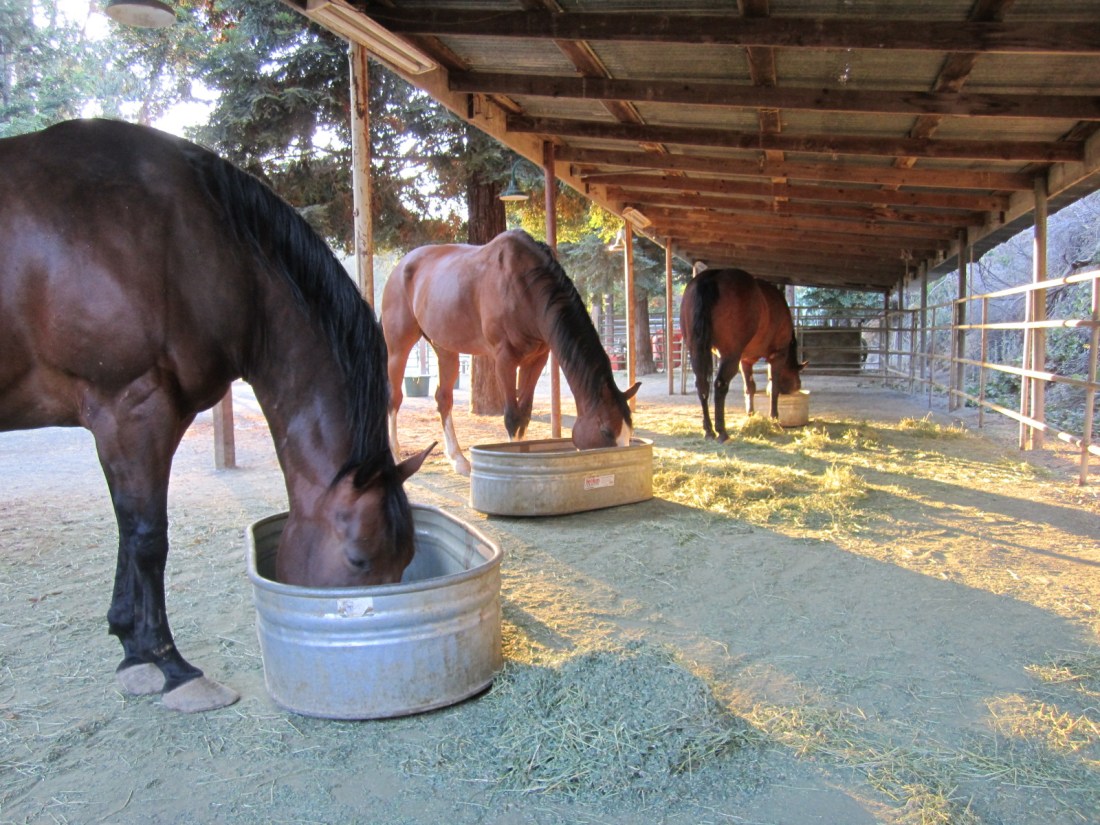
On Sand Wash Basin HMA. H/T Lebliztx.
Given:
Therefore, every HMA should have at least 150,000 acres.
There are a total of 117 HMAs in Nevada, Oregon and Utah (66% of the HMAs in the U.S.) and 67 are smaller than 150,000 acres (57%).
The Pryor Mountains and Little Bookcliffs Wild Horse Ranges, which have been in the news of late, have 38,000 and 36,113 acres respectively.
The problem is not too many horses, the problem is not enough land.
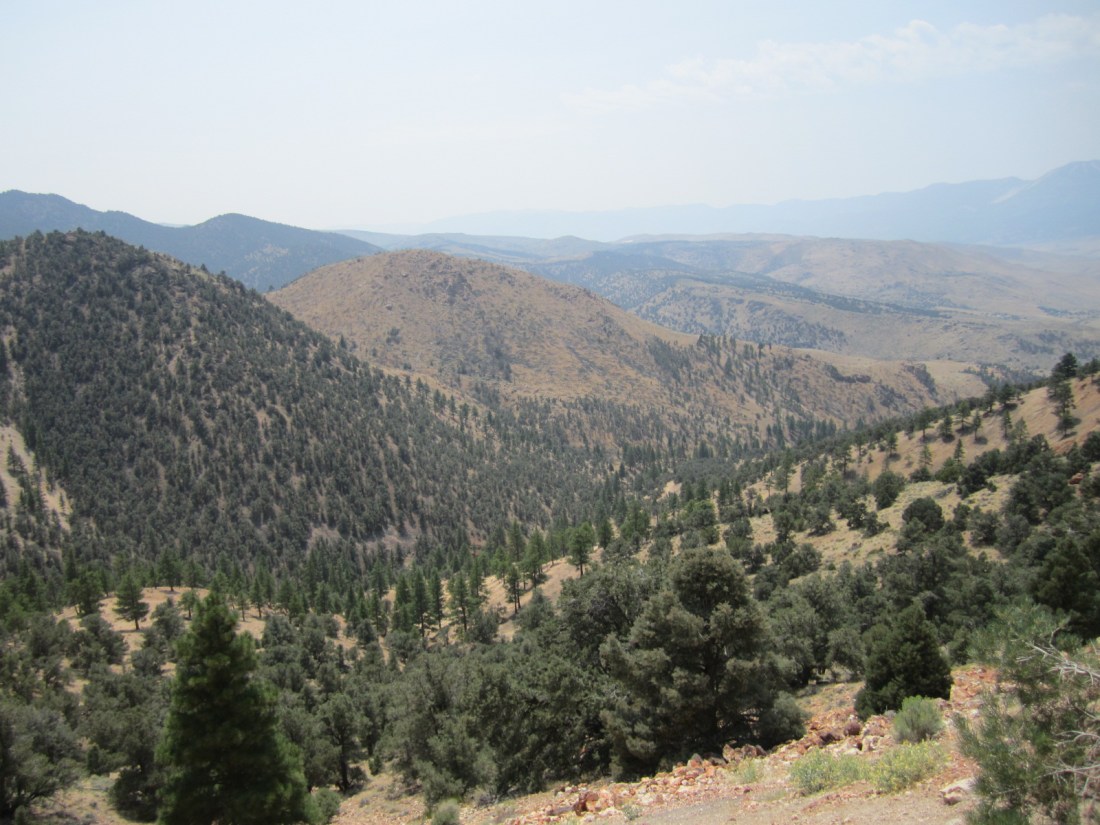
The USFS will remove approximately 1000 wild horses from the Devil’s Garden Plateau WHT, beginning in early October, according to an undated statement at the Modoc National Forest web site.
The roundup will be conducted by Cattoor Livestock Roundup Inc. The announcement did not indicate if gather operations would be open to public observation.
Presumably, horses removed from the range will be taken to BLM holding facilities where they will be checked by veterinarians and offered for adoption.
The WHT covers 308,000 acres and has an AML of 402, for an aimed-at population density of 1.3 animals per thousand acres. It’s located in northeast California.

The announcement did not indicate if livestock were present in the area. A video was included to document current conditions on the WHT (embedded below).
Livestock do not appear in the video and the term is not mentioned in the narrative.
Therefore, it must be those darn oil companies—or mining companies—demanding that the wild horse population be reduced. After all, T-post fencing is a sure sign that drilling and digging are going on just out of frame. Almost certainly there are derricks behind those trees the Forest Service doesn’t want you to see.

The muddy area at 4:07 was caused by the fence not by the horses. Who put that fence there? Not exactly what you’d expect to find in a wilderness area.
Apparently, media coverage of livestock on HMAs and WHTs is taboo, especially during roundup season.
A stallion named Tecate was killed earlier today on Hwy 318 in northwest Colorado, according to a report just posted in the Craig Press. Low visibility was cited as a factor in the incident. The Sand Wash Basin HMA is about 45 miles west of Craig, CO.
He’s right. Those darn horses have been breeding in back alleys, running through neighborhoods, driving down property values. They should be spayed and neutered, just like cats and dogs. Government takes thousands of them off the streets every year, why shouldn’t they do that for horses?
See the report posted yesterday by CBS-4 News in Denver.
As always, the debate revolves around the horses, never around the livestock that have been allowed to invade their territory. The BLM has been an ally of public-lands ranchers and their overlords since Moby Dick was a minnow. It’s a Good Ol’ Boy network if ever there was one. And it needs to be broken up.
That would be your responsibility, Mr. Zinke.
RELATED: Mustang Meg Goes Drone.
More trailcam images of Virginia Range mustangs visiting the new stock tanks.
They don’t stay put very long. They come in and move on in a minute or two.


 Western Horse Watchers Association