
On Wheeler Pass HMA.
Month: May 2018
Discipline in the Horse World
A fine example of virility and potency, on the part of the mom. This comes as a shock to individuals in western culture, now overrun with effeminacy and cowardice.
FYI – NRA
The NRA, not known for its unwavering support of the Second Amendment, is a member of the steering committee of the National Wild Horse and Burro Rangeland Management Coalition.
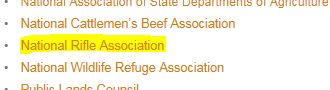
The aim of the NWHBRMC is to articulate the wild horse narrative. They are not friends of the horses. Their fingerprints are on the recent BLM Report to Congress (by way of the National Wild Horse and Burro Summit).
So now you have another reason to avoid the NRA. They’re not on the side of freedom, ruggedness and self-reliance, but are aligned with weakness, vulnerability and dependence on government.
UPDATE: See this piece in The Washington Times about the incoming president of the NRA and this post in the Captain’s Journal about said incoming president. H/T Western Rifle Shooters Association.
Yakama Horses
1. Watch the following video about the Yakama Indians and their horses.
2. Go to Chillypepper.org and observe the endless string of rescued foals coming from Washington state.
3. Download the 05/09/18 episode of Mustang Matters and listen to the remarks from 14:50 to 23:10.
Are you connecting the dots? They’re sending pregnant mares to slaughter.
In trucks marked ‘666?’
Disgusted? Want it to stop? Call a press conference and tell the truth.
Darkness hates the light.
Some of the horses may be traceable to the Horse Heaven Hills.
Beauty Matters
What is a Wild Horse Territory?
The WHB Act protected horses and burros on lands where they were found when the law was signed by President Nixon in December 1971. Some of those lands are managed by the Bureau of Land Management (BLM), some are managed by the U. S. Forest Service (USFS). Lands managed by the USFS are called ‘Territories.’ BLM uses the term ‘Areas.’
There are currently 34 active WHB territories in seven states, some managed jointly with the BLM. They can be found on this map. If you can’t find a territory on the USFS list, try the BLM HMA page.
The USFS FAQ page provides a history of equines in North America, stating that horses and burros are indigenous species, evolving on the continent with its grasslands.

This contradicts one of the elements in the wild horse narrative, namely, that horses are non-native animals.
Ten to twelve thousand years ago, most of the large mammals became extinct in North America, including horses, mammoths and saber-tooth tigers. Horses returned to the continent with the arrival of Spanish explorers.

Ian Tyson’s La Primera, the soundtrack in this video, takes it from there. The story is told from the horse’s viewpoint. H/T Sandy Palen at Wild in the Pryors.
Fox Guarding the Hen House
An editorial that appeared in The Salt Lake Tribune on 05/01/18 points out the conflicting interests of the BLM in the area of rangeland management. The photo at the top of the page was probably taken near the National Wild Horse and Burro Summit held in Salt Lake City last August.
The conference organizers and conference participants are not wild horse advocates. How many elements of the wild horse narrative can you find in their plenary session?
The commentary is a response to the recent BLM Report to Congress about management of wild horses and burros on Western rangelands.
The writer argues that commercialization is the cause of rangeland degradation, not wild horses and burros.
It’s easy to see what livestock can do to the land, harder to imagine how widespread damage can be attributed to oil and gas exploration. Go to 5:04 in this video for the scene at Stewart Creek HMA in Wyoming.
If the goal is to change the way Americans think about western rangelands, and to supplant traditional notions of freedom, ruggedness and self-reliance with new-age ideals of weakness, vulnerability and dependence on government, then the landscape should be dotted with cattle and sheep, not free-roaming horses and burros.
More on the WHB Narrative
An opinion piece in The Ely Times dated 05/04/18 yields three more components of the wild horse narrative.
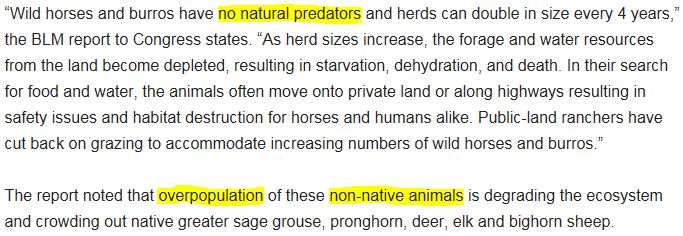
A fourth element, mentioned last week, is they were turned loose or escaped from ranches and therefore have no special significance.
Note that the ranchers—bless their hearts—have reduced grazing on public lands to accommodate our poor horses and burros. Just like the welfare recipients who voluntarily give up some of their government benefits after being told how those programs are driving the country into debt.
The WHB Act of 1971 did not include a provision for unrestricted sale of unadoptable animals.

That feature was added in 2004.
Do you really think the government would close departments, sell buildings and lay people off if wild horse and burro populations were reduced to their AMLs and there were no more animals in long-term holding? Do you think the proposed measures would actually lead to a reduction in government spending? Good grief. Not as long as liberals are in charge.
The narrative is not about saving money. It’s about getting the horses and burros off public lands and the ideas they represent out of the public’s mind.
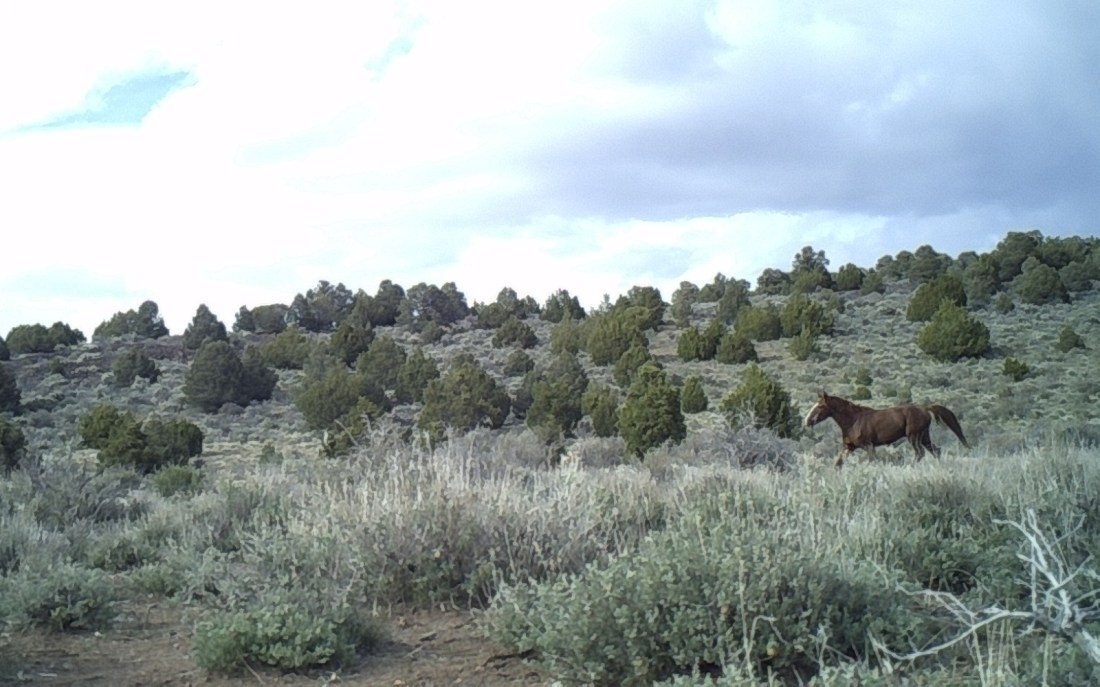
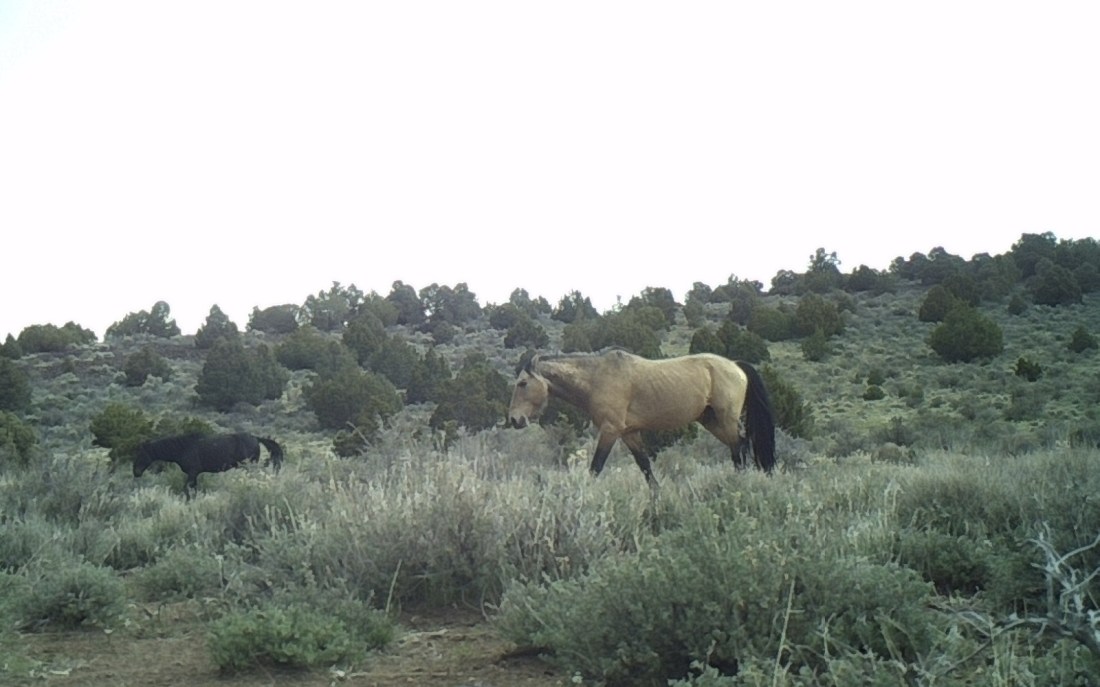
Mustang Monday
On Wheeler Pass HMA.
Happy Mother’s Day
Don’t forget the moms who aren’t, thanks to the PZP zealots. These self-proclaimed advocates are on the same page as the wild horse haters, differing only in methodology.
RFP for VR Transfer Withdrawn
Refer to this statement at the Nevada Department of Agriculture grant page.
How to Make Your Horse Pushy and Disrespectful
It’s easy, just feed him by hand. Great technique for endangering those on the range.
Here’s to Our Wild Ones
From Superbowl XXXVIII.
And Now for Something Completely Different
Forms of government.
No to Cannon in SD 17
Yearning for open space? Check out this guy’s bio. What does he do for a living? What are his qualifications for office? Is he on board with the fundamental transformation?
The Democrat candidate recently visited the Pine Nut Mountain herd area to learn about birth control for horses.
Hmmm, can the technique be used to re-shape the electorate? It’s already happening. The birth rate in the U.S. is negative because we are aborting/sterilizing/contracepting ourselves out of existence. Although rarely discussed, this is an important part of the Voter Replacement Project sponsored by his party.
Our wild ones are losing ground, literally, because of Multiple Use. What are some of the factors making livestock grazing on public lands (especially HMAs) more attractive?
- Costs – corn is getting too expensive due to ethanol production
- Pop culture – a belief that range-fed beef is better for you
- Revenue – grazing fees help nourish the leviathan
- Land – not enough of it in private hands
Who pushes alternate energy? Who wants more money from the private sector? Who thinks government should control everything? Liberals.
Anybody asking for ‘an equitable solution to our wild horses’ doesn’t understand the issues and shouldn’t be setting policy, political leanings aside.
Rural Water Systems – Cold Climates
If temperatures at your ranch drop below freezing for days or weeks at a time, the riser from your pump (pipe that brings water to the surface) can’t exit the well from the top.
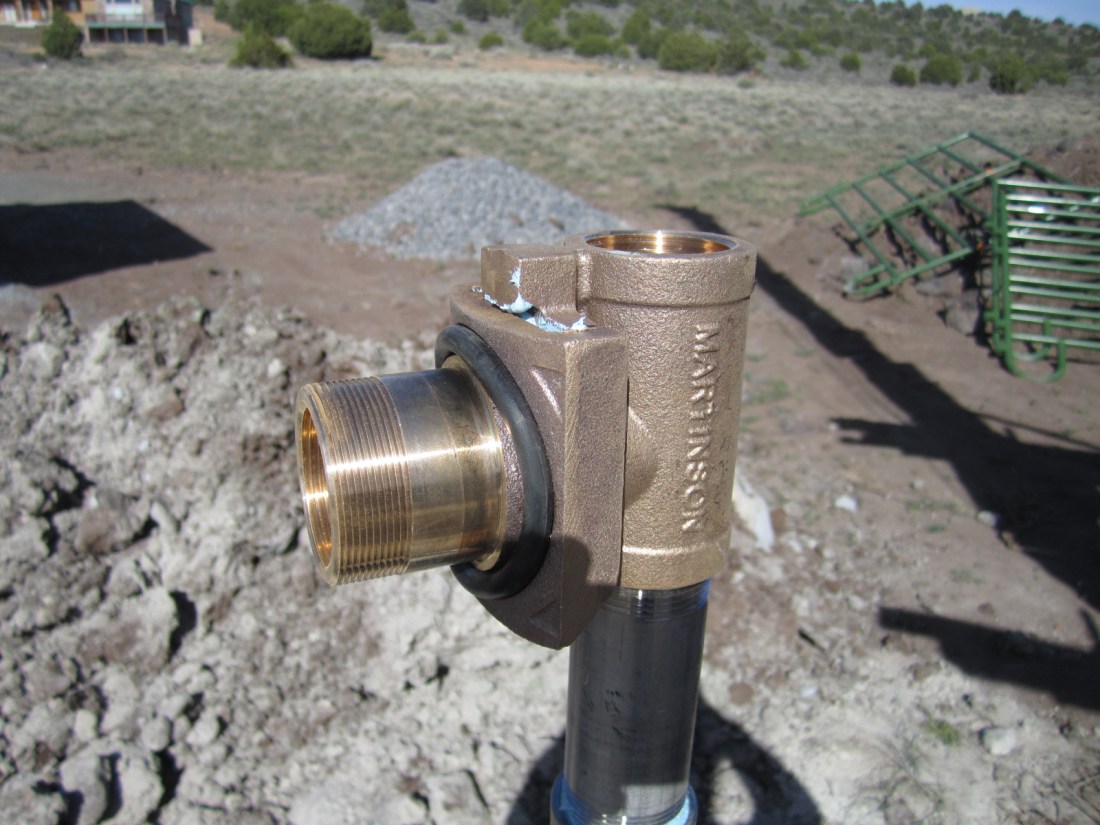
Your contractor will cut a hole in the case at the appropriate depth, 36″ in this example, to install a special fitting known as a pitless adapter.

The adapter functions like a 90 degree elbow, but is threaded at the top so the hoisting rig can lower the assembly (pump, riser and fitting) back into the well. The o-ring seals it to the inside of the casing, preventing surface water intrusion. When installed, the outlet of the fitting (male threads) protrudes from the casing. The contractor will connect an underground line to the fitting and run it over to your pump house.
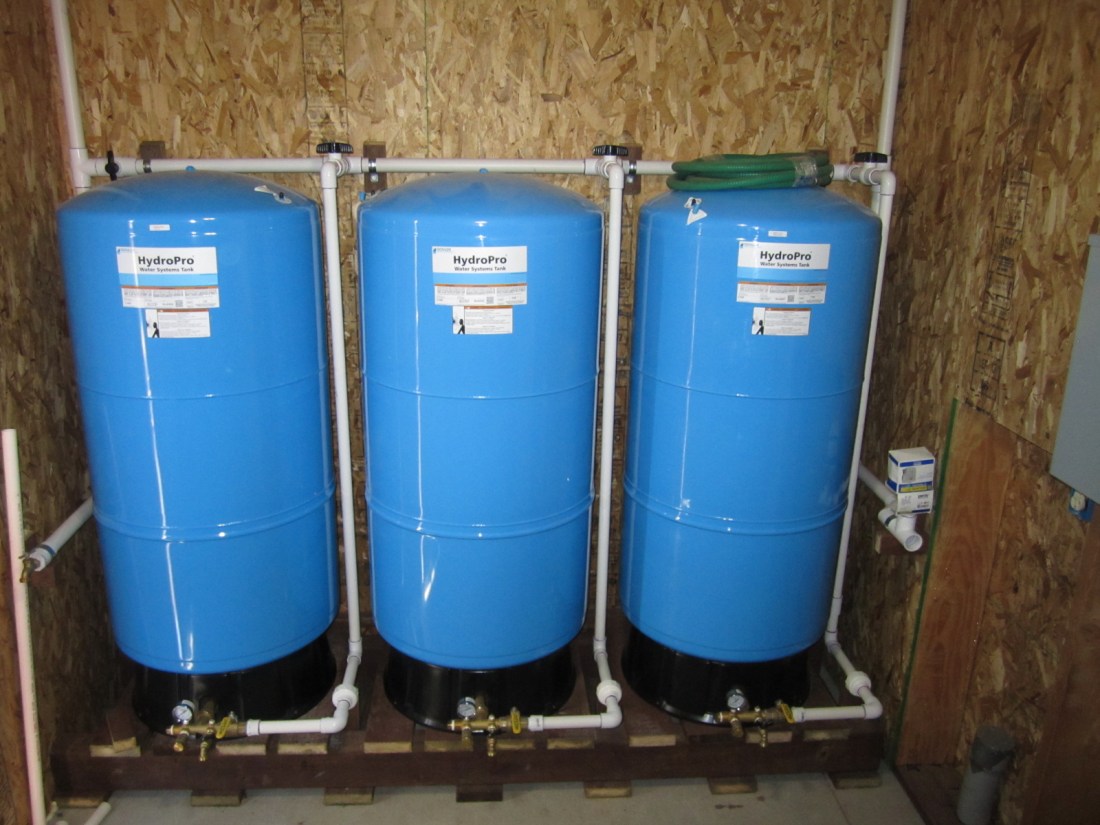
The line should enter the pump house on an interior wall. The gray conduit stub seen in the lower right of this photo is where that will happen (contractor will push 1.25″ poly tubing from the well up through the stub). The pressure tanks and water treating equipment will also need to be protected from freezing. The pressure switch is on the right in this photo, covered by its box, at the inlet to the system. A 500 watt heater keeps the space warm (above freezing) in the winter.
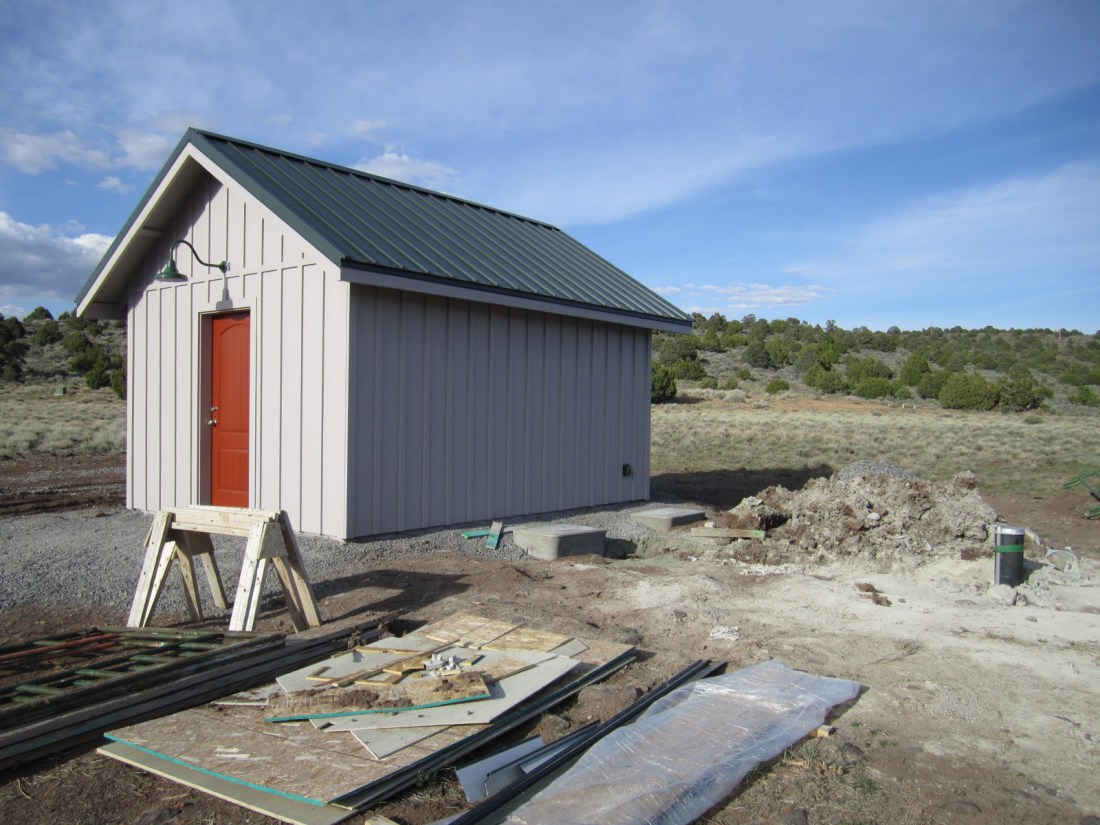
This photo shows the basic arrangement, construction almost complete. The well is on the right. Cement-fiber siding and metal roof for fire resistance. The gooseneck lights (one in the rear also) are on dusk-to-dawn control.
Next to the house and barn, you’ll probably spend more money on the water system than any other part of your ranch. But that’s what you have to do if you want live among the wild horses of the American West.
Emergency Gather Planned Near Cold Creek, NV
Refer to this report dated 05/07/18 in the Las Vegas Review-Journal. See also this press release dated 05/07/18 from the U.S. Forest Service.
A similar action was carried out in 2015, against the wishes of local residents. At the time of the gather, the horse population was at 7X AML and no cattle were grazing in the area. The case is briefly discussed beginning at 21:48 in this video.
The town of Cold Creek falls within the Wheeler Pass HMA or Spring Mountain HA.
New Band on the Virginia Range
Photo of VR stallion scouting out the territory on 05/04/18. A mare and foal lagged about 600 feet behind, awaiting instructions.
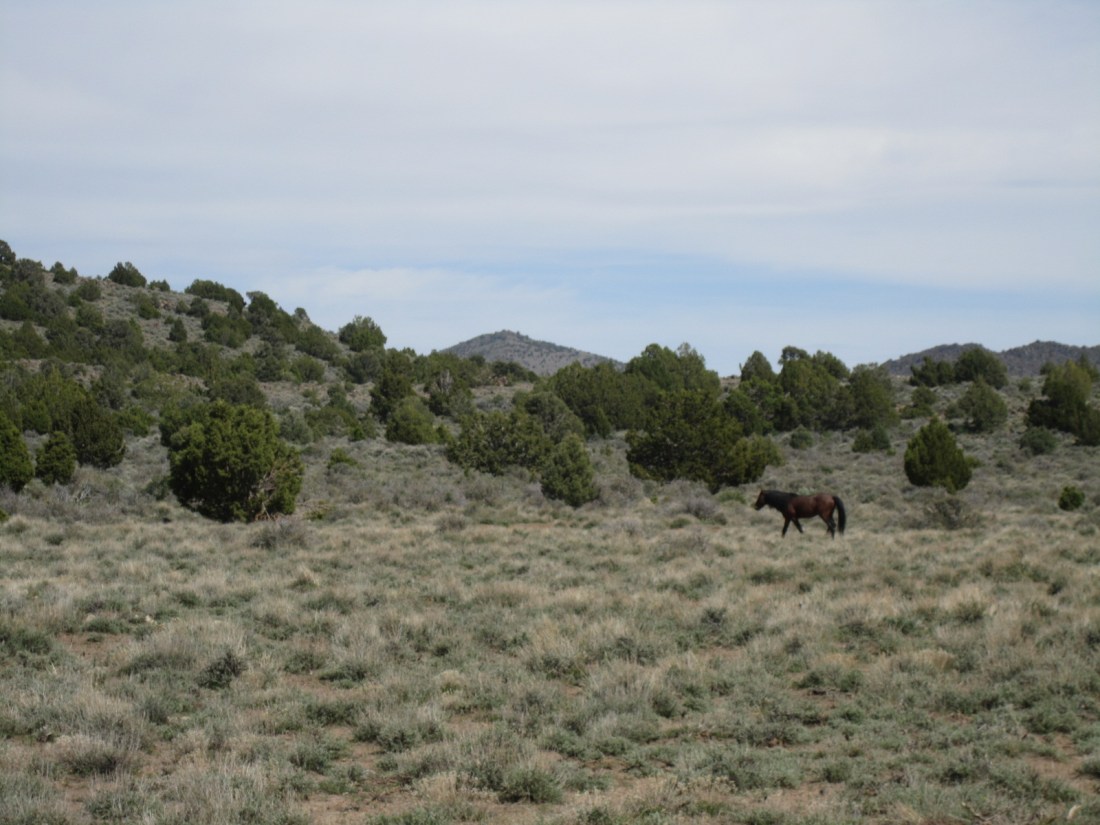
He decided things were not safe for the rest of the family so he circled back and moved them elsewhere.
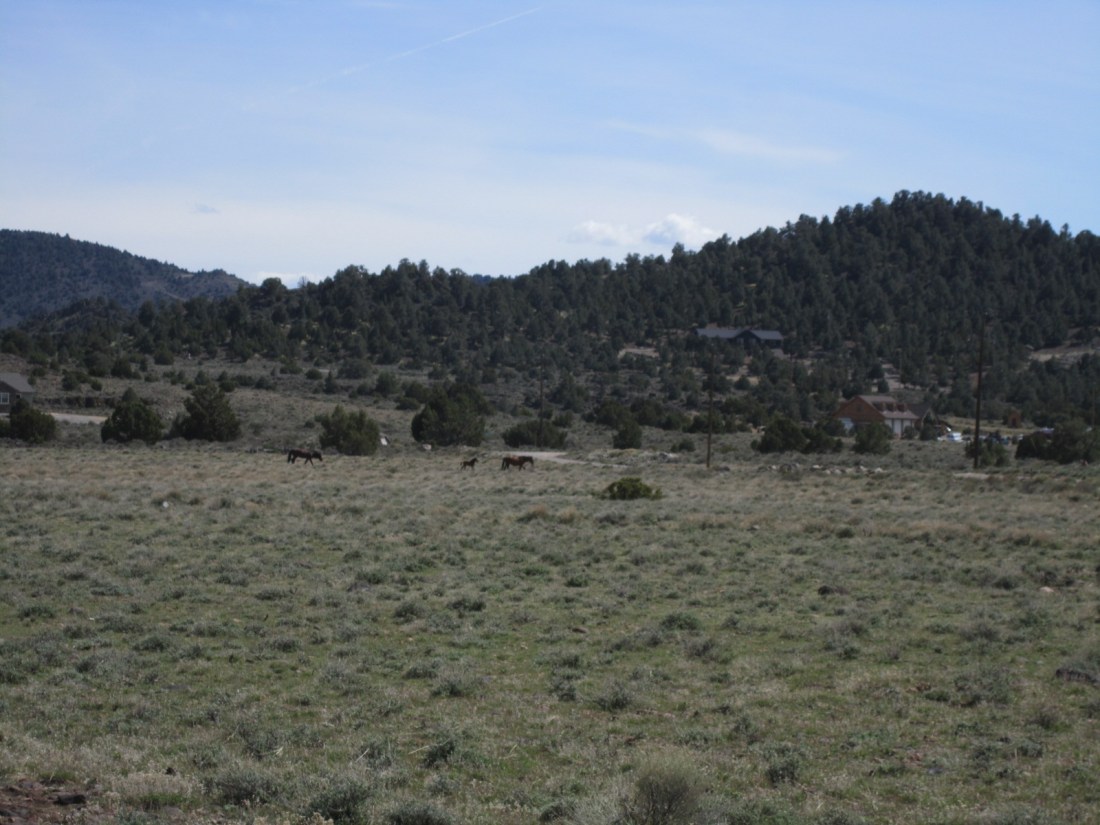
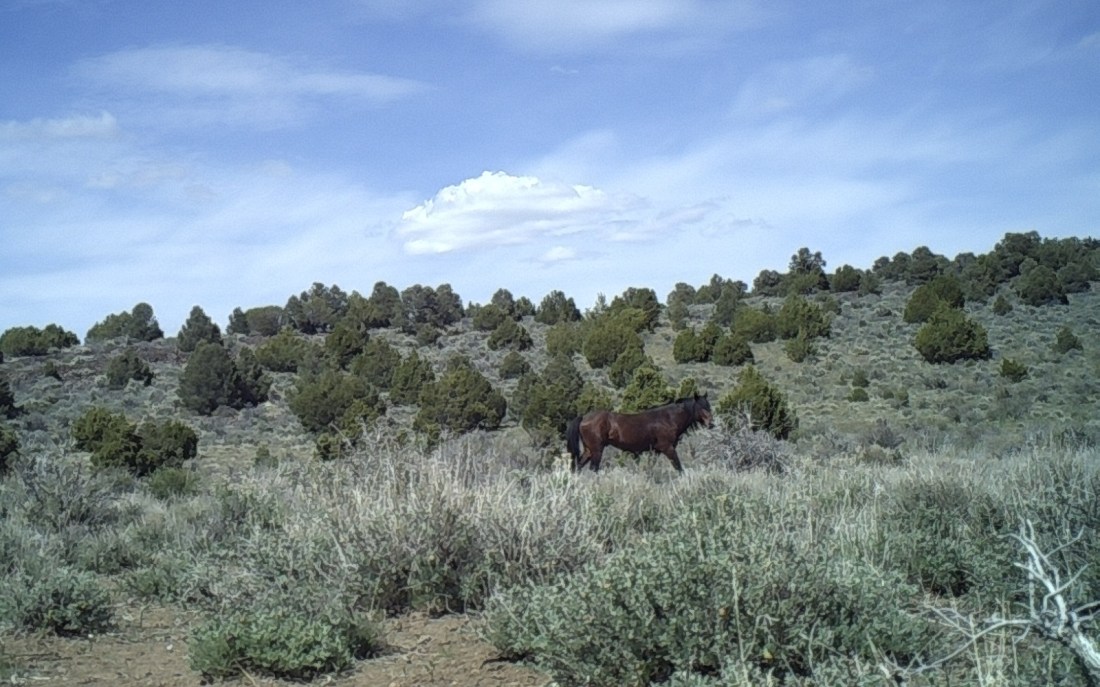
Picked up by trailcam as he circled back. A contractor arrived on site while these photos were taken, pulling a trailer with backhoe, and that’s what spooked him.
Checks and Balances
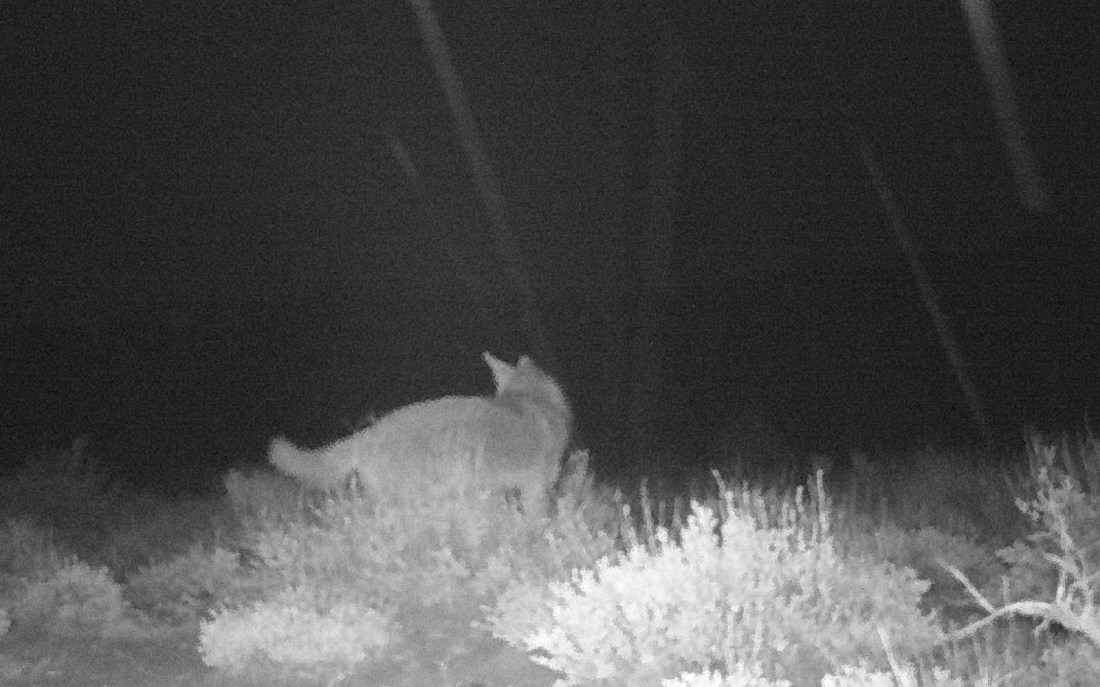
Trailcam image of a coyote on the Virginia Range, 05/01/18. Temperature 29 °F, elevation 6500 feet.
Mustang Monday
On Kiger HMA.
 Western Horse Watchers Association