San Bernadino County Hits Pause on Reche Canyon Burro Removal

County officials have ended discussions with Peaceful Valley Donkey Rescue for wild burro rescue and relocation services according to a February 21 story by the San Bernadino Sun.

The county is now working with DonkeyLand for similar services.

For a quick tour of the area, refer to the February 10 edition of Mustang Monday.

RELATED: San Bernadino County Removing Reche Canyon Burros.

Foal-Free Friday, Making Their Heads Explode Edition

One way to trigger the advocates is to talk about keeping wild horses on the range.

It sounds crazy—they’re supposed to be voices for the horses.

But they’re not.

Most are obsessed with pesticides, overpopulation and nonmotorized removal.

We Want the Ranchers to Win 04-04-24

You might get blocked if you leave comments on their Facebook pages about

  • Management at the minimum feasible level
  • Nature’s way
  • Principal use
  • Lopsided forage allocations
  • Repurposing allotments as refuges
  • Bringing grazing fees in line with market rates

They might come unglued if you talk about mass sterilization, abnormal sex ratios, loss of genetic diversity and selection for faulty immune systems, the inevitable results of PZP darting programs.

If they won’t welcome you into their fold, point out their hypocrisy and treachery, shake the dust from your sandals and leave.

RELATED: Foal-Free Friday, Rangelands and Lovers Edition.

Bullfrog EA Out for Review

The draft assessment has been copied to the project folder with nine appendices.

The proposed HMAP, discussed in Appendix D, is subordinate to the Tonopah RMP and will affirm management provisions therein.

The EA cites outdated registrations for GonaCon Equine in Section 2.3.2.2 and refers to the pesticide as a vaccine.

Comments will be accepted through March 24 according to the news release.

RELATED: Bullfrog Scoping Begins.

Bullfrog HMA with Allotments 09-17-24

Key Indicators for New Wild Horse Preserves

Ideally, you’d like to see forage availability above 60 and the stocking rate exceed five, as discussed previously.

Forage availability (AUMs per thousand public acres)RatingStocking rate (Wild horses per thousand public acres)
Less than 36PoorLess than 3
36 t0 60Fair3 to 5
More than 60GoodMore than 5

You also want a land ratio above three.

Land ratio (public acres to deeded acres)Percent public landsRating
ZeroZeroUnacceptable
1:150Unacceptable
2:167Unacceptable
3:175Barely acceptable
4:180Good
5:183Better
6:1 or more86 or moreBest

Sanctuaries consisting of deeded acreage only (no public lands) represent victory for the ranchers and failure for the horses.

RELATED: Scoping Out a New Wild Horse Refuge.

Suitability of Allotments for Wild Horse Preserves

A first-pass assessment can be carried out if you know the forage availability or stocking rate, both of which can be determined from the Allotment Master Report at RAS.

Forage availability = Active AUMs ÷ Public acres × 1,000

Stocking rate = Forage availability ÷ 12

Forage availability (AUMs per thousand public acres)RatingStocking rate (Wild horses per thousand public acres)
Less than 36PoorLess than 3
36 t0 60Fair3 to 5
More than 60GoodMore than 5

For example, the Wallrock Allotment in Oregon offers 6,656 active AUMs on 100,167 public acres according to the report.

That’s 66.4 AUMs per thousand public acres or 5.5 wild horses per thousand public acres, putting it in the Good category.

If the base property tied to the allotment was on the market, you might want to take a closer look.

The allotment supports livestock equivalent to 555 wild horses, which would be the carrying capacity of the new refuge, assuming no on-site hay production.

RELATED: Scoping Out a New Wild Horse Refuge.

What Does Herd Implosion Look Like?

It’s not apparent to the untrained eye.

But it’s occurring across the American west, as the advocates sterilize the mares and birth rates fall irreversibly below death rates.

In this example from the Salt River, the white horse at 1:42 shows a subtle indicator of their involvement.

The Salt River Wild Horse Darting Group works closely with the Campaign Against America’s Wild Horses.

RELATED: When Will PLC Endorse Salt River and Virginia Range Advocates?

When Will PLC Endorse Salt River and Virginia Range Advocates?

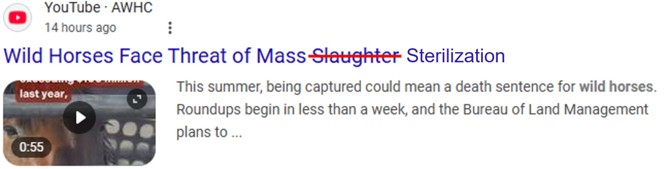
They’re using PZP to reduce wild horse populations, with the inevitable result of mass sterilization.

The technique was pioneered at Assateague Island, where, as of last year, the herd was still shrinking eight years after the darting program was shut off.

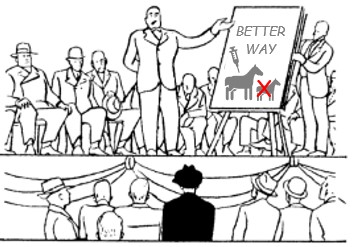
Better Way 10-25-23

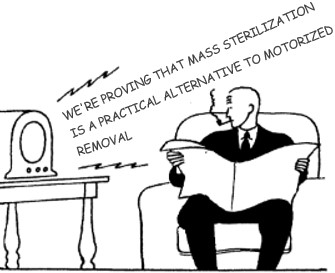
The advocates sell it as a humane alternative to motorized removal, claiming the pesticide is safe and reversible.

The Public Lands Council represents cattle and sheep producers who hold grazing permits on public lands across the western U.S.

RELATED: Salt River Darting Program by the Numbers.

Colorado Wild Horse Working Group Mulls New Refuge

The agenda from last week’s meeting indicates that Day 2 was devoted to consideration of a new preserve.

The legislature expects the group to identify and pursue long-term solutions for wild horses that are removed from federal horse management areas or held in federal facilities according to the Year One Report.

The best option is to acquire base properties tied to one or more grazing allotments, such as the ranch near Dinosaur, and flip the preference to horses.

The pattern has already been established by the Wild Horse Refuge.

RELATED: Criteria for Colorado’s New Wild Horse Preserve.

Foal-Free Friday, Rangelands and Lovers Edition

Proponents of pesticides, helicopters and livestock will share a special moment today as they renew their vows of ranching superiority in the lawful homes of wild horses.

They may not always agree on fine points but a belief in the overpopulation narrative and the necessity of achieving AMLs helps them overcome their differences.

RELATED: Foal-Free Friday, Science-Based Conservation Edition.

Working Together for a Horse-Free Future 12-21-22