An attorney representing plaintiffs in a new lawsuit said they won’t happen before the summer of 2026 according to a report by Wyofile.
The case was brought by two advocacy groups and two women, all PZP adherents, who may have been offended by being described as “pro-horse groups and individuals.”
When will the advocates explain how mass sterilization, the inevitable result of humane population reduction, preserves wild horses for future generations?
When will they stop lying about the reversibility of PZP?
This year’s event will be held at Gracias Madre in West Hollywood (sometimes referred to as the city of the sodomites), according to an announcement on Average Socialite.
The venue features Mexican food made from plant-based ingredients only, a must-have for liberals.
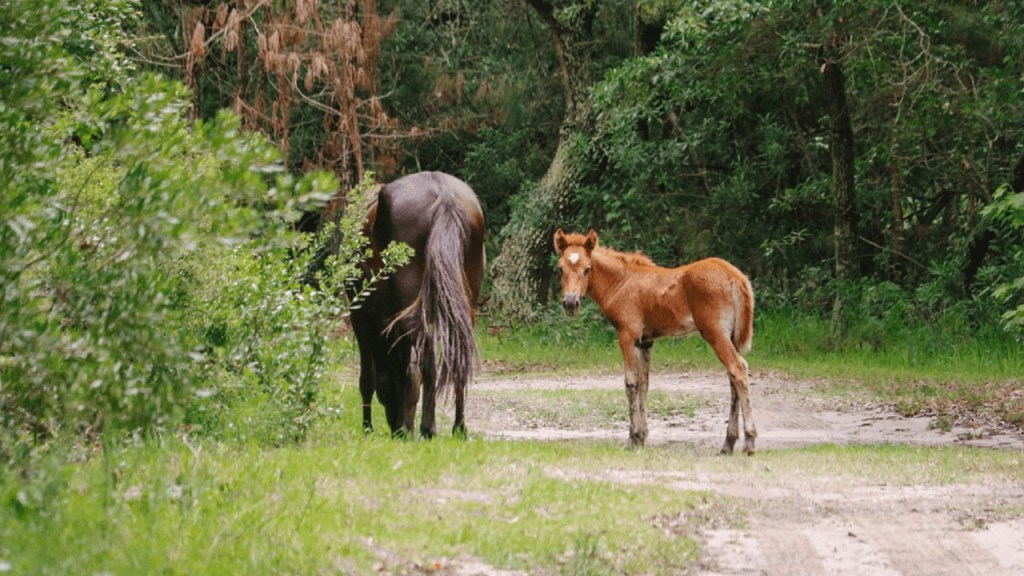
The online flyer shows a mare and foal, antithetical to the CAAWH mission.
The general admission ticket gets you drinks and hors d’oeuvres.
The foal friend ticket pays for care of an orphaned foal. There aren’t supposed to be any foals.
The meadow guardian ticket funds the reseeding of one acre of scorched earth in their bogus land trust. The name of the affected allotment was not given.
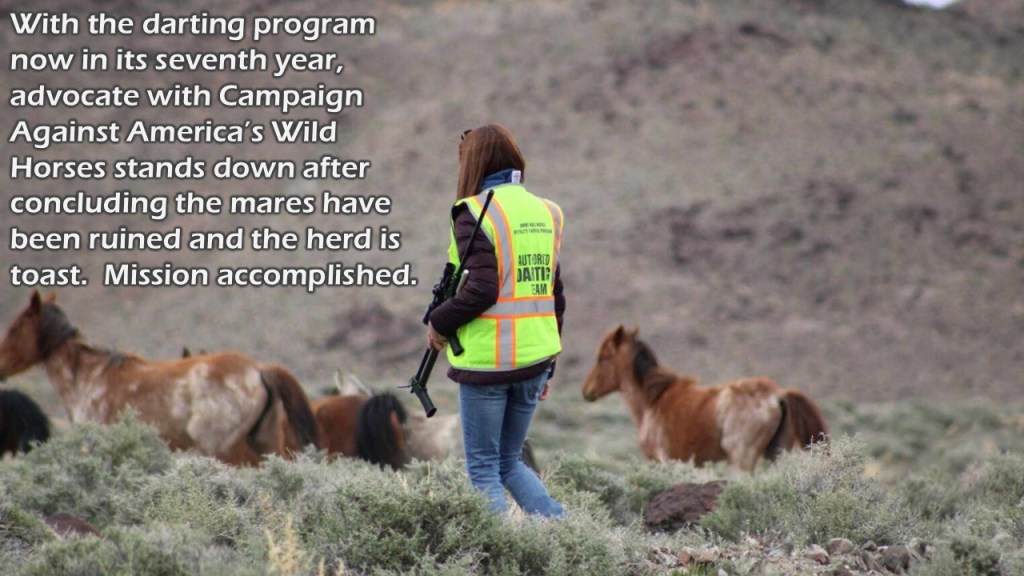
The herd protector ticket buys 20 doses of PZP. In exchange, you get an 8×10 photo taken by the head darter in charge at Cedar Mountain, where the BLM pays them to ruin the mares.
The organizers say the event is dedicated to protecting America’s wild horses and burros, yet there are no remarks about stopping competition from livestock, fixing unfair resource allocations and restoring lost habitat.
If your opponent appears to be winning, should you rethink your strategy or continue on the same path?
Consider this commentary in today’s edition of Nevada Current, written by the State Director for the Campaign Against America’s Wild Horses.
The author identifies the problem, but instead of offering a solution, shows how to make it worse.
“America’s wild horses have faced competition from livestock, unfair resource allocation, and shrinking habitat for generations.”
Fair statement.
The answer?
Sterilize the mares.
Give the ranchers what they want.
While you’re at it, feed the public a steady diet of lies.
“The Virginia Range program uses an immunocontraceptive vaccine known as PZP (porcine zona pellucida). Administered by trained volunteers via remote darting, PZP prevents pregnancy in mares without harming hormone cycles or behaviors, and it’s reversible.”
PZP is a restricted-use pesticide that tricks the immune system into attacking the ovaries.
After five years of treatment, the mares can no longer bear fruit.
“The USA now has more wild horses in captivity than running free on the rangelands in the West.”
Why is that?
Refer to the problem statement at the beginning of your op-ed, about which you, and your army of nitwits, do nothing.
The Forest Service copied the following documents to the project folder on August 29:
Final environmental assessment
Final territory management plan
Draft decision notice
Scroll down to the Project Summary, expand the Project Documents section and click on the AdminReview folder.
Only those who participated in the planning process are eligible to object.
The DN would authorize Alternative 2, the Proposed Action, discussed on page 18 of the EA (page 24 in the pdf) and beyond.
Horses currently occupy an area much larger than the 19,700-acre WHT so initial management actions will be directed at achieving AML within the designated space.
Active AUMs and acreages of surrounding allotments should be reviewed to determine if the proposed AML (104) and stocking rate (5.3 wild horses per thousand acres) are reasonable.
Surgical sterilization was dropped from the analysis.
Chemical sterilization, via PZP and GonaCon, is on the table.
Expanding the territory, increasing the AML and reducing livestock grazing didn’t make the cut.
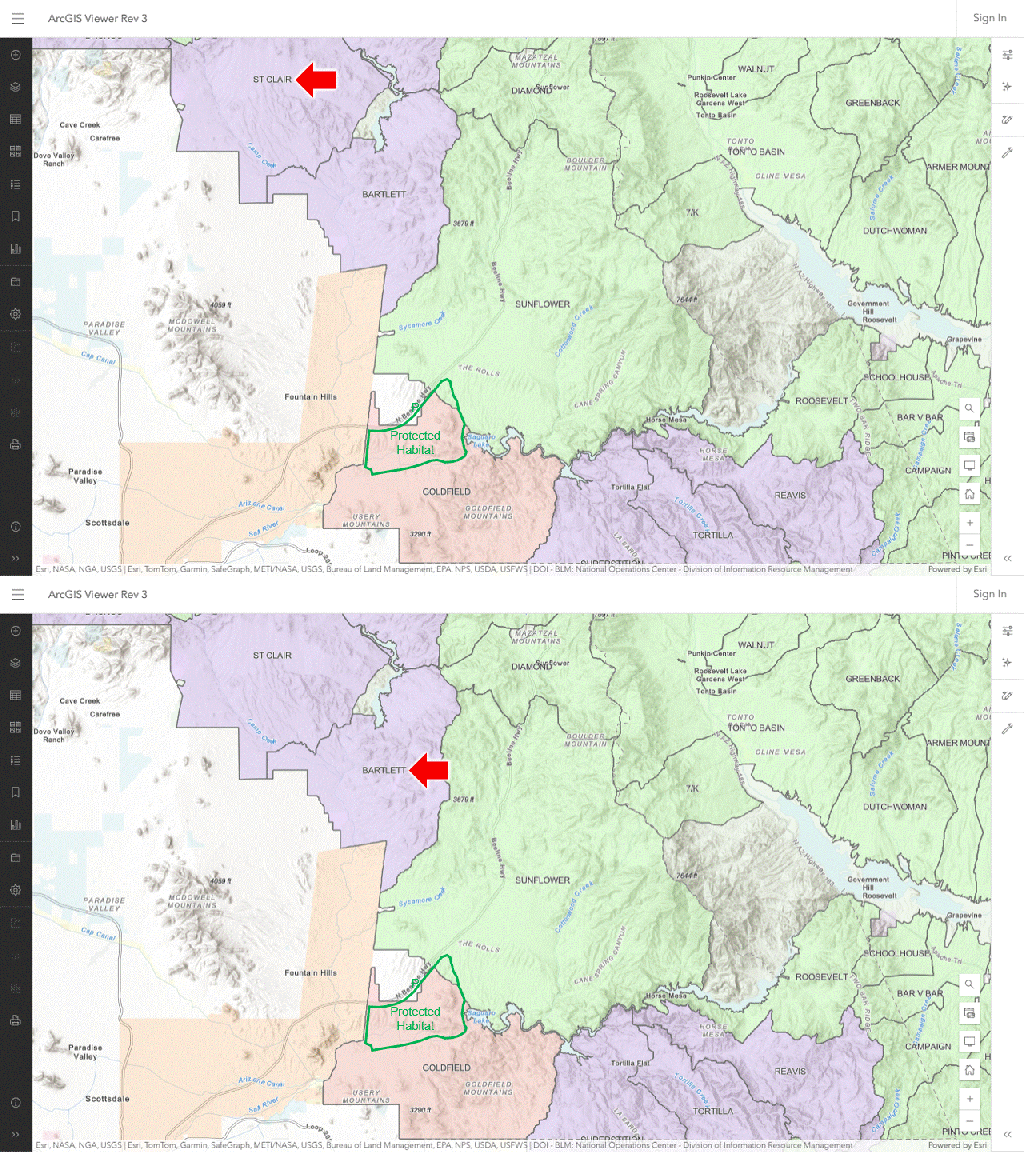
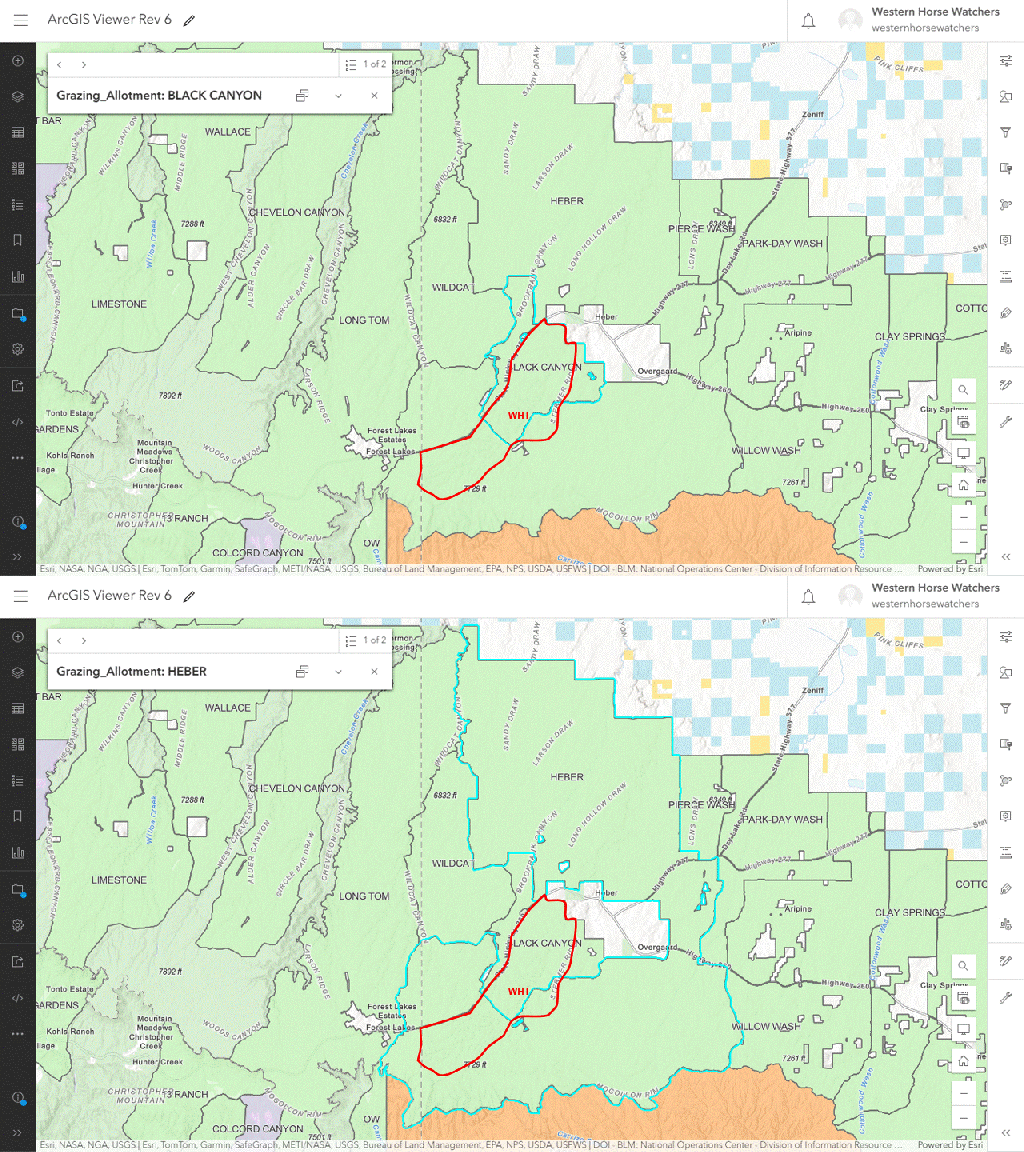
The WHT lies within the Heber and Black Canyon Allotments. Figure 6 in the EA shows the overlapping pastures.
The Forest Service has added deaths to the daily reports.
Shipping data are not provided.
Deceased animals are not included in the daily breakdowns. For example, two horses were put down for unspecified conditions on September 3 but you don’t know if they were stallions, mares or foals.
The daily totals should match the daily breakdowns.
The documented capture total is 68, including 28 stallions, 34 mares and six foals.
Youngsters represented 8.8% of the sample.
Of the adults, 45.2% were male and 54.8% were female.
The average daily take is 6.8.
The death rate, based on a capture total of 72, is 6.9%.
It is the only option calling for a nonreproducing segment in the population, to be achieved by “minimally invasive sterilization” of mares and stallions.
Other features of the plan include:
Forcible removal of excess animals to low AML
Application of fertility control pesticides
Alteration of sex ratios to favor males
Development of a new a new water source
Monitoring of genetic diversity
Commenting in support of the plan was Return to Normal (Before WHB Act). Refer to item 2 in Appendix XVII of the EA.
The project is subject to a 30-day appeal period but that was not mentioned in the news release.
Despite a July 15 appeals court ruling, the agency plans to proceed with permanent removal of wild horses from the Salt Wells Creek and Adobe Town Herd Areas, starting on or about October 13, according to a report by WyoFile.
Referring to them as herd areas, a sign of bureaucratic arrogance, implies validity of the RMP amendments.
The flyer says wild horses are a living symbol of America’s spirit of freedom, but career politicians and bureaucrats in Washington have sold them out to special interests.
What special interests?
If the speakers don’t talk about livestock, forage allocations and the way your public lands are managed, shake the dust from your sandals and leave.
The organizer, who served eight months in prison for wire fraud, is trying to unseat Dina Titus, a left-wing kook, co-founder of the Pesticide Caucus and close supporter of the Campaign Against America’s Wild Horses, from Nevada’s 1st congressional district.






 Western Horse Watchers Association