Foal-Free Friday, Passing the Torch Edition

Nobody talks about wild horse removal more than the advocates.

They’re obsessed with pesticides, their theories don’t hold water and they serve no charitable purpose.

They are the old guard, snake oil salesmen, allies of the ranchers.

America’s wild horses need leadership, not collusion.

Put them out to pasture today!

RELATED: Foal-Free Friday, No Bad Behaviors Edition.

Advocates are the Predators 11-30-21

How to Interpret Sex Data from WHB Roundups

The BLM reported that 16 jacks and 26 jennies had been captured through Day 10 of the Lake Pleasant roundup.

Do those results look like they came from a population that’s 50% males / 50% females?

The observed proportions are 38.1% male and 61.9% female.

The answer must be determined by calculation, using a basic statistical formula that accounts for random variation.

How to Compute p-chart Limits 02-10-22

In this example p-bar = .5 and n = 42.

The calculated range of variation is .269 (26.9%) to .731 (73.1%), which includes the observed values, so there is no evidence that the population is not 50% males / 50% females.

The East Pershing roundup took 1,082 stallions and 1,245 mares off the range (as well as 365 foals).

Do those data look like they came from a herd that’s 50% males / 50% females?

The observed proportions are .465 and .535, and the calculated limits are .469 and .531, so there is some evidence of an abnormal sex ratio.

The problem often occurs in herds subject to the Montana Solution, which the advocates dismiss as mares living longer.

Lake Pleasant Roundup, Day 10

The incident started on February 5.  Results through February 14:

  • Scope: Lake Pleasant HMA
  • Target: Burros
  • Type: Planned
  • Method: Bait trap
  • Goals: Gather 400, remove 400
  • Captured: 55, up from 29 on Day 6
  • Shipped: 28, up from zero on Day 6
  • Released: None
  • Deaths: None
  • Average daily take: 5.5
  • Unaccounted-for animals: 27

The figures above are based on the daily reports.

The capture total included 16 jacks, 26 jennies and 13 foals.

Youngsters represented 23.6% of the animals gathered.

Of the adults, 38.1% were male and 61.9% were female.

The HA and HMA are the same size.  The area is subject to permitted grazing.

  • Forage liberated to date: 330 AUMs per year
  • Water liberated to date: 275 gallons per day

Data quality has been good.

There are no plans to treat any of the jennies with fertility control pesticides and return them to the HMA.

The roundup will remove animals that are damaging private property and creating a public safety hazard, purposes for which PZP was not authorized.

The incident supports three tenets of rangeland management.

RELATED: Lake Pleasant Roundup, Day 6.

Lake Pleasant HMA with Allotments 02-06-23

Advocates Far Greater Threat to Wild Horses Than Holding Pens

This article by the Casper Star-Tribune is not about the loss of a yearling during the McCullough roundup, but the phoniness of the advocates.

The two women interviewed for the story, Sisti and Walker, are pesticide pushers.

If they had their way, there wouldn’t be any yearlings to trap.

They are the old guard, members of the Love Triangle, irrelevant.

RELATED: Cody Enterprise Biased in Favor of McCullough Ranchers?

McCullough Peaks Darting-1

BLM Extends Nomination Period for WHBAB

The original solicitation dated October 2 produced insufficient applications for the natural resources position so a second call for nominations will appear tomorrow in the Federal Register, according to an unofficial pre-publication notice.

The Wild Horse and Burro Advisory Board meets one to four times per year and members serve without compensation.

RELATED: Another WHBAB Nomination Cycle Begins.

Currituck Herd Adds One

WARNING: This post will be disturbing to most advocates.

A new foal has been spotted according to a report dated February 13 by OBX Today.

His name is Eros and he’s about a week old.

His mom had a filly in 2021.

Offspring since then are not known.

The status of the darting program is not known.

The number of viable mares and the size of the breeding population are not known.

Birth rates and breeding patterns had been determined by the advocates, not the horses.

The herd was the subject of last week’s Foal-Free Friday.

BLM Takes Overpopulation Narrative to Elementary School

A WHB Specialist used candy to show students at Duckwater Shoshone Elementary School the dangers of overgrazing by wild horses and burros, according to a story dated February 10 by KOLO News.

The herds increase every year, he told the class, and the amount of available forage, represented by Kit Kat bars, does not.  Too many animals degrade the range, impairing herd health.

The article follows a BLM news release dated February 8.

What he didn’t tell the kids was that there is another box of Kit Kats under the table that belongs to the horses but has been shifted by his co-workers to public-lands ranchers.

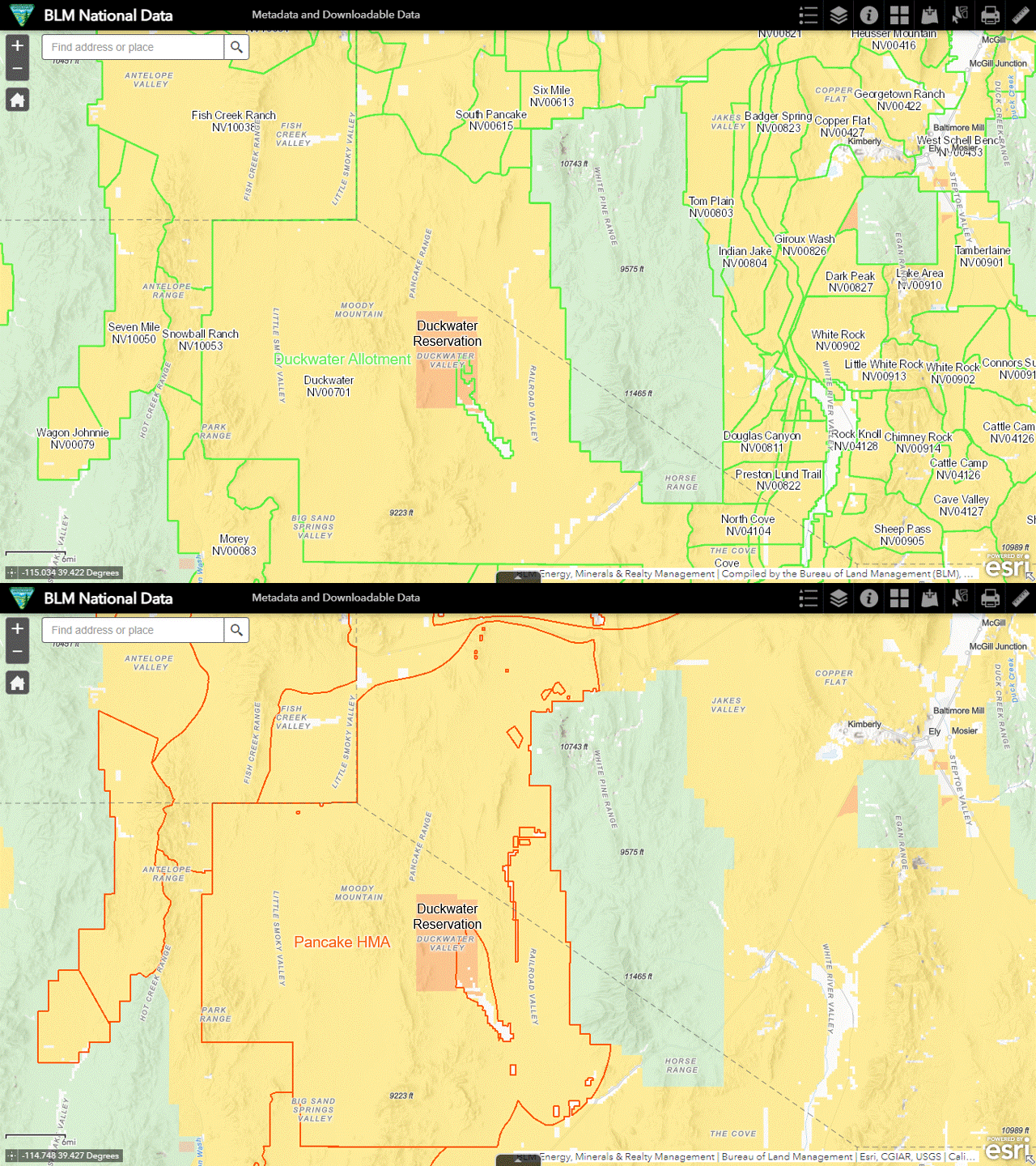
That might be good news to the kids because the Duckwater Reservation lies within the Duckwater Allotment and the tribe holds 24% of the active AUMs.

Also not mentioned in the article is that the reservation lies within the Pancake HMA, and there is considerable overlap between it and the allotment, so the discussion about overpopulation may be rooted in a conflict between horses and livestock.

Duckwater Reservation with HMAs and Allotments 02-13-24

McCullough Roundup, Day 20

The incident started on January 22.  Results through February 10:

  • Scope: McCullough Peaks HMA
  • Target: Horses
  • Method: Bait
  • Type: Planned
  • Goals: Gather 80, remove 35
  • Captured: 14, up from 11 on Day 5
  • Shipped: 3, no change from Day 5
  • Released: 10, up from 7 on Day 5
  • Deaths: 1, no change from Day 5
  • Average daily take: 0.7
  • Unaccounted-for animals: 0

The figures above are based on the daily reports.

Activity since Day 5 consisted of three stallions captured and released.

The death rate is 7.1%.

The location of the trap site was not disclosed.

The HMA is subject to permitted grazing.

  • Forage liberated to date: 48 AUMs per year
  • Water liberated to date: 40 gallons per day

The National Data Viewer shows habitat loss and overlapping allotments.  Click on map to open in new tab.

An estimated 535 wild horses have been displaced from their lawful home by permitted grazing, making the True AML almost five times higher than the current AML.

The roundup supports three tenets of rangeland management.

RELATED: McCullough Roundup, Day 5.

McCullough Peaks HMA with Allotments 07-14-23

Lake Pleasant Roundup, Day 6

The incident started on February 5.  Results through February 10:

  • Scope: Lake Pleasant HMA
  • Target: Burros
  • Type: Planned
  • Method: Bait trap
  • Goals: Gather 400, remove 400
  • Captured: 29, up from 10 on Day 1
  • Shipped: None
  • Released: None
  • Deaths: None
  • Average daily take: 4.8
  • Unaccounted-for animals: 29

The figures above are based on the daily reports.

Youngsters represented 24.1% of the animals gathered.

Of the adults, 50% were male and 50% were female.

The HA and HMA are the same size.  The area is subject to permitted grazing.

  • Forage liberated to date: 174 AUMs per year
  • Water liberated to date: 145 gallons per day

The roundup supports three tenets of rangeland management.

RELATED: Lake Pleasant Roundup Begins, No News Release.

Lake Pleasant HMA with Allotments 02-06-23

Notoriety of Virginia Range?

Velma’s first encounter with the mustangers occurred in the area but that’s not what makes it famous today.

It’s the site of the world’s largest darting program, where the advocates are trying to convince the bureaucrats and ranchers that they can be as ruthless as the helicopter pilots and wranglers.

Better Way 10-25-23

Their duplicity is on full display in this rugged area, as they pummel their cherished wild horses with ovary-killing pesticides.

They are the old guard, snake oil salesmen, turncoats.

Their allies want the herd drastically reduced because it contradicts their lies about resource availability and carrying capacity.

RELATED: Goicoechea’s Focus on Virginia Range Not About Public Safety.

Pesticide Pushers 07-17-23

East Pershing Roundup Cut Short

The incident concluded on February 9, not just gather operations but processing as well, based on the totals in the sidebar.

The numbers don’t balance but they tell you there are no unaccounted-for animals, no horses in pens awaiting shipment.

Horses captured: 2,692

Horses processed: 2,664 + 3 + 26 = 2,693

The capture and removal goals were 2,875 each.

The death rate was 1.0%.  Four horses died accidentally, 22 were killed intentionally.

The capture total included 1,082 stallions, 1,245 mares and 365 foals.

Youngsters represented 13.6% of the animals gathered, consistent with a herd growth rate of eight to nine percent per year.

Of the adults, 46.5% were male and 53.5% were female, no clear evidence of an abnormal sex ratio.

There were no plans to treat any of the captured mares with fertility control pesticides and return them to the range.

Video of a horse dragged on a skid sparked advocate outrage.

A Nevada politician used the roundup to push nonmotorized removal.

The BLM paid a very low price for the work.

The incident supported three tenets of rangeland management.

RELATED: East Pershing Roundup Starts Next Week.

UPDATE: BLM issued news release marking end of incident on February 13.

No Change to Federal Grazing Fee in 2024

Ranchers will continue to pay pennies on the dollar to feed their animals on public lands this year, including areas identified for wild horses and burros.

The price remains at $1.35 per AUM for the new grazing season, which begins on March 1.

The fee applies to nearly 18,000 grazing permits and leases administered by the BLM and nearly 6,250 permits administered by the Forest Service according to a news release dated January 31.

For comparison, the price of hay now stands at $170 per AUM.

The new fee ensures that the American people will not receive a fair return on the use of their public lands in 2024.

RELATED: New Grazing Fee Untouched by Inflation.

Foal-Free Friday, No Bad Behaviors Edition

“A wild horse is just gonna do what a wild horse does,” according to herd manager and PZP darter Meg Puckett, “and it’s not really up to us to decide whether or not that’s good behavior or bad behavior.”

Not so fast, dear.

Like most advocates, you determined that procreation is a bad behavior and you tried to stop it.

Worse, the herd was designated as Critical/Nearly Extinct by the Equus Survival Trust as you pummeled the mares with ovary-killing pesticides.

Two years ago, the herd was at 106.  Today, it’s at 110, a 2% annual growth rate.

How many in the wild are female?  How many are still viable?  What’s the size of the breeding population?

The greatest threat to these animals is the advocates, not tourists, not climate change and not apples.

RELATED: Foal-Free Friday, Keeping You in the Dark Edition.

East Pershing Roundup, Day 43

The incident began on December 28.  Results through February 8:

The figures above are based on the daily reports, not the totals posted by the BLM.

The death rate is 1.0%.  Four horses died accidentally, 22 were killed intentionally.

The capture total includes 1,084 stallions, 1,251 mares and 363 foals.  The sidebar at the gather page says 1,082/1,245/365.

Youngsters represented 13.5% of the animals gathered, consistent with a herd growth rate of eight percent per year.

Of the adults, 46.4% were male and 53.6% were female, no evidence of an abnormal sex ratio.

Body condition scores ranged from 3 to 4 on Days 42 and 43.

The location of the trap site was not disclosed.

The Complex is managed primarily for animal agriculture.  The National Data Viewer shows habitat loss and grazing allotments.  Click on image to open in new tab.

*According to advocates.

East Pershing Complex with Allotments 12-30-23

Day 43 ended with 80 unaccounted-for animals.

There are no plans to treat any of the captured mares with fertility control pesticides and return them to the range.

With 2,589 horses shipped, and a pre-gather population in Winnemucca of 958, give or take, the off-range corrals should be at 89% of capacity.

Other statistics:

  • Forage liberated to date: 32,340 AUMs per year
  • Water liberated to date: 26,950 gallons per day
  • Horses allowed by plan: 555
  • Pre-gather population: 3,375
  • Forage assigned to horses: 6,660 AUMs per year
  • Forage assigned to livestock: Not determined
  • Horses displaced from Complex by permitted grazing: Not determined
  • True AML: Not determined
  • Stocking rate at new AML: Not determined
  • Horses displaced by drilling and mining: Ask the advocates

Overpopulation means more horses than allowed by plan, not necessarily more horses than the land can support.

The ability of the Complex to sustain wild horses has been limited by the bureaucrats, who have assigned most of their food to the public-lands ranchers.

Refer to these reports for an indication of the problem:

RELATED: East Pershing Roundup, Day 41.

Why Did We Drop the Geocentric Model of the Universe?

Because it didn’t do a very good job of correlating the observed facts.

The heliocentric model wasn’t perfect but it did a better job of explaining the motions of the heavenly bodies.

Euclidian geometry works well within the confines of the village but fails at larger distances because the surface of the earth is curved.

Likewise, the sperm-blocking theory of PZP doesn’t do a good of correlating the observed facts, especially the skewing of sex ratios in favor of females, and therefore deserves a fair share of skepticism.

Better yet, it should be tossed out along with its adherents in favor of the ovary-killing theory, which is not perfect but does a better job of explaining the observed facts.

RELATED: Sperm-Blocking Theory Doesn’t Account for Self-Boosting Mares.

Cody Enterprise Biased in Favor of McCullough Ranchers?

The paper posted an editorial today, written by the publisher, claiming that roundups are necessary to preserve not only the horses but also our public lands.

Wild horses can’t be legally hunted and there aren’t enough natural predators to combat their growing populations.  Without the BLM’s diligent work to achieve an appropriate management level, these wild herds can increase rapidly and public lands can be overwhelmed by the demand for forage and water.

What about the six allotments that overlap the HMA?

How much forage do the ranchers receive?

What happened to the predators?

Why is the AML so small?

The HMA is managed primarily for animal agriculture.

The darting program protects the ranchers.

The roundup protects the ranchers.

Depredation protects the ranchers.

The AML protects the ranchers.

But there’s not one word in the commentary about the ranchers.

Shame on you Megan Barton!

RELATED: Advocates Bawling About Loss of McCullough Filly?