The agency is aware of several cases where patients required medical support after self-medicating with the equine dewormer, according to a report published yesterday by The New York Daily News.
RELATED: Safety of Ivermectin Paste?

Western Horse Watchers Association
Exposing the Hypocrisy, Lies and Incompetence of the Wild Horse Advocates
Around the ranch
The agency is aware of several cases where patients required medical support after self-medicating with the equine dewormer, according to a report published yesterday by The New York Daily News.
RELATED: Safety of Ivermectin Paste?
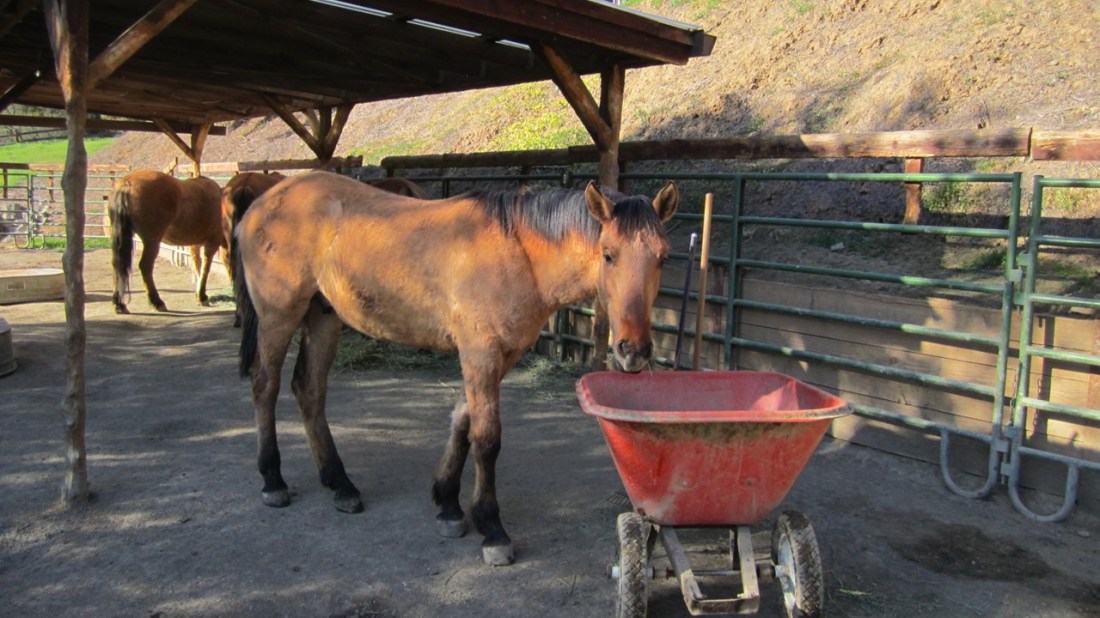
The colt was eleven months old yesterday. He was born last year on April 1.
Mares supposedly go back into heat shortly after birth so let’s say she was bred on April 10. Adding 340 days to that means she’d be due on March 16—two weeks from today.
She’s behind the colt in the photo, but does she look like she’s two weeks out? Nope, not even close. Is the stud still in the corral? Yep.
After the colt was born the mare told the stud, by numerous kicks, that she didn’t want anything to do with him. For the first six weeks, she ruled the roost with an iron fist.
So maybe they only get pregnant when they want to get pregnant?
RELATED: Thoughts on New Colt.
What’s the point of buying enough hay to last four weeks when you can only store enough grain for two weeks?
A 31-gallon metal trash can holds up to three 50-pound bags and they’re great for dispensing daily rations. Rodents will bore into the plastic ones.
An eight-foot round end tank will hold up to twelve sacks. Cover it with plywood or similar material to keep pests away.
At current prices, you’ll be paying about $100 per AUM to feed your horses—unless you have grazing privileges on public lands, in which case you’ll pay $1.35 per AUM.

If you want to help the local ecosystem and reduce inbreeding associated with “rising populations” of wild horses, then you need to get involved with the Meeker Mustang Makeover. Yep, genetic diversity is compromised by overpopulation, according to a spokesperson interviewed for a story by The Daily Sentinel of Grand Junction, CO.
A disclaimer says the event is not associated with, sponsored or endorsed by the Mustang Heritage Foundation, Extreme Mustang Makeover, Mustang Madness, Mustang Mania or the Wild to Mild TIP Challenge. It is an independent, volunteer run entity that is unaffiliated with any other mustang event, organization, or association.
Organizers include ranchers, horse trainers, conservationists and historians concerned about the growing populations of mustangs in western Rio Blanco.
A story by WKRN News of Nashville, TN regarding a horse rescue included a link for daily livestock exports from Texas to Mexico.
The most recent report, dated February 23, shows 1,992 horses shipped to slaughter year to date.
The largest category is beef cattle.
The site offers reports on other export channels to Mexico. Type ‘exports’ in the Search Publications field and hit Enter.

UPDATE: A weekly summary is also available.
If you died and came back as a horse, would you want you as an owner?
The incident occurred at the Fitzjoy Farm Riding Academy on February 16, according to a report by the Chicago Tribune. There were no injuries.
The facility owner said the failure was likely due to heavy snowfall.
RELATED: Roof of Covered Arena Collapses.
The incident happened this morning at the Glen Grove Equestrian Center in Morton Grove, IL, according to a story by the Chicago Tribune. Authorities said the failure was the result of heavy snowfall. No people or animals were hurt.
The film, titled ‘Vanishing Knowledge,’ tells the story of the Kuntz brothers and the horses they rescued, according to a newsletter from The Nokota Horse Conservancy.
These were the original free-roaming horses of Theodore Roosevelt National Park.
RELATED: Story of the Nokota Horses.
The Forest Service is now selling wild horses for $1 each, according to a report posted today by KRCR News of Redding, CA. Approximately 150 animals are available.
RELATED: Devil’s Garden Outplacement Program Ramping Up.
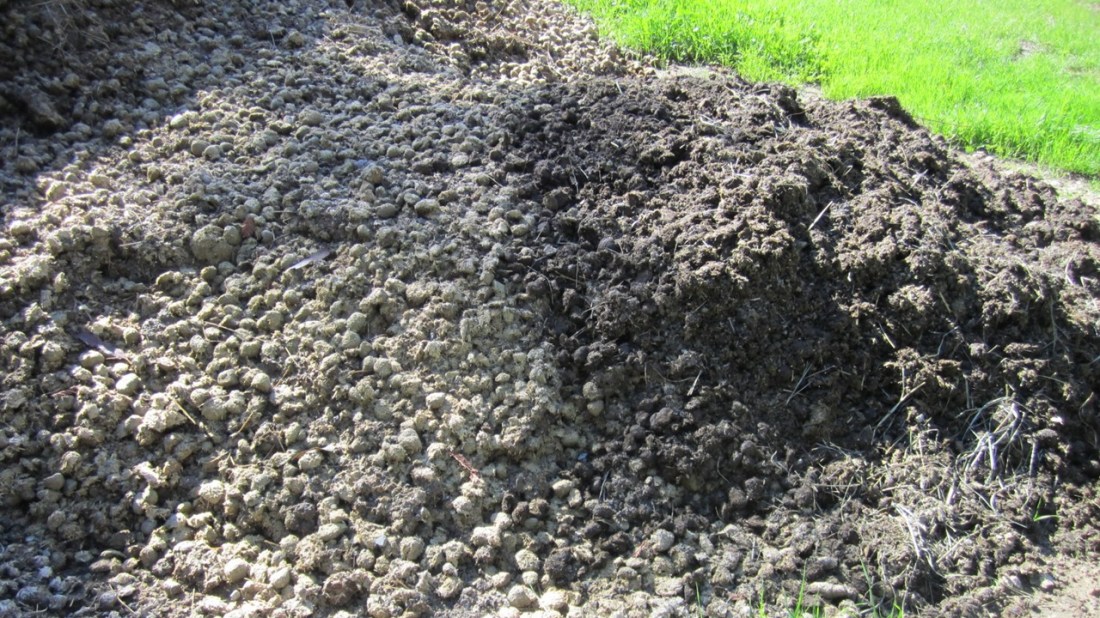
Switched from alfalfa to alfalfa-grass about a week ago and the effect can be seen in their manure. Older material on the left, newer material on the right.
Today is Groundhog Day—and Punxsutawney Phil did see his shadow—but the adopted horses are signaling the arrival of spring: They’re shedding out.

Refer to this report dated January 29 by the Brainerd Dispatch. Doesn’t seem to matter whether they’re wild or domestic.
The storms that hit central California earlier this week almost claimed the lives of two horses but they were pulled from neck-deep mud by firefighters and members of a disaster response team, according to a report posted yesterday by the Monterey Herald of Monterey, CA.
This stuff has been as hard to find as an Assateague horse census, but it’s been back on the shelves for the past few weeks. For bleaching water buckets.

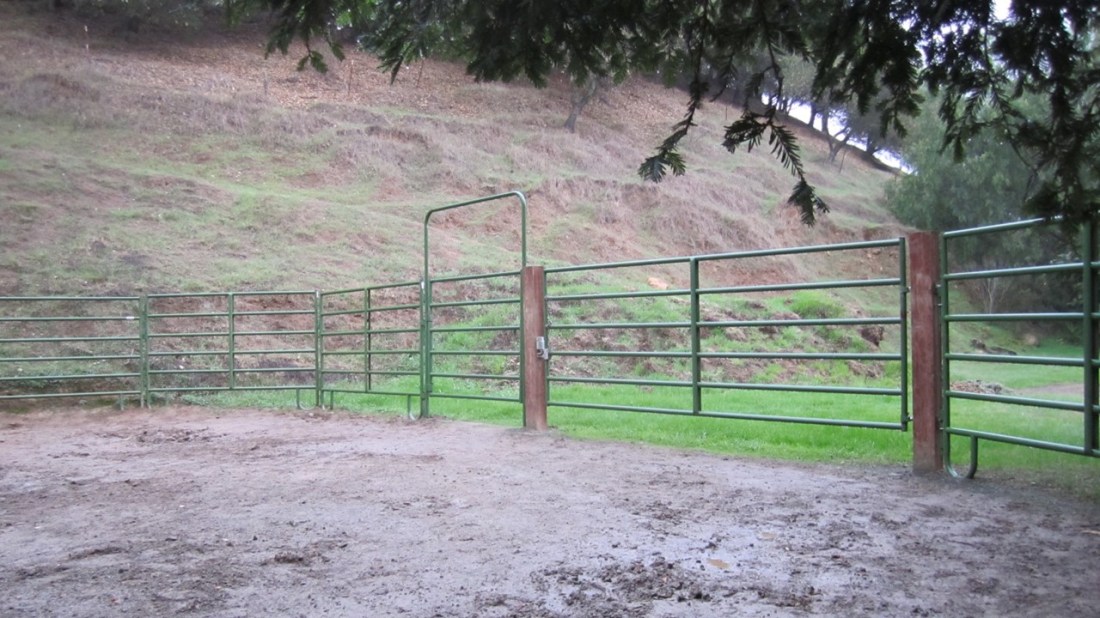
The absence of grass in the corral below tells you the stocking rate is too high, from a sustainability viewpoint. It holds two horses on approximately 5,000 square feet.
That’s two horses on 0.115 acre, equivalent to 17.4 horses per acre, which is the same as 17,400 horses per thousand acres.
Rick Gore has two horses on ten acres (equivalent to 200 horses per thousand acres) and his pastures look good. Of course, that’s Texas, not Nevada.
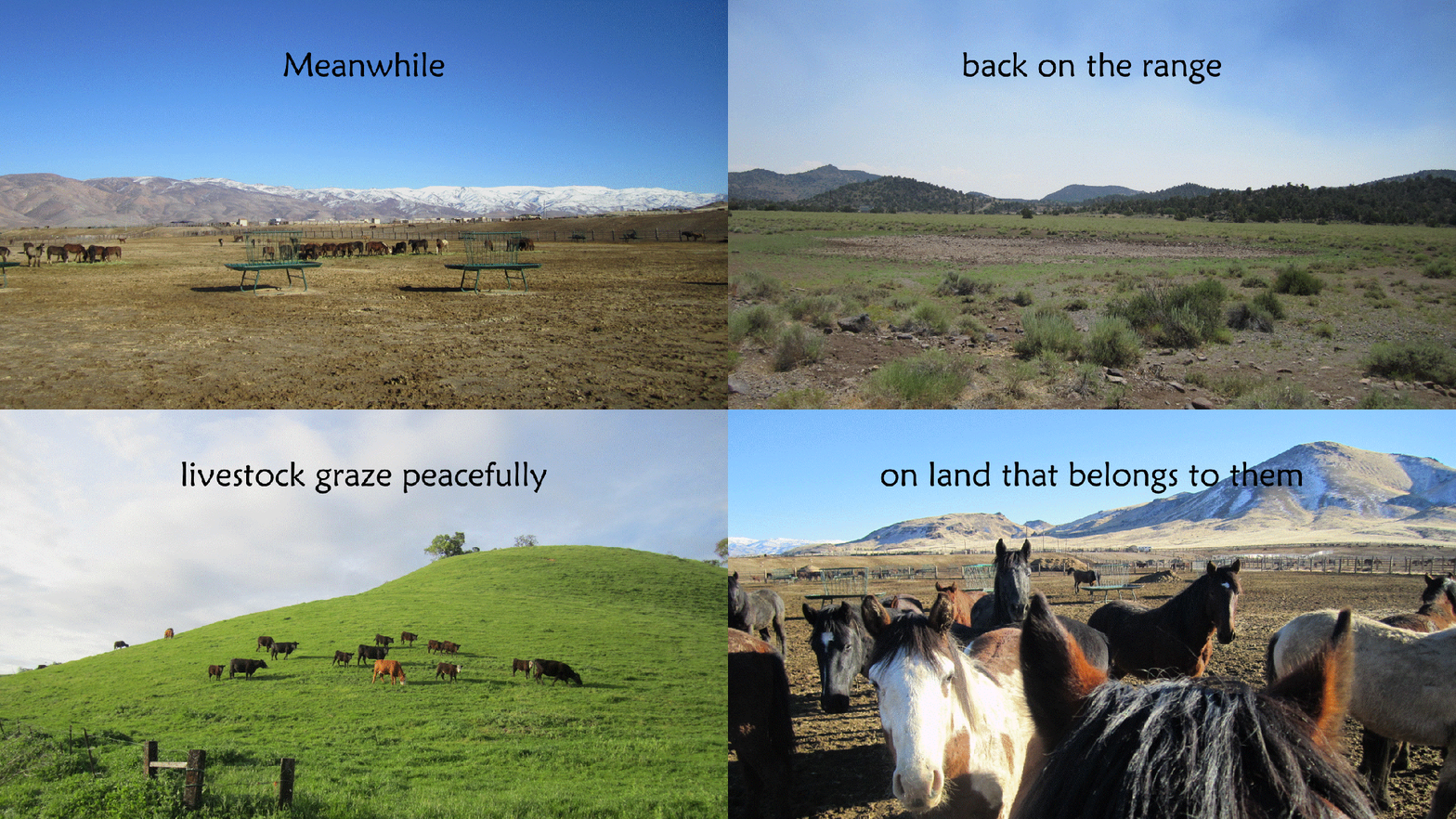
The target stocking rate on western rangelands is 27,000 ÷ 27,000,000 × 1,000 = 1.0 one wild horse per thousand acres, neglecting burros for simplicity.
The current stocking rate is 95,000 ÷ 27,000,000 × 1,000 = 3.5 wild horses per thousand acres.
The stocking rate allowed by plan for privately owned cattle is usually several times than the rate for horses, even on land set aside for the horses.
Some of the horses injured in a tractor-trailer accident on IH-44 last October are now available for adoption, according to a report by FOX2 News of St. Louis, MO.
The rig was taking them to slaughter.
The fire started around 3:00 AM this morning in Pico Rivera and spread to several barns, according to a report by the CBS affiliate in Los Angeles.
They have determined that the animal died of a shotgun blast at close range, according to an update posted today by WYFF News of Greenville, SC.
RELATED: Horse Shot on Family Farm.
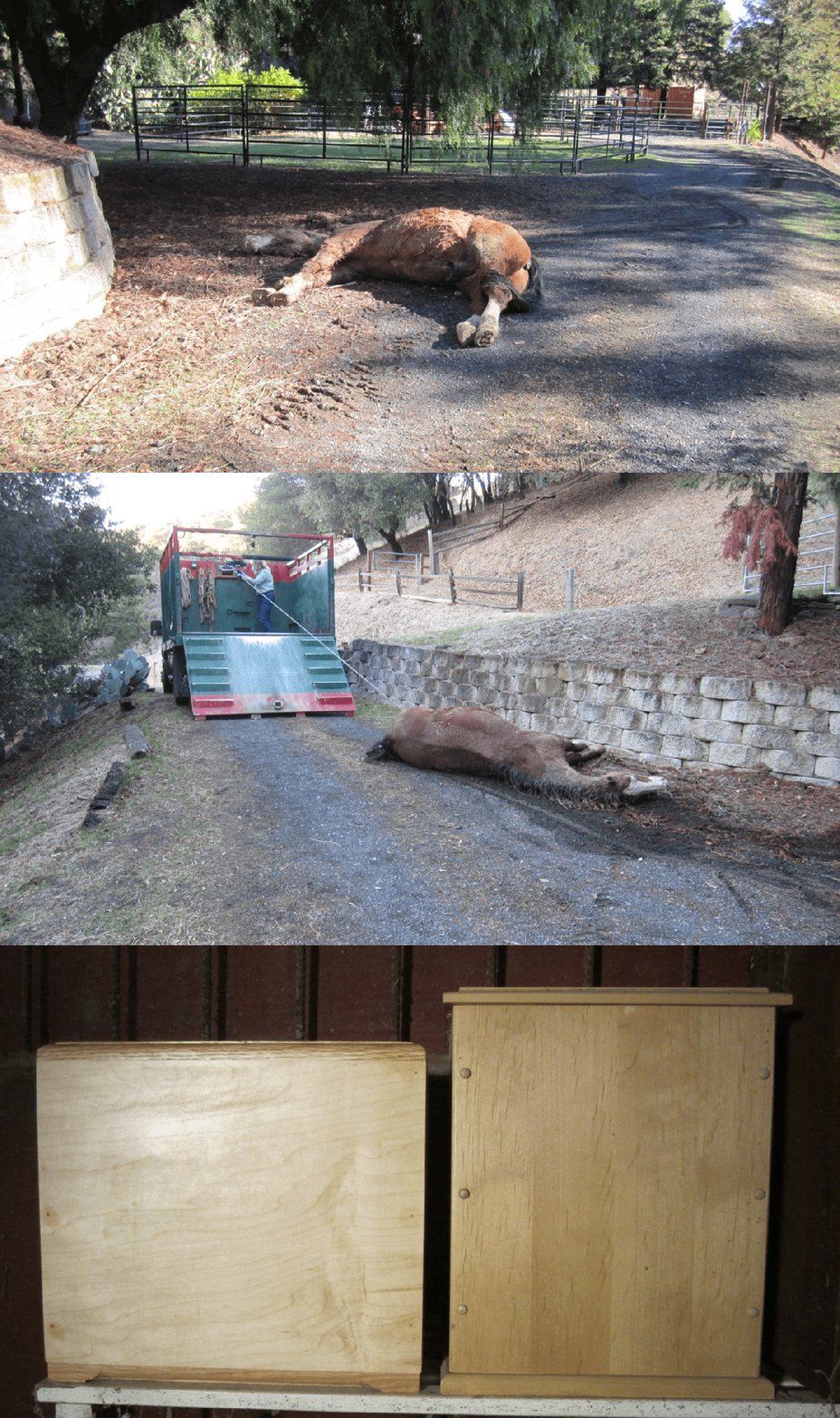
NOTE: The photos in this post may be disturbing to some viewers.
In the wild, predators and scavengers remove the carcass. If the horse was euthanized, as was the case recently near the Heber WHT, and/or received medications prior to death, you could get a secondary kill.
If you have land and the codes allow it, you can bury him on your own property. You’ll need some heavy equipment to dig the hole and place the horse in it. You are not going to drag a thousand pound animal out of a stall, corral or pasture.
And you’ll be doing all of that while you’re upset at the loss of your horse. Yeah, it sucks.
When Trapper died the vet referred me to a hauler. One option was to take him to a rendering plant and another was the pet cemetery. I opted for cremation. I still had to get him out of the corral, which was a muddy mess due to rain.
My paint mare, one of two other horses in the corral, became very agitated that evening when she realized he wasn’t coming back. They had been barn buddies for eight years.
The result of the cremation process is an urn with the horse’s remains. In the photos below, Trapper’s urn is on the left, Cassie’s is on the right. She was my first horse, lost in 2012.
The vet bill was $744. The hauler charged $300. The cremation fee was $800.
The incident was a reminder of why you should never let your savings account drop below, say, $2,500—if you have horses. That amount does not include the cost of feed and other expenses if you lose your job.
Many financial coaches say you should always have between three and six months of living expenses in savings, but they’re usually not thinking about horses.
With the cost of feed at $100 per AUM, that’s an extra $600 per month for six horses.
RELATED: Trapper Gone But Not Forgotten.
 Western Horse Watchers Association