Foal-Free Friday, Holier Than Thou Edition

Who’s the greater threat to wild horses?  A grifter who sends letters to county wildlife boards seeking their removal from public lands or a real estate agent who’s taking them off the range with ovary-killing pesticides?

That’s the underlying issue in the latest installment of “Wild Horse Tales,” written by a PZP darter and appearing on page 18 of the March edition of Horse Tales.

You will not question the advocates.  You will not doubt their authority.

They are the old guard, allies of the ranchers, leaders of the blind.

RELATED: Foal-Free Friday, Confessing Your Loyalties Edition.

RTF: Surgical Sterilization Bad, Chemical Sterilization Good

The advocates are united in their love for on-range management, which is the same as humane management, which is a codeword for nonmotorized removal.

Thus, on-range management means off the range.

Their attitude toward wild horses differs little from that of the ranchers, evident in a news release dated March 18 by Return to Normal (Before WHB Act).

No surprises, though.  They signed onto the “Path Forward,” a 2019 plan for ranching superiority in the lawful homes of wild horses, sometimes referred to as achieving and maintaining AMLs.

RELATED: Mass Sterilization OK if Done with PZP.

Mass Sterilization OK if Done with PZP

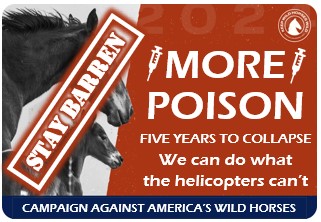
The Campaign Against America’s Wild Horses would never let the BLM get away with it, according to a news flash dated March 14, but they’ll do it as often as possible.

Getting Rid of Wild Horses Is Our Job 10-14-23

The idea was floated in a FY25 budget proposal, supposedly, but a link to the document was not provided.

Sterilization undermines genetic viability but also disrupts natural behaviors essential for the survival of wild herds.

Curiously, the nonprofit, a leader in nonmotorized removal, runs a sterilization program on the Virginia Range, now in its fifth year, while the Salt River Wild Horse Darting Group, a partner organization, does the same in the Tonto National Forest.

PZP tricks the immune system into attacking the ovaries.

It’s a pesticide, not a vaccine.

It’s not reversible.  The sperm-blocking theory doesn’t correlate with the observed facts, such as the flat-lining of the herd on Assateague Island.

Damage begins with the first injection, leading to sterility in five years.  Such animals are said to be “self-boosting.”

CAAWH said it “will deploy all necessary resources to prevent any mass permanent sterilization plan from becoming law” (but will actively solicit such arrangements through cooperative agreements).

Pesticide Pushers 07-17-23

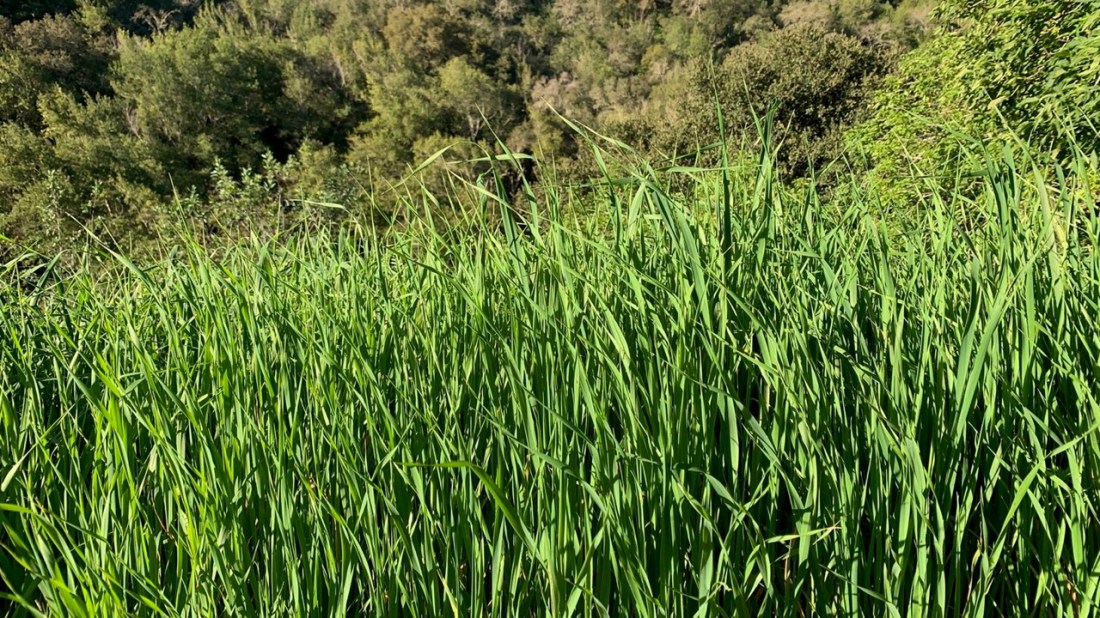
Maybe Today Should Be National Forage Day

Today might be a good opportunity to share some green beer with friends and tell them about resource mismanagement in areas identified for wild horses.

For example, on the Beaty Butte Allotment, which coincides roughly with the Beaty Butte HMA in southern Oregon, ranchers receive 26,166 AUMs on 506,985 public acres.

The horses receive 3,000 AUMs.

The AML is 250, compared to a True AML of 2,430, and 2,180 wild horses have been consigned to off-range holding because of permitted grazing.

The advocates tell you the answer is to end wild horse reproduction, not animal agriculture, because they’re in cahoots with the bureaucrats and ranchers.

Spring Grass 03-17-24

RTF Bemoans WHB Budget Cut, Pushes Nonmotorized Removal

The signatory to the “Path Forward,” a 2019 plan for ranching superiority on public lands in the western U.S., said in a March 11 news release that Congress should hold the BLM responsible for immediately implementing safe and proven fertility control that can stabilize herd numbers and end decades of failed, inhumane management by forcible removal.

Better Way 10-25-23

Like the Campaign Against America’s Wild Horses, Return to Normal (Before WHB Act) has a leadership problem and will never be able to advocate effectively for wild horses without a thorough housecleaning.

RELATED: Congress Trims WHB Budget by Four Percent in FY24.

Congress Trims WHB Budget by Four Percent in FY24

The explanatory statement for Interior, Environment, and Related Agencies, one of six spending bills approved by the Senate yesterday and signed into law today, provides $141,972,000 for the program in FY24, down from $147,888,000 in FY23.

Go to the table on page 179.

With a growing number of animals in off-range holding, thanks to aggressive efforts this year to force them from their lawful homes, the reduction may necessitate some changes to the FY24 roundup schedule.

The statement indicates that up to $11,000,000 can be spent on the use of ovary-killing pesticides such as PZP, which it describes as “a robust and humane fertility control strategy of reversible immunocontraceptive vaccines.”

Pesticide Patrol 08-16-23

Foal-Free Friday, Dancing Like Marionettes Edition

This result appeared yesterday in a Google search for “wild horses.”

Reality of Roundups 03-07-24

If the advocates actually believed this, they wouldn’t be so eager to get rid of the horses.

It’s theater.  They want the ranchers to win.

They go through the motions to win your support but in reality their hearts are very far from the horses.

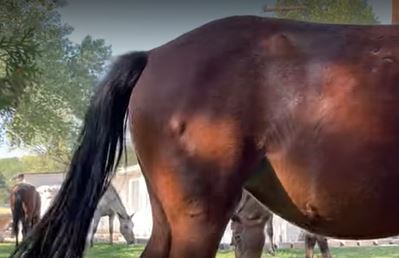
VR Darting Injury 09-15-21

RELATED: Foal-Free Friday, Scribes and Pharisees Edition.

CAAWH Spends $3.6 Million on Fish Springs Land Grab

Records at the Douglas County assessor’s office indicate the sale consisted of three transactions covering 21 APNs.

The project is dedicated to wild horse and burro habitat conservation according to a March 2 announcement distributed by Lucky Three Ranch.

Half of the parcels are designated for single family residences.

1. Document 2023-995176, Grant, Bargain, Sale Deed, $963,000.

2. Document 2023-995160, Grant, Bargain, Sale Deed, $2,067,100.

3. Document 2023-995179, Grant, Bargain, Sale Deed, $552,000.

  • 1321-00-001-021, 640 acres, agricultural qualified
  • Subtotal: 640 acres, average price $862.50 per acre

Grand total: $3,582,100 for 3,269.44 acres, average price $1,095.63 per acre.

This was the justification for the rebranding.

CAAWH Rebranding 02-29-24

In another example of conservation just a few miles north in Storey County, volunteers with the Campaign Against America’s Wild Horses have been pummeling the Virginia Range mares with pesticide-laced darts since 2019.

RELATED: CAAWH Seeks More Land in Pine Nut Mountains?

Pesticide Pushers 07-17-23

What Do the Darting Programs Have in Common?

Besides the hypocrisy, lies and collusion, no accountability to the public.

For example, the reports issued by the Campaign Against America’s Wild Horses for nonmotorized removal on the Virginia Range do not discuss the

  • Long-term population goal
  • Number of viable mares
  • Size of the breeding population
  • Loss of genetic diversity
  • Changes in death rate and sex ratio
  • Unlawful use of pesticides

The population of over 3,000 wild horses has produced only three foals this year.

That’s great news to the bureaucrats and ranchers, whom CAAWH serves, but it’s frightening to the rest of us.

How close is the herd to the tipping point, where it implodes because most of the mares are sterile?

You have a right to know but they’re not talking.

RELATED: Virginia Range Darting Update for February 2024.

Pesticides R Us Better Way 11-07-23

Virginia Range Darting Update for February 2024

The Campaign Against America’s Wild Horses, a leader in nonmotorized removal, reported today that 161 mares received 161 doses of PZP during the month, 22 given as a primer and 139 as a booster.

Over the life of the program, which began in 2019, the advocates have pumped 8,770 doses of the pesticide into 1,998 mares.

Three foals have been born year-to-date.  One died of unspecified causes.

The current population is thought to be 3,444 with 338 horses listed as missing, compared to 3,465 with 342 horses listed as missing in January.

The population was 3,471 with 336 listed as missing in December.

The goal for March: “Continue to maximize booster treatments to mares across the Virginia Range before spring breeding season to prevent pregnancies, and continuing to allow for humane population decrease.”

Protecting Them From Removal 12-03-23

Not discussed in the report:

  • Long-term population goal
  • Number of viable mares
  • Size of breeding population
  • Loss of genetic diversity
  • Changes in death rate and sex ratio
  • Unlawful use of pesticides

PZP tricks the immune system into attacking the ovaries, resulting in sterility after five years of treatment.

The report will be submitted to the Nevada Department of Agriculture.

RELATED: Virginia Range Darting Update for January 2024.

Adjectives for Pests 12-01-23

Coalition Asks Wildlife Board to Support Anti-Horse Agenda

The Douglas County Advisory Board to Manage Wildlife took no action at its February 27 meeting regarding a letter prepared by the Coalition for Healthy Nevada Lands, Wildlife and Free-Roaming Horses, according to a story dated March 1 by The Record-Courier of Minden, NV.

A copy of the letter, seeking a reduction of wild horses on public lands. was not included in the report.

Advocates attending the meeting came not as spokesmen for the horses but as defenders of humane management.

They noted that the Coalition pushes for the removal of wild horses to the point they would no longer be genetically viable, yet that’s exactly what they’ve done with their ruinous darting program.

Although there are around 80 wild horses in the Fish Springs herd, Western Horse Watchers suspects the breeding population is now in the single digits.

The sex ratio is likely skewed in favor of females.

The number of viable mares is unknown.

The Pine Nut advocates receive material support from the Campaign Against America’s Wild Horses, leader of the blind and recognized expert in nonmotorized removal.

Advocates Bawling About Removal of McCullough Filly

They say she’s too young to be separated from her mom, according to a story dated March 2 by Cowboy State Daily.

Are they upset because the government is getting rid of the horses and not them?

Getting Rid of Wild Horses Is Our Job 10-14-23

The article said the youngster was taken on February 22 but the report for that day shows no foals captured or removed.

Most folks in the horse world would not refer to a six-month-old female as a mare.

RELATED: Advocates Bawling About Loss of McCullough Filly?

The Allotments Tell the Story: They’re Lying, All of Them

Public lands in the western U.S. can only support one wild horse per thousand acres according to the bureaucrats, ranchers and advocates (27,000 animals on 27 million acres).

A corollary is that public lands in the western U.S. can only produce 12 AUMs per year per thousand acres.

But in case after case, the latest being the base properties offered by Harry Ranch, the data show otherwise.

The allotments tied to those parcels produce enough forage to sustain from five to seven times as many wild horses.

This is the dirty little secret of rangeland management.

The roundups, darting programs and outplacement services are not necessary.

They were contrived to protect the ranchers.

Consider the undated infographic for the WHB program in FY23, especially the list of new partners at the bottom of page one.

They are defeatists, pesticide pushers and ranching sympathizers.

How do you oppose the juggernaut?

Use their own data against them.

That means having a basic understanding of the National Data Viewer, the Allotment Master Report and some simple arithmetic.

The other option is to throw in with the Love Triangle and kiss the herds goodbye.

RELATED: The Three Tenets of Rangeland Management.

Working Together for a Horse-Free Future 12-21-22

Voices of Defeat

This result appeared today in a Google search for “wild mustangs.”

Voices of Defeat 03-01-24

Are you surprised that it was posted to a site controlled by the Campaign Against America’s Wild Horses?

The underlying assumption is that wild horses and burros need to be removed from their lawful homes (in favor of privately owned livestock).

This is the sound of defeat, a defining characteristic of wild horse advocacy.

Western Horse Watchers would rather see the WHB Act restored to its original form, the ranchers confined to their base properties and the advocates banned from areas identified for wild horses and burros.

RELATED: Capitulation, Surrender, Defeat.

Foal-Free Friday, Scribes and Pharisees Edition

They love to be greeted with respect in the marketplace and to be called “Teacher.”

They love the best places at festivals and the reserved seats at conferences and seminars.

They do everything for show.

On the outside they appear to be good but on the inside they’re full of hypocrisy and lies.

They boast about their conservation and rescue efforts but when you’re not looking, they’re poisoning the mares with ovary-killing pesticides.

They’ll do anything to win the approval of the bureaucrats and ranchers, including the sterilization of entire herds, such as those at the Salt River and Virginia Range.

Protect Wild Horses from Advocates 08-29-21

They want the ranchers to win.

They are the wild horse advocates, the old guard, leaders of the blind.

RELATED: Foal-Free Friday, Rallying Around Error Edition.

Stop the Helicopters But Not the Poisons!

The Campaign Against America’s Wild Horses may have shed its skin, like the serpent it is, but its message is the same: Replace motorized removal with nonmotorized removal.

Totally self-serving.

Tomorrow, on National Horse Protection Day, these charlatans want you to tell your elected representatives to support the Wild Horse and Burro Protection Act, according to their news release, which would ban the use of helicopters and expand their pest control business.

The right thing to do is kick these buffoons to the curb and tell your representatives that you want the WHB Act restored to its original form so areas identified for wild horses and burros will be managed principally for them, not privately owned cattle and sheep.

RELATED: CAAWH Rebranding.

Calling it a Vaccine 05-01-23