Clark Mountain Reward Grows?

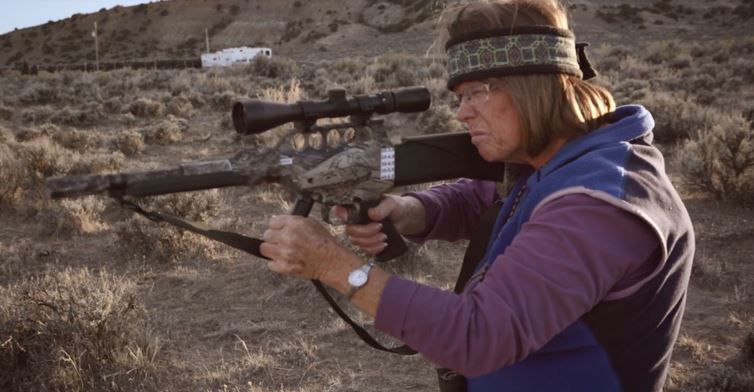
At one point it topped $100,000 but as of today stands at $36,000 according to a BLM update.

Remarks by those pledging the funds are especially troubling: The Humane Society of the United States, the PZP registrant who looks the other way as the Campaign Against America’s Wild Horses, another sponsor, uses the pesticide to wipe out entire herds.

When will these charlatans be brought to justice?

RELATED: Vehicles-of-Interest Identified in Clark Mountain Burro Shooting.

Virginia Range Darting Update for April 2024

The Campaign Against America’s Wild Horses, an appendage of the BLM and leader in mass sterilization, reported today that 201 mares received 205 doses of PZP during the month, 61 given as a primer and 144 as a booster.

Over the life of the program, which began in 2019, the advocates have pumped 9,140 doses of the pesticide into 2,027 mares, for an average of 4.5 doses per mare.

Sixty-four foals have been born year-to-date.  Four died of unspecified causes.

The current population is thought to be 3,519 with 370 horses listed as missing, compared to 3,480 with 353 horses listed as missing in March.

The population was 3,444 with 338 horses listed as missing in February and 3,465 with 342 horses listed as missing in January.

The agreement with NDA expired on April 30 but the report indicates the following goal for May: “Continue to maximize booster treatments to mares across the Virginia Range as we move through the rest of spring breeding season to prevent pregnancies, and continuing to allow for humane population decrease.”

Protect Wild Horses from Advocates 08-29-21

Not discussed:

  • Long-term population goal
  • Number of viable mares
  • Size of breeding population
  • Loss of genetic diversity
  • Changes in death rate and sex ratio
  • Unlawful use of pesticides

PZP is a restricted-use pesticide that tricks the immune system into attacking the ovaries, resulting in sterility after five years of treatment.

The report will be submitted to the Nevada Department of Agriculture.

RELATED: Virginia Range Darting Update for March 2024.

Adjectives for Pests 12-01-23

Currituck Herd Expands by One

A new colt is the third foal born in 2024 according to a report by OBX Today.

Why is this important?

The advocates have been poisoning the mares with PZP, a restricted-use pesticide that tricks the immune system into attacking their ovaries.

The size of the breeding population and the number of viable mares is not known.

Curiously, the story ends with a remark about protecting and preserving this critically endangered herd.

Protecting Them From Removal 12-03-23

RELATED: Currituck Outer Banks to Become Like Assateague Island?

Sour Grapes: Advocates Criticize Indian Lakes Wild Horse Deaths

The privately owned facility experienced an 11% mortality rate in 2023 according to a report dated April 29 by KLAS News.

Information for the story was supplied by the Campaign Against America’s Wild Horses, a leader in nonmotorized removal.

The concluding remark about the dark realities of the BLM’s roundup and removal program does not arise from a genuine concern for wild horses.

Rather, it reflects their frustration in taking market share from the legacy contractors to expand their pesticide business.

We Want to End Wild Horse Reproduction 04-08-24

As for the horses, better if they weren’t even born.

TRNP Wild Horse Reduction Plan by the Numbers

Alternative C, a fully contracepted herd that dies off, is no longer on the table but it could still become a reality.  Here’s how.

The herd needs to be reduced from 200 to 60 or less according to the story by AP News.

Motorized removal will draw the same negative reaction as the original plan.

The advocates have had some success in convincing the public that attrition by pesticides is better than attrition by helicopters, and nobody talks about getting rid of wild horses more than they do, so let’s see what would happen if the Park Service turned to them for advice.

Better Way 10-25-23

The initial population is 200 and the goal is 60.

Assume a six percent death rate and zero percent birth rate.

Let x = number of years to achieve goal by nonmotorized removal.

TRNP Population Calcs 04-29-24

The advocates will need almost 20 years to achieve the goal.

Actually, they only need five years.  The mares will be sterile after that and the herd will implode, just like Assateague Island.

The assumption of a constant death rate is probably not valid.

With no new foals hitting the ground, the average age of the herd will increase, along with the death rate, so the goal could be achieved sooner than expected.

RELATED: TRNP Decision Offers Mixed News to Wild Horse Advocates.

New Colt Puts More Pressure on Salt River Darting Program

Advocates with the Salt River Wild Horse Darting Group, an affiliate of the Campaign Against America’s Wild Horses, are supposed to be getting rid of them.

This little guy probably has a weakened immune system as discussed on Friday.

If a predator doesn’t get him, disease will, which is great news for the advocates.

RELATED: Salt River Darting Program by the Numbers.

Free Mining Claims Workshop Set for May 30

The event runs from 8 AM to 5 PM at the Nugget Casino Resort in Sparks, NV, according to yesterday’s announcement.

BLM staff will provide guidance on land status, locating and mapping new claims, and transfers of interest, among other things.

Personnel with the State of Nevada will be available to answer questions and will provide information on filing with counties.

The National Data Viewer has an option for mining claims in the layer list but you have to zoom in to enable it.

The following image shows claims and herd areas around Caliente, NV.

The Public Land Survey System, another option in the list, helps you identify their size and location.

The advocates would have you believe that drilling and mining are the greatest threat to wild horses, as they eradicate the herds with ovary-killing pesticides.

They are masters of misdirection and subterfuge.

Mining Claims in NDV 04-27-24

IDA: Sterilization Should Be Done with PZP, Not GonaCon

One by one they’re coming out of the closet.

This time it’s In Defense of Animals, commenting on yesterday’s announcement that wild horses can stay in TRNP:

PZP is the darting method that should be used for wild horse sterilization, not GonaCon.”

For years the advocates have been telling you it’s a safe, proven and reversible vaccine.

Now they admit it’s a sterilant.

They are enemies of the horses, leaders of the blind, irrelevant.

RELATED: Mass Sterilization OK if Done with PZP.

Feminism Leaves Women Single, Childless and Depressed?

That’s according to a story published by The Daily Telegraph for its subscribers but available on MSN without restrictions.

We want to be equal with menWe don’t need menWe are men

Real men don’t want to be around them.

Where do you find these wretches in the wild horse world?

  • In the field, with clipboards and darting rifles
  • On the staffs and boards of the advocacy groups
  • Among the supporters and followers thereof
  • In the state and federal bureaucracies

Can you think of anyone better qualified to destroy families and disrupt the natural order than women who have been brainwashed out of marriage and distaff pursuits?

TRNP Decision Offers Mixed News to Wild Horse Advocates

The bad news is that Alternative C, a fully contracepted herd that dies off, is not going to happen.

For now, they’ll have to be content with their sterilization programs at the Salt River, Virginia Range and elsewhere.

The good news is that the herd still needs to be whittled down to an appropriate level, and that could be accomplished with ovary-killing pesticides instead of helicopters.

Better Way 10-25-23

RELATED: Park Service Terminates TRNP Livestock Plan.

Areas Identified for Wild Horses Are Underpopulated, Not Over

Public lands in the western U.S. managed by the BLM currently support livestock equivalent to one million wild horses on 145 million acres, as determined previously.

If you scale that down to 42 million acres, public lands identified for wild horses and burros in 1971, you get 290,000 wild horses.

The current population is 59,000 wild horses and 15,000 wild burros, equivalent to 66,500 wild horses, well below the carrying capacity of their land.

The population target is 27,000, the number of animals allowed by plan.

The advocates are doing everything they can to help the bureaucrats and ranchers achieve this goal.

Advocates are the Predators 11-30-21

Conference Organizers Needed

If the Save Our Wild Horses conference was even halfway sincere, and this is not known, most wild horse advocates would stay away because they are frauds.

They would be attracted, however, to a Save Our Poor Ranchers conference, because that’s what they do.  Actions speak louder than words.

We Want the Ranchers to Win 04-04-24

The event would give them an opportunity to stop pretending that they care about wild horses, let their hair down, and schmooze with the bureaucrats and ranchers, whose approval they seek at all costs.

With more evidence coming out of Assateague Island, soon to be followed by the Salt River and Virginia Range, they can prove that they do indeed have a better way to get rid of wild horses.

Better Way 10-25-23

Forced to live in multi-million-dollar base properties, if they live on site at all (some are investors or corporate owners), the ranchers receive only 80% of the authorized forage in the lawful homes of wild horses.

For this they pay pennies on the dollar compared to market rates.

The bureaucracies keep predators in check, repair wildfire damage and provide funding for range improvements.

They remove wild horses and cram them into off-range corrals, also at taxpayer expense, while the ranchers pocket the profits.

It’s government dependency and redistribution of wealth, no getting around it.

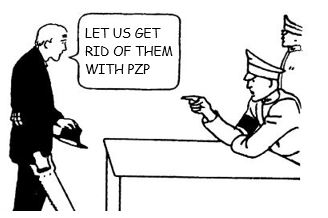
The advocates, desperate for a seat at the table, have a plan that will fix the problem once and for all.
Protect Wild Horses from Advocates 08-29-21

The ranchers can realize their dream of 100%.  They just need to be patient.

RELATED: SOWH Conferees Tour Palomino Valley Off-Range Corrals.
PSA 12-12-19

Foal-Free Friday, Advocates, Assateague and Amnesia Edition

A few years ago the advocates pointed to the herd as a model of wild horse management.

Now that the Park Service has released another report indicating that it’s still shrinking, eight years after the darting program was shut off, they know nothing about it.

Their safe, proven and reversible vaccine turned out to be an ovary-killing pesticide that plunged the herd into irreversible decline.

It’s great news for the advocates and should convince their allies that nonmotorized removal is more effective in the long run than motorized removal.

RELATED: Foal-Free Friday, More Bang for Your Buck Edition.

Adjectives for Pests 12-01-23

Think in Terms of Abundance, Not Scarcity!

The bureaucrats, ranchers and advocates want you to think there’s not enough food and water for wild horses on America’s public lands, thereby justifying their removal.

It’s all bullcrap, as discussed earlier this week for public lands in Wyoming and a few weeks ago for Nevada.

The off-range corrals, adoptions and long-term pastures are part of the ruse.

Resource availability is already known.  There’s no need for scientific studies.

Most of the forage has been assigned to the public-lands ranchers and this can be quantified with the reports at RAS.

With those numbers in hand, you can estimate the True AMLs, compare them to the current AMLs and show others how the horses are getting the short end of the stick.

If you did this for every HA, HMA and WHT, you’d find that all of the off-range corrals and long-term pastures could be emptied several times over by confining the ranchers to their base properties, at great savings to American taxpayers.

The decrease in grazing fees would be trivial.

RELATED: The Allotments Tell the Story: They’re Lying, All of Them.

Thriving Ecological Balance-3

A Penchant for Pesticides

We know from Assateague Island the fate of every wild horse herd where the advocates are involved, especially those identified for population reductions.

At the Salt River, the advocates need a zero percent birth rate and six percent death rate for ten consecutive years to achieve the goal.

The mares will be ruined after five years, setting the stage for collapse.

On the Virginia Range, the advocates need similar conditions for 30 years.

They can walk away after five years and let the herd implode.

This is the insidiousness of nonmotorized removal, attrition by pesticides.

Irreversible decline after the tipping point is reached.

The advocates won’t tell you the truth about PZP any more than they’ll talk about Assateague Island, an area they once praised as a paragon of wild horse management.

Don’t be confused if they refer to themselves as conservationists, influencers or experts.

They are phonies, allies of the ranchers, leaders of the blind.

RELATED: Latest Census Shows Assateague Herd Imploding.

Pesticide Pushers 07-17-23

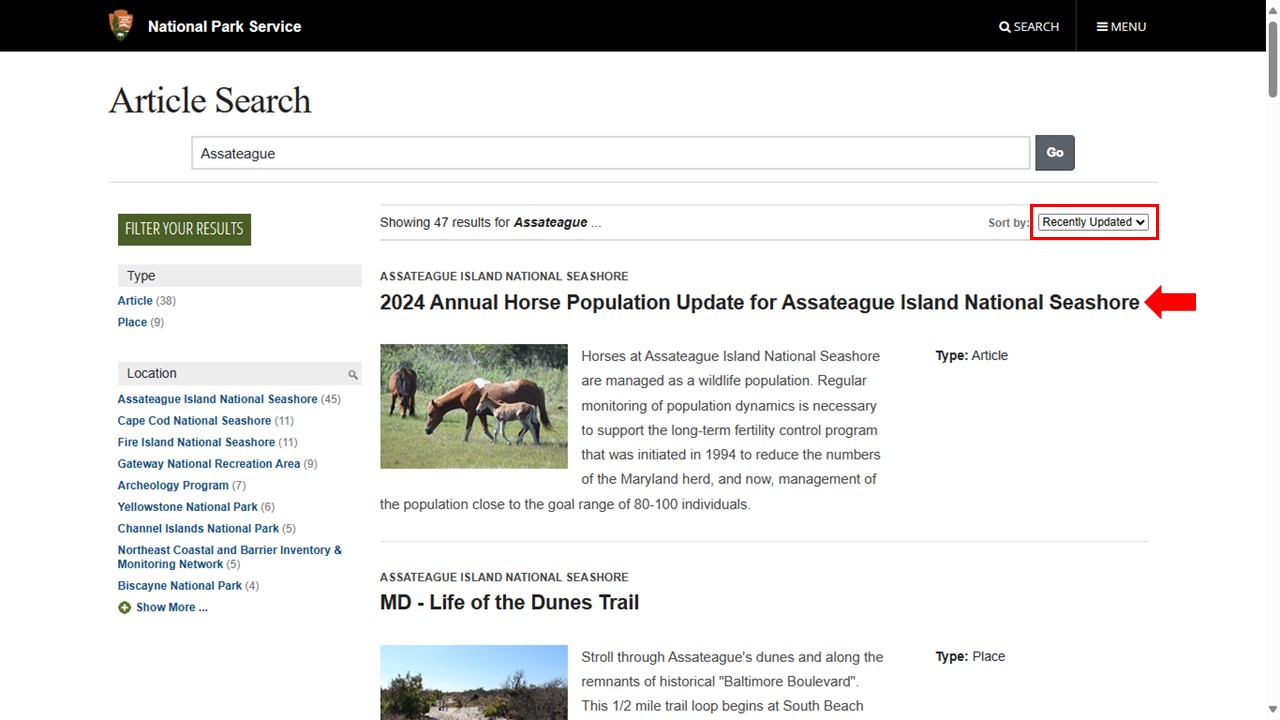
How to Find the 2024 Census Report for Assateague Island

It’s not at the wild horse page, which, as of today, still shows the report for 2023.

It does not appear on the Assateague news page.

It was buried among thousands of articles by NPS.

Go to the search page, type in Assateague and hit “Go.”

Then set the “Sort by” field to “Recently Updated.”

The report says the population is close to the goal range of 80-100 individuals, which is not true.

The herd has passed through the target range and continues to decline because too many mares have been ruined by the ovary-killing pesticide PZP, which the advocates peddle as a safe, proven and reversible vaccine.

They are the old guard, leaders of the blind, irrelevant.

RELATED: Latest Census Shows Assateague Herd Imploding.

Assateague Article Search 04-13-24

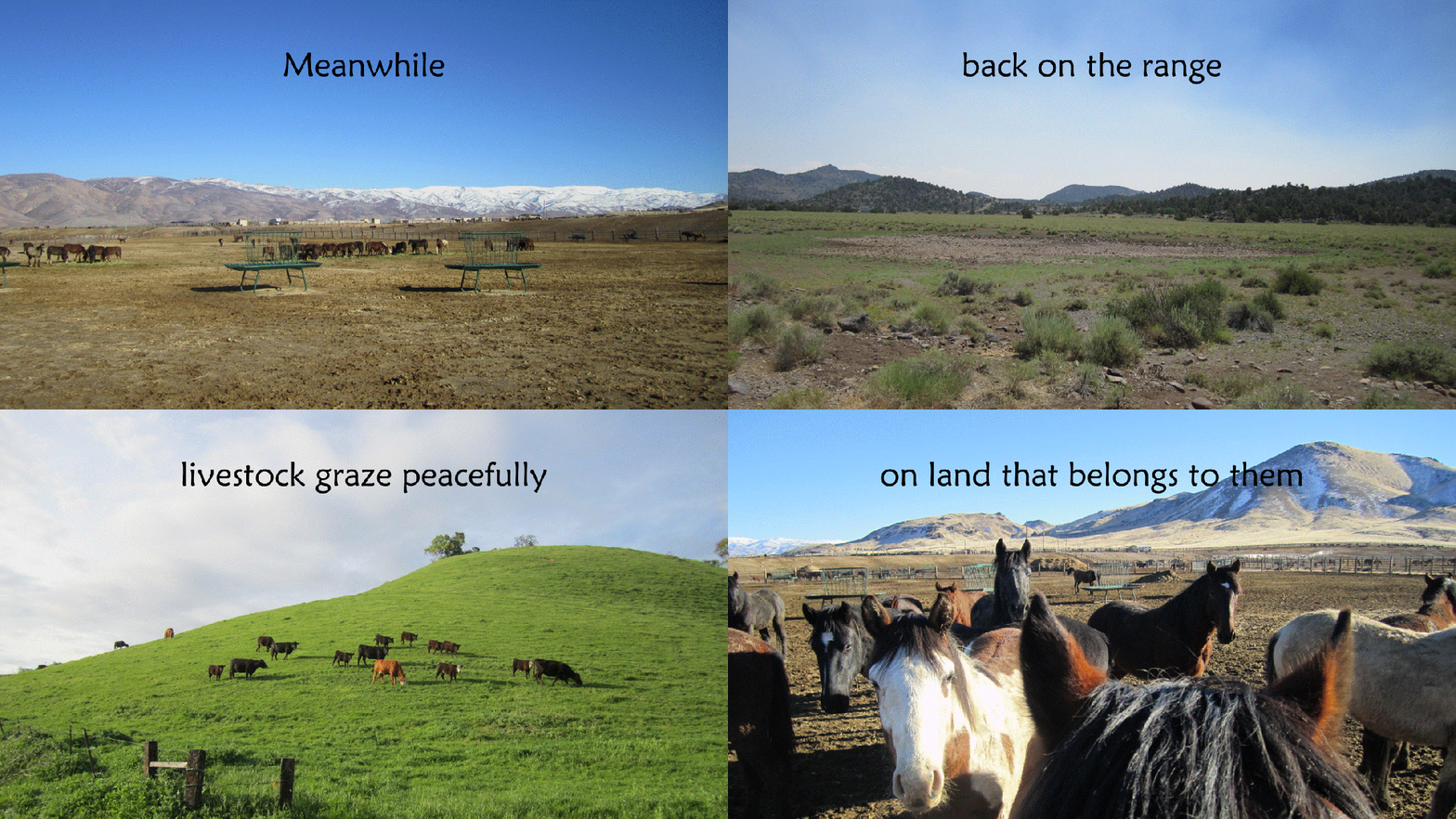
Why Are There So Many Wild Horses in Off-Range Holding?

Because most of their food has been assigned to the public-lands ranchers, not because the advocates haven’t implemented enough darting programs.

WITHOUT DARTING PROGRAMS

  • Goal: Ranching superiority in the lawful homes of wild horses
  • Forage allocations: 20% to horses, 80% to livestock
  • Result: For every wild horse allowed on public lands, four have been consigned to off-range holding
  • Who foots the bill: Taxpayers

WITH DARTING PROGRAMS

  • Goal: Ranching superiority in the lawful homes of wild horses
  • Forage allocations: 20% to horses, 80% to livestock
  • Result: For every wild horse allowed on public lands, four have been consigned to off-range holding
  • Who foots the bill: Taxpayers

Darting programs change the method of removal, with the added benefit that the herds don’t bounce back.

Thus, the advocates do a better job of achieving the long-term goal than the helicopter pilots and wranglers.

McCullough Peaks Darting-1