In the nonmotorized category, the Salt River Wild Horse Darting Group and the Campaign Against America’s Wild Horses take the prize for their mass sterilization programs at the Salt River and Virginia Range, affecting over 3,500 wild horses.
So, for now, those who accuse the federal government of the largest attempted eradication of wild horses are guilty of it themselves.
Snippet from statute: It is the policy of Congress that wild free-roaming horses and burros shall be protected from capture, branding, harassment, or death
Snippet from manual: To protect wild horses and burros from unauthorized capture, branding, harassment or death
The figures above are based on the daily reports.
The death rate is 0.2%.
The capture total includes 146 stallions, 176 mares and 87 foals.
Youngsters represented 21.3% of the animals gathered.
Of the adults, 45.3% were male and 54.7% were female.
The location of the trap site is not known.
The name of the contractor was not given.
The shipping destination was not disclosed.
There are no plans to treat any of the mares with fertility control pesticides and return them to the range.
The HMA is subject to permitted grazing. Resources liberated to date:
Forage: 4,908 AUMs per year
Water: 4,090 gallons per day
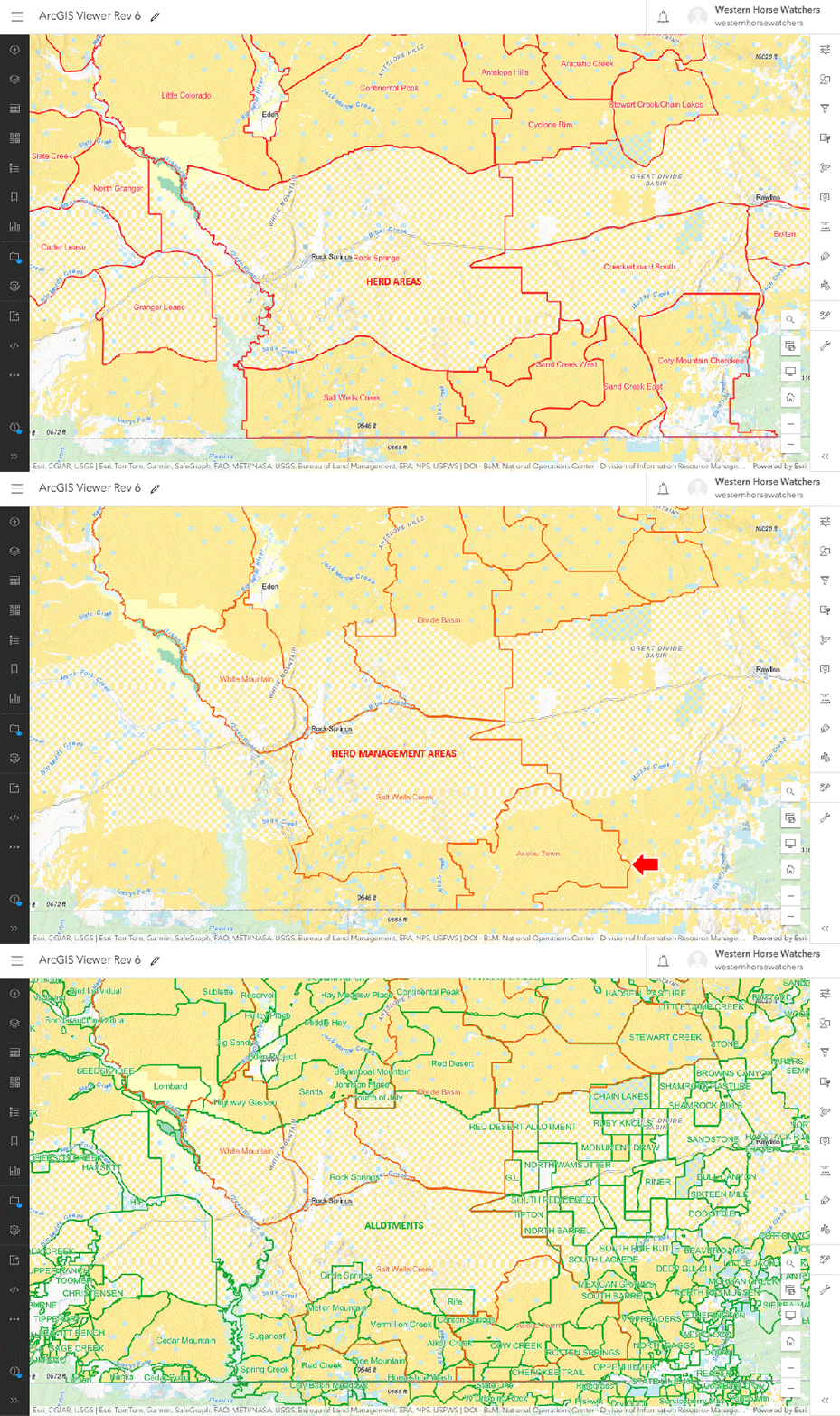
The map shows the Rock Springs HMAs before the RMP amendments, which were halted by an appeals court ruling on July 15. Click to enlarge.
Snippet from statute: It is the policy of Congress that wild free-roaming horses and burros shall be protected from capture, branding, harassment, or death
Snippet from manual: To protect wild horses and burros from unauthorized capture, branding, harassment or death
The figures above are based on the daily reports.
A burro died of old age on Day 36, lifting the death rate to 0.5%.
The capture total includes 395 jacks, 353 jennies and 63 foals. The sidebar at the gather page says 397/351/63.
Youngsters represented 7.8% of the animals gathered.
Of the adults, 52.8% were male and 47.2% were female.
The location of the trap site is not known.
The name of the contractor was not provided.
No jennies were treated with PZP since the last report, leaving the total at 78.
The July 1 schedule indicates the designated pesticide was GonaCon Equine.
The Complex is subject to permitted grazing. Resources liberated to date:
Forage: 4,866 AUMs per year
Water: 4,055 gallons per day
These numbers will go down if burros are returned to the range.
Snippet from statute: It is the policy of Congress that wild free-roaming horses and burros shall be protected from capture, branding, harassment, or death
Snippet from manual: To protect wild horses and burros from unauthorized capture, branding, harassment or death
The figures above are based on the daily reports.
A stallion was dispatched on Day 2 for blindness in one eye, putting the death rate at 0.5%.
The capture total includes 65 stallions, 82 mares and 38 foals.
Youngsters represented 20.5% of the animals gathered.
Of the adults, 44.2% were male and 55.8% were female.
The location of the trap site is not known.
The name of the contractor was not given.
There are no plans to treat any of the mares with fertility control pesticides and return them to the range.
The HMA is subject to permitted grazing. Resources liberated to date:
Snippet from statute: It is the policy of Congress that wild free-roaming horses and burros shall be protected from capture, branding, harassment, or death
Snippet from manual: To protect wild horses and burros from unauthorized capture, branding, harassment or death
The figures above are based on the daily reports minus the results from October 3.
The capture total includes 16 stallions, 17 mares and 5 foals.
Youngsters represented 13.2% of the animals gathered.
Of the adults, 48.5% were male and 51.5% were female. A higher percentage is females is expected in herds receiving the Montana Solution.
The gather page does not indicate if BLM staff are using the permanent trap site.
The HMA is subject to permitted grazing. Resources liberated to date:
Forage: 456 AUMs per year
Water: 380 gallons per day
These numbers would go down if any horses are returned to the range.
Protecting the public-lands ranchers is a top priority of the Campaign Against America’s Wild Horses and its affiliates, even if it means leading the young folks astray.
Now is a great time to be in the millstone business.
Snippet from statute: It is the policy of Congress that wild free-roaming horses and burros shall be protected from capture, branding, harassment, or death
Snippet from manual: To protect wild horses and burros from unauthorized capture, branding, harassment or death
The figures above are based on the daily reports.
A burro died of a fractured neck or back on Day 32, lifting the death rate to 0.4%.
The capture total includes 335 jacks, 296 jennies and 58 foals.
Youngsters represented 8.4% of the animals gathered.
Of the adults, 53.1% were male and 46.9% were female.
The location of the trap site is not known.
The name of the contractor was not provided.
No jennies were treated with PZP since the last report, leaving the total at 78.
The July 1 schedule indicates the designated pesticide was GonaCon Equine.
The Complex is subject to permitted grazing. Resources liberated to date:
The start dates for the Salt Wells Creek and Adobe Town roundups were delayed in the July 1 schedule as parties trying to stop them await a decision from the Tenth Circuit Court of Appeals according to an article by WyoFile.
Wild horse removal begins tomorrow in the retained portion of Adobe Town (outside the checkerboard), while operations in Salt Wells Creek and the zeroed-out portion of Adobe Town (inside the checkerboard) are set for August 25.