Assuming that foals are produced by a simple random process centered at 50% males / 50% females, a herd of 150 adults should contain between 37.75% and 62.25% females according to this relationship, where n = 150 and p-bar = .5.
Converting to integers, the number of female adults should range between 57 and 93.
Given that twins are very rare for horses, a herd of 150 adults should not be able to produce 100 foals unless something has occurred that invalidates the assumption of 50% males and 50% females.
Your host sent an email to the Chincoteague Volunteer Fire Company this morning seeking the current size of the herd and the number of adult males and females.
The number of foals offered at auction is going up
The number of colts returned to the island is going down
Hypothesis
The saltwater cowboys are skewing the sex ratio in favor of females, turning the island into a puppy mill for wild horses, to increase revenue from auctions
Snippet from statute: It is the policy of Congress that wild free-roaming horses and burros shall be protected from capture, branding, harassment, or death
Snippet from manual: To protect wild horses and burros from unauthorized capture, branding, harassment or death
The figures above are based on the daily reports. The sidebar at the gather page says 1,677 horses captured, including a mule, and 1,510 shipped.
The capture goal has been reached.
The sidebar indicates that two stallions were released but this is not documented in the daily reports.
A foal died of capture shock and a stallion was euthanized on Day 16.
A foal was dispatched on Day 17.
The death rate is 0.5%.
The capture total includes 601 stallions, 720 mares and 354 foals, not counting the mule.
The sidebar says 603/719/355.
Youngsters represented 21.1% of the animals gathered.
Of the adults, 45.5% were male and 54.5% were female.
The location of the trap site is not known.
The name of the contractor was not given.
There are no plans to treat any of the mares with fertility control pesticides and return them to the range.
The HMA is subject to permitted grazing. Resources liberated to date:
Forage: 20,100 AUMs per year
Water: 16,750 gallons per day
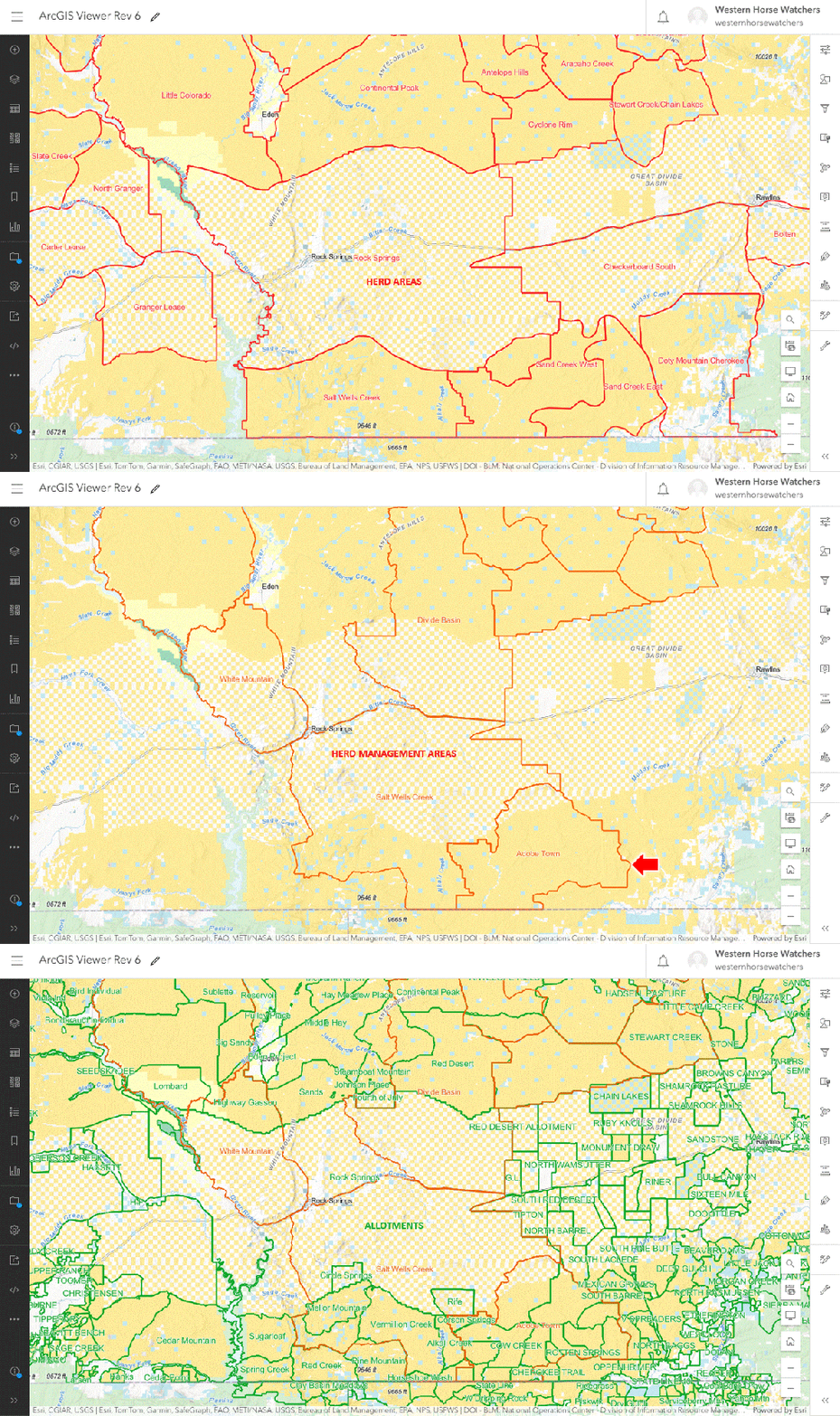
The map shows the Rock Springs HMAs before the RMP amendments, which were halted by an appeals court ruling on July 15. Click to enlarge.



 Western Horse Watchers Association