Snippet from statute: It is the policy of Congress that wild free-roaming horses and burros shall be protected from capture, branding, harassment, or death
Snippet from manual: To protect wild horses and burros from unauthorized capture, branding, harassment or death
The figures above are based on the daily reports.
Three horses were dispatched on Day 2, followed by five on Day 3. No details were given.
The death rate is 4.7%.
The capture total includes 72 stallions, 76 mares and 23 foals.
Youngsters represented 13.5% of the animals gathered.
Of the adults, 48.6% were male and 51.4% were female.
The location of the trap site is not known. The capture rate suggests that the method of removal is helicopter, not bait.
The name of the contractor was not given.
There are no plans to treat any of the mares with fertility control pesticides and return them to the range.
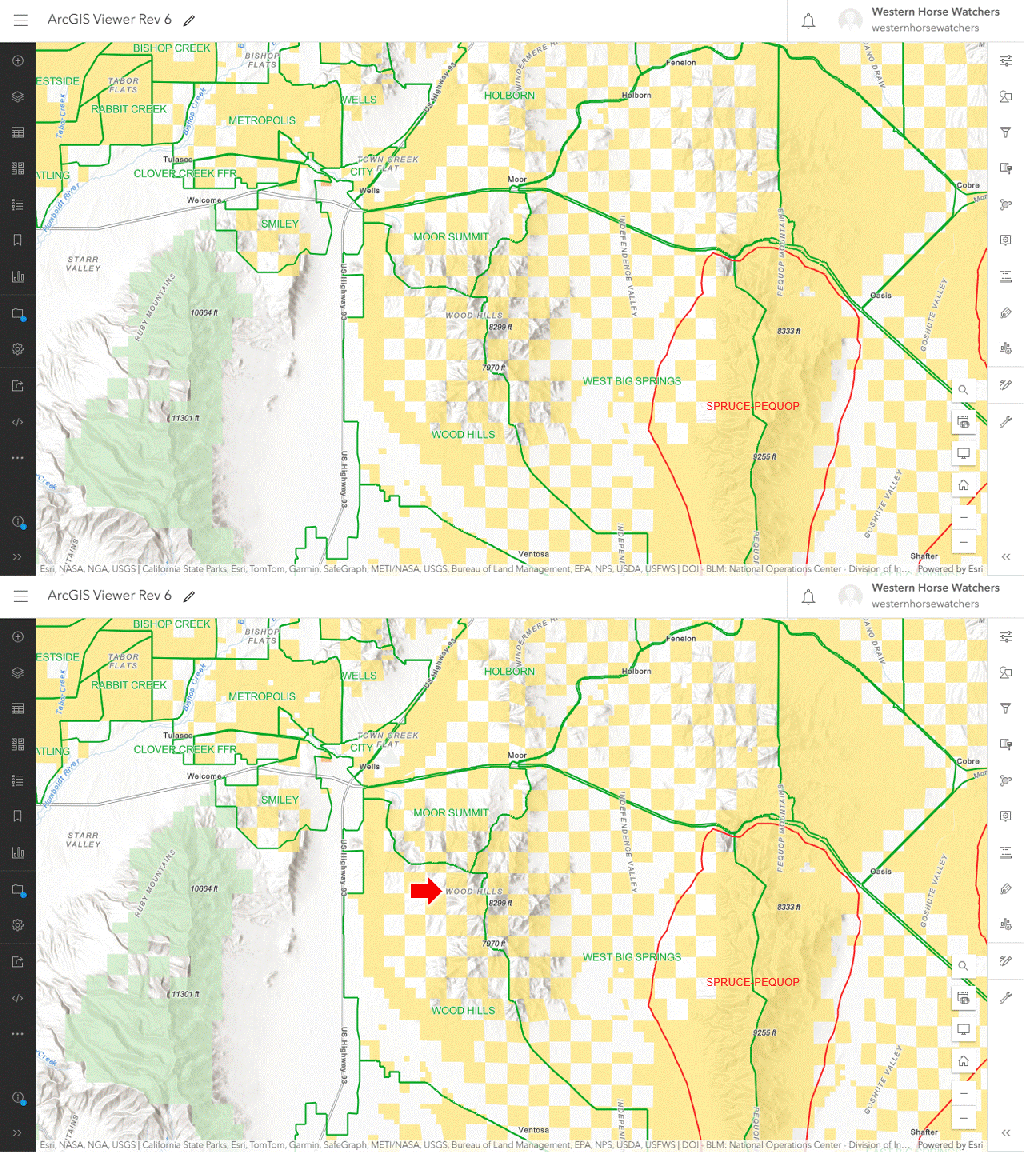
Both areas are subject to permitted grazing. Resources liberated to date:
Most of the debate occurs on socialist media but occasionally appears in local news outlets, such as this letter to the Daily Independent of Sun City, AZ.
Nobody’s talking about the long-term prospects for the herd, which has been ruined by the advocates.
A population target of 100, or any other value, will be impossible to maintain when you’ve driven the birth rate to zero—permanently.
When you see a search result like this you know you’re about to be led down the garden path to a glorious place envisioned by ranchers and their allies.
How much of the material was sourced from the Bureau of Livestock Multiplication and the Campaign Against America’s Wild Horses?
Western Horse Watchers was unable to access the article.
Public lands in the western U.S. may have 47,500 wild horses and burros than allowed by plan, but not 47,500 more than the land can support.
The issue is not overpopulation, but the way your public lands are managed.
The conventional wisdom among the advocates is that procreation is bad for wild horses because the herds might outgrow the tiny resource boxes established for them by the bureaucrats, necessitating removal.
Their solution is to sterilize the mares with PZP.
However, there is an area where breeding is not only tolerated but expected.
On Chincoteague National Wildlife Refuge, the most profitable grazing allotment on the east coast, generating over $1 million for the Chincoteague Fire Company in 2025.
The project would apply population controls to more lands in the Stillwater Field Office, conferring the authority of a 2017 EA on acreage that wasn’t analyzed.
One of the goals was to sterilize approximately 30 percent of the low-AML population of each herd, even though it was not approved in the 2018 decision.
The practice will undoubtedly play a larger role in wild horse management, as the advocates demand greater use of fertility control pesticides in lieu of motorized removal.
Abnormal sex ratios are usually seen in herds treated with PZP, a byproduct of the effort to sterilize the mares, but in the case of the Chincoteague herd, it’s probably intentional.









 Western Horse Watchers Association