Pancake Emergency Roundup Starts July 22

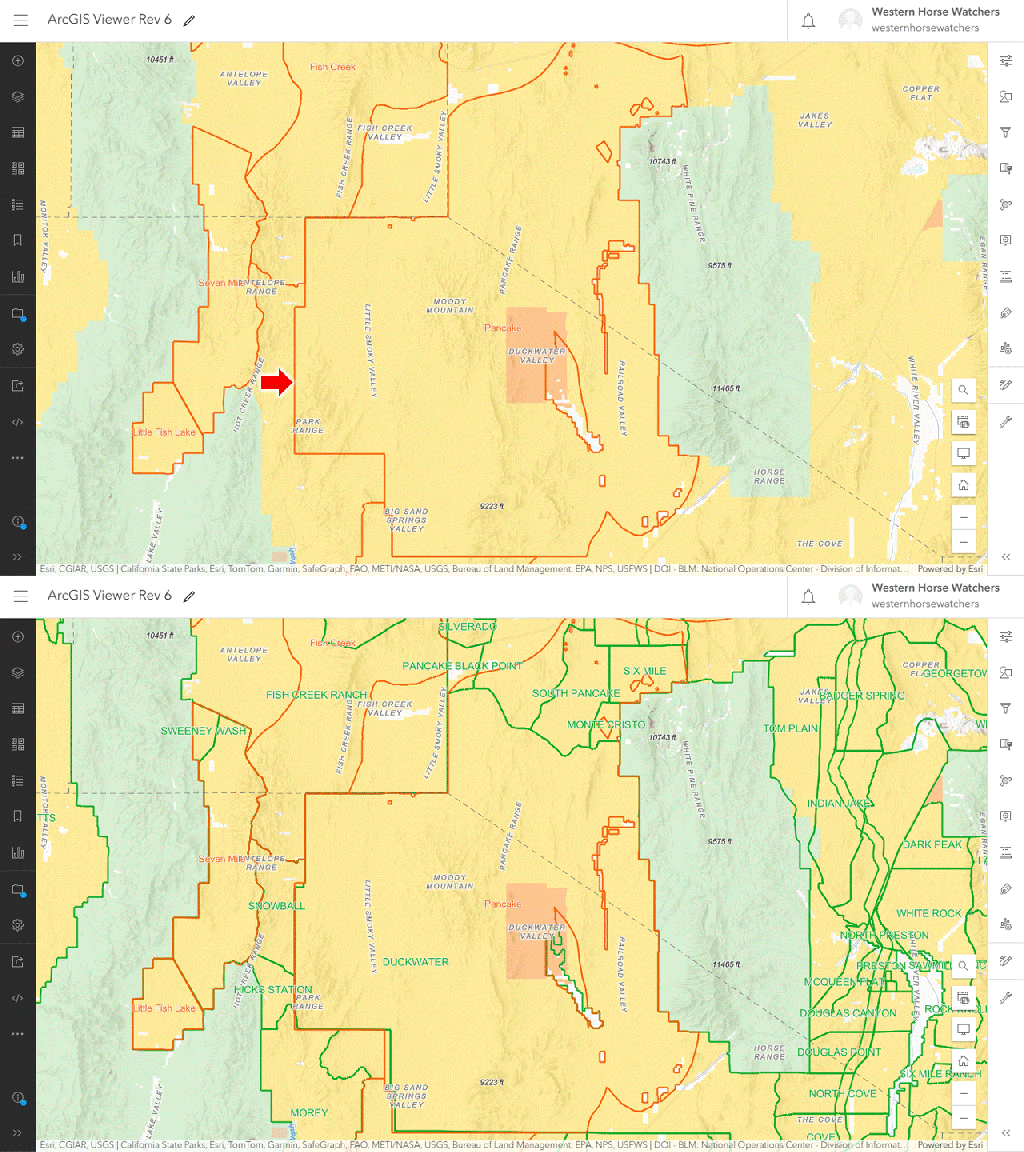
The news release says the incident will occur in the northern half of the HMA, an area known as Big Sand Springs Valley, but the ArcGIS Viewer puts it in the south.

The driver is lack of food and water.

The capture and removal goals are 100 each.

Horses will be drawn into the traps with bait.

Operations will not be open to public observation.

Animals identified for removal will be taken to the off-range corrals in Fallon.

There are no plans to treat any of the mares with fertility control pesticides and return them to the range.

The announcement did not indicate if the active AUMs would be reduced in the Duckwater Allotment, which overlaps most of the HMA.

Chincoteague Pony Swim Set for July 30

The event includes new security measures according to a report by Shore Daily News.

The auction occurs on July 31, followed by the return swim on August 1.

The herd, consisting of approximately 150 adults and 60 to 70 foals, lives on the Virginia side of Assateague Island.

Refer to the pony swim guide for more information.

When the event concludes, the herd will look like it’s been treated with the PZP.

Most of the foals will be stripped away except for the buy-backs.

Largest Attempted Eradication of Wild Horses?

The demoting of two HMAs in Wyoming and the downsizing of a third might win the prize in the motorized removal category but the plan was halted by an appeals court decision on July 15.

In the nonmotorized category, the Salt River Wild Horse Darting Group and the Campaign Against America’s Wild Horses take the prize for their mass sterilization programs at the Salt River and Virginia Range, affecting over 3,500 wild horses.

So, for now, those who accuse the federal government of the largest attempted eradication of wild horses are guilty of it themselves.

Why are you still giving them money?

Adobe Town Roundup, Day 5

The incident started on July 15.  Results through July 19:

  • Scope: Adobe Town HMA
  • Target: Horses
  • AML: 536 (was 800)
  • Pre-gather population: Not given, 2,382 according to 2025 population dataset
  • Type: Planned
  • Method: Helicopter
  • Category: Cruel and costly (according to advocates)
  • Better way: Sterilize the mares with PZP (according to advocates)
  • Capture goal: 1,675
  • Removal goal: 1,675
  • Captured: 409, up from 185 on Day 3
  • Shipped: 170, up from zero on Day 3
  • Released: None
  • Deaths: 1, no change from Day 3
  • Average daily take: 81.8
  • Unaccounted-for animals: 238
  • Snippet from statute: It is the policy of Congress that wild free-roaming horses and burros shall be protected from capture, branding, harassment, or death
  • Snippet from manual: To protect wild horses and burros from unauthorized capture, branding, harassment or death

The figures above are based on the daily reports.

The death rate is 0.2%.

The capture total includes 146 stallions, 176 mares and 87 foals.

Youngsters represented 21.3% of the animals gathered.

Of the adults, 45.3% were male and 54.7% were female.

The location of the trap site is not known.

The name of the contractor was not given.

The shipping destination was not disclosed.

There are no plans to treat any of the mares with fertility control pesticides and return them to the range.

The HMA is subject to permitted grazing.  Resources liberated to date:

  • Forage: 4,908 AUMs per year
  • Water: 4,090 gallons per day

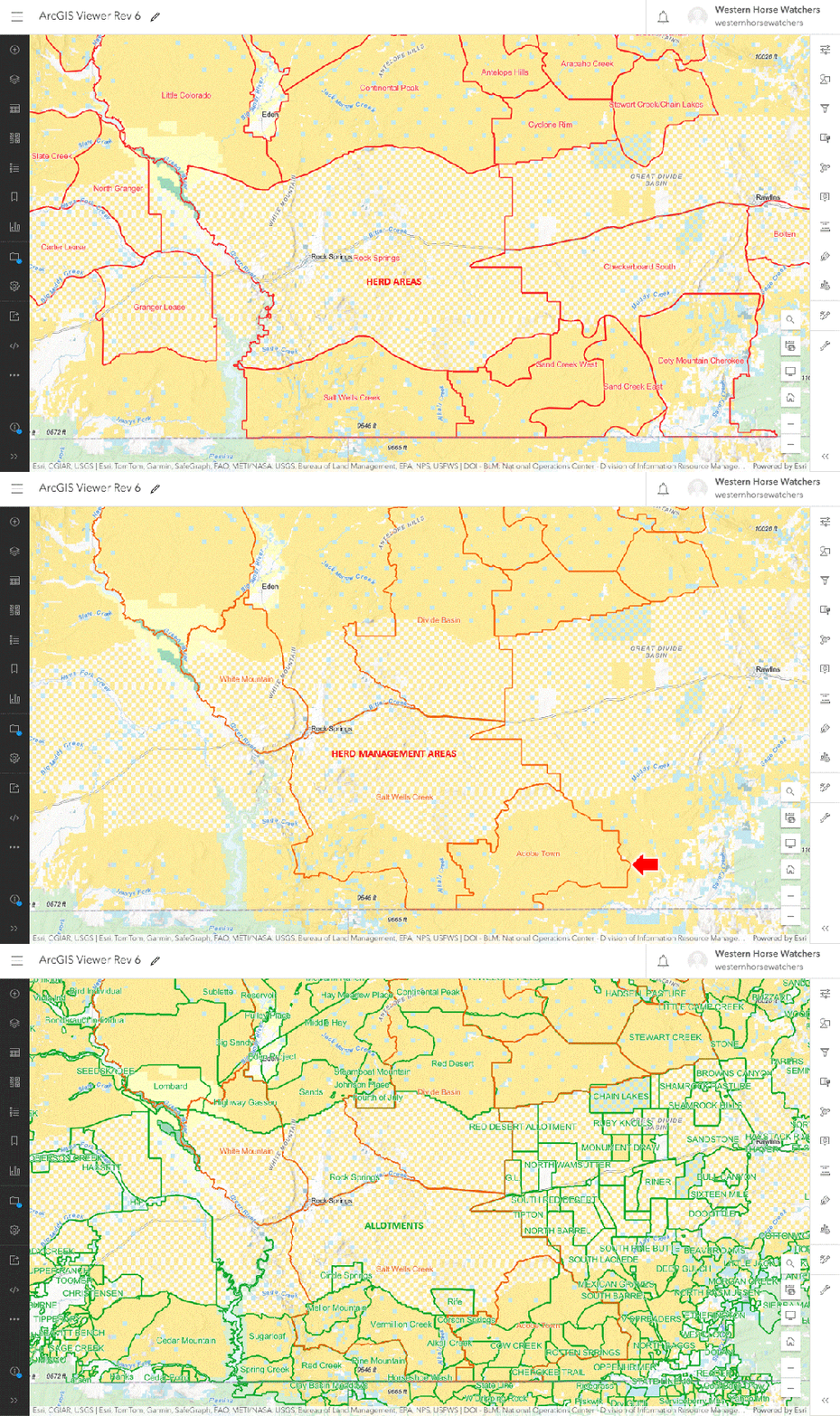
The map shows the Rock Springs HMAs before the RMP amendments, which were halted by an appeals court ruling on July 15.  Click to enlarge.

RELATED: Adobe Town Roundup, Day 3.

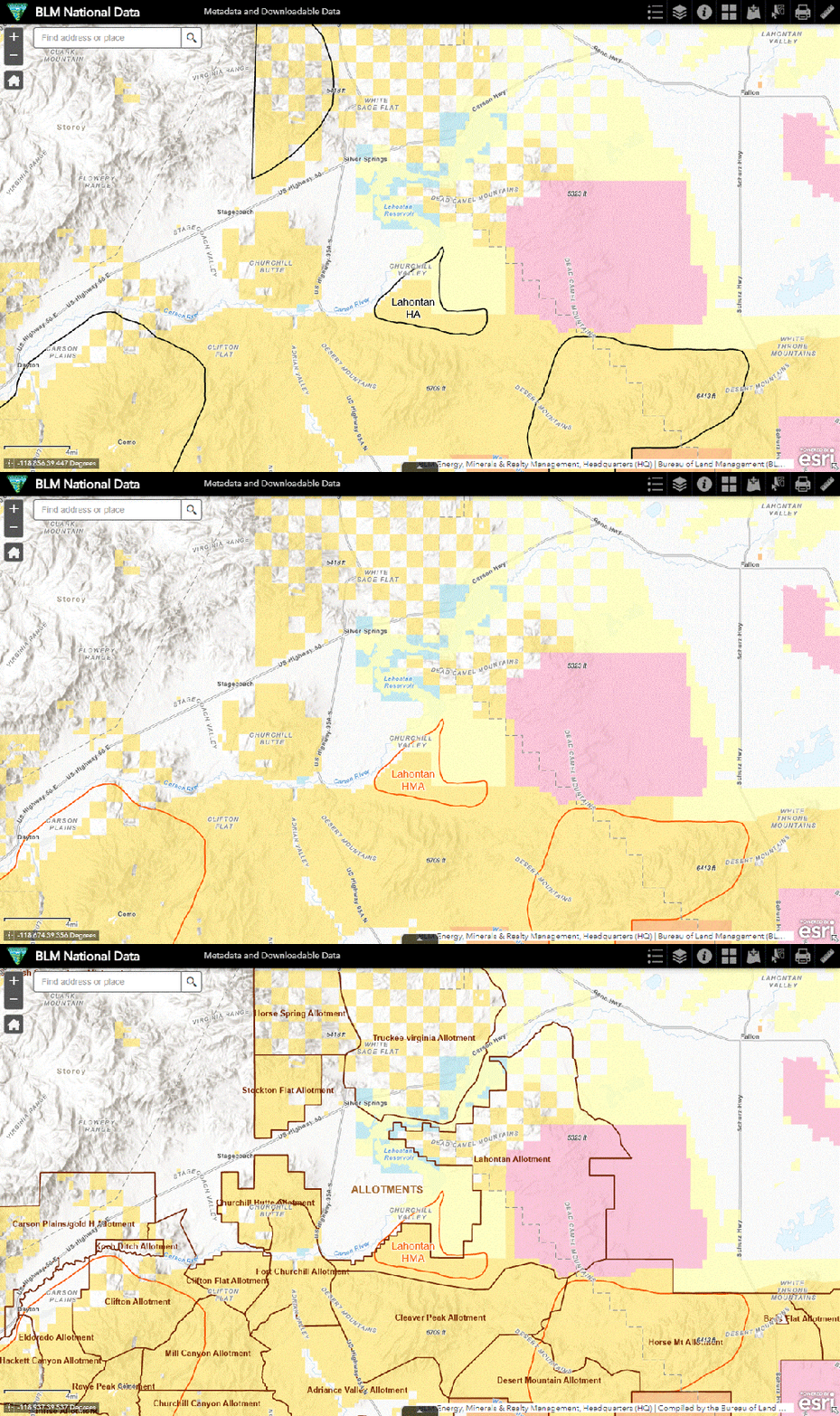
BLM Issues Lahontan Final Planning Documents

The Decision Record authorizes Alternative 1, the Proposed Action, discussed in Section 2.2 of the Final EA.

This does not mean a roundup is imminent.

A summary of comments on the Draft EA was copied to the project folder.

The news release did not indicate how many of the 518 wild horses in the project area were actually born in the HMA.

RELATED: Lahontan Planning Documents Out for Public Review.

Foal-Free Friday, Missing in Action Edition

The advocates no longer talk about the reversibility of PZP because they’ve shifted from slowing population growth to humane disposal.

You cannot use the pesticide for herd reduction, as they are doing at the Salt River and Virginia Range, without sterilizing the mares.

It’s not wild horse conservation, it’s wild horse extermination.

RELATED: Foal-Free Friday, Searching for the Truth Edition.

Three Rivers Roundup, Day 39

The incident started on June 9.  Results through July 17:

  • Scope: Alamo, Big Sandy, Havasu HMAs
  • Target: Burros
  • AML: 160 + 139 + 166 = 465
  • Pre-gather population: Not given, 2,644 according to 2025 population dataset
  • Type: Planned
  • Method: Bait
  • Capture goal: 1,100
  • Removal goal: 1,000
  • Captured: 811, up from 689 on Day 32
  • Shipped: 745, up from 665 on Day 32
  • Released: None
  • Deaths: 4, up from 3 on Day 32
  • Average daily take: 20.8
  • Unaccounted-for animals: 62
  • Snippet from statute: It is the policy of Congress that wild free-roaming horses and burros shall be protected from capture, branding, harassment, or death
  • Snippet from manual: To protect wild horses and burros from unauthorized capture, branding, harassment or death

The figures above are based on the daily reports.

A burro died of old age on Day 36, lifting the death rate to 0.5%.

The capture total includes 395 jacks, 353 jennies and 63 foals.  The sidebar at the gather page says 397/351/63.

Youngsters represented 7.8% of the animals gathered.

Of the adults, 52.8% were male and 47.2% were female.

The location of the trap site is not known.

The name of the contractor was not provided.

No jennies were treated with PZP since the last report, leaving the total at 78.

The July 1 schedule indicates the designated pesticide was GonaCon Equine.

The Complex is subject to permitted grazing.  Resources liberated to date:

  • Forage: 4,866 AUMs per year
  • Water: 4,055 gallons per day

These numbers will go down if burros are returned to the range.

RELATED: Three Rivers Roundup, Day 32.

Adobe Town Roundup, Day 3

The incident started on July 15.  Results through July 17:

  • Scope: Adobe Town HMA
  • Target: Horses
  • AML: 536 (was 800)
  • Pre-gather population: Not given, 2,382 according to 2025 population dataset
  • Type: Planned
  • Method: Helicopter
  • Category: Cruel and costly (according to advocates)
  • Better way: Mass sterilization with PZP (according to advocates)
  • Capture goal: 1,675
  • Removal goal: 1,675
  • Captured: 185, up from 38 on Day 1
  • Shipped: None
  • Released: None
  • Deaths: 1, up from zero on Day 1
  • Average daily take: 61.7
  • Unaccounted-for animals: 184
  • Snippet from statute: It is the policy of Congress that wild free-roaming horses and burros shall be protected from capture, branding, harassment, or death
  • Snippet from manual: To protect wild horses and burros from unauthorized capture, branding, harassment or death

The figures above are based on the daily reports.

A stallion was dispatched on Day 2 for blindness in one eye, putting the death rate at 0.5%.

The capture total includes 65 stallions, 82 mares and 38 foals.

Youngsters represented 20.5% of the animals gathered.

Of the adults, 44.2% were male and 55.8% were female.

The location of the trap site is not known.

The name of the contractor was not given.

There are no plans to treat any of the mares with fertility control pesticides and return them to the range.

The HMA is subject to permitted grazing.  Resources liberated to date:

  • Forage: 2,220 AUMs per year
  • Water: 1,850 gallons per day

The map shows the Rock Springs HMAs before the RMP amendments, which were halted by an appeals court ruling.  Click to enlarge.

RELATED: Adobe Town Roundup Pending.

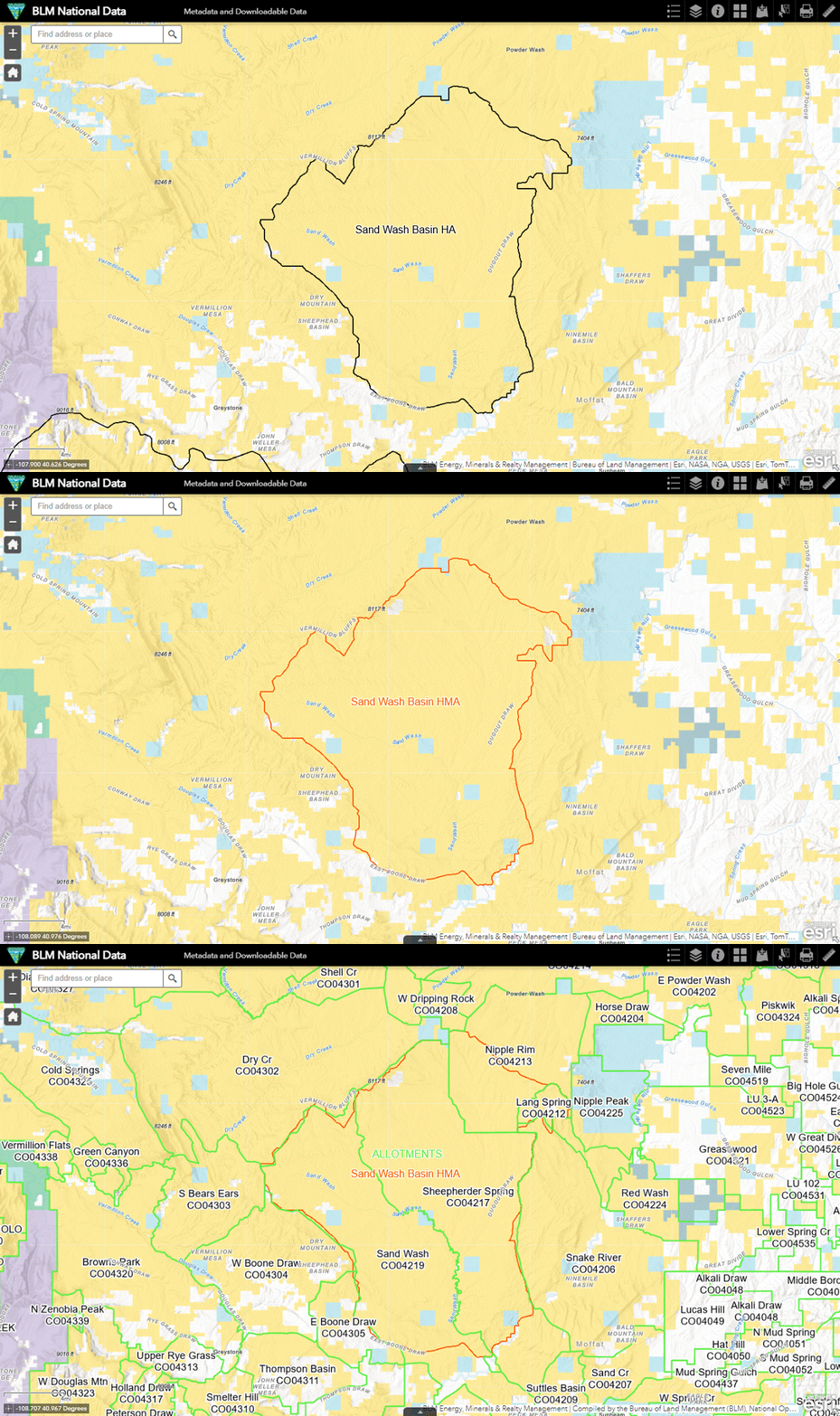
Sand Wash Roundup Over

The incident concluded on July 16 with 38 horses captured, 38 shipped, none released and no deaths.

Results from October 3 are not included.

There were no unaccounted-for animals.

The capture and removal goals were 60 and 45.

The capture total included 16 stallions, 17 mares and 5 foals.

Youngsters represented 13.2% of the animals gathered.

Of the adults, 48.5% were male and 51.5% were female.

The average daily take was 3.8.

Up to 15 mares were to be treated with PZP and returned to the HMA.

The roundup supports three tenets of rangeland management.

RELATED: Sand Wash Basin Roundup in Progress, No Announcement.

Sand Wash Roundup, Day 9

The incident started on July 7.  Results through July 15:

  • Scope: Sand Wash Basin HMA
  • Target: Horses
  • AML: 362
  • Pre-gather population: 487
  • Type: Planned
  • Method: Bait
  • Capture goal: 60
  • Removal goal: 45
  • Captured: 38, up from 24 on Day 5
  • Shipped: 30, up from 24 on Day 5
  • Released: None
  • Deaths: None
  • Average daily take: 4.2
  • Unaccounted-for animals: 8
  • Snippet from statute: It is the policy of Congress that wild free-roaming horses and burros shall be protected from capture, branding, harassment, or death
  • Snippet from manual: To protect wild horses and burros from unauthorized capture, branding, harassment or death

The figures above are based on the daily reports minus the results from October 3.

The capture total includes 16 stallions, 17 mares and 5 foals.

Youngsters represented 13.2% of the animals gathered.

Of the adults, 48.5% were male and 51.5% were female.  A higher percentage is females is expected in herds receiving the Montana Solution.

The gather page does not indicate if BLM staff are using the permanent trap site.

The HMA is subject to permitted grazing.  Resources liberated to date:

  • Forage: 456 AUMs per year
  • Water: 380 gallons per day

These numbers would go down if any horses are returned to the range.

RELATED: Sand Wash Roundup, Day 5.

Advocates Prevail in Rock Springs RMP Appeal

The Tenth Circuit Court of Appeals ruled today that the BLM’s plan to zero-out two HMAs and downsize a third in the Wyoming checkerboard violated the Wild Horse and Burro Act, overturning a decision last year that upheld it.

The agency might be able to move ahead with the plan if it corrects the deficiencies according to a news release by Western Watersheds Project.

RELATED: Court Hears Arguments in Rock Springs Grazing Appeal.

UPDATE: Opinion available here.

Muddy Creek Emergency Roundup #2 Ends

The incident concluded on July 13 with 149 horses captured, 148 shipped, none released and one dead.

There were no unaccounted-for animals.

The capture and removal goals were 150 each.

The death rate was 0.7%.

The average daily take was 37.3.

The capture total consisted of 61 stallions, 68 mares and 20 foals.

Youngsters represented 13.4% of the animals gathered.

Of the adults, 47.3% were male and 52.7% were female.

There were no plans to treat any of the mares with fertility control pesticides and return them to the range so the total removed was 149.

RELATED: Another Muddy Creek Emergency Roundup?