A. Proceedings in the Senate.
B. Pesticides on the range.

Western Horse Watchers Association
Exposing the Hypocrisy, Lies and Incompetence of the Wild Horse Advocates
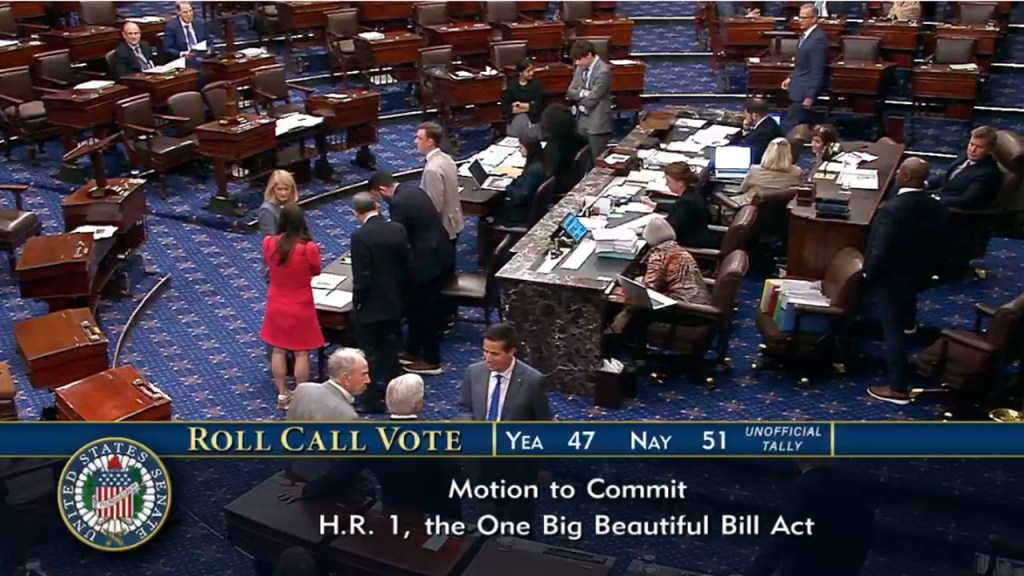
A. Proceedings in the Senate.
B. Pesticides on the range.
On the Virginia Range with Art.
The incident started on June 9. Results through June 26:
The figures above are based on the daily reports.
The Day 14 results have not been corrected but are probably 18/21/4, not 10/8/2 as shown at the gather page.

The death rate is 0.2%.
The capture total includes 241 jacks, 178 jennies and 25 foals.
Youngsters represented 5.6% of the animals gathered.
Of the adults, 57.5% were male and 42.5% were female.
The location of the trap site is not known.
The name of the contractor was not provided.
Sixty jennies have been treated with PZP although the June 3 schedule indicates the pesticide of choice was GonaCon Equine.
Given that no animals have been released, they will likely receive a second dose.
RELATED: More Three Rivers Confusion.

A. Politicians wrangling over the language in a bill.

B. Bitter and unsuccessful women poisoning the mares with PZP.
Those who sound the alarm about wild horses are often among their worst enemies.
RELATED: Advocates, Not Congress, Greater Threat to Wild Horses.
The last-minute change leaves one topic for the ‘Call of the Wild’ event on July 1.
RELATED: ‘Call of the Wild’ Set for July 1.
Little Snake Land & Livestock Company was selected in 2018 for an outcome-based demonstration project.
The operator information report at RAS associated the ranch with two authorizations, 0500302 and 0504960.
The allotment information report tied the authorizations to four allotments, all in the Little Snake Field Office:
The news release said the project involved an authorization with three allotments, so it’s probably 0504960.
Horse Draw is northeast of the Sand Wash Basin HMA and other three are east of Horse Draw.
The allotment master report provides management status, acreage and active AUMs.

The allotments support livestock equivalent to 177 wild horses on 16,984 public acres, or 10.4 wild horses per thousand public acres.
Your faithful public servants claim that public lands in the western U.S. can only support one wild horse per thousand acres (25,500 animals on 25.6 million acres).

Go off script. Ask for something that helps wild horses stay on public lands.
RELATED: ‘Call of the Wild’ Set for July 1.

Yes, they have a pesticide caucus but they get their information from the advocates, who have sensationalized language in current legislation regarding slaughter—referring to it as a bullet to the head of wild horses—and the sale of public lands, without providing screen images or links to the offending material.
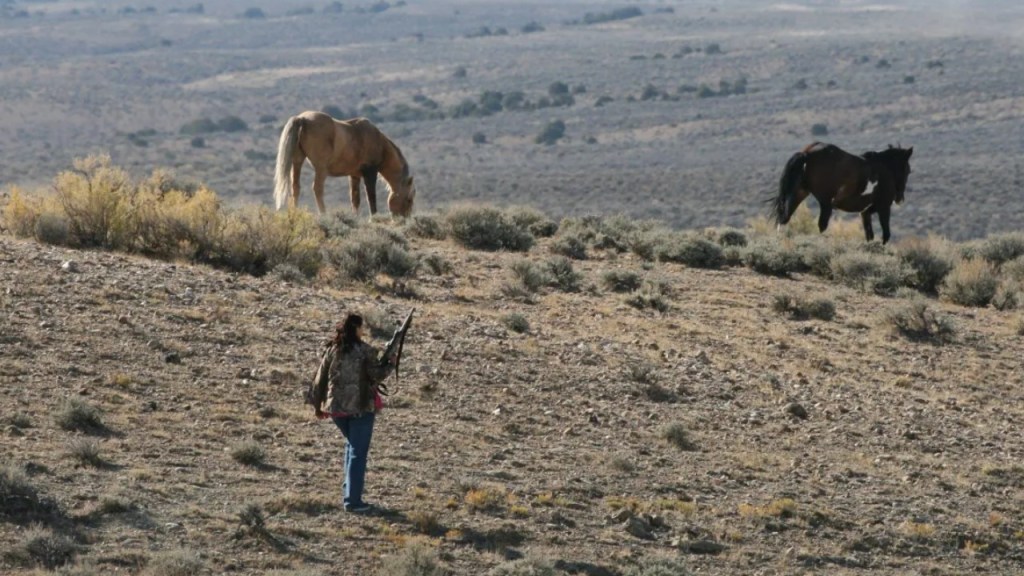
Meanwhile, they spend their days on the range, shooting the mares with pesticide-laced darts.
The advocates, not your elected representatives, are a clear and present danger to America’s wild horses.

A BLM public affairs specialist told Western Horse Watchers yesterday that the contractor captured 40 horses on June 26.
As of today, no reports have been posted to the Utah gather page.
RELATED: Muddy Creek Emergency Roundup Announced.
Handout provided as a public service.
Western Horse Watchers believes no action is necessary.
Those who organize these appeals are often among the most gullible and least informed about wild horses and burros.
If you’re thinking about HMAPs, you’re right, but there are other ways the advocates tell you they want the ranchers to win.
Forage allocations for wild horses and livestock are specified in resource management plans, sometimes referred to as land-use plans.
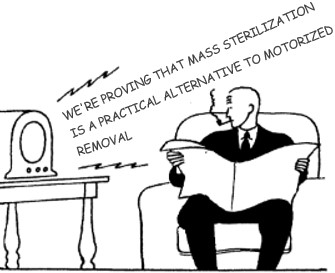
The plans are usually enforced by motorized removal.
If horses are consuming 40% of the authorized forage when the plan gives them 20%, a roundup is ordered to protect the ranchers.
The advocates don’t like roundups but concur with the idea of resource enforcement.
Fertility control is a better way of ensuring the ranchers receive 80% of the authorized forage in the lawful homes of wild horses, as specified in the RMPs.
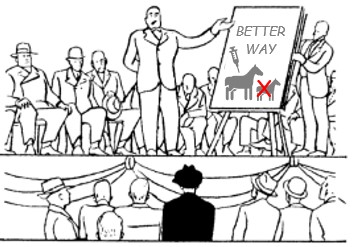
There are no low-flying helicopters and no roping of fatigued animals.
In its extreme form there are no horses—exactly what the ranchers want.
The order affects public lands northeast of Gerlach, NV from July 24 to October 5.
A map was included with the news release.
Black Rock City runs from August 24 to September 1 this year.

Results for Days 9 to 15 were not posted until yesterday.
Results for Days 4, 5 and 8 were edited.
The report for Day 14 says 43 animals captured, but the breakdown says 10 jacks, 8 jennies and 2 foals.
The gather page says 350 animals captured but the daily reports yield 327.
The discrepancy is probably in the Day 14 results.
Only adults have been shipped.
The designated pesticide is GonaCon Equine according to the June 3 schedule but the contractor treated 20 jennies with PZP on Day 13 and 20 more on Day 15.
No animals have been released, suggesting that booster doses are pending.
A burro was dispatched on Day 14 for a pre-existing condition but no details were given.
The location of the trap site was not disclosed.
Three HMAs are affected.
RELATED: Three Rivers Confusion.
As usual, the news release does not include a map of the project area or link to the NEPA analysis.
Permit holders, among others, were urged to be aware of treatment operations.
Ironically, the agency that routinely ignored the 2017 labeling amendment for GonaCon Equine, which extended the interval between primer and booster from 30 days to 90 days, said in the announcement that “Strict adherence to the pesticide label restrictions and instructions is followed as required by law.”
Imagine having a net worth of several million dollars and being eligible for food stamps.
That’s permitted grazing.
The ranchers pay almost nothing for the forage they consume and the services rendered on their behalf by the government.
And it’s a lifestyle, not temporary public assistance.
What did they know and when did they know it?
You cannot use the Montana Solution to reduce a herd from 450 to 200 without sterilizing the mares.
You need a diploma from the Billings School of PZP Darting to apply it.
To claim ignorance implies gross negligence of the instructors.
Will the guilty parties please step forward?
RELATED: AZDA Should Hold Pre-Bid Hearing for Salt River Contract.
On the Virginia Range, where wild horses are fast disappearing from the American scene, with Jeff Martinez.
Housing was not mentioned in the June 20 article.
A link to the offending material was not provided so you can’t be sure what they’re whining about.
But you get the impression that the federal government will be selling off vast amounts of public lands with few if any limitations if an amendment to the budget reconciliation bill drafted by the Senate Energy and Natural Resources Committee becomes law.
The story may be related to a section in a bill titled “MANDATORY DISPOSAL OF BUREAU OF LAND MANAGEMENT LAND AND NATIONAL FOREST SYSTEM LAND FOR HOUSING,” which starts on page 30.
It was linked to a news release dated June 11.
The measure calls for the disposal of not less than 0.50 percent and not more than 0.75 percent of Bureau of Land Management land and not less than 0.50 percent and not more than 0.75 percent of National Forest System land.
Said lands are to be suitable for residential housing, have access to existing infrastructure and are adjacent to developed areas.
Large parcels in remote areas, such as the Fifteenmile HA and overlapping allotments, would not be nominated for sale.
Small islands of public lands that can’t be accessed without crossing private property are likely candidates.
For example, APN 004-251-06, just inside the Storey County line and slightly north of the Jumbo Allotment, is in a developed area on the Virginia Range.
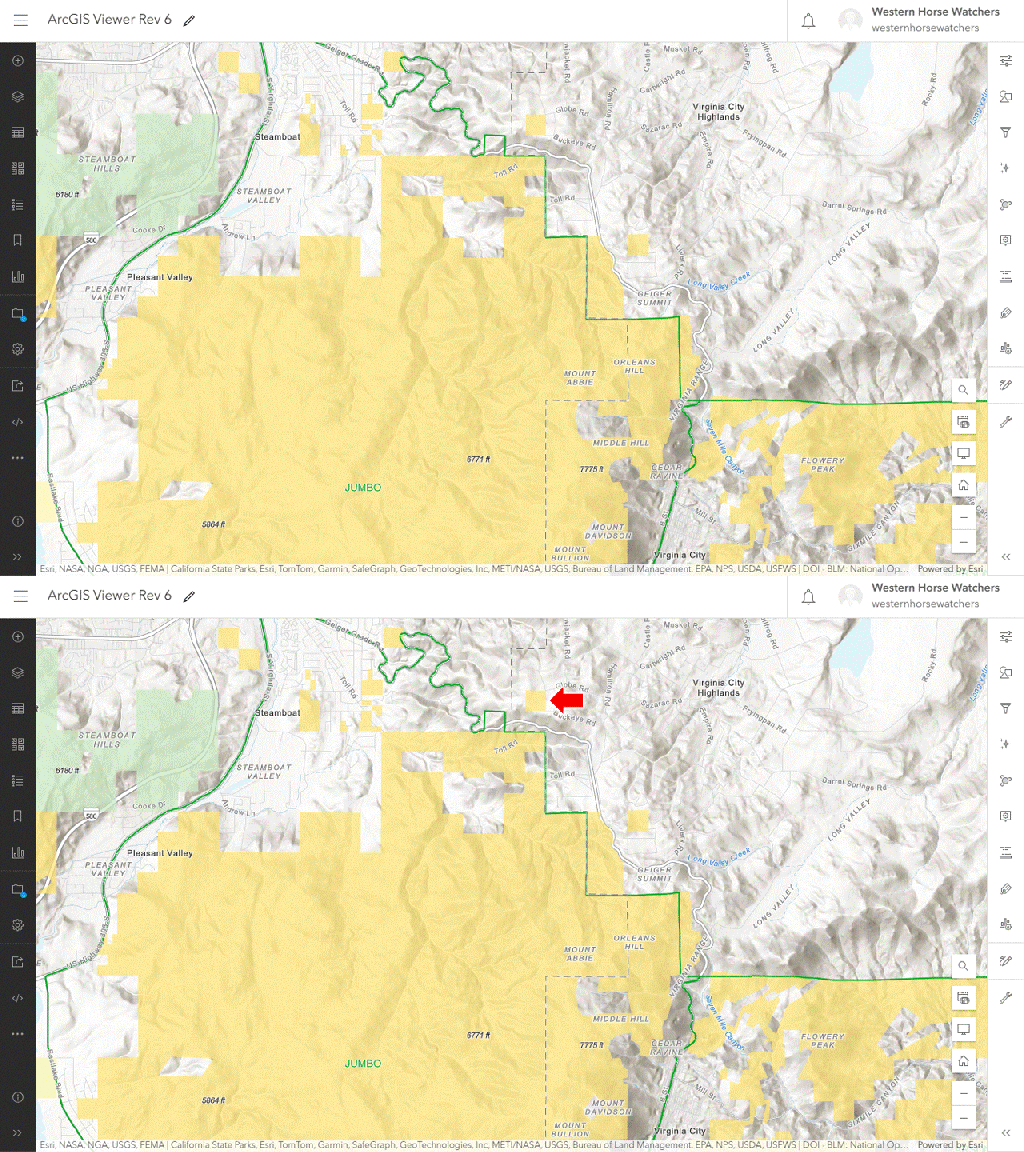
It’s designated as a single-family residence but owned by the BLM.
The 40-acre parcel has a seasonal pond, is mostly level, and power lines are about a half mile away.
Would probably fetch around $200,000.
Federally protected lands are not eligible for sale.
Unfortunately, the list of protected lands on page 31 does not include areas identified for wild horses and burros.


 Western Horse Watchers Association