
One of the objectives in the Land Management Plan for the Tonto National Forest is to evaluate at least one vacant allotment every two years to (1) convert it to forage reserves, (2) grant it to a current or new permittee or (3) close it to permitted grazing.
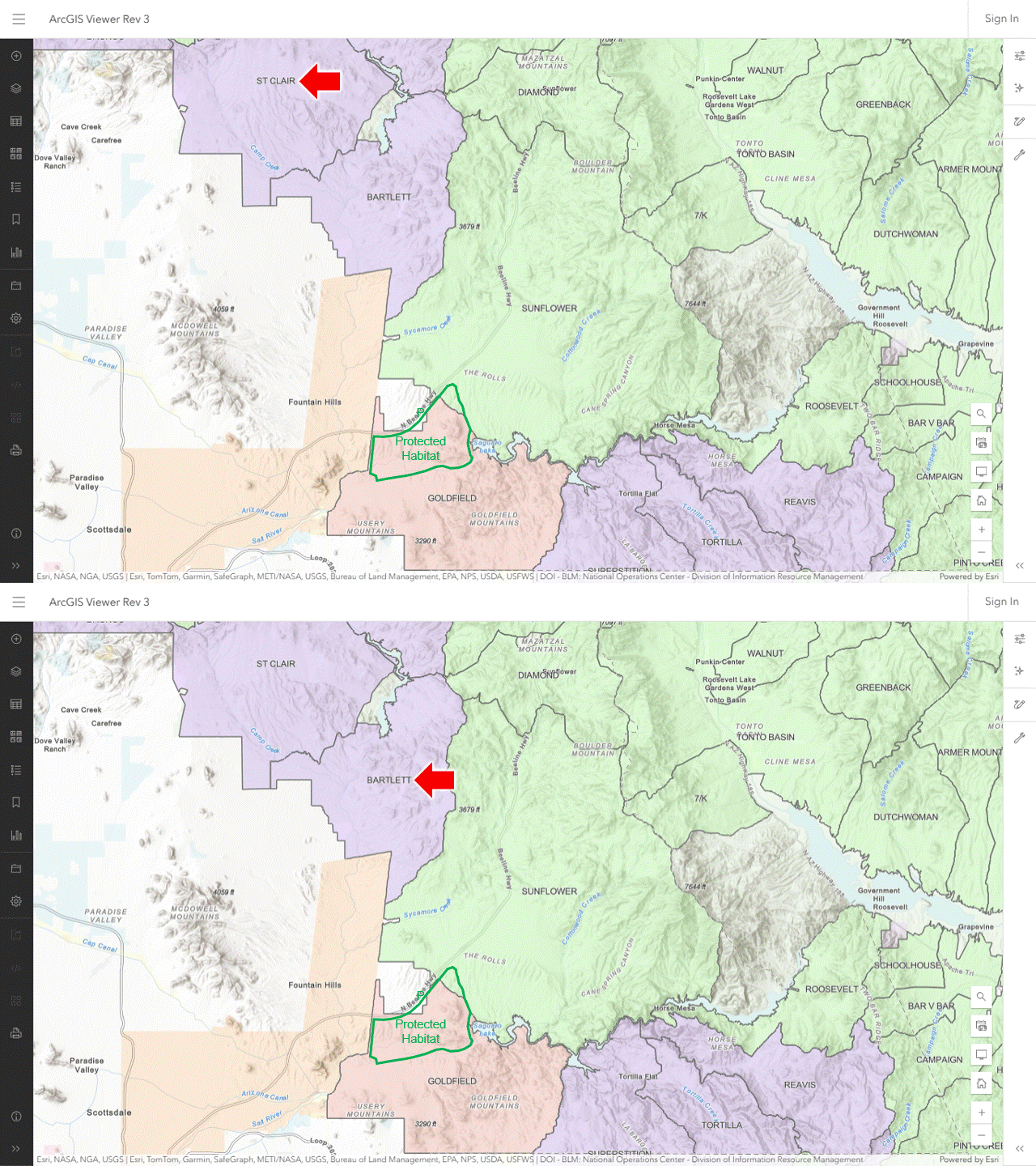
The 2018 report on forage availability states in Appendix 5 that the Goldfield, Bartlett, St. Clair and Sunflower allotments are most similar in vegetation, soil, and topography to the Salt River horse zone.
The ArcGIS viewer indicates that Bartlett and St. Clair are vacant.
Appendix 5 also indicates that the two allotments offered a combined 7,404 AUMs on 116,430 acres, equivalent to 617 wild horses, or 5.3 wild horses per thousand acres.
Your faithful public servants claim the rangelands in the western U.S. can only support one wild horse per thousand acres.
If the advocates had a base property that met Forest Service requirements, they could ask the agency to attach it to one or both of the allotments, securing grazing preference thereon.
The livestock type would be horses and the season of use would be 12 months.
This would probably require a NEPA review, which could span several years, complete with blowback from ranching interests.
But it would be better for the horses compared to their current situation, crammed into a 20,000-acre habitat with the number of viable mares decreasing every year.
RELATED: Leadership Needed at Salt River.
 Western Horse Watchers Association