
As you read this article about the fertility control program, think of Simone Netherlands as a marionette with Suzanne Roy pulling the strings.
The events leading to the current situation are discussed in a 2019 report to the Arizona Department of Agriculture and U.S. Forest Service.
In a nutshell, the Forest Service announced that it would be removing wild horses from the Tonto National Forest and the advocates stepped in and said “Let us do that.”

Recalling the early days, Netherlands said “At that time, we narrowly escaped removal of the Salt River Wild Horses and offered our way of management to both the state and the federal government.”
What she meant was their way of removal.
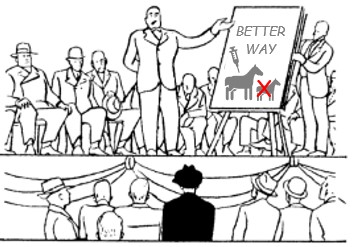
One of her most outrageous statements involves birth rates and breeding patterns: “If we do want the mare to have a baby, we just don’t dart her that year,” as if conception can be switched on and off like a light bulb—a reference to the sperm-blocking theory.
The longer a mare has been treated with PZP, the longer she takes to regain fertility, about a year per year.
After five years of treatment, she won’t recover. She’s said to be self-boosting, a codeword for sterile.
Clearly, the horses are not in control of their future.
The management plan allowed ten years for birth control and natural attrition to reduce the herd to 100-200 head, from an initial size of around 400.
Do you think after a decade of nonstop darting the herd will come in for a soft landing, finally in balance with its surroundings?
That’s what they tried at Assateague Island and the herd was still shrinking eight years after the darting program was shut off.
 Western Horse Watchers Association