Foal-Free Friday, Backstopping the Advocates Edition

Predators are an essential part of PZP darting programs, as they take out any foals born to immunocompromised mares or those missed by the field workers.

The latest example occurred at the Salt River in Arizona.

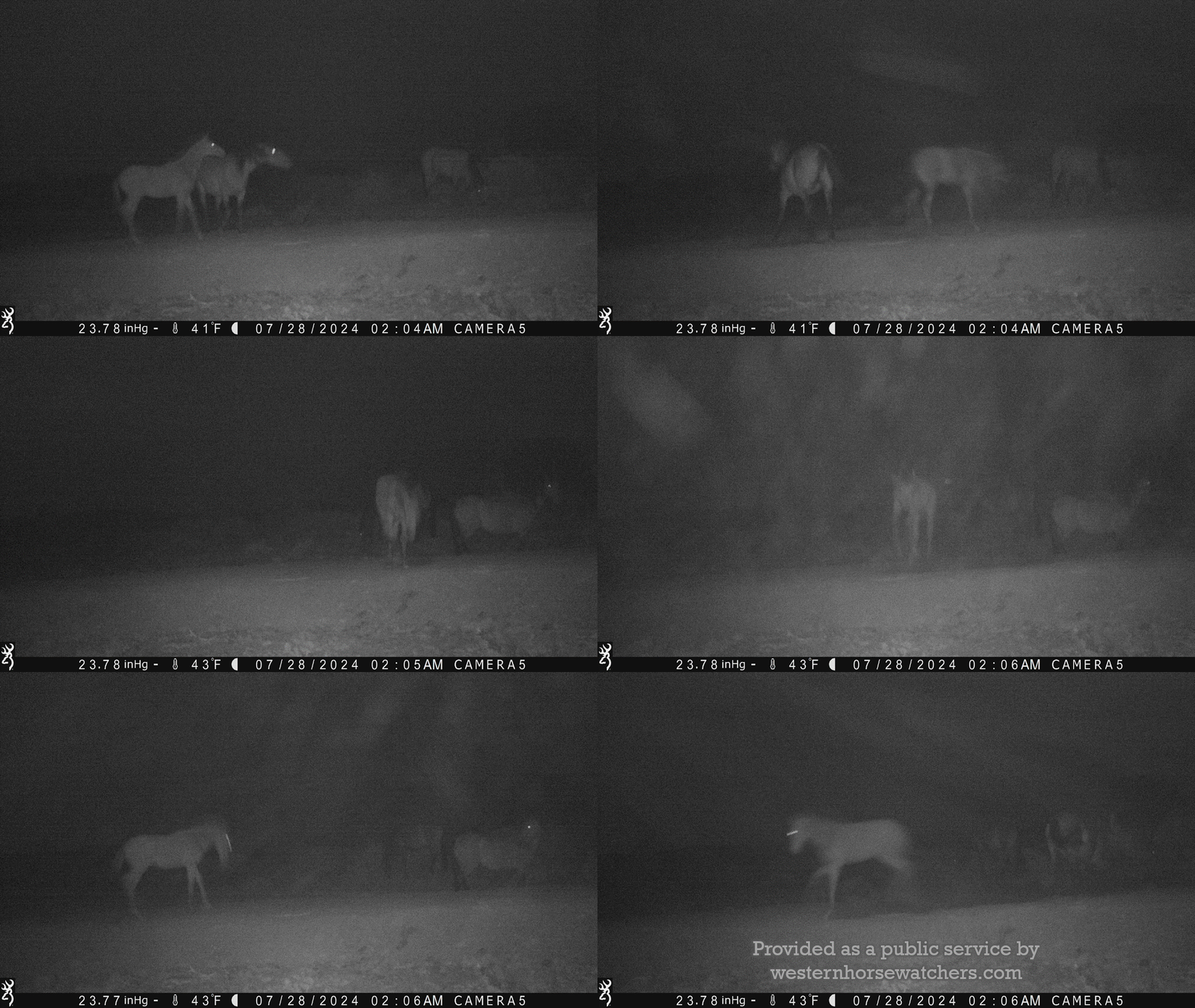
Loss of Salt River Filly 02-27-25

The safety net is not as effective in areas subject to permitted grazing, where predators have been depopulated, mostly at the state level, to protect livestock.

A workaround is to create state-sponsored groups that recruit more volunteers and help them buy more pesticides.

Do not be deceived by the advocates and their celebrity spokesmen.

They are wiping out entire herds with mass sterilization and peddling the effort as wild horse conservation.

RELATED: Foal-Free Friday, Making Their Heads Explode Edition.

Canyonlands Roundup, Day 3

The incident started on February 24.  Results through February 26:

  • Scope: Canyonlands HMA
  • Target: Burros
  • AML: 100
  • Pre-gather population: 208
  • Type: Planned
  • Method: Helicopter
  • Goals: Capture 100, remove 100
  • Captured: 52, up from 23 on Day 1
  • Shipped: 49, up from zero on Day 1
  • Released: None
  • Deaths: 3, up from zero on Day 1
  • Average daily take: 17.3
  • Unaccounted-for animals: None
  • Snippet from statute: It is the policy of Congress that wild free-roaming horses and burros shall be protected from capture, branding, harassment, or death
  • Snippet from manual: To protect wild horses and burros from unauthorized capture, branding, harassment or death

The figures above are based on the daily reports.

Two jacks were dispatched on Day 2 because of tumors, followed by another on Day 3 for a missing eye, lifting the death rate to 5.8%.

The capture total includes 30 jacks, 21 jennies and 1 foal.

Youngsters represented 1.9% of the animals gathered.

Of the adults, 58.8% were male and 41.2% were female.

The location of the trap site is not known.

The name of the contractor was not provided.

There are no plans to treat any of the jennies with fertility control pesticides and return them to the range.

RELATED: Canyonlands Roundup Begins.

Canyonlands HMA with Allotments 01-10-24

Should SCR 4006 Refer to Cape Lookout as a Model for TRNP?

The resolution asks Congress to establish federal protections for wild horses at Theodore Roosevelt National Park.

Congress established Cape Lookout in §459g of 16 USC 1 SUBCHAPTER LXIII.

Protections for the horses appear in §459g–4.

The AML is hard coded in §459g–4(b)(1).  Probably not a good idea for TRNP.

Provisions for monitoring and reporting are worthy of consideration.

Entering into an agreement with a nonprofit would be a bad idea if the NGO was obsessed with pesticides and nonmotorized removal, as many are today.

The park should be exempted from the multiple use mandate which the bureaucrats interpret as ranching superiority in the lawful homes of wild horses.

Repatriation of the original wild horses, thought to be descendants of Sitting Bull’s ponies, should be a priority.

RELATED: SCR 4006 Introduced in House.

Shackleford Herd Grew Slightly in 2024

There were 119 horses on Shackleford Banks at the end of 2024 according to an undated report by NPS, up from 117 at the end of 2023.

The AML is 120 to 130, a narrow range that implies a small growth rate, tiny breeding population and massive interference in nature’s way.

Fourteen foals were born in 2024, for a birth rate of twelve percent.

Eleven horses died, so the population should have increased by three not two.

Curiously, the report for 2023 is 404.

Two cases of failure to thrive were reported, a condition that may indicate inadequate genetic diversity.

The herd consisted of 61% females and 39% males.

The unusual sex ratio is a result of long-term use of PZP, an ovary-killing pesticide.

Eight mares who had recent foals were treated in 2024.  They contributed to the gene pool, now they will be sterilized, a standard practice in fertility control programs.

The number of nonviable mares in the herd was not given.

Annual reports are posted to the Cape Lookout wildlife management page.

RELATED: Shackleford Herd Shrinks by Seven in 2023.

Murderer’s Creek Roundup Ends

The incident, prompted by the Rail Ridge Fire, concluded on February 18 with 410 horses captured, 400 shipped, none released and ten dead.

There were no unaccounted-for animals.

The death rate was 2.4%.

The average daily take was 5.0.

The capture total, based on the daily reports, includes 148 stallions, 164 mares and 98 foals.  The gather page indicates 150, 166 and 94.

Foals represented 23.9% of the total, consistent with a herd growth rate of 19% per year.

Of the adults, 47.4% were male and 52.6% were female, no indication of an abnormal sex ratio in the population at large.

There were no plans to treat any of the mares with fertility control pesticides and return them to the range.

No decisions have made regarding the long-term disposition of captured horses.

The status of livestock grazing in the burned area is not known.

RELATED: Murderer’s Creek Emergency Roundup Announced.

Bill Clinton: Archetype of the Wild Horse Advocates

Rush Limbaugh explains the behavior in this video from 1996.

The advocates love to schmooze with their rangeland partners, telling them how many mares they’ve ruined and which herds are near the tipping point.

Until it’s time for a fundraiser, when they have to interact with their supporters.

Then it’s back to cherished/beloved/innocent/treasured/iconic/majestic wild horses as they try to separate them from their money.

San Bernadino County Hits Pause on Reche Canyon Burro Removal

County officials have ended discussions with Peaceful Valley Donkey Rescue for wild burro rescue and relocation services according to a February 21 story by the San Bernadino Sun.

The county is now working with DonkeyLand for similar services.

For a quick tour of the area, refer to the February 10 edition of Mustang Monday.

RELATED: San Bernadino County Removing Reche Canyon Burros.

Foal-Free Friday, Making Their Heads Explode Edition

One way to trigger the advocates is to talk about keeping wild horses on the range.

It sounds crazy—they’re supposed to be voices for the horses.

But they’re not.

Most are obsessed with pesticides, overpopulation and nonmotorized removal.

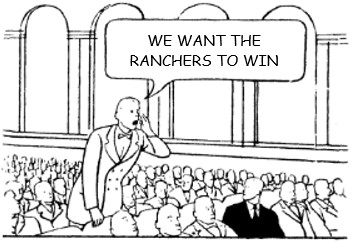
We Want the Ranchers to Win 04-04-24

You might get blocked if you leave comments on their Facebook pages about

  • Management at the minimum feasible level
  • Nature’s way
  • Principal use
  • Lopsided forage allocations
  • Repurposing allotments as refuges
  • Bringing grazing fees in line with market rates

They might come unglued if you talk about mass sterilization, abnormal sex ratios, loss of genetic diversity and selection for faulty immune systems, the inevitable results of PZP darting programs.

If they won’t welcome you into their fold, point out their hypocrisy and treachery, shake the dust from your sandals and leave.

RELATED: Foal-Free Friday, Rangelands and Lovers Edition.

Bullfrog EA Out for Review

The draft assessment has been copied to the project folder with nine appendices.

The proposed HMAP, discussed in Appendix D, is subordinate to the Tonopah RMP and will affirm management provisions therein.

The EA cites outdated registrations for GonaCon Equine in Section 2.3.2.2 and refers to the pesticide as a vaccine.

Comments will be accepted through March 24 according to the news release.

RELATED: Bullfrog Scoping Begins.

Bullfrog HMA with Allotments 09-17-24