Foal-Free Friday, Spending Wisely Edition

The advocates use your donations to buy pesticides.

They want to replace motorized removal with mass sterilization, abnormal sex ratios and faulty immune systems.

They oppose principal use, management at the minimum feasible level and nature’s way.

They care most about their standing with the bureaucrats and ranchers.

Why are you still giving them money?

Withholding your financial support is easy, sensible and costs nothing.

RELATED: Foal-Free Friday, Raising Them Right Edition.

Pesticide Pushers 07-17-23

Head of WHB Program Not a Political Appointee

The position is filled through job postings at USA Jobs according to Dorothea Boothe, Wild Horse and Burro Program Outreach Specialist.

The job title is Division Chief, not Director.

A 2021 handout suggests the On-Range and Off-Range Branch Chiefs report to the Division Chief, currently manned by Scott Fleur.

WHBAB meetings usually include updates from the two branches.

The Wild Horse and Burro Division, HQ-260, accomplishes its mission through the two branches, HQ-261 and HQ-262.

The handout provides an example of an adverse finding during field audits of darting teams (unlawful use of pesticides, failure to wear proper PPE).

Unlawful Use of Pesticides Missing PPE 12-05-24

The November 15 edition of Foal-Free Friday tells you where to report such incidents.

RELATED: Nominee for Director of Wild Horse and Burro Program?

Triple B Roundup Ends

The incident concluded on December 4 with 2,196 horses captured, 2,131 shipped, 39 released and 27 dead, according to figures in the sidebar.

The number of horses processed exceeded the number captured by one.

The daily reports indicate 2,130 shipped, making the numbers balance.

The number of horses removed was 2,157.

The capture and removal goals were 2,255 and 2,155, respectively.

The death rate was 1.2%.

The average daily take was 66.5.

The capture total included 804 stallions, 881 mares, and 511 foals.

Youngsters represented 23.3% of the animals gathered, consistent with a herd growth rate of 18% per year.

Of the adults, 47.7% were male and 52.3% were female, no indication of an abnormal sex ratio.

Two of the mares were not wild and were reunited with their owner.

Twenty-three mares were treated with GonaCon Equine.  The number of doses and interval between them were not specified.

The Complex supports livestock equivalent to 3,730 wild horses, so it can never go below 4.2X AML.  Some researchers claim that areas above AML are harmful to sage grouse.

Today’s news release said there was not enough water and/or forage to support the number of horses in the area.

The operation liberated 25,884 AUMs per year, giving new hope to the Triple B permittees.

RELATED: Triple B Roundup Announced.

Murderer’s Creek Roundup, Day 5

The incident started on November 29.  Results through December 3:

  • Scope: Murderer’s Creek HMA, WHT
  • Target: Wild horses
  • AML: 140
  • Pre-gather population: 650
  • True AML: TBD
  • Type: Emergency
  • Method: Bait
  • Capture goal: 350 – 400
  • Removal goal: 350 – 400
  • Captured: 68, up from 18 on Day 1
  • Shipped: 56, up from zero on Day 1
  • Released: None
  • Deaths: 2, up from zero on Day 1
  • Average daily take: 13.6
  • Unaccounted-for animals: 10
  • Snippet from statute: It is the policy of Congress that wild free-roaming horses and burros shall be protected from capture, branding, harassment, or death
  • Snippet from manual: To protect wild horses and burros from unauthorized capture, branding, harassment or death

The figures above are based on the daily reports.

A stallion was dispatched on Day 2 for poor body condition, followed by a mare for a sudden leg fracture, bringing the death rate to 2.9%.

The capture total includes 25 stallions, 26 mares and 17 foals.

Youngsters represented 25% of the animals gathered.

Of the adults, 49% were male and 51% were female.

Body condition scores were not given.

The location of the trap site was not disclosed.

The name of the contractor was not provided.

There are no plans to treat any of the mares with fertility control pesticides and return them to the range.

No decisions have made regarding the long-term disposition of horses, which means they could be treated or altered in off range holding, including the stallions.

The status of livestock grazing in the burned area is not known.

RELATED: Murderer’s Creek Emergency Roundup in Progress.

Murderers Creek HMA with Allotments 10-24-24

Colorado Wild Horse Working Group Meets Next Week

The meeting runs from December 12 to 13 and is open to the public.

An agenda was not provided.

The group supports three tenets of rangeland management.

The legislature expects it to make recommendations on humane, non-lethal alternatives for horses taken off range but most of the resources are devoted to helping the advocates buy pesticides and apply them on the range.

Sand Wash Advocates 01-17-22

Triple B Roundup, Day 31

The incident started on November 2.  Results through December 2:

  • Scope: Triple B Complex
  • Target: Wild horses
  • AML: 889
  • Pre-gather population: 3,335
  • True AML: 4,551
  • Type: Planned
  • Method: Helicopter
  • Category: Cruel and costly (according to advocates)
  • Better way: Sterilize mares with PZP (according to advocates)
  • Capture goal: 2,255
  • Removal goal: 2,155
  • Captured: 2,163, up from 2,102 on Day 29
  • Shipped: 2,019, up from 1,938 on Day 29
  • Released: 20, no change from Day 29
  • Deaths: 26, up from 24 on Day 29
  • Average daily take: 69.8
  • Unaccounted-for animals: 98
  • Snippet from statute: It is the policy of Congress that wild free-roaming horses and burros shall be protected from capture, branding, harassment, or death
  • Snippet from manual: To protect wild horses and burros from unauthorized capture, branding, harassment or death

The figures above are based on the daily reports.

The sidebar says 2,022 shipped.  If that figure was used, there would be 95 unaccounted-for horses.

Two mares were dispatched for poor body condition on Day 30, lifting the death rate to 1.2%.

The capture total includes 790 stallions, 868 mares and 505 foals.

Youngsters represented 23.3% of the animals gathered, consistent with a herd growth rate of 18% per year.  The Rule of 72 says the herd size will double in four years.

Of the adults, 47.6% were male and 52.4% were female, no indication of an abnormal sex ratio.

Body condition scores were not given.

The location of the trap site was not disclosed.

The name of the contractor was not provided.

Three HMAs are affected.

Twelve mares have been treated with GonaCon Equine.  The plan calls for up to 50 to receive the pesticide and be returned to the range with up to 50 stallions.

The roundup supports three tenets of rangeland management.

Resources liberated to date:

  • Forage: 25,716 AUMs per year
  • Water: 21,430 gallons per day

The Complex supports livestock equivalent to 3,730 wild horses, so it will always be at 4.2X AML or higher.

RELATED: Triple B Roundup, Day 29.

Triple B Complex with Allotments 11-04-24

Spend Wisely: Today Is Defund the Advocates Day

They want to replace motorized removal with mass sterilization, abnormal sex ratios and faulty immune systems.

They oppose principal use, management at the minimum feasible level and nature’s way.

Withholding your financial support is easy, sensible and costs nothing.

RELATED: Starting a Nonprofit That Actually Helps Wild Horses.

Support the Advocates 09-22-24

Ninth Circuit Hears Arguments in Big Summit Appeal

Attorneys for the Forest Service and Central Oregon Wild Horse Coalition appeared today before a three-member panel regarding a plan to remove at least half of the wild horses in the Big Summit WHT.

The plaintiffs claim that the range can support a much higher population than the government admits.

A story by Courthouse News Service said the court did not indicate when it would rule.

The Forest Service recently started work on a new facility that would hold wild horses removed from the area.

RELATED: Court Sides with Forest Service in Big Summit Legal Challenge.

BLM Closes Public Lands for Murderer’s Creek Roundup

The order covers about 18,800 acres in Grant County, OR and could extend through February 28 according to today’s news release.

No map was provided.

The incident was set to begin on November 25 but no animals have been captured.

The announcement may be an example of the new rule the agency imposed on itself in August.

RELATED: Murderer’s Creek Emergency Roundup Announced.

Wyoming Honor Farm EA Out for Review

The document was copied to the project folder today.

Comments will be accepted through January 2 according to the news release.

In Alternative 1, the Proposed Action, the BLM would award a five-year contract to pay for space, feeding, training and care of up to 200 wild horses and burros.

Alternative 2 would end the inmate training program, which started in 1988.

The facility held 141 horses and 8 burros as of September 23.

RELATED: Scoping Begins for Wyoming Honor Farm Contract Renewal.

NDA Posts Board of Agrigulture Meeting Attachments

The Animal Industry Report offers little if any new information about the Washoe Lake fencing project.

  • NDA has entered into a contract with a vendor for reconstruction of BLM fences and construction of new fences pending the completion of the NEPA study, in the Virginia Range Area
  • Approximately 6 miles of existing fencing have been rebuilt in the Washoe Valley area
  • All funding is sourced from the NDA Feral Horse Management Project
  • John Axtell has taken over as project manager

The botched rescue of 24 Virginia Range horses in August is recounted on page 2.

The report was posted to the BOA meetings page.

RELATED: NDA Schedules Fourth Quarter Board of Agriculture Meeting.

Triple B Roundup, Day 29

The incident started on November 2.  Results through November 30:

  • Scope: Triple B Complex
  • Target: Wild horses
  • AML: 889
  • Pre-gather population: 3,335
  • True AML: 4,551
  • Type: Planned
  • Method: Helicopter
  • Category: Cruel and costly (according to advocates)
  • Better way: Sterilize mares with PZP (according to advocates)
  • Capture goal: 2,255
  • Removal goal: 2,155
  • Captured: 2,102, up from 1,953 on Day 27
  • Shipped: 1,938, up from 1,754 on Day 27
  • Released: 20, no change from Day 27
  • Deaths: 24, up from 23 on Day 27
  • Average daily take: 72.5
  • Unaccounted-for animals: 120
  • Snippet from statute: It is the policy of Congress that wild free-roaming horses and burros shall be protected from capture, branding, harassment, or death
  • Snippet from manual: To protect wild horses and burros from unauthorized capture, branding, harassment or death

The figures above are based on the daily reports.

The sidebar says 1,941 shipped.  If that figure was used, there would be 117 unaccounted-for horses.

A stallion died of a ruptured aorta on Day 28.

The death rate is 1.1%.

The capture total includes 776 stallions, 834 mares and 492 foals.

Youngsters represented 23.4% of the animals gathered, consistent with a herd growth rate of 18% per year.

Of the adults, 48.2% were male and 51.8% were female, no indication of an abnormal sex ratio.

Body condition scores were not given.

The location of the trap site was not disclosed.

The name of the contractor was not provided.

Three HMAs are affected.

Twelve mares have been treated with GonaCon Equine.  The plan calls for up to 50 to receive the pesticide and be returned to the range with up to 50 stallions.

The roundup supports three tenets of rangeland management.

Resources liberated to date:

  • Forage: 24,984 AUMs per year
  • Water: 20,820 gallons per day

The Complex supports livestock equivalent to 3,730 wild horses, so it will always be at 4.2X AML or more.

RELATED: Triple B Roundup, Day 27.

Triple B Complex with Allotments 11-04-24

Socialist Media Update for November 2024

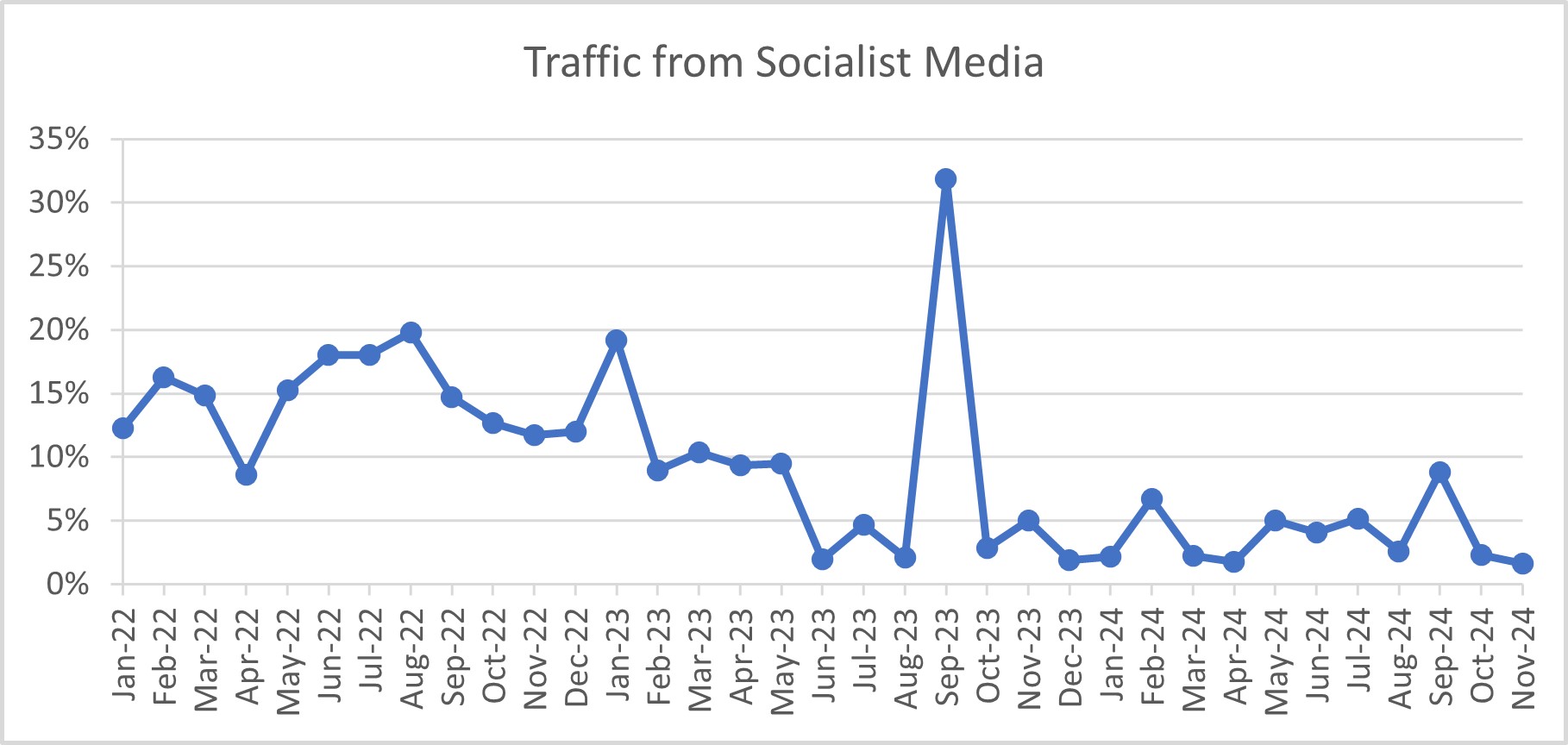
Traffic from Facebook and Twitter accounted for 1.6% of the total during the month, down considerably from the same period two years ago and reaching a new low.

WordPress does not report results for Instagram.

Did you know the Rock Springs HMAs would be well above AML even if all the horses were removed?

The advocates are silent about these things.

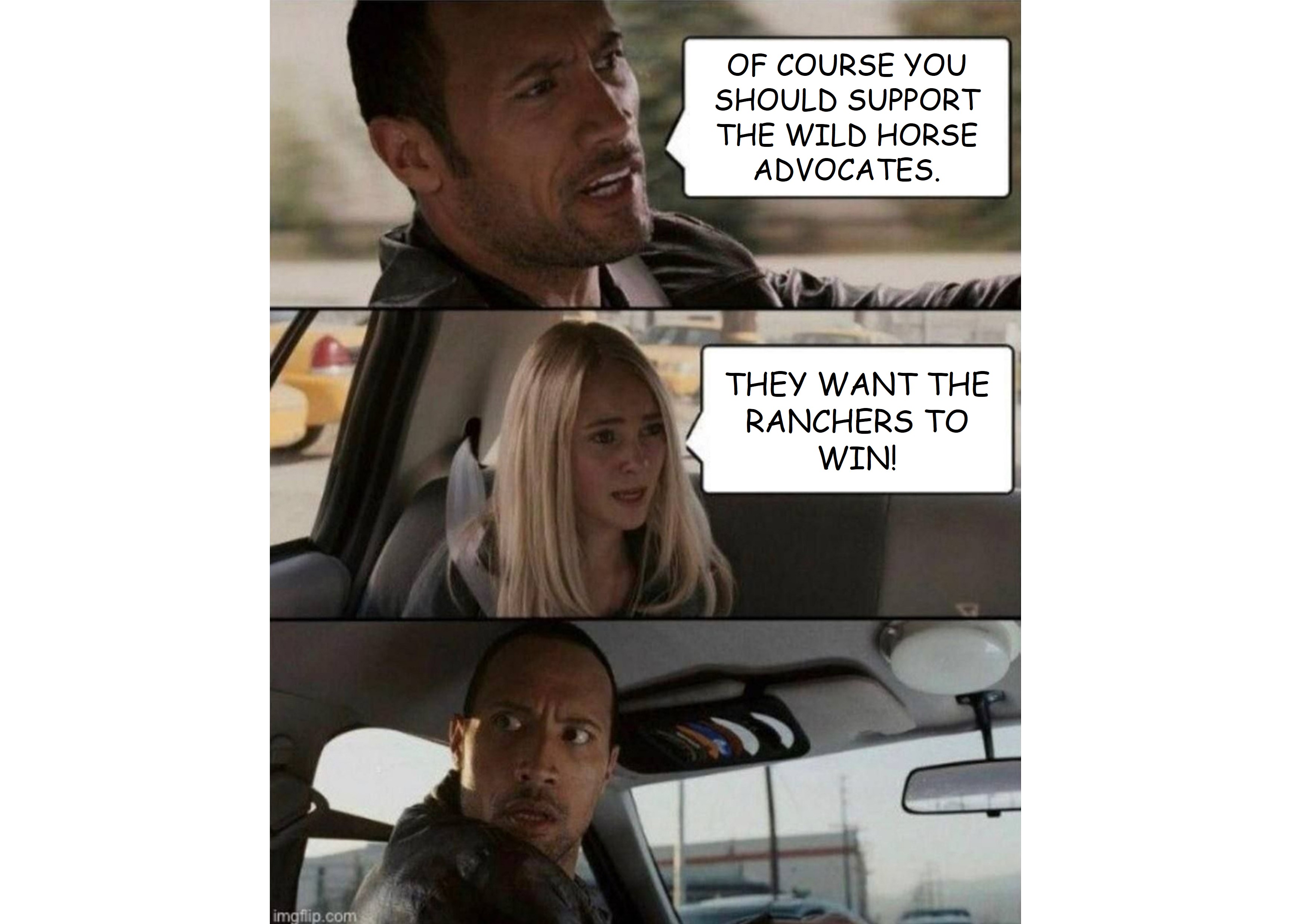
They want the ranchers to win.

Example from PNWHA 12-01-24

Keep that in mind on December 3.

RELATED: Socialist Media Update for October 2024.

Traffic from Socialist Media November 2024 12-01-24